Post Travels: A Brief Visit to Ireland — Day 1: Getting There
Steve Slon attends a conference of travel writers in Ireland and does a little sightseeing, as well. See the entire series.
Day 1. Getting There
Arrive Dublin airport around 8:30 AM. Very little sleep. Disturbingly mammoth line to go through customs. But it’s no more than a formality of stamping passports, so it moves quickly.
Board bus with a group of travel writers and ride to Lyrath Hotel in Kilkenny. The hotel is grand, built in the 17th century on the site of a ruined castle from Medieval times. Nothing left of that original castle unfortunately, but the 17th century wing of the hotel is ivy covered and charming.


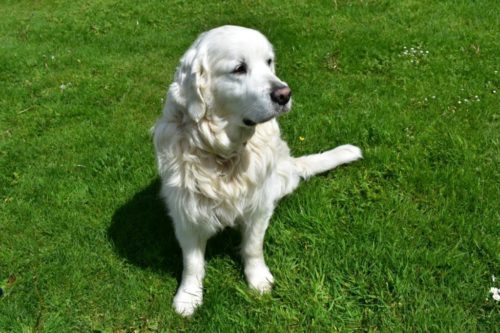
Three humongous golden retrievers greet us. Or, rather, I should say, allow us to step carefully over them as they lie immobile in the doorway.

The traveling part of traveling is not much fun. The getting there is the fun part. And, as I’ve learned, you quickly forget about the jet lag and the hassle of airplane travel, customs and the like. You simply need to spend the first day abroad getting organized or catching up on sleep, or both. In this case, I’d forgotten to bring adapters for the Irish wall sockets.
Oops, helpless without a way to charge batteries for computer, smart phone, camera. (How has all this equipment become so essential in such a few short years?)
Figured I’d just call down to the lobby for a spare, but the hotel didn’t have any. So I spent a good deal of time calling around and finally found a store in Kilkenny that carried them.
Taxi to the store, where it turned out the only product they had is a very fancy, multipurpose adapter for just about any kind of socket you can find, UK, US, Italy and several other places. It cost about $40. Okay, this is the price of traveling. Paid the bill and got back in the cab.
End of story? Not exactly. The affable cabbie is horrified to learn how much I’ve spent on the adapter. He takes me to the Irish equivalent of a dollar store where I purchase three adapters for about five bucks. I plan to return the expensive version tomorrow.
Major feeling of accomplishment for solving this conundrum.
That evening, lovely dinner at the hotel with speeches and general good cheer. Among the attendees, travel writers, editors of travel magazines and other publications (like the Post) that include articles about traveling. Wonderful talk by our keynote speaker, George Stone, Editor in Chief of National Geographic Traveler magazine, in which he talks about the value of travel in connecting us to different cultures and revealing the similarities of the human experience across the artificial divide of borderlines.
Ruth Moran, who represents Irish tourism, reads a poem consisting of a compilation, one line from each person, who were asked on facebook to answer the question… ‘Ireland is…..’?
She warns before reading it that we won’t understand all, and we don’t, but we get the warm feeling just the same. (I’ll just share some of the best bits here. )
Ireland is…
Ireland is mammy shouting
Close the door, you’ll leave the heat out
A Daddy who can’t say how much he misses you
Where it rains in the front garden
And it’s a rainbow out the back
Ireland is…
The official home of the rainbow marriage
Where warm hearts send blood to warm toes
While we listen to the death notices on the radio
And give single finger waves on country roads
Ireland is…
midnight mass at 9 O’clock
Where the wit is dry but the weather is wet
Where loving yourself is seen as being too big for your boots
A soggy little rock onto which our dreams cling like limpets
Ireland is…
Where “Pennies” is an acceptable response to a compliment on your outfit
Ireland is a tayto sandwich
Ireland puts clothes on the line in November
Because using the tumble dryer would be a fierce extravagance altogether
It’s a damp eyed tune with a wooden spoon
And worrying about the person you gave directions to
Ireland is..
A mammy offering you a sandwich even though she’s not your mammy
Ireland is my home, my heart and my blood
Ireland is not using the good room
Where a potato in a suit is a national treasure
It’s the squint on the lough against the cold autumn sun
And the fog of glorious stories condensing on the pub’s window pane
Ireland is…
easy to leave but impossible to escape
It’s thanking the bus driver for getting us there safe
Ireland is a box of fancy biscuits you are not allowed to eat, just in case
Ireland is green fields and laughter
Where you’re mammy says, “we’re not made of money” as an answer to almost everything
Even though the answer is usually sudocream
Ireland is…
cutting the grass because the neighbors did theirs
Solving the entire world’s problems, one cup of tea at a time
Ireland is not being able to say goodbye
Ok, bye, bye, bye now, good luck, bye, bye, bye

—Steve Slon is the Editorial Director for The Saturday Evening Post. See the entire series.
The Case for Saving Endangered Species: 1964 and Today
Since the Pilgrims landed at Plymouth Rock in 1620, more than 500 species and varieties of animals and plants on our continent have become extinct, including the California golden bear, the eastern cougar, and the Tacoma pocket gopher.
Conservationists have been working for generations to preserve species that are precariously close to joining those 500. They’ve been helped by the Endangered Species Preservation Acts of 1966, 1969, and 1973.
These laws, supported by conservationists, naturalists, and hunters, have saved several species of wildlife, including alligators, bald eagles, peregrine falcons, wolves, grizzly bears, and California condors.
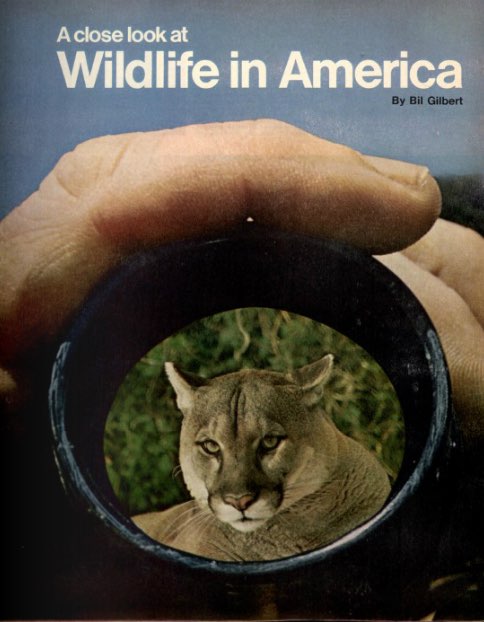
The whooping crane, for example, came dangerously close to extinction. In his 1967 article, “A Close Look at Wildlife in America,” Bil Gilbert reported that only 43 whooping cranes remained. Today, with protective measures, the population has risen to 603. But with their wetlands disappearing beneath developments, the whooping cranes’ longevity still isn’t assured.
In 1967, Gilbert’s ideas about ecological damage would have been unfamiliar to many. In his article, he tried to make a solid case for the importance, and the complexity, of conserving wildlife and preserving an ecological balance.
Then, as now, some Americans wonder why saving species is important apart from keeping bird watchers, wildlife lovers, and hunters happy. Here are four:
- Preserving natural diversity. With every species that disappears, the environment loses a little more of the reserves it needs to respond to natural or man-made disasters. As the monarch butterfly population drops sharply because of overuse of herbicide, so does the population of birds that feed on the monarch larvae, which, in turn, alters the fertilization patterns of the plants that feed any number of other animal species, including us Homo sapiens. If monarch butterfly populations fall off, remaining butterfly species can’t make up for the missing link in the food chain.
- Contributing to medicine. Tarantula venom is now being tested as a treatment for Parkinson’s disease. Taxol, now the standard treatment for ovarian cancer, is based on a molecule so complex that researchers might never have developed it. It was discovered in a weed tree, the Pacific yew, which was routinely discarded in logging operations.
- Monitoring health risk. In 1913 , miners began bringing canaries into the mines with them because the birds would register the presence of poisonous gases before the miners. Today, honeybees are used to monitor air quality, mollusks for water quality, and swallows, bats, and fish for rising presence of pesticides in the environment. A sharp decline in a species could signal a rising danger to humans.
- Boosting the economy. Wolf tourism in Montana, Wyoming, and Idaho brings over $35 million in revenues to those states. When bird watchers come to Texas each year, they pump $400 million into the state economy.
We can’t count on the natural world to adjust itself to the vagaries of human progress, or on human ingenuity to develop a miraculous, last-minute solution when extinction starts hitting home. Ultimately, the species we’re trying to save is our own.
Featured image: American Elk (John James Audubon, Brooklyn Museum)
A Good Sport
It was snowing again, and the snow was less falling than being driven sideways. The wind had picked up and gusts rocked the lift wildly, tore at the cable. And then, they were at the top.
A freaking blizzard, Trinity thought. Our first trip together. A ski trip to Canada. To make him happy. And we get a blizzard.
Snow whipped in their faces, and a ski patrol shouted at each of them in turn, “Shelter in the warming cabin. Over there. Wait till it slacks off.”
Ten people struggled blindly toward the cabin, broke in through the door and dragged it shut. Stepped into another world. Cozy, warm.
Trinity stacked her skis and poles in the wall rack, collapsed onto a bench. A fire was burning in the woodstove; a kettle softly hissing on top. A cupboard revealed coffee and cocoa packets, stacks of paper cups, a couple of big cans of Habitant Pea Soup, a can opener. Okay. She smiled: An adventure: Trapped in a Warming Cabin in the Wilds of Canada.
James grumbled. Like it was her fault, the blizzard. “I wanted this trip to be perfect. For you. For us,” he said.
“It’s okay,” she said. “It’s an adventure.” She smiled to make him smile, but he passed.
The cabin was overly warm and crowded. With mittens and jackets piled on picnic tables, it was wet and messy, too.
“Yeah, so let’s go.” A boy announced, one of a group of high schoolers, from his accent, up from New England. He was lean with curly hair and a cute smile. “It’s just snow,” he said to the others cheerfully. “We know snow. We can go down the back.”
A boy with a visored watch cap agreed. “Let’s do it. This place sucks.”
Still in their outer clothes, the kids picked up their skis and poles and left.
Trinity opened the two cans of Habitant Pea Soup and emptied them into the saucepan on the woodstove.
“Don’t add water,” a woman said at her elbow.
“I know,” Trinity answered and quoted the label: “‘Never add water to Habitant Pea Soup.’”
“Right.” The woman chuckled. “I’m Louisa. There’s a teakettle and some water. I’ll make cocoa.”
Ten minutes later, Trinity and Louisa poured cocoa and pea soup into paper cups. “We’re camping,” they agreed.
Trinity settled across from James, lifted her cup of cocoa to him.
“Santé.”
“Santé,” he said, finally smiling. “You’re a good sport.”
She smiled back and took a sip of cocoa, but looked briefly away at a man across the cabin, a Scots Canadian judging by his blue eyes and soft, fair cheeks pinked by the cold.
Alone on a bench by the window, he was staring out at — the snow? No. He was too intense for that. He was trying to see through the snow, leaning a little this way, then that, his mouth pouted. Suddenly, he rose to his feet, startling her.
“Those kids,” he said, frowning.
They all looked up from their steaming cups.
“They were outside a moment ago,” he said. “They didn’t leave. They disappeared.”
“’Said they were going down the back,” James said indifferently.
“No. They were arguing. A couple wanted to use the trail, but you can’t ski in this, and the leeward side is off trail. Then they disappeared. Like they dropped off the earth.”
A gust of wind whacked the cabin so hard it shook. Louisa looked anxiously at her companion, who gave her a squeeze and a reassuring smile. Trinity turned back to James.
“Like I said,” James said blandly.
The man frowned again. “No. Not like you said. Either they went over the cliff or they went off trail. Either way, they could be in trouble. You know Mainers. They think they know everything about snow. They get in more damn —” He slipped into his jacket, zipped it, pulled a cap down over his ears and picked up his gloves. “I’ll go check. If I’m not back —” He paused. “I’ll be back.”
Louisa’s man stopped him. “Don’t go out there alone, man. There’s no visibility. Wind could suck you off the side of the mountain. They wouldn’t find you ’til spring.”
The man looked around. “Someone care to join me?”
James looked away. The wind thumped the north wall. “Be a complete idiot to go out in this,” he muttered.
“They’re kids,” the man pleaded.
“I’ll go.” Trinity stood but was yanked down by James’ firm hand.
Trinity looked at him in disbelief: “But I’m a first responder. If there’s a problem — if one of them’s —”
“You’ll stay right here,” he said. Cold as an iceberg.
Trinity went hot. “But —”
Louisa’s man suited up and the two men unlatched the door, which flew open, hitting the wall outside with a bang.
Trinity stood to help Louisa with the door, but James pulled her back.
“Guy wants to risk his life for a coupla kids, that’s his problem. Not mine. Not yours,” he whispered angrily. He gave her arm a shake. “Never talk back to me in public.”
“I’m sorry,” Trinity said too loudly. “I just —”
He dropped her arm and turned away.
Trinity sat, flushed and angry. Dismissed.
The door burst open, and she started up, thinking it had blown open. Instead, all five kids and the two men poured back into the cabin.
“They fell down a tree hole,” the man she thought Scots-Canadian announced.
The curly-haired boy shrugged, smiling broadly. “We were standing on the snow talking, and Anna disappeared. Poof. Then Tyler. Then we all fell in.”
A girl explained. “The snow covered the trees up against the cliff. We were standing over the cliff on the tops of spruce trees. Like Wile E. Coyote.” She giggled. “And then the snow gave way, and we fell down the cliff through the trees. Nobody’s hurt,” she said. “It was really funny. We were all laughing.”
“How’d you get out?” Trinity asked.
The other girl shook snow off her jacket and gave a little snort of laughter. “We climbed the trees.”
Soon the wind lightened and the snow stopped. Separately and together, they skied down the mountain.
But Trinity carried the tree hole in her heart, guarded it tenderly against her chest.
She too was in a hole. She too could climb a tree.
News of the Week: New TV Shows, Old Technology, and the Vanishing American Adult
The Upfronts
May is the month when all of the TV networks tell you about the new shows that are coming up in the fall and which of your favorite shows they have dumped like last week’s leftovers. They’re called “The Upfronts,” when the networks put on a showcase for advertisers (and fans). It would take too long to give you a complete list of what’s going and what’s coming, but you can read all of the coverage at The Hollywood Reporter, Variety, and Deadline.
I do want to talk about a few shows, old and new. Both Will & Grace and Roseanne are coming back for limited-run final seasons. I don’t know how either of these shows are going to do new seasons. The final episode of Will & Grace showed the two title characters not speaking to each other for several years and then showing a flash forward several years into the future where they became best friends again when their kids end up in the same college dorm. So I’m not sure when the new season will take place. And John Goodman’s character on Roseanne actually died in the last season, so I’m curious to see how they bring him back. Maybe it’s inspired by The Walking Dead.
ABC has a new show coming called Deception, which is about a magician who helps the FBI solve cases. Sounds a lot like a show I loved as a kid, The Magician. And we’ll see another season of Arrested Development on Netflix.
CBS’s Two Broke Girls has finally been put out of our misery, as was Fox’s Sleepy Hollow. Also, NBC canceled one of my favorite shows from last season, Timeless, and then, in a stunning reversal, changed their minds a couple of days later, renewing it for a second season! I guess those online fan campaigns to save a show sometimes actually work.
And finally, here’s the trailer for The Orville, Seth MacFarlane’s Star Trek spoof that looks like it could be fun:
Hollywood Is Worried about Technology
Most films today, with exceptions here and there, are shot and edited digitally. While that’s great for clarity and flexibility, it’s when the films have to be stored that a problem comes into focus.
The problem is with the magnetic tapes that studios have been using since the 1990s to store films in their archives. It’s a very complex, insider-ish problem, but IEEE Spectrum has a fantastic, detailed rundown on what the problem is and what solutions Hollywood is looking at. One expert in the piece says that a lot of media from the 1990s through 2020 will actually be lost forever. While that’s incredible to think about, if Two Broke Girls is one of those things lost, I’m not going to lose any sleep over it.
New Books
I’m reading The Vanishing American Adult: Our Coming-of-Age Crisis — and How to Rebuild a Culture of Self-Reliance. It’s a long title and a long book, but one that’s very readable and enjoyable. It’s by Ben Sasse, a Republican senator from Nebraska who is worried that we’re not doing our kids any favors these days in the ways that we (and schools) are raising them. It’s not just one of those books that simply gives you tips on how to solve problems. It’s also extremely well written, which is not something you often see in a book written by a politician. But luckily, Sasse is also a historian. I think it’s one of the most important books of the past 10 years, one that argues for a return to hard work, common sense, and more reading. You should read it.
On a somewhat related note, The Tech-Wise Family: Everyday Steps for Putting Technology in Its Proper Place by Andy Crouch explains why we should control the tech in our lives instead of having it control us. Because we all know that a lot of people would rather give up food or a limb than have to be away from their phones for even a day. Buy the print edition so it’s one less thing you have to read on a screen.
RIP Roger Ailes, Chris Cornell, Powers Boothe, Brad Grey, Anne Morrissy Merick, Steve Palermo, Curt Lowens, and John Cygan
Roger Ailes was the former head of Fox News who was embroiled in a sexual harassment scandal that forced his ouster from the network. He was also a consultant for several presidents and was executive producer of The Mike Douglas Show. He died Thursday at the age of 77.
Chris Cornell was the lead singer of the bands Soundgarden and Audioslave. He also performed the theme song “You Know My Name” for the James Bond movie Casino Royale. Cornell was found dead in his Detroit hotel room Wednesday night after a Soundgarden concert. He was 52.
Powers Boothe was a veteran actor know for movies like Nixon, Guyana Tragedy: The Story of Jim Jones, Sin City, and Red Dawn, and for TV shows like Deadwood, 24, Agents of S.H.I.E.L.D., and Philip Marlowe: Private Eye. He died Sunday at the age of 68.
Brad Grey was the former CEO of Paramount and half of the prolific producing team of Brillstein-Grey. He died Sunday at the age of 59.
Anne Morrissy Merick was a pioneering TV producer who was not only one of the first female sports reporters but also had a hand in getting women permission to cover wars. She passed away May 2 at the age of 83.
Steve Palermo was a baseball umpire who officiated at many games, including the tense Boston Red Sox/New York Yankees one-game playoff in 1978. He was paralyzed trying to stop a holdup outside a Dallas restaurant in 1991. Palermo died Sunday at the age of 67.
Curt Lowens was a Holocaust survivor who later went on to appear in many movies, including Torn Curtain, Tobruk, and To Be or Not To Be, as well as TV shows like Hogan’s Heroes, Mission: Impossible, and MacGyver. He died Monday at the age of 91.
John Cygan co-starred on the ABC show The Commish and provided voices on tons of animated shows and movies, including Toy Story, Cars, and WALL-E. He died Saturday at the age of 63.
Coke Is It!
We live in a world where people jump from job to job more often than people did in generations past. If you stay at the same job for 6 or 8 years, that’s considered a very long time. So what do you say about a person who has stayed at the same company for 80 years? Meet 97-year-old Fred Kirkpatrick, who has worked for Coca-Cola since … 1938!
Not surprisingly, he also collects Coke memorabilia.
Show of Hands
Let’s talk about washing your hands. You’re probably not doing it right.
NPR has a story — in a section on their site called, for some reason, “Goats and Soda” — highlighting the Center for Disease Control’s campaign to teach you how to wash your hands. Basically, you have to really get inside the spaces between your fingers, dry your hands thoroughly with a paper towel, and then turn off the faucet with the paper towel. I have to admit, I’m pretty thorough when I wash my hands, especially in public restrooms.
And may I suggest something to all of the retail stores and restaurants out there? Make sure your restroom doors push out so we don’t have to grab a door handle to open the door. You won’t believe how many guys don’t wash their hands when they’re, well, done with what they have to do. It makes you worry about American adults and how the art of simple hand washing is vanishing.
This Week in History

Congress Lets Women Enlist in Military (May 14, 1942)
This article from our May 30, 1942, issue explains how women actually did a lot of the heavy lifting during World War II.
Charles Lindbergh Takes Off from NYC for Paris (May 20, 1927)
The American aviation hero was later vilified for his thoughts about Nazi Germany and his promotion of isolationism, but maybe there’s more to that story.
This Week in Saturday Evening Post History: “James Thurber, I Love You” (May 20, 1967)
Elizabeth Acosta’s story ran in the magazine 50 years ago this week. It’s about a fan letter she wrote to humorist James Thurber and the response she got back from him. The piece was accompanied by original Thurber drawings.
National Quiche Lorraine Day
I’ve never had quiche in my life, even though I worked in breakfast places for many years. I don’t think we even had them on any of the menus (an omelet isn’t the same thing). When I was younger, I often wondered what a “quiche” was, and if this “Lorraine” person is the one who invented it.
Tomorrow is National Quiche Lorraine Day, so here’s a recipe for a classic version from Simply Recipes. And while it’s not Quiche Lorraine specifically, here’s a recipe for California Party Quiche if you want a variation.
Lorraine, of course, refers to the Lorraine region of France. There was also a Laraine Day, but she’s a whole different thing.
Next Week’s Holidays and Events
Ringling Bros. Barnum & Bailey’s Last Show (May 21)
The final Ringling Bros. Circus performance is this Sunday, and you can watch it online for free at their official site or on their Facebook page. It starts at 7 p.m. Eastern.
Sally Ride Day (May 26)
This day celebrates the life and career of the first American woman in space, who died in 2012.
Second Chapters: Still Life After Death
Norm Diamond’s 30-year career as an interventional radiologist required intense precision daily. The ever-changing technological landscape of the field kept Diamond on his toes as he treated a wide variety of diseases with minimally invasive techniques. For example, he describes a procedure in which he used a catheter the size of overcooked angel hair pasta to patch a bleeding artery. Dyes, stents, and imaging technology were among the tools Dr. Diamond used until retiring in 2012. Then he took up a different set of tools: lenses, lights, and tripods.
His second chapter got its start in 1979 when he captured an image of a Holocaust remembrance plaque in Paris. The plaque, at the School of Hospitalières-Saint-Gervais, reminds pedestrians of the 165 Jewish children taken from the school to Nazi concentration camps during World War II. N’oubliez pas, the plaque reads — “Do not forget.”
Others recognized the beauty and pathos of Diamond’s photograph of the plaque with two children playing in the foreground. It was acquired by Holocaust museums in Paris, Jerusalem, and Dallas.
Diamond continued taking pictures as a hobbyist, but after retiring from medicine, he devoted himself to the art form, using it as a way to reflect on his emotionally taxing career. He cites the evocative photography of Cig Harvey, Jay Maisel, and Debbie Fleming Caffery as influences on his work. He found his own muse in the storytelling capacity of everyday household articles.

Diamond’s book, What Is Left Behind: Stories from Estate Sales, features 66 photographs he captured while visiting hundreds of estate sales around Dallas over the course of a year. The photos display poignancy, humor, and often a Texas flair. Diamond was drawn to photograph estate sales because of the unique emotional magnitude of each object he encountered. In the preface of his book, Diamond says, “The stark reality of life’s brevity pervades every estate sale, where children’s toys sit a few feet from wheelchairs.”
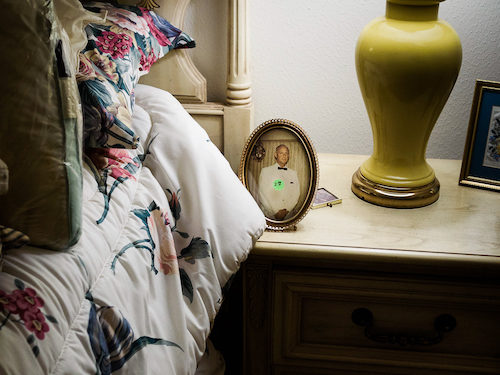
Like a prepped patient, an estate sale is a life splayed open and on display. Items that presumably held considerable significance at one time can be found for $2.50, like the framed portrait in Diamond’s image “Man of the House.”
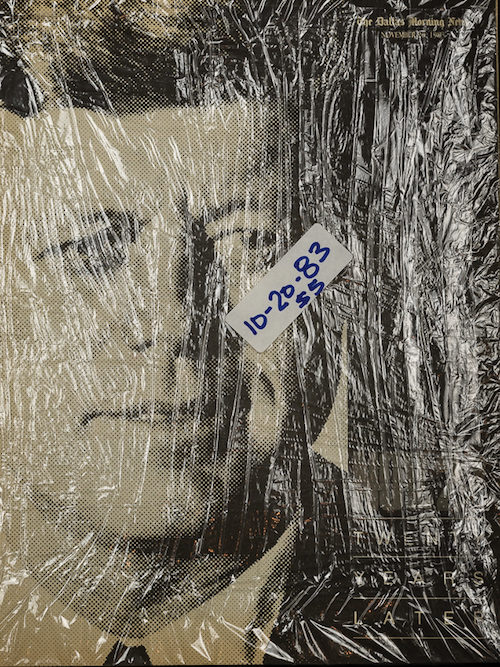
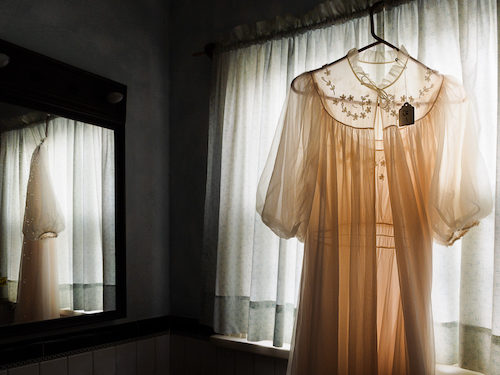
Diamond explores the emotional nature of objects in his collection. His stills capture history. Some are personal, like “Wedding Night Negligee,” and others are more public, like “Twenty Years Later,” a shot of an issue of The Dallas Morning News commemorating JFK’s assassination that someone kept for decades. “The themes of generational passage and the poignancy of aging are what moves me. My ancestors came to this country in the late 19th century, and they were more interested in becoming Americans than they were in recounting their past. That genealogy was never really passed down to me,” Diamond said.
Diamond believes his second career as an art photographer has been informed by his experiences in medicine. In his training to become an interventional radiologist, he was taught to suppress any emotional expression with his patients. This was best for the patient as well, he said. But Diamond believes this professionalism has affected his own relationships and given him a dark worldview. “The work was very consuming. It was something that occupied all of my attention, even when I wasn’t there.”
Through his photography, Diamond hopes to inspire others and to heal himself: “My images appeal to certain people. They move certain people, and that, to me, is a very gratifying thing.” The journey through time offered by his snapshots of discarded trinkets is sometimes mournful and sometimes droll, but it is always compelling. If objects could speak, these would have a great deal to say. Much like his first successful photograph, Diamond’s work has a running theme of paradoxical nostalgia and the emotional bearing of the inanimate as it seems to say, “Do not forget.”

Selling America on the Draft: 100 Years Ago
 The idea of a military draft has never sat comfortably with Americans. When conscription was introduced during the Civil War, it sparked a three-day riot in New York that left over a hundred dead and hundreds more injured.
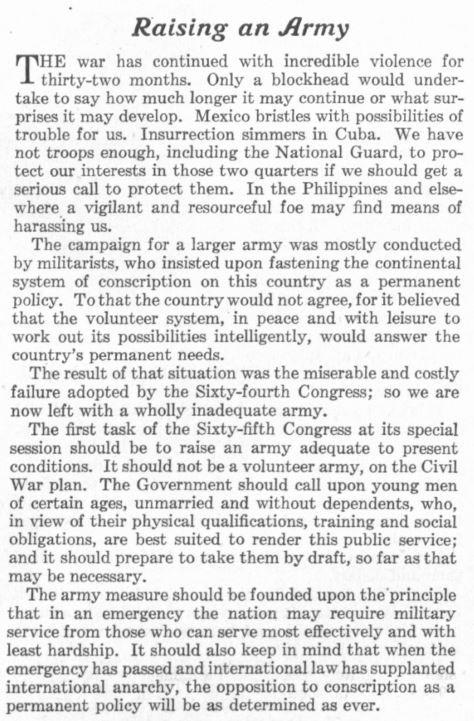
When President Woodrow Wilson called for a new draft in 1917, the country’s response was divided. Some, like the editors of the Post, strongly supported bringing back conscription, as seen in this April 7, 1917, editorial, “Raising an Army,” written just days before Congress declared war and published the day after.
Others expected the new draft to be met with violence. One Missouri senator told the secretary of war that a draft would result in “the streets of our American cities running red with blood.” The speaker of the house declared there was “precious little difference between a conscript and a convict.”
Even the judge advocate general of the U.S. Army said that “a military draft is not in harmony with the spirit of our people. All our previous experience has been that it causes trouble and that our people prefer the volunteering method.” Yet it was this same man, General Enoch Crowder, who successfully launched the new Selective Service System.
Crowder made the draft more acceptable to the public by putting it under local, civilian control. Starting in the spring of 1917, the Selective Service set up 4,648 boards run by “responsible citizens” — county clerks, lawyers, doctors, and community leaders. Rather than military officers choosing which boys to send into war, the draftee’s neighbors and friends would hold the responsibility.
On June 5, during the first registration (there would be two more), these boards — which covered all 48 states, the District of Columbia, and the territories of Alaska, Hawaii, and Puerto Rico — began registering every American man between the ages of 21 and 30. The boards then determined which men were available for military service.
Each man was issued a registration number between 1 and 10,500 (the maximum number registered with any draft board). On July 20, a lottery determined the number holder’s eligibility for service.
How successful was Crowder’s Selective Service? Between June 1917 and November 1918, it registered 24 million men and sent nearly 3 million into the Army. (Neither the Navy nor the Marines wanted draftees in their ranks.)
Among the drafted men were 64,000 who requested to be listed as noncombatants. Despite widespread suspicion that these conscientious objectors were cowards, malingerers, or enemy agents, almost 90 percent of the requests were granted.
It is interesting to note that 16,000 of the conscientious objectors eventually changed their minds about fighting. One of these was Medal of Honor recipient Alvin York. After a minister convinced him that military service was compatible with his faith, York rose to the rank of sergeant and, one day in 1918, infiltrated the German lines, seized 35 machine guns, and killed or captured more than 150 enemy soldiers.
Despite the apparent success of the Selective Service, the system wasn’t any more perfect than the Americans it served. For example, the state of public health in America was so bad in 1917 that one-third of the conscripts were rejected for medical reasons. Another problem was draft dodgers. Crowder estimated that 3.6 million men never even registered. And of those who registered and were conscripted, 12 percent dodged military service.
Crowder had made the draft less objectionable to Americans, but he never eliminated their dislike of the program. Resistance to the draft climbed steadily during the Vietnam War years. Of the 27 million men eligible for military duty between 1964 and 1973, the Selective Service chose 2.2 million. Over 15 million deferred their service, mostly to finish a college degree program, which many did as slowly as possible. Over 200,000 avoided the draft illegally, 100,000 deserted, and an estimated 10,000 to 30,000 fled to Canada.
We won’t know if Americans’ attitude toward the draft has changed until the next draft is called.
Featured image: Saturday Evening Post cover by Julian De Miskey from May 11, 1918 (SEPS)
A Discouraging Word: Is It Okay to Criticize Kids?
If you could find a way to get Billy in as a pitcher,” one of my player’s fathers emailed, “it would really make his day.”
It was a simple appeal to boost a 9-year-old’s happiness. This was, after all, just Little League.
Yet we were into our sixth game, and most of the other boys were invested in our so-far poor results. One mother related that her son was teased at school, and she wanted to know what we could do about it. “Play harder and get better,” I said.
Billy was a likable boy. He was also one of the reasons we were losing. He didn’t play hard or get better. He didn’t make it to every practice or game. In the outfield, his attention would wander, and he’d gaze at who-knew-what in a parking lot or someplace other than where he needed to. (“Billy, game’s this way!”) In the infield, he kicked dirt at his feet. (“Billy, ready position!”) If he was paying attention and heard me, he’d make a perfunctory twitch indicating that he was ready, but one or two pitches later, Billy snapped back to a state of unreadiness. He looked startled when balls came toward him, and on the occasion he got ahold of one, his shoulder and elbow somehow moved in opposite directions. It had to be an optical illusion. The throw itself often set in motion miscues that ended with the other team celebrating.
And now I heard his happiness depended on being a pitcher.
I groaned, anticipating that once on the mound — what choice did I have? — he’d hear the opposing bench’s cheers and his teammates’ quietness as they witnessed him walk batter after batter. “Come on, Billy!” someone would shout from the bleachers. “You can do it, Billy!” Which, let’s be frank, is what someone says when no one, least of all a kid in Billy’s shoes, believed he could. The attempt to “make Billy’s day” would ruin his and everyone else’s. You had to hope no one mocked him at school the next day.
That Billy didn’t see it was one thing. Billy, after all, was 9. But why didn’t his father? “Son,” he needed to say, “you’re not ready to pitch. Let’s practice, and maybe you’ll get there.”
If Little League is innocuous enough — or not, given the way competition among boys determines status off the field, too — the situation of people who do not see where they stand, their abilities and limitations, comes up quite frequently well into adulthood. Unrealistic self-evaluations and false encouragement from people who should be candid or know better bring to mind the phrase that the path to hell is paved with good intentions. We’re all big on dreams and destiny and vision, and we latch onto stories about people who, through persistence and determination, proved a naysayer wrong. We like late-bloomers almost as much as prodigies. The message is to not give up. Believe in yourself. Do not let others put you off of your dreams. We are buoyed up by clichés, which begin to obscure the fact that gloom-to-glory tales are fun and notable precisely because they are exceptional.
When eventually we do accept our own limitations, we sometimes pass down our unrealized hopes to children, and nurture them to believe they can do anything, as the phrase goes, they set their minds to — a nice idea that’s often a setup to the disappointment that will eventually come to pass.
A friend who is a professor at a large university lamented the phenomenon among his master’s students. They are educated people by any reasonable standard, and that they’re in a humanities-related field shows they are ambitious about knowledge rather than just money. But the leap from master’s to doctoral candidates is like single-A minor league ball to the majors, and only a small minority will make it.
“The number of students who don’t see that they’re not up to it is astonish ing,” he said. “It’s not just that they’re applying to doctoral programs when they shouldn’t be. They’re even applying to top-tier schools. You just wonder what they’re thinking that they could overrate themselves so badly.”
They don’t care for being told where they stand, either. One mediocre student asked him for a recommendation for her application. He recommended that she take stock of her strengths and weaknesses. “I don’t know why he hates me,” she told another student. It had to be intensely painful to have slogged that far to realize you’re not going farther, like Moses on Mount Nebo.
In the case of my 9-year-old pitcher, you could argue that there is something worthwhile, maybe even noble, in trying. As the poet Robert Browning put it, “Ah, but a man’s grasp should exceed his reach, or what’s a heaven for?” Well, okay. But grasping when you aren’t even close, least of all when you haven’t really put the time in, is just wishful, if not delusional. A person who keeps chasing an unrealistic dream may feel as if he just can’t catch a break. If you realize your vision is a mirage, do you not change course? Where does encouraging someone, either because they’re not ready or because they’re just not good enough, cross into irresponsible counsel? When is just not trying — in other words, not engaging in futile effort — the better choice?
I suspect that often enough, somewhere in there, the mind and body know. At some point, even if you can’t figure it out, colleagues, customers, teammates, boards of directors, and P&L statements will enlighten you. Disappointment is a grim reaper.
My generation, I think I’m safe to say, made being parents into a verb, and contained within the word parenting an entire lexicon of notions about how to be supportive and foster self-esteem. We were always extremely careful to be encouraging.
We meant well.
Critics called this generation “helicopter parents” because we seemed to be hovering over our children. I think perhaps a better term would be “umbrella parents,” who would stand guard against any rain that might fall.
Protection is one thing. But you can’t forever shield your child from disappointment. It’s inevitable. And I would argue that experiencing some disappointment in childhood is good practice for life’s greater griefs. Disappointment also has a way of directing us to our greater strengths. The actor-director-writer Andrew McCarthy told me once that he’d only started acting because he’d failed to make the basketball team. So maybe the takeaway here is that Billy’s dad could be teaching Billy a lesson rather than trying to press for an unrealistic goal.
In the end, I decided not to accede to Billy’s father’s request. I thought disappointment would be easier to bear than humiliation. I also felt that indulging him when he hadn’t earned it would send his teammates the wrong message. Didn’t their feelings count, too?
There is much to be said for striving for what is attainable. At my local café, I ran into a man of a certain age who had always seemed to me comfortable having made reasonable accomplishments, a man with the wisdom to reach for the attainable and live in good humor.
“How do you feel?” I asked.
“Old, fat, and ugly,” he replied good-naturedly.
“And otherwise?”
“Otherwise I’m all right, thanks for asking.”
He doctored up his coffee with milk and sugar and walked out through the door, his silhouette framed by the white light of a sunny morning.
I wondered if once, 60 years ago or so, he had hoped to get a chance to pitch.
Todd Pitock’s last article for the Post was “Floating Toward Ecstasy” in the January/February 2017 issue.
This article is featured in the May/June 2017 issue of The Saturday Evening Post. Subscribe to the magazine for more art, inspiring stories, fiction, humor, and features from our archives.
The Art of the Post: The Hidden Talent of Post Cover Artists
Artists used to dream about painting a cover for The Saturday Evening Post. But there was a big difference between the printed covers America saw and the actual oil paintings created by Post cover artists.
The young Norman Rockwell said that his highest ambition was to paint a cover for the Post, which he called “the greatest show window in America for an illustrator.” The Post had the largest readership of any magazine and paid well, but most of all, its cover spot was culturally important. Readers studied and discussed the covers in homes all across America, and they were even used as teaching tools.
In the 1930s, a young art student in Minnesota wrote home about her classes:
[T]his is what they are teaching us to do here in Illustration. We are doing covers for the Saturday Evening Post, and everyone has a [Post] cover at their side which they consult and worship while working at their own sketch. ¹
Rockwell studied those early Post covers and daydreamed about his future:
I used to sit in my studio with a copy of the Post laid across my knees. “Must be two million people look at that cover,” I’d say to myself. “At least. Probably more. Two million subscribers and then their wives, sons, daughters, aunts, uncles, friends. Wow! All looking at my cover.” And then I’d conjure up a picture of myself as a famous illustrator and gloat over it, putting myself in various happy situations: surrounded by admiring females [and] deferred to by office flunkies at the magazines. ²
Rockwell and other artists could tell very little from the printed cover of the Post about the magic behind the scenes. What was required to create a successful Post cover illustration? Rockwell recalls that he spied on one of the Post’s most prolific and accomplished cover artists, J.C. Leyendecker: “I’d followed him around town just to see how he acted….I’d ask the models what Mr. Leyendecker did when he was painting. Did he stand up or sit down? Did he talk to the models? What kind of brushes did he use? Did he use Winsor & Newton paints?” ³
Today the internet gives us the ability to compare the original paintings with the printed Post covers, and enjoy the details that were lost in the printing process. First of all, we should note that the original paintings that were reproduced on the cover of the Post were far larger than the magazine — sometimes four or five times larger. Compare the size of these Leyendecker covers with the original paintings:


They were painted with oil paint on canvas, just like fine art in the greatest museums. Often, Post cover artists had been trained in a classical fine art tradition. Leyendecker, for example, trained in Paris at the Académie Julian.
Perhaps the biggest difference between the original paintings and the printed Post covers was that the original paintings were often done in bright, glowing colors while the printed covers were often muted and fuzzy. Compare this printed cover by Leyendecker with his original painting. We can see how the printed cover could impress the young Rockwell …

… yet it conveyed only a fraction of the talent in the original:

Leyendecker painted details with exquisite care, even though he realized that readers would never really be able to see or appreciate them.


Let’s compare another published version of a Leyendecker cover with the original painting.


Once again we can see a huge difference between the original painting and the printed version that showed up in mailboxes across America. Notice the care that Leyendecker invested in capturing the feel of the velvet in the man’s jacket, despite the fact that it barely reproduced with the printing technology of the day.

Note the flesh tones on Leyendecker’s cherubs and compare them to the published version.


Even the bone structure and flesh of the man’s hand is treated with great subtlety that few readers of the Post were likely to notice.


These extra touches required not only great talent and technical skill, but also extra time, which was precious for artists working under a deadline. Great cover artists like Rockwell and Leyendecker painted hundreds of covers under deadline. They must have been sorely tempted to cut corners; after all, the differences would not be apparent to the average Post reader. Leyendecker alone painted 322 Post covers, but he consistently maintained his high standards.
What motivated these great craftsmen to remain at their easel making the best art they could, despite the fact that it would not always be appreciated?
Illustrator Robert Fawcett once observed, “The argument that ‘it won’t be appreciated anyway’ may be true, but in the end this attitude does more harm to the artist than to his client.” These high personal standards are what made this elite group of artists so remarkable.
- Quote by author and illustrator Wanda Gag, from The Gag Family: German-Bohemian Artists in America by Julie L’Enfant. Top ↑
- Rockwell: My Adventures as an Illustrator Top ↑
- Rockwell: My Adventures as an Illustrator Top ↑
6 Myths About Hospice Care
Contrary to what many believe, hospice is about living, not dying. “Get the facts before you need them. Hospice makes a hard reality much easier for everyone,” says Kurt Kazanowski, M.S.N., hospice expert and author of A Son’s Journey: Taking Care of Mom and Dad. Understand hospice care before you or a loved one needs it with Kazanowski’s quick guide:
Myth: Hospice means giving up.
Truth: While hospice focuses on comfort (palliative) care, not a cure, patients don’t have to be ready to die before getting the care they need or deserve. And patients can leave hospice at any time if their health improves or if they want to pursue
a cure.
Myth: Hospice patients can’t go into the hospital.
Truth: A hospice patient always has the choice to go to the hospital.
Myth: It’s only for the elderly.
Truth: Hospice is for anyone with a terminal illness and a life expectancy of six months or less.
Myth: The family must sign a Do Not Resuscitate (DNR) order.
Truth: A patient can receive hospice care without signing a DNR. Hospices cannot discriminate against patients because of any advance directive choices.
Myth: Only a doctor can speak to hospice administrators.
Truth: Patients and families can choose to talk with a hospice anytime. However, a doctor’s order is required to admit a patient to hospice.
Myth: It’s only for people who don’t need a high level of care.
Truth: Level of care required by the patient is not a factor in admission to hospice. The medical and nursing professionals in hospice are required to have advanced training in technologies associated with palliative care.
This article is featured in the May/June 2017 issue of The Saturday Evening Post. Subscribe to the magazine for more art, inspiring stories, fiction, humor, and features from our archives.
Women in the Military: A 75-Year Evolution
Today, the idea of women serving in the military is widely accepted, if not considered downright mundane. But attitudes toward women in the military have changed a lot in the 75 years since the Women’s Army Corps was created in 1942.
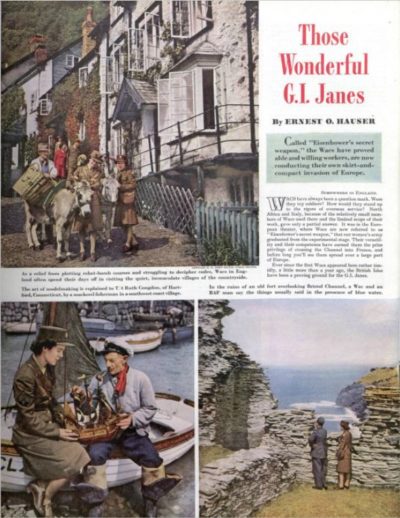
Women soldiers were still a strange idea when “Those Wonderful G.I. Janes” was published on September 9, 1944. Ernest O. Hauser, describing members of the newly created Women’s Army Corps, stressed that they had retained their femininity.
“If you ask them what they want to do after the war,” Hauser reassured Post readers, “the majority will reply, ‘Have a home and babies.’”
By 1957, when “This Lady’s Army” appeared, Americans were still adjusting to the idea of women in uniform. Sidney Shalett praised their contribution to the war effort, serving with distinction while enduring vicious slander. Wartime rumors had been spread of their rampant immorality, including shiploads of pregnant WACS being sent back to the state in disgrace and “wolf packs of sex-hungry Wacs roaming the countryside…seducing innocent sailors.”
“While these libels were being broadcast, heroic women were being torpedoed en route to North Africa, undergoing the blitz in England, and hitting the ditch under Japanese strafing in Leyte,” Shalett reported.
Regardless of how they felt about women in service, Americans had to acknowledge that all the WACs had freely volunteered to serve. Unlike the men, they could have sat out the war with no risk of being drafted. And while the military no longer segregates men and women (the Women’s Army Corps was disbanded in 1978), women are still not required to register for the draft, as men are.
But it looks like that may change as well. A women’s draft was nearly made into a law last year.
The idea began as a protest. When the National Defense Authorization Act was introduced in April 2016, it contained a provision for women to serve in combat. Opposing this idea, California Representative Duncan Hunter (R) introduced an amendment that would require women between 18 and 26 to register with the Selective Service, thinking that his progressive colleagues would oppose it.
Instead of drawing opposition to the Defense bill, the amendment gathered unexpected support from both Democrats and Republicans, men and women. The amendment passed the Senate by a vote of 85 to 13.
The amendment was struck from the bill’s final version before it being sent to the House, but the idea of including women in the draft continued to arouse controversy online.
Extending the Selective Service to women will probably be included – and passed — in a future Defense bill. It’s uncertain how much controversy will accompany the change, but it’s clear that seventy-five years after the formation of the Women’s Air Corps, some Americans are still adjusting to the idea of women in uniform.
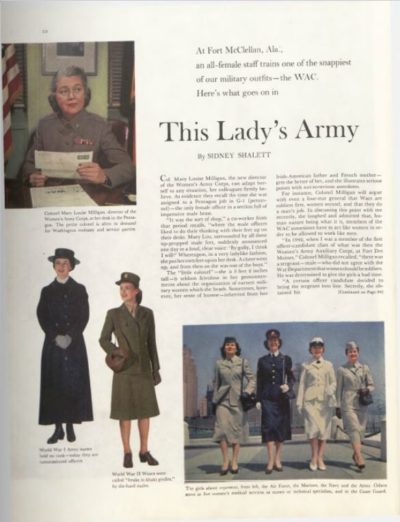
Featured image: National Archives
“King Caliban” by John Wain
The short explanation is that Fred’s always been a bit on the daft side. That’s what I said to them straightaway, as soon as they began to question me. “I’m his brother,” I said, “and you can take it from me he’s never been overburdened with gray matter.” Those were the exact words I used: “overburdened with gray matter.” Nobody could say Fred was that. But gentle, with all his strength. That’s why the whole thing’s so ridiculous.
I don’t blame them for getting me down there. They have to make inquiries. When all’s said and done, I was there and saw it happen. So did about five thousand other people, of course, but I was the one he kept talking about. “You ask Bert,” he kept saying to them. “Bert’ll tell you I didn’t mean to do it.” That’s what they told me, and I can quite believe it. He always did refer things to me. I did the talking for him, even when we were kids, even though I was 18 months younger. Anything Fred couldn’t quite explain, send for Bert. I had the brains, and he had the brawn. It could have been a good partnership, but as things were it never really worked out. If I’d been a type to get into scrapes, to find myself in a position where I needed a big, strong brother to stand by me, I’d have found it very convenient to have a giant in the family. But then I wasn’t. I got along all right. I soon learned to handle people. All you have to do is watch them — keep your eyes open. And I never got into trouble much, either at school or when I started work. Not real trouble. A bit of boyish high spirits, yes, but to do anything really silly was never in my line.
Come to think of it, my quick wits were no more use to him, really, than his strength and size were to me. I could tell him this and that and the other thing, but I couldn’t stop him being stupid. He was slow, and that was all there was to it. Of course I always did what I could to help him — even after we went different ways, or rather I went ahead and he stayed pretty well where he was. For quite long spells we wouldn’t see much of each other. But when we did meet I’d always ask him how he was getting on, and I was always ready to give him a hand where I could. Ask anybody. Well, that’s how the whole thing came about, isn’t it? Me helping him. That’s what I said to the police. “You try to help somebody,” I said, “and this is where you land up. In the police station being questioned.”
If he’d had just a bit more gray matter, none of this would have happened. He’d have got a decent job and earned a decent wage, and then Doreen wouldn’t have got onto him so much. Another three quid a week would have satisfied her. It’s as simple as that.
Doreen is Fred’s wife. They started going together when he first went to work at Greenall’s. She was there for years, of course, before he started. She was about twenty-nine when he first met her and pretty well in charge of the shop. Old Greenall used to call her his right-hand man. Of course she was very wide-awake. Knew exactly what they had in stock, whether it was on the shelves or in storage, and carried all the prices in her head. Greenall offered to put up her wages when she said she was leaving. If what I heard at the time was anything to go by, he pretty near offered her double. But she just said she’d decided to marry Fred and make a home for him, and she was leaving, and that was that. She told him if he could afford to spend that much on wages he could give Fred a bit more, now that he was going to be a breadwinner. But that wouldn’t wash, of course. Fred was getting seven pounds already, and he wasn’t worth more than that of anybody’s money.
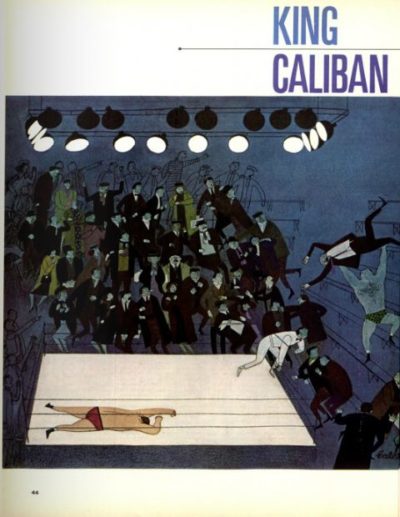
He was slow, you see. Old Greenall used to say he did a lot of work in a lot of time, and it’s true that Fred was never lazy. But he couldn’t hold much in his head; he had to keep coming back for instructions, and he could never see for himself the shortest way to do a thing. Greenall kept him on because he was as strong as three men and as honest as daylight. And it’s true there was a lot of heavy work about the place. There always is, with a grocery. You’d be surprised. Barrels of this and crates of that to be humped about. And loading and unloading the van. Fred used to spend most of his time carrying things about, or doing the deliveries. He hadn’t enough gray matter to do paper work, and when they put him on to serving in the shop he was more of a nuisance than anything else, being so big. The space behind the counter just wasn’t wide enough for him. You might as well try squeezing past an elephant.
It got on Doreen’s nerves from the start. She was fond of him, in her own way, but between you and me I don’t think she’d thought out all the angles before jumping into holy wedlock. She was scared of being left on the shelf — it’s a thought that must come pretty often to a girl who works in a grocery store. She knew what happened when you made a mistake and over-ordered a particular line. You sold what you could and the rest you got rid of cheap, or, in the end, chucked it away. That wasn’t going to be her. Not Doreen. When she saw the magic number thirty coming up on the clock, she jumped. And landed on Fred.
I thought he was rather lucky, at that. She wasn’t a bad looker, and she was smart. But she did get onto him about money. She’d saved a bit, and by putting that to what Fred had they managed to get a house in a decent-enough street. But that was just it. They were out of Fred’s class, really. Most of the husbands were getting twice what he was getting. So their wives had all sorts of things that Doreen couldn’t afford. They managed a telly, but when it came to fridges and cars and stainless-steel sinks, and one woman even had a washing machine! I think it was the washing machine that put the iron in Doreen’s soul. Yes, old Fred wouldn’t be in the mess he’s in today if it hadn’t been for the washing machine.
One Sunday when I was round there she poured out her troubles to me while Fred was out in the garden, the children skipping round him and playing some kind of game. They had two, a boy and a girl. It always seemed to me that he was fonder of them than she was. In a way I don’t blame her. She’d worked part-time until they came, so that they weren’t pinched for money. Then she’d had to give it up. So she had no reason to thank them for being born. Not that she didn’t do her best to bring them up right.
Anyway, that afternoon she stood staring through the window at the three of them. Her face had gone into hard lines, and she looked old and miserable.
“Bert,” she says, jumping straight in without any messing about, “can’t you suggest something?”
“Suggest what kind of something?” I asked.
She looked out at Fred again. He was digging trenches, shoving the spade through the wet soil with his great arms as if it was sawdust. I never saw anybody as strong as he was. The kids were hanging onto him shouting something and laughing. I could hear their voices faintly through the glass.
“What use is he?” said Doreen, following my eyes. “Tell me that. Here am I, with two kids to bring up and everything to pay for, and what does Fred do?”
“He works,” I said. “He earns a living as well as he’s able.”
She looked at me, straight in the eyes. “That’s not well enough. You know it, and I know it. We all know he’s strong, but what’s the good of that?”
I looked at Fred again. He was getting on toward thirty. His body seemed all chest and shoulders. His great barrel of a torso made his legs seem like an ape’s legs. His hair was beginning to get thin in front. As I watched, he laughed at something one of the children said, and his whole face seemed to go into one enormous smile.
“You be satisfied; that’s my advice,” I said to Doreen. “They don’t come any better than old Fred. You’ll never be rich, but you’ve got a good husband, and the kids have got a good father.”
“Keep your advice,” she said, “if that’s the best you can do. Mr. Know-it-all. How would you like to live on seven quid with two children? Scraping for every penny and never having a bit of life. If I want an evening out the only thing I can afford is to go down to the station and watch the trains come in. He’s your brother, and it’s not good enough. Who can I turn to, if not you? You’ve got all the brains; you could easily think of an opening for him. Don’t you tell me to be satisfied,” And more like that. It got so unpleasant I put my coat on and left.
I tried to forget about Doreen and her troubles. After all, I wasn’t her brother; I was Fred’s, and he seemed all right. He was quite happy. She nagged him, of course, but what I say is, if you don’t want to get nagged, don’t get married.
But I couldn’t forget her face. I mean, she was desperate. And I had to admit that seven quid was only seven quid, for a woman who’d been in a good job and never really gone short. Well, she knew Fred wasn’t overburdened with gray matter, I thought to myself. It’s her own fault. But if you feel sorry for somebody, you can’t stop it just by saying it’s their own fault. It nags at you. In fact, it really began to spoil the fun I was getting out of life. I’m in building supply, you know. I had a nice little corner in porcelain stuff just then, everything from insulators to washbasins. I was doing all right, and I’d begun to knock about with a crowd who’d mostly got a fair amount of cash. Chaps who knew their way around. I was on the inside, after always having been on the outside before, and it tasted good. I’d stopped going to the Lord Nelson in the evenings and taken to looking in at the back bar of the George — the private bar. A very nice crowd used to get in there.
Anyway, I mentioned it because Len Weatherhead used to go there very often. He was really one of the big boys. Savile Row suits, a Bentley, the lot. He’d made it up from the ground, and he wasn’t fifty yet. Started as some kind of fairground attendant, then ran a boxing concession, and now one of the biggest all-in wrestling promoters in the country. All-in wrestling! Can’t you see how the whole thing fell smack into my lap?
And yet, funnily enough, I didn’t think of it for a week or two. It wasn’t until one evening when Len Weatherhead came in looking really brassed off. Dead cheesed. The corners of his mouth were right down, and he wasn’t speaking to anybody.
Anyway, I went to work on him. Soon I had him telling me what was wrong. He couldn’t find wrestlers. He’d got the crowds, he’d got the halls, but he couldn’t find the boys to wrestle.
“Only today,” he said. “Two boys I could really rely on. Go anywhere and always put on a good show. Mike the Moose and Billy Crusher — those were their wrestling names. Always put ‘em on together. Well, all of a sudden Ogden — that’s Mike the Moose — comes to me and says he’s dissolving the partnership and going to work somewhere as a gym instructor. Says he knows it’ll mean a drop in the money, but he prefers the type of work he’ll be doing. I ask you! Turning away eighty quid a week!”
“Eighty quid a week?” I said. I saw Doreen running to the shop to buy six washing machines, one for each room.
He nodded. “In the season,” he said. “Of course there’s not a lot doing between April and September. But those two were always up near the head of the billing. And so well-drilled! Knew every wrinkle in the game. Never hurt one another; never had to have any time off with sprains or dislocations or anything like that. And the money I spent on them!”
I began to question him, without letting on that I had anything special in my mind. I learned a lot in a few minutes. All-in wrestling was something I’d never given any thought to. I suppose I just thought it was a matter of a promoter hiring a hall and then a lot of chaps being entered by their managers, like boxers. But of course all-in isn’t a contest; it’s a gymnastic display. The wrestlers have to know each other and work together. Every fight is rehearsed from beginning to end. You’ll notice, if you ever watch a contest, that every time one chap has got the other down and he’s putting some fearful lock on him, twisting his limbs about and making him yell blue murder, and you decide he’s a goner, the one who’s on top suddenly lets him get up. That’s because it’s his turn to be put through the mill next, till the crowd get tired of it and one of them has to win and make room for another pair.
You’ll probably want to ask me what I asked Len Weatherhead. What kind of people watch this? How can they enjoy it when a child of five could see the fights were rigged? Surely it can’t fool them, so what are they doing there? Len Weatherhead couldn’t really answer this, and neither can I. In a way all that happens is that the sight of two big, hefty men beating and gouging hell out of one another excites the crowd so much that they don’t care whether they’re being fooled or not. They’re like middle-aged men watching a striptease. Every one of them knows that the girl isn’t taking her clothes off for him, but never mind; he still wants to see her do it.
Len went on to tell me a bit more. In some cases the wrestlers have what you might call characters. The good guy against the bad guy, like Westerns. One of them will wear some costume that makes him look devilish, and have some frightening name like Chang the Terrible or Doctor Death. He’ll be fighting some blue-eyed, fair-haired type, and he’ll fight dirty to put the crowd against him. They’ll scream all sorts of insults at him, and he’ll snarl and shake his fist, and of course the other chap will let him win right up to the end, and suddenly get the upper hand in the last half minute and damn near break his neck. That’s when they all jump up and down and shout with joy. It works on some of these feebleminded types so much that after a season or two of following it they get to a stage where it’s the only sport they can follow. Oh, yes, somebody had a bright idea there.
“Look here, Len,” I said, choosing a moment when nobody was likely to come breezing over. Of course you know what’s coming. “You’re really short of wrestlers?” I asked him. “I mean, if you found a chap who was willing to go in at the bottom and who was strong — I mean really strong — you’d take him on even if he had no experience?”
He looked a bit crafty at me. “It would depend,” he said. “If he had no experience I’d have to find a partner and train him from the ground up. And he wouldn’t be making me a penny during that time. I couldn’t afford to keep him on more than part-time till he was trained.”
We dickered about it a bit more, and finally he asked me point-blank to come out with whatever was in my mind. So I told him about Fred. A man with the strength of half a dozen wrestlers rolled into one, not making a penny out of it.
Anyway, under his craftiness Len Weatherhead was as keen to do business as 1 was, and before we cleared out at closing time I had a nice little deal all buttoned up for Fred. He was to go down to the gym evenings and weekends and train with this chap Billy Crusher, who’d been left without a partner. As soon as the training had reached a stage where they could work out a fight and get it rehearsed, they could go on, and Fred would move into the big money. if he fought three times a week, he’d clear anything from fifty to eighty quid, depending on the gate money.
Len Weatherhead said he’d have to look Fred over first, but I knew that wouldn’t hold us up. Far from exaggerating his size and strength, I’d even played it down. I didn’t want Len to think of me as a bigmouth. He was a man I could do a lot of business with if I won his confidence. He clapped me on the shoulder before driving off in his Bentley, and I felt on top of the world.
Well, there was no point in messing about, so the very next evening I took Fred out for a drink and started to feed the idea into his mind.
“How are the kids, Fred?” I asked him.
“They’re coming along fine,” he said. “I don’t know which of them’s growing faster. Sometimes I think it’s Peter, other times I think it’s Paula. They just grow and grow. And clever! They get it from their mother. You know what they said the other day?” And he went on to tell me all their clever little sayings. I let him chatter on, because I could see it was softening him up. He was doing all the work for me, and all 1 had to do was listen and buy him a drink now and then.
So I listened until he’d told me everything the kids had done and said since they were one day old, all of which I’d heard before, because he never talked about anything else. And when he’d finished I gave the ball another tap to keep it rolling. Money.
“You’ve got two grand kids,” I said. “Kids who deserve the best. And there are so many opportunities opening up for youngsters these days. That’s where a bit of money comes in handy.”
“That’s what Doreen says,” he said, and worry came over his face. Fred’s expression never changed quickly; it seemed to take time for one to fade and another to take its place. Like sand castles being washed out by the tide. I suppose that was the slowness of his mind.
I knew there was no rushing him, what with the time it took him to get hold of an idea, so I jumped straight in. I asked him if he’d ever heard of Len Weatherhead. He hadn’t. I told him Len Weatherhead made a lot of money for himself and everybody else by promoting all-in wrestling. Fred thought for a bit, and I half expected him to ask me what all-in wrestling was, but finally he turned his head slowly toward me and said, “Yes?”
“Yes,” 1 said. “And, what’s more, Len Weatherhead is very interested in you, Fred. Very interested indeed.”
“Interested in me?” he said, tapping himself on the chest to make quite sure we had our identities sorted out.
“Yes, you,” I said. “He’s heard all about you as a big, strong muscleman. That’s the main thing, you know, in the wrestling game. The rest can be learned. They have a gym where they train you.”
It was as plain as a pikestaff that he simply didn’t know what I was getting at. All-in wrestling and gyms and training just weren’t anything to do with him, and that was that. I felt irritated suddenly. I wanted to drag him along. Cut through that slowness of his.
“Listen, Fred,” I said. “Why do you think I’m bothering to tell you this?”
“Is it a bother?” he said. “I thought we were just having a pint together.”
“Well, so we are,” I said. After all, he was my brother. “But you’re lucky, Fred. You’ve got a smart brother who keeps his eyes open for you.”
“Well, thanks,” he said.
“I can put you in the money,” I said, rushing it along. “No more trouble with Doreen. Everything you want for the kids. Dress them up lovely. Take them on holidays. Send them to a nice school.”
“You can do that?” he asked, looking at me with his eyes wide open. I knew I’d hit the right note.
“Play along with me,” I said, clapping him on the shoulder, “and I’ll see you make eighty quid a week.”
At that he burst out laughing. Or, rather, laughter welled up out of that big chest of his. It took about two minutes to get from his belly as far as his voice.
“All right, laugh,” I said. “But when you’ve finished, let me put you in the picture. Eighty quid sounds a lot to you. It even sounds a lot to me. But it’s just everyday stuff to Len Weatherhead.”
Fred searched in his memory for the name Len Weatherhead, which he’d heard two minutes before, and finally he lifted his head in that perplexed way of his and said, “Wrestling?”
“Wrestling,” I said. “Just the job you were cut out for.”
He picked up his beer, but he only looked at it and then put it down and faced me again.
“You’re joking, Bert,” he said. “It’s one of your jokes.”
“Eighty quid a week,” I said. “Don’t believe me. Don’t listen to me. Go and see Len Weatherhead.”
He shook his head.
“Now look, Fred,” I said. “Do you want to have nice things for Peter and Paula or don’t you?”
“They’re all right,” he said, almost fiercely. “They don’t go short. I take care of them, and we have good times together. They’ve got a house to live in and a garden — ”
“And they could have so much more,” I cut in quickly, “if their father would just realize his own potentialities.”
That last word threw him. It was the sort of word you hear chucked about in the private bar in the George, but not in the Lord Nelson, where we were.
“Don’t mess me about, Bert,” he said. “Don’t mess me about with long words. I do a job, and the wage comes in, and we live on it. We can be happy.”
I didn’t want to get stuck on that point, so I just pushed along. First I drew a picture of Doreen’s sufferings; then I looked forward to the time when the kids would need all sorts of things to help them keep up with the crowd — smart clothes and motor scooters and the rest of it. I told him it wouldn’t always be enough for them to play with him in the garden.
“You’re doing all right,” I said, “now. But when they get bigger you’ll need four, five times the money you’re making now. Who’s going to give it to you? Greenall? That’s a laugh, and you know it.”
I got him so worried that finally he agreed to come and see Len Weatherhead. But first I thought I’d better take him to a wrestling bout to give him an idea of what he was going into. I didn’t want Len Weatherhead to write him off as a total nitwit the first time he met him.
So a couple of nights later we went down to the Town Hall for one of Len’s promotions. It was the usual thing — tickets from about half a crown to a quid, the place pretty well packed out, and everybody excited at the prospect of seeing some licensed mayhem.
Right from the start I knew I was going to have trouble with Fred. I’d taken a lot of trouble to get him into a nice, relaxed mood, so much trouble that I wondered, now and then, why I was doing it. Just brotherly love, was all I could think of. I’d called at his house and picked him up by car — with Doreen’s full approval, of course, because I’d told her what I was doing — and on the way down I’d stopped and got a couple of drinks inside him and even stood him a cigar, one of those one-and-ninepenny panatelas.
But it was no good. Even before the first pair of wrestlers came out I could see that he didn’t like it. There was a kind of edge to the atmosphere that upset him. Of course he was always so gentle; he hated any kind of violence. As we sat there waiting, I looked round and for a moment I saw the scene through his eyes. There was the huge hall, dimly lit, with clouds of cigarette smoke drifting up to the ceiling. And the ring, with that white light beating down on it, like an operating table all ready for someone’s guts to be cut out. And the faces of the people sitting round us weren’t too pleasant. Probably you wouldn’t have minded them on the street, but here they seemed more ugly and cruel, with the sort of thoughts that were going on in their minds.
Then I thought, Eighty quid a week! And I knew I’d talk Fred into it, with Doreen’s help, whatever he thought about this evening.
Well, it started, and I hardly saw anything of the program. I was too busy hanging onto Fred, trying to calm him and make him stay in his seat. If I hadn’t been there I don’t think he’d have stayed beyond the first minute of the first bout.
One fighter was called Eskimo Jim and the other Paddy Doyle, or some such name. Eskimo Jim was the bad one. You could see at once he was going to fight dirty. He didn’t look much like a real Eskimo, but he had thick lips and a flat nose, and his eyes were sort of slanted. The Irish chap was good-looking, of course. All the time the ref was briefing them, or pretending to, the crowd was jeering Eskimo Jim, and he was glaring murder and shaking his fist. Once he broke away and came to the ropes as if he was going to jump over and go for them, but the ref pulled him back, of course. And all the time Paddy stood there looking calm and handsome. I’d have laughed if I hadn’t been so worried about the way Fred was taking it. He didn’t seem to see the funny side at all. The insults and the shouting, and the fist- shaking and threats, were all having a terrible effect on him. It was like trying to lead a horse past something it’s afraid of.
“Relax, Fred, relax,” I kept saying to him. “It’s just entertainment, see? It’s not a fight — it’s an acrobatic performance. Remember that — just an acrobatic performance.”
And just as I said the words, Eskimo Jim pushed the referee to one side and started the fight before Paddy was ready. Of course. He grabbed Paddy’s head and swung it down to knee level, twisting it at the same time so that he damn near dragged it off. Then, while Paddy was reeling about dazed, he gave him a kick in the guts that you could hear all over the building. It was very clever, really, how they managed it. But it was too much for Fred. If we hadn’t been sitting in the middle of a row he’d have been halfway down the aisle, and I’d never have got him back. It was the other customers who saved the situation for me. They’d paid for their seats, the butchery had just begun, and they didn’t want their view blocked by this big elk of a man pushing past them. They hissed at him to sit down, and he did. But he wouldn’t look at the ring.
Well, we stuck it out. Halfway through the evening Fred slumped in his seat as if the will to resist had left him, and he didn’t try to get away anymore. Just sat there staring straight in front of him. I couldn’t even decide whether he was watching the wrestlers or not. As for me, I settled down and watched the show. After all, I’d paid for it. And if Fred wasn’t concentrating, then I’d got to watch hard enough for two. I don’t like to waste my money.
We went across to the pub afterward and I lined up a couple of refreshing pints. Fred threw his down in four swallows. I could see his hand trembling. There was no need to ask him what he thought about all-in wrestling.
“Well, that’s it, Fred,” I said. “I’m not going to try to talk you into anything. I’ve lined up a chance for you, and if you don’t want to take it that’s your affair.”
He turned and looked at me. His face was dead white: I’d never seen it like that before. “You mean you still want me to go in for that?” he asked. I didn’t answer, and he didn’t say anything more. I finished my pint, and then I drove him home. Well, I was thinking to myself, that’s one more thing that’s no good.
Doreen was waiting for us when we got back to the house. I was feeling pretty savage about wasting all that time and money, and when she asked me to come in for a cup of tea. I said no. I didn’t even get out of the car. She called to me from the doorway, and when she saw I wasn’t going to move she came out and spoke to me through the car window.
“What’s wrong?” she asked, in her direct way.
“Oh, nothing,” I said. “Fred doesn’t like all-in wrestling; that’s all. We’ll have to think of some other spare-time hobby for him.”
And I drove off. Let him sort it out, I thought. I could imagine him trying to explain to Doreen that he didn’t want to go in for wrestling even if it did mean eighty quid a week. And, being in a savage mood, I felt it served him right. I’d had a lot of trouble and expense — and, what was worse, I was going to look like a bigmouth when I next talked to Len Weatherhead. Just a stupid, unreliable bigmouth. Let her put him through it, I thought as I locked up the garage.
After that I just assumed it was all over. I kept away from the George for the next few evenings because I wouldn’t have known what to say to Len Weatherhead if I’d met him. I thought I’d let the idea just get lost of its own accord. Anyway, it was a good thing I didn’t rush into any big explanations with Len, because the next thing that happened was something that really surprised me.
I was sitting in the office one morning. I call it the office, though it’s only one room. But that won’t last. I’ve got my eye on a bigger place already, and business is looking up all the time. Anyway, I was sitting there, working out a bit of costing on some washbasins, when the door opened and there was Fred. In the middle of the morning. I ask you.
“What’s up?” I said. “Got the sack?”
“I’m on deliveries,” he said. “I just wanted to have a word with you.”
“What about?” I said. Rather cool. I wasn’t in a mood to let him forget that he’d disappointed me.
“Look,” he said, coming in, but not sitting down. “This Len Who’s-it. When can you take me to him?”
I looked up into his face, and all of a sudden I saw what must have happened. He looked like somebody who’d just come back from Devil’s Island.
“Been talking it over with Doreen, have you?” I asked him, keeping it as casual as I could.
“When can I see this Len?” he asked, ignoring my question. Of course he wouldn’t want to talk about it. Doreen must have really turned it loose on him to drive him to the state where he’d rather go into the ring with Eskimo Jim than face her in his own house.
I reached for the telephone and dialed Len Weatherhead’s office. I wasn’t going to let this cool. Too much depended on it. The luck was with me: I got hold of him straightaway and fixed it for Fred to go and see him and talk business.
After that I relaxed. I knew that Fred wouldn’t change his mind. He might change his mind about wanting to be a wrestler, but he wouldn’t go back on his arrangement to see Len Weatherhead. Which made it Weatherhead’s job to talk him into it. All I had to do was to sit back and collect thanks and smiles.
The next few days passed very smoothly. I bypassed Fred and got the score from Doreen. She welcomed me now as nice as pie. I was the lifesaver who had turned her grocer’s-assistant husband into a big, rich wrestler. At least he was headed that way. Len had evidently taken to him and seen how far his strength would take him in the wrestling business, because he’d given Fred the full treatment. Taken him all round the gym and everything. if Fred still wanted to back out he didn’t get a chance to, because the next thing Len did was to arrange for him to meet Billy Crusher. That’s the fellow who had been in partnership with Mike the Moose, who’d now gone legit as a gym instructor.
I suppose Billy did more than anyone to talk Fred into the game. He had a professional attitude, which was all the more refreshing, because he was going to be with Fred, right there in the ring. He wasn’t asking Fred to do anything he wasn’t going to do himself. That put him straightaway in a different class from me, Doreen, Len Weatherhead and the crowd. I heard so much about Billy Crusher, whose name was really Arthur Trubshaw, that one Sunday morning I looked in, out of curiosity, to watch the pair of them training at Weatherhead’s gym.
They were at it when I arrived, so I stood back and watched them. Arthur was a big, powerful chap, but not so strong as Fred. He was much faster and lighter on his feet, being a trained acrobat and all that, and I could see that he was watching Fred carefully. He wasn’t exactly afraid of him, but he was wary. He didn’t want any mistakes, because he knew that if Fred should forget the script and loose that strength of his in the wrong direction there was every chance of getting hurt. And he wasn’t in the business to get hurt; I could see that. He was a clever performer and knew exactly what he was doing. And his face was unmarked. Nobody had ever taken a swipe at him and broken his nose, and they weren’t going to if he could help it.
When I got there he was showing Fred the way to get out of a lock. The drill was that Arthur got Fred on his back and twisted his legs round in a way that looked bloody agonizing, but (as I heard Arthur keep telling Fred) wouldn’t do him any harm as long as he was expecting it and relaxed. They were to hold this for a bit, while Fred was supposed to writhe about in agony, and then all of a sudden Fred was to kick out so that his feet caught Arthur full in the chest and threw him backward. Then they could go on to the next move. Arthur was pointing out to Fred, very carefully, the exact point on his chest where the feet were to land. No messing about. He didn’t want a kick under the heart to make him groggy, nor did he want the feet to go too high up and get him in the throat. He rehearsed the thing till Fred could have done it in his sleep. Never an inch too high or too low. I was just leaning against the wall, having a smoke and watching the fun, when I heard Len Weatherhead’s voice in my ear. “Seem to be getting to know each other all right,” he said.
“That chap Arthur’ll bring Fred along all right,” I said. “He’s working very hard on him.”
“I should hope he is working hard,” said Len a bit sourly. “He’s on full pay during this training period, and he doesn’t have to fight any bouts. He gets as much for one of these training sessions as he does for a fight in the ring.”
Just as he spoke Fred brought his fist down on the small of Arthur’s back. Arthur must have told him to, but perhaps Fred was an inch or two outside the target area or brought it down too hard or something. Anyway, Arthur collapsed on the floor, gasping that his kidneys were ruptured and that he was going straight round to his lawyer and sue everybody. Fred stood over him, looking apologetic and Len Weatherhead went over.
“Bad luck,” he said, trying to pass it off cheerful. “Fred’ll have to watch what he’s doing — won’t you, Fred?”
“It looks easy from where you’re standing,” said Arthur, fixing Len Weatherhead with a very cold eye. His face was white. “I ought to get double pay for this,” he said.
“Oh, come on, Arthur,” said Len, fencing him off. “You know you do all right.”
“All right, is it?” said Arthur, climbing to his feet. “You come and have a bash at it if it’s all right.”
“What did I do wrong?” Fred puts in, as if he was back at Greenall’s and had put some bags of flour in the wrong place or something.
“I’ll show you what you did wrong,’ said Arthur, and suddenly he seized hold of the back of Fred’s neck, dragged his head down till he was bent double, and then slammed him in the kidneys with his fist. It made me feel faint to see it. As for Fred, he crumpled up. I thought he was going to be sick. Finally he dragged himself onto his hands and knees, but he couldn’t get any further.
“That’s what I’m talking about,” said Arthur. Really cool he was. “Get that into your head, and maybe we’ll start making progress.”
“Fred,” I said through the ropes. “How are you feeling?”
“Don’t overdo it, Arthur,” said Len Weatherhead.
“He’s got to learn,” said Arthur. But he sounded a bit nervous, because Fred was climbing onto his feet now, with sweat breaking out all over him, and none of us liked the look on his face. The gentleness was gone, and it seemed full of nothing but pain and rage. His huge chest made him seem top-heavy, and as he took a step or two toward Arthur he seemed to waddle like a gorilla.
Arthur stood his ground, but he fell automatically into a wrestler’s crouch, ready to defend himself. He sank his head down between his shoulders so that he wouldn’t get his neck broken. Instinct, I suppose. Actually it was all over in seconds. Len and I both broke into action. Len climbed through the ropes and got between them, and at the same time I leaned over and got hold of Fred’s arm.
“Don’t do it, Fred,” I said. “It’s me — Bert.”
He hadn’t realized I was there, and the sound of my voice started him out of his trance. But his mind moved slowly, as usual, so it was like watching a diver come up from the ocean floor.
“He hit me,” Fred said to me, as if we were back on the old asphalt playground.
“That’s enough for today. Out of the ring,” said Len Weatherhead in his manager’s voice.
Arthur came over to Fred and looked him straight in the eye. I had to admire his pluck.
“No offense, Fred,” he said. “I got a bit rattled when you hit me in the wrong place; that’s all. Let’s try that again.”
I liked him for doing it his own way, ignoring Len Weatherhead’s order to break it up for the day. And he was certainly risking something by inviting Fred to give him another punch. But it worked perfectly. They went through three or four movements that looked like dance steps, and then Fred swung his fist down, and this time it must have been placed right, because, although the sound thumped out like somebody kicking a suitcase, Arthur just grinned, and the two of them went off to get dressed.
I saw Len Weatherhead staring after them, looking very excited. “I’ve got a name for him,” he said. “Did you see that look that came over his face? Sort of apelike? That’s worth a fortune in the ring.”
Well, a fortune was a fortune, but Fred was still my brother, so I didn’t exactly gush over this discovery of his. “What’s the name?” I said, a bit short.
“King Caliban,” he said.
“King who?” I asked.
“Caliban. He was some kind of monster on a desert island. That’s the angle to stress for Fred. The barbaric.”
“Why not call him the Missing Link and have done with it?” I asked. But as soon as I’d spoken I wished I hadn’t. If I wanted to stay in with Len, I had to leave him to run his business his own way. He gave me a look that told me clearly that when he wanted my advice he’d ask me for it. So I decided to button up and make myself scarce. I didn’t want to spoil everything now that it seemed set fair. I mean to say, it’s through playing along with chaps like Len Weatherhead that chaps like me get their place in the sun.
After that I played it cool for a while. I kept my nose out of it and didn’t see anything of Len — or of Fred and Doreen, for that matter. Time jogged along, and I knew it must be time for Fred and Arthur to have a bout in public, but I didn’t think about it much. Then, late one afternoon as I was just locking up the office, Doreen showed up.
“I want you to do me a favor, Bert,” she said, coming to the point, as usual.
“I know,” I said. “Hold Fred’s hand when he goes into the ring.”
“No; be serious,” she said. Her face had gone thin, it seemed to me. Something had frightened her.
“Fred’s acting up strange,” she said. “Since he gave up at Greenall’s and gave all his time to practicing with Arthur.”
“I didn’t know he’d done that,” I said.
“Yes, the last three weeks before their first bout,” she said. “That was the arrangement. Mr. Weatherhead’s been paying him the same wage as he’d have got at Greenall’s. The three weeks’ll be up in four days, Tuesday night. That’ll be his first professional fight, and then he’ll get the same pay as Arthur.”
So she hadn’t touched the big money yet. Just the worry and uncertainty.
“Where do I come in?” I asked her.
“Fred doesn’t like it,” she said. “He’s doing it, but he doesn’t like it. And sometimes he seems so strange. I hardly know him anymore.”
“When he’s earning you eighty quid a week,” I said, “you won’t care whether you know him or not.”
“Bert, that’s not fair,” she said, and all of a sudden if she didn’t burst out crying. Doreen, of all women!
“He frightens me,” she said, sobbing so you could hear her in the street. “The other day we had a bit of a difference. I was for telling the children about his new job, and he said no, let them think he still worked at Greenall’s. ‘But they’re bound to find out, Fred,’ I said. ‘Why not tell them now? Besides, Peter’ll be proud to have a real wrestler for his dad.’ I was going on like that when all of a sudden he gave a sort of roar. I never heard him make a noise like that before. And he glared at me. His eyes seemed like an animal’s, Bert. I thought he was going to murder me.”
“Did he lay a finger on you?” I asked.
“No,” she said.
“Well, then,” I said. “If every man who shouted at his wife could scare her as much as you’re scared, the world’d be a happier place.”
She seemed a bit easier in her mind. After all, there’s nothing like having somebody tell you your fears are just imagination. But she hadn’t finished with me. She pressed on to the next point.
“Promise you’ll come on Tuesday night, Bert,” she said. “I feel I must be there but I can’t stand it by myself.”
“Why don’t you stay at home?” I said.
“Oh, I couldn’t,” she said. “1 must be with him.”
It seemed a funny idea to me. With him. Her and five thousand other people. But I said I’d go. I wasn’t keen, but she was so anxious — and, besides, I was curious to see how the act would go over.
I asked Doreen if she’d got any free tickets, and she said no. That riveted it. I mean it really convinced me that she must be feeling bad about things to miss a chance of saving at least fifteen bob.
Anyway, I called for her on the night. She’d asked me to go round at about six to have a bit of a meal before we set off, and as luck would have it I got there just as Fred was leaving. Len Weatherhead, giving him the VIP treatment because it was his first bout, had called for him in his Bentley, and Arthur was along too. The three of them were just coming out of the house as I got there, and I must say it looked exactly like a man being arrested by two Scotland Yard detectives. They were jollying him along, and Arthur was even carrying the little suitcase which I suppose contained his wrestling outfit. I recognized it. It was his old football case. He used to keep his shorts and boots and things in it, with a little bottle of liniment. That was when we were between about eighteen and twenty-one, both living at home. It made me feel funny to see the old football case going out through the door on such different business. And there was old Fred. He didn’t recognize me. At least, I spoke to him and he looked to me, but he seemed to stare straight through me. His face looked sad and lonely, as if he’d spent about five years in a desert and given up hope of ever meeting another human being.
Well, I thought, the first time is always uphill, whatever it is you’re doing. He’ll settle down. I went on into the house and there was Doreen with the children. She’d got some game out on the table, a jigsaw puzzle or something, and was trying to get them interested in it to cover up for Fred. But she wasn’t having much luck. They could tell there was something going on, and they both kept asking where dad was till it nearly drove her nuts.
We ate some kippers, neither of us saying anything much, and then the neighbor who was going to mind the kids came in, and we got into our coats and on our way. In the car I started trying to raise Doreen’s spirits a bit. “As of tonight,” I said to her, “you and Fred can kiss your worries good-bye. A solid fifty to eighty quid a week in the season, and he can always go back to humping groceries when his reactions begin to slow down and he can’t wrestle any longer. You’re a very lucky girl,” I told her.
“But if it’s going to make Fred different — ” she whined, but I cut her short. I wasn’t having any of that.
“Different, my foot,” I said. “It’s just exchanging one trade for another. This isn’t fighting. It’s an acrobatic display, and Fred’s been well trained for it. It’s the chance of a lifetime. Considering he isn’t overburdened with gray matter, this is the only kind of profitable work he can be trained for.”
She quietened down a bit, but when we got to the Town Hall and saw the crowd streaming in she got all upset again, and to tell the truth I didn’t feel any too good myself. The faces! Like things you’d see in a nightmare. I didn’t know which were the worst, the men or the women. There were women of all ages, from grandmothers down to teen-agers, and they all had that bright-eyed look that people wear when they’re going to see something really horrible. To see a man get hurt — that was what they were there for, and it was as plain as if they’d had it written on sandwich boards. Perhaps they’d all been ill-treated by a man at some time or other. Perhaps every woman has. Well, I thought, at least the all-in wrestling game won’t ever lack support. The cinemas can close, the dog tracks can close, but this’ll keep going. Fred’s onto a good thing. But I wasn’t too happy inside.
The usual flourishing and announcing went on, and then the first bout started. It was between a character covered from head to foot in red tights, with just little holes for his eyes, and another chap who’d gone to the other extreme and was nearly naked. The red one was called the Scarlet Fiend or the Red Devil or something. He was the one the crowd were supposed to be against, though as far as I could see they were both equally horrible, and when it came to fighting dirty, hitting the other chap when he wasn’t looking and the rest of it, there was nothing to choose. But the crowd started to get worked up straightaway. The girls! Screaming advice as to how to hurt one another. And such technical advice too. Where they picked it up I don’t know. But the worst was a big, bald-headed fellow about four seats away from me. We were in the third row from the ringside, and I could see that if they’d been ringside seats this chap would have had his head through the ropes to shout better. He seemed completely beside himself. Nothing short of complete bestiality would satisfy him. He must have been some kind of pervert like you read about in the Sunday paper. He never stopped shouting. And when the action really got hot he’d leap to his feet and start dancing about with excitement till the people behind him had to grab him and pull him down again so they could see.
I saw Doreen glancing at this bald chap once or twice, and 1 could tell what she was thinking. If he shouted like that when Fred was fighting she wasn’t going to be able to stand it. I made a little joke about Baldy, to get her to see him as funny, but I couldn’t put my heart into it. I didn’t think he was funny myself. So I concentrated on the money. “It’s worth it for eighty quid,” I said to Doreen. She gave me an expressionless look and I couldn’t tell what was going on in her mind.
We watched three or four more bouts, and I began to feel numb. My sense of proportion came back, and I thought, Well, it’s just a lot of silly fools shouting and getting worked up. “All in the day’s work,” I said to Doreen. She gave me the same look again.
I got so sunk in my thoughts that I hardly watched the ring any more, and it shook me to hear all of a sudden the name Billy Crusher shouted out by the emcee. He went on to tell the fans that this popular fighter was back after a spell of rest and that he was matched tonight with the most dangerous opponent he had ever faced, an untamed giant straight from the jungle. And there they were climbing into the ring, and the emcee was bawling, “King Caliban!”
Anyone could tell how it was going to be slanted. Arthur had those flashy good looks, especially when you saw him from a few yards away with the arc lights shining down on that smooth torso. The idol of the gallery. Especially the women. Fred would have looked pretty lumpy and plain anyway, and to make it worse they’d dressed him in a leopard skin so that he looked like a jungle chieftain in a “B” picture. I don’t think they’d actually used greasepaint on him, but it’s a fact that his face looked much uglier than I’d ever seen it before. Perhaps it was just the angle at which I was looking up at him, but his forehead seemed narrow and sloping. I don’t think I’d have recognized him if I hadn’t known.
The crowd was well away by now, having witnessed half a dozen crimes of violence already, and they started jeering poor old Fred straightaway, calling him all sorts of names and telling Arthur to throttle him and put a stop to his career. I knew Fred was supposed to feed all this by reacting and making all sorts of threatening gestures, but he just stood there looking lonely. It made him seem subhuman, like a bear that had been brought in to be baited. I glanced at Doreen. She was staring down at her feet. I knew she wouldn’t look at the ring.
The fight started, and they went pretty smoothly into the routine. Arthur’s training had been good, and I was hoping they’d get through without any accidents and finish with it so that I could take Doreen home. Then when she had Fred back with her, plus a big fat pay packet, things would seem rosier. This was the low ebb, having to sit here and watch them twist one another’s limbs.
The bald chap seemed to have taken a real dislike to Fred, hooting insults at him right from the start, rejoicing whenever Arthur looked like maiming him and groaning like a stuck pig when Fred was on top. I nearly leaned over and asked to him to shut up, but it wouldn’t have done any good. He was demented. I think he wanted to attract Fred’s attention, to have him come to the ropes and shake his fist or threaten to come down and do him. That’s what those nut cases want — to be in on the act. “Serve you right!” he’d scream whenever Fred got jumped on or twisted. “That’s what you need!” I could see it was making Doreen sick, and I felt a bit shaky myself.
What was worse, I could see that Baldy was beginning to rattle Fred. His voice must have got in through Fred’s insulation, so to speak. Every time he was taking punishment, to hear that screech right in his ear — it was enough to send him round the bend, if he hadn’t been halfway there already.
At one point, after they’d done a very clever double fall which ended with Fred being thrown up in the air and landing on his back, Baldy set up such a howl of glee that Fred turned on one elbow and looked at him. He could see who was doing the shouting, and he gave Baldy the same look that I’d seen him give Arthur in the gym that morning. His subhuman look. I felt myself break into a sweat. If that was how he’d looked at Doreen, no wonder she was frightened. He slowly got to his feet, still glaring at Baldy, then slowly he turned to face Arthur, who was waiting to get on with the act.
From that moment on, Fred’s performance went to pieces. His timing went off, and he seemed to be acting in a dream. He was so much slower than Arthur that Arthur had to keep waiting for him, and it began to look obvious. I saw Arthur’s lips moving, and knew he was whispering to Fred, trying to get him to snap it up. Then suddenly Fred made a bad mistake. He put the wrong lock on Arthur and really hurt him. Arthur twisted away, and, with the same quick flash of temper I’d seen him show before, he dug his elbow savagely into Fred’s ribs. It was more petulant than anything else — a kind of reminder to keep his mind on the job. But it was too much. Fred must have seen red. He swung round and slapped Arthur across the side of the head with his open hand. It made Arthur reel across the ring. And before anyone could stop them they were fighting. It was the strangest thing I ever saw, the way they switched from mock fighting to real in a couple of seconds. They were both mad and out to hurt each other.
Naturally that didn’t last long. The ref saw what was going on and moved in to break it up. But at that moment Arthur got a punch in that went under Fred’s ribs and made him gasp for breath. He stood there for a second, fighting for breath, and at that moment I saw his face. It was quite calm. Just very lonely. As if he’d gone beyond anyone’s power to help him or speak to him.
It was all over in a moment. Fred pushed the ref away, turned to Arthur and suddenly swung his fist in the air, like a club, and crashed it down on Arthur’s skull. The whole place fell silent. Everybody knew this was not fooling. Arthur lurched, tried to put his hands up to his head, then fell forward. I remember thinking, He’s killed him. I still don’t know, for that matter. He’s still unconscious, but he may get better.
I said the whole place fell silent. But there was one still on his feet and shouting. Yes. The bald chap. He was pointing a finger straight at Fred and screaming, “Dirty! A foul! He fouled him!” Nobody else was moving or making a sound, but Baldy couldn’t stop yelling.
Then like a nightmare I saw Fred come across the ring and through the ropes. I tried to call to him, but my throat was dry, and nothing came out. I knew what he was going to do. The people in the front row scattered as he walked straight over them. And the second row. The ref jumped down and scrambled after him. Doreen was screaming. But it was too late. Fred had got hold of the bald chap and was lifting him above his head like a log of wood. Higher and higher he lifted him. My voice came back and I cried, “Don’t do it, Fred! Don’t do it!”
But he did it. He flung the man down across the wooden seats, as if it was the seats he hated and he was just using the man’s body to break them with.
Don’t ask me how we got out of there. Of course the police were in there within five minutes. They got Fred into a Black Maria even before they got the bald chap into an ambulance. As far as I can make out, he’ll live. So it all might have been worse. Of course I feel a bit shaken. I spent the night on the settee at Doreen’s after the police let me go. But I didn’t sleep. And I haven’t felt up to doing anything all day. As I said to them, that’s what happens when you try to help anybody. Well, it’s a lesson to me.
Doreen’s telephoned to say that Fred’s been asking for me. Well, let him ask. He got himself into this; let him get himself out. I mean to say, all right, it was my idea for him to go in for the wrestling. But how was I to know he’d do a bloody silly thing like that?
And what will I say to Len Weatherhead when I meet him?
Hank Aaron’s Slump
This article and other features about baseball can be found in the Post’s Special Collector’s Edition, Baseball: The Glory Years. This edition can be ordered here.
In Jacksonville, Florida, where he carried off almost everything except the franchise during the South Atlantic League baseball season of 1953, there is still a considerable degree of puzzlement about Henry Louis (Hank) Aaron, now one of the mightiest warriors in the tribe of the Milwaukee Braves. There was, for instance, the time in Jacksonville that summer when Aaron was in the grip of a rare batting slump, and one of his teammates asked in clubhouse conversation how he was going to cure it.
“Oh, I called Mr. Stan Musial about it,” was Aaron’s deadpan reply, “and I’m coming out of it.”
“What did Musial tell you to do?” asked the teammate, an in elder named Joe Andrews.
“He said, ‘Keep swinging,’” Aaron said.
Shortly the slump passed and Henry thundered on to a .362 finish. meanwhile the Musial story was repeated often in dugouts around the league. On the day when Aaron got the league’s Most Valuable Player award, manager Ben Geraghty decided it might be well to have Henry repeat his Musial tale to the sports writers who were inquiring into the reasons for his success.
“Man, I never called Stan Musial,” Aaron said, shaking his head vigorously.
“But you told Joe Andrews you did,” Geraghty said.
“I’m liable to tell Joe Andrews anything.”
Spec Richardson, general manager of the Jacksonville Braves, is representative of the perplexed local opinion that Aaron left behind. “Tell you the truth,” he says, “we couldn’t make up our minds if he was the most naive player we ever had or if he was dumb like a fox.”
National League pitchers have long since reached the verdict that there is nothing naive about this 22-year-old out elder when he takes a baseball bat in hand. over the last two and a half seasons in Milwaukee, he has carved out a reputation as probably the best fast-ball hitter in the league, and a man who should be up there among the batting leaders for many years to come.
— “Born to Play Ball” by Furman Bisher, Aug. 25, 1956
North Korea: How Did We Get Here?
Ever since the Cold War ended, America’s international worries have focused on problems in the Mideast. But now, North Korea’s recent missile launches and defiance of UN resolutions is shifting our focus back to Asia and a piece of unresolved business: the Korean War.
On November 10, 1951, the Post published “Why We Went to War in Korea,” explaining President Truman’s decision to send troops to that conflict. The Truman administration, desperate to stop communists from seizing more countries than they’d already grabbed at the end of World War II, had pledged help to any country resisting a communist takeover. So from 1950 to 1953, America fought to prevent communist North Korea from overrunning the democratic South Korea.
The United Nations also recognized Korea as a test of its peacekeeping mission. If the international community allowed the communists to seize South Korea, the UN would become as useless as the long defunct League of Nations.
More than 30,000 Americans lost their lives in that conflict before a cease-fire went into effect. But the Korean War never really ended — not for Korea, nor for us. North Korea still threatens South Korea as well as other Asian neighbors. It has long trumpeted its nuclear weapons program. It has launched missiles with increasingly longer ranges and conducted underground tests of its nuclear weapons, contrary to international law and its own promise to cease these activities.
North Korea is particularly hostile to the U.S. and claims it now has the capabilities to launch a nuclear attack on America.
Many Americans have been hoping that North Korea would simply go away — implode, as the Soviet Union did. Despite the odds, the communist North Korean regime remains, now led by the third generation of the same family.
While the battles of World War II are honored and the complexities of the Vietnam War are frequently rehashed, comparatively little coverage is given to American’s forgotten war — the Korean War. The timeline below gives an overview of the Korean War and its continuing consequences.
Perhaps we celebrated the end of the Cold War a little too soon.
Timeline for Korean Conflict
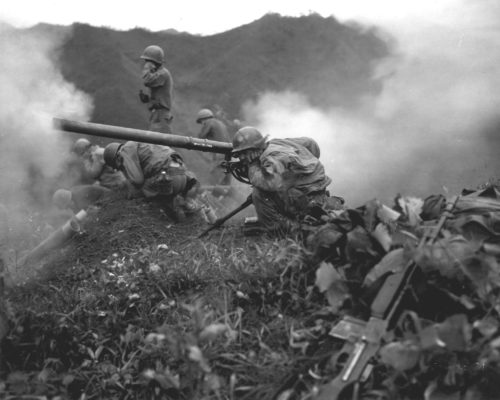
The Hot War
1945: World War II ends. American troops are stationed in the southern half of Korea, and Russian troops in the north. The dividing line between two zones is the 38th parallel.
1946: Russia sets up a puppet communist government in North Korea, headed by Kim Il-sung.
1947: American forces start withdrawing from South Korea, leaving the government in the hands of pro-American President Syngman Rhee.
1948: Soviet forces begin withdrawing from North Korea. North and South Korea’s governments both claim sovereignty over the entire country.
1950:
- With Soviet backing, North Korea crosses the 38th parallel to invade the south. It quickly pushes back South Korean forces, eventually capturing the South Korean capital of Seoul.
- South Korean President Syngman Rhee responds to the invasion by rounding up any political opponents in South Korea. His forces executed more than 100,000 South Koreans during the “Summer of Terror.”
- President Truman orders American troops to South Korea. The United Nations also sends forces to defend South Korean autonomy.
- After a long retreat, Americans and South Koreans finally halt the North Korean advance.
- In August, General MacArthur achieves a decisive victory by landing troops at Inchon, close to the 38th parallel. U.S. troops cut North Korea troops’ supply lines, forcing them into a rapid retreat northward. Americans soon retake South Korea. President Truman authorizes MacArthur to cross the 38th parallel and pursue the fleeing North Koreans unless he meets opposition by Chinese or Russian troops. American troops enter the North Korean capital, Pyongyang.
- Chinese troops cross their border into North Korea and attack South Korean troops. The Chinese push the Americans and South Koreans back toward the 38th parallel.
1951: The armies reach a stalemate north of the 38th parallel. The United Nations calls for negotiations by the four participants — North and South Korea, China, and America — to end the conflict. Meanwhile the shooting continues with heavy losses on both sides.
The Cold War

1952: Dwight Eisenhower wins the presidency by promising to secure an honorable truce in Korea.
1953: Representatives of all four nations agree to an armistice that recognizes North and South Korea. Representatives meet at Panmunjom, on the border between North and South Korea, for talks to reach a final, permanent peace treaty, but negotiations quickly break down.
1954: A meeting between the U.S. and China to resolve the Korean conflict also fails to reach a resolution. Talks at Panmunjom continue to this day.
1968: North Korea captures a U.S. naval intelligence ship it claims was in its territorial waters. Negotiations eventually lead to the crew’s release.
1985: North Korea joins the Nuclear Non-Proliferation Treaty, which prevents it from developing nuclear weapons.
1986: North Korea starts up a nuclear reactor capable of making weapons-grade material.
1993: The International Atomic Energy Agency demands that North Korea allow inspectors into the country to examine storage sites of nuclear waste.
1994: North Korea agrees to halt its nuclear program in return for oil and nuclear technology. Kim Il-sung dies and is succeeded by Kim Jong-il.
1996: An estimated three million North Koreans starve to death, the result of floods, drought, and government mismanagement. North Korea masses thousands of troops in the demilitarized zone near the 38th parallel.
1998: North Korea launches a rocket that travels beyond Japan, farther than a North Korean missile has ever reached.
2000: Kim Jong-il and South Korean President Kim Dae-jung agree at a summit to renew negotiations.
2002: President George W. Bush calls North Korea a part of the “axis of evil,” which includes Iran and Iraq, all of which, Bush claims, are building weapons of mass destruction. South Korea, Japan, and the U.S. stop all oil exports to North Korea after learning that the North had resumed its nuclear weapons program.
2003: After years of threatening to leave the Nuclear Non-Proliferation Treaty, North Korea finally ends its agreement to cease production of nuclear weapons.
2005: North Korea publicly declares it has developed its own nuclear arsenal.
2006: North Korea fires a new missile said to be capable of reaching the U.S. It fails shortly after takeoff. North Korea begins illegal underground testing of nuclear weapons. The United Nations responds with economic and commercial sanctions.
2007: North Korea closes down its main nuclear reactor in return for foreign aid. South Korea sends $50 million for flood relief.
2009: North Korea terminates all military and political agreements with South Korea. It resumes its nuclear weapons program, conducting underground tests and launching another long-range rocket.
2010: An American scientist is shown a secret uranium-enriching facility in North Korea.
2011: Kim Jong-il dies and is succeeded by Kim Jong-un.
2012: Another long-range rocket test fails, but the government announces it now has missiles that will reach America.
2013: A third underground nuclear test by North Korea brings new UN sanctions. China, North Korea’s only ally, stops the export of any items that will help North Korea build nuclear, chemical, or biological weapons.
2014: North Korea launches two medium-range missiles. They agree to resume talks with South Korea. North Korea and the U.S. accuse each other of cyber attacks.
2015: After conducting its fifth underground nuclear test, North Korea is hit with United Nations sanctions that will cost the country $800 million.
2016: North Korea claims it has completed tests of its first hydrogen bomb, which is doubted by experts.
2017: North Korea announces it is in the final stages of developing long-range missiles with nuclear capability. Kim Jong-un’s half-brother Kim Jong-nam is assassinated in Malaysia; investigators suspect North Korean involvement.
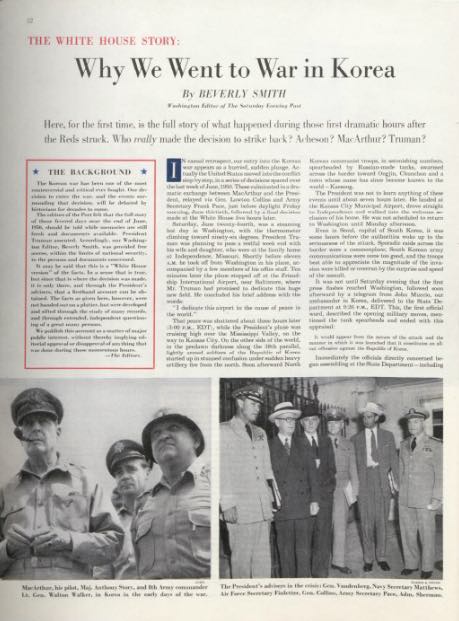
Featured image: Shutterstock
Pigeons
“A pair of pigeons moved in beneath your air conditioner a couple weeks ago,” Kate informed the divorce lawyer who lived in Apartment 4B. “They’ve been shitting into my yard ever since.”
4B had been out of town when the birds appeared in early June. Since then, pasty white globules had settled on the rough concrete and endured. Kate was all in favor of the blue jays and cardinals that sometimes paused on her rhododendron and co-opted the cats’ imaginations for hours. She lodged no complaints against the pigeons that passed through her airspace on their way someplace else. But the 12 feet of enclosed alleyway accessible only through her basement apartment were sacrosanct. She’d bought pots and planted ferns and impatiens. The pigeons laid all that to waste.
“You need to block the space under the AC,” Kate told her neighbor. “Spikes, a shoebox, anything.”
4B kept her hand on the doorknob as she surveyed Kate in the hall.
“No can do,” she said. “Even if I could get beneath the AC from inside my apartment, I wouldn’t want to. It’s nice, having birds.”
“Pigeons.”
“They picked me, you know? Out of all the window ledges in the city, they chose mine. I want them to feel at home.”
“Do you know how filthy the guano of a New York City pigeon is? It carries an incredible amount of disease. Wet, dry, doesn’t matter: It will make you sick. My family and I eat out there, Debra. I have cats.”
“I’m glad, Kate. I’d only ever seen you.”
Arden had arrived on Kate’s home front shortly before the pigeons. By virtue of dating Kate’s son, rather than desecrating Kate’s yard, her welcome had been warmer than the birds’.
“Any luck?” Arden asked from behind her laptop, as Kate returned downstairs.
“She thinks the pigeons have chosen her, like she’s some sort of Disney princess messiah. If she weren’t such an awful neighbor, I would feel sorry for her.”
That was the difference between Liam and his mother, Arden thought. Whereas Kate made her home in the realm of almosts, casting glances now and then to what might have been demanded of her had circumstances been more favorable, Liam inhabited the more grounded territory of what was. For better or worse, he took people as they came.
Arden hadn’t intended to live with Liam’s parents this year after college (with Kate; Liam’s dad was never not traveling for work). After taking her job in the city, she’d found a room in Crown Heights, four minutes from the subway, for $600 a month. It was right as she’d duct-taped the last of her boxes that the roommate she’d be replacing had called, frantic: Arden knew how she was going to move in with her girlfriend, right? Well, she’d caught that harlot in bed with the hairdresser — her hairdresser, if you could believe it! — and the long and the short of it was she needed her old room back quick.
Arden called friends and combed Craigslist. Everything was too expensive or raised too many red flags, like the guy in the walk-up who’d advertised for female roommates based on height and flexibility.
“Stay in my room,” Liam suggested one evening just before graduation. He’d be working in Boston for the summer; his childhood room in the city would be empty, just a resting-ground for his stuff. “At least until you find a place.”
“It’d be a monumental imposition on your parents.”
“It was my mom’s idea to ask you.”
So Arden’s boxes of clothes and books joined Liam’s bins of sports trophies and schoolwork in the second bedroom of the basement apartment on West 108th. At first their piles faced each other with the trepidation and interest of kids at a middle school dance. But their borders relaxed. Arden borrowed books and sweaters and lodged her own on Liam’s shelves.
She’d assumed she’d pay rent, but Kate wouldn’t hear of it and seemed frankly offended that Arden would mention it at all. Instead Arden helped around the house. On the way back from work, she picked up groceries according to the lists Kate left on the fridge. She watered the plants and scrubbed the plastic deck chairs of their winter grime. She fed Kate’s two elderly cats.
“We have a problem,” Kate said one morning as Arden was leaving for work. Arden ran through the lists of apartment dos-and-don’ts she might have transgressed but could think of nothing. “Come with me.”
Kate led Arden out to the yard and pointed up to the fourth-floor window ledge, over which a pair of gray tail feathers quivered.
“Pigeons,” Kate spat. “Using our yard as their personal shitbox. And 4B’s out of town.”
“Don’t tell me you, too, are now calling the neighbors by their apartment numbers,” Liam said, when Arden told him, in a phone call on her way home from work, of 4B’s refusal to evict the birds.
“Only as unwitting stage names.”
“It’s too bad, about the birds,” he said. “I was going to call my mom.”
“I’m sure she’d love to tell you about the pigeon saga.”
“No, I wanted to talk to her about something, but now’s probably not good.” He sighed. “You know how I lost my keys last week, so I stayed at my aunt’s?”
Arden did.
“Julia — my aunt — kept badgering me about it. I get that I have to be more careful. It’s on the list of Self-Improvements to Make Pronto, right up there with buying fewer water bottles and managing to parallel park. But she wouldn’t drop it.”
“What happened?”
“I wasn’t thinking. I said I got mugged.”
“Yikes. Where?”
“While I was running around the reservoir.”
“Harrowing! What else did the mugger take? Or was it muggers, plural?”
“It was just one guy, and he just took the keys. They were all I had with me, since I was running, you know?”
“Why would a mugger take just your keys?”
“People don’t look at what they’re taking, when they mug you.”
“Not when it’s a bag or a wallet, maybe, but if it’s just keys — why bother?”
“Okay, Julia didn’t ask that. She bought it, end of story. Except, not end of story, because now she’s telling people. I got a call from my junior-year roommate asking if I was all right.”
“It’s amazing your mom hasn’t heard.”
“I should probably call soon.”
“Which version will you give her — that you were mugged, or that you told Julia you were mugged?”
“Definitely that I was mugged. Have you met my mom?”
Arden had.
“Why didn’t you tell me about what happened with your aunt?”
Liam did not answer immediately.
“I guess I forgot about it,” he said. “I was embarrassed.”
Liam’s fib did not trouble Arden. They fibbed. Little things, like why they were running late or couldn’t make it. Tweaking things about themselves to try them on for size: telling the lady sitting next to them on the plane that they were physics Ph.D. students funding their studies by modeling nude for university art classes. Mendacity for sport or convenience, mendacity by omission, little white lies that harmed no one but greased the tracks of everyday life, and, forged together, forged Liam and Arden together, too.
But this mendacity was supposed to have existed in their shared interface with the world, never between them. The point was less the convenience it brought about in their concourse with other people, than that their equivocations could be shared, like sheets drawn up and over them to make them a realm; to make their one small room an everywhere. That was what had started it, or fanned it into life and flame — the unexpected pleasure of mythmaking together, the way they could knit their prevarications into a fiction that, presented to the real world and accredited, itself became a world.
The game had not involved playing each other, too.
“Are you there?” Liam asked.
“Sorry,” Arden said. “Bad reception. Obviously I’m on your team.”
When Arden got back to the apartment, Kate was unpacking a big cardboard box, looking pleased.
“Hello,” Arden said. She dropped her bag on the table by the door and took off her shoes. “Good-looking box.”
“Just you wait.”
White packing peanuts spilled over the edge as Kate drew out another box, whose angrily bright colors depicted a kid wielding a water gun erupting in frothy shoots.
“Fires up to 40 feet, which should just reach that window ledge. Those shitpots are toast.” Kate slid a razor along the box’s edges and pulled out the gun. “Of course, I’m not going to hurt them. Just spook them into reconsidering their abode.”
She filled the tank with cold water from the kitchen faucet, and together she and Arden went into the backyard. An old wind chime Liam had made in summer camp out of screws and latches jangled. No tail feathers hung over the ledge.
“Not a problem,” Kate said. “It’ll be good to get the hang of this thing before combat.” She hefted the gun up to her shoulder. “It’s really only suitable for situations like this, or for watering hard to reach plants.”
She pumped the tank, aimed, and shot. Water rocketed upwards. Just short of the ledge, the water slowed, paused, and hung for a moment, then cascaded back down.
Kate swore.
A pair of pert eyes flanking a stumpy beak peeked curiously over the ledge and down at the women. With new venom, Kate pumped the tank and fired. Again the water ascended, hesitated, and fountained back downward. The bird cocked its head. Kate tried to pump the gun a third time, but the tank was out of water. Kate lowered the gun in disgust and went back inside.
Arden sat down in the deck chair she’d scrubbed a few weeks earlier. If the problem was that Liam might have fudged things with her, well, surely so, too, had she. Not on purpose maybe, and certainly not maliciously, but still, in small ways, of course she had. Who knew what complete honesty could even be?
It was just that there had been questions — not even doubts, just twinges of disquiet — that Arden had dismissed, and that now, between her and Liam, probed for space. Had he really slept at Sid’s that night last year and not at Eloise’s, and had he really not gone through Arden’s emails and texts? Often Arden had urged Liam to temper the whoppers he’d been ready to tell. There had been no need, when he’d wanted to skip out on a work picnic, to blame his nonattendance on her having fallen down the stairs. His distortions tended to be more reckless, more erratic, more gratuitous than hers. He claimed that he only told lies in which he was comfortable being caught. But his comfort was expansive. And anyway Arden was not sure his guiding principle was as alleged.
“I need something really good,” Kate called through the window. “Like clam pasta. Will you be here for dinner?”
“I wish. I said I’d meet friends.”
“Which friends?”
“Gabrielle and Nora. You met them, I think. I lived with them senior year.”
“I liked them!” Kate hesitated. “You could always invite them over here, sometime, if you wanted. Even tonight. But you probably have plans.”
Kate looked at her shyly through the window bars.
“Your mom got a water gun,” Arden told Liam the next day, on the phone, from Liam’s room. Usually they talked on Arden’s way home from work, since cell phone reception, Wi-Fi, and privacy all were all hard to come by in Kate’s basement apartment. But Liam had been busy. Arden spoke softly from his bed.
“Oh yeah?”
“To disturb the pigeons, since Debra won’t evict them. It’s very plastic and bright.”
He laughed. “You’ve eaten the pomegranate seeds, Persephone. You are tied.”
“I even called 4B ‘Debra.’ What gave me away?”
“Just, you know: The cats. The pigeons. The impossible neighbors upstairs.”
“Must have happened last night, my pomegranate downfall. We really painted the town — by which I mean the garden, which, of course, is world enough. Gabbie and Nora came over. If, this morning, your mom’s head did not hurt as much as mine, I will be very impressed.”
“Hell of a time.”
“I wish you’d been there. What were you up to?”
“Eloise and I went to the new Thai place that opened.”
“What brings her to town?”
“She works here.”
“Oh.”
“What?”
“There’s no what.”
“It seems like there’s a what.”
“Not on my end, nope. Is there one on yours?”
“It just seems like you’re being thorny about Eloise. Which I get: It’s my fault for not being clearer with her, or warmer about you, when it was easier, or more fun, not to factor you in. But that’s background noise. It’s hardly the real thing.”
“What kind of unreal fun?”
Kate held a military-grade slingshot.
“It’s from the Army and Navy store,” she said. “State of the art. I wanted something guaranteed to reach four stories up. What I really wanted was one with a wrist-brace stabilizer, since those are supposed to be the best. But apparently you need a federal firearms license to buy one in New York.” She pulled a face. “That’s probably a good thing, given the people out there, but it’s too bad for little old me. This is the most powerful one they’d sell me. Isn’t it beautiful?”
Arden tugged the sprawling strands of her attention from her conversation with Liam and tried to see the slingshot through Kate’s happy eyes. Its pistol grip branched into sleek steel arms, from which an elastic band cradled a launching pouch. The steel shots were cold and heavy in Arden’s hand. Altogether it looked like an answer — elegant as an equation, and Kate’s to command.
“You’ve upped your game, Elmer Fudd. Those birds’ll have to keep up.”
“This game is mine,” Kate said. “Anyway, I’m still only going to frighten them — a nice little ping against the air conditioner, a nice little whoosh through their tail feathers. They’ll get the message, all right.”
“They’ll definitely get some message.”
Kate glanced at Arden. The tenderness with which she had considered the slingshot became something that Arden did not recognize.
“You know,” said Kate, once they were outside, “Liam’s had a sheltered life. His father and I didn’t. We wanted to make things good for him.”
“He’s a lucky kid.” Kate took a steel shot from her pocket.
“It might come as a surprise to him, but the room in which you’ve been staying isn’t his. He has no jurisdiction over that space. It’s mine.” She tucked the steel shot in the pouch. “Who stays there is, and always will be, my decision.”
“Of course.”
“I say this,” Kate continued, raising the slingshot, “because I don’t like liars, and I don’t like cheats. Liam’s father, as I imagine you know, has been both.” She adjusted her aim. “I heard you on the phone earlier. Were you going to tell me you two broke up? Or, as I gather my son suggested, were you going to wait until you’d found somewhere to go?”
With a sharp snap of elastic, the steel shot catapulted up and hit the bricks just left of the window. It fell easily, gracefully, and with the relief of a return.
“I should have said something immediately. I’m sorry. I can leave right away.”
Kate handed the slingshot to Arden. “Avoid the window. We don’t want shattered glass, on top of the pigeon shit.”
The slingshot was light in Arden’s hands, and chilly, except in the hot imprint where Kate’s hand had been.
“I don’t understand.”
“I’d like you to stay, if you want to. As my guest, not Liam’s. Now load that shot.” A vision of the surprise that would color Liam’s face bloomed before Arden. She felt the shame he would have felt before his mother, had he known what Kate had heard. Arden loaded the shot.
“Atta girl.”
Arden peered up at the window ledge. She would have liked to see the home the birds had made and that she was being asked to break.
A beak emerged over the window ledge. The pigeon raised its head.
“I’ve never used a slingshot. I could hit the bird.”
“You could,” Kate said. “But you won’t.”
Arden pulled the elastic back and squinted at the window ledge. If she hit the bricks, as Kate had, Kate couldn’t complain. She aimed for a brick just left of the air conditioner and released the shot.
It swerved to the right and struck the air conditioner square in the middle, producing, as Kate had predicted, a resounding ping. With a sharp shuffling of feathers, both birds erupted from their perch, screeching their alarm. They circled around the patch of sky above the yard. Arden and Kate watched them boomerang back toward the ledge.
“Shoot again,” Kate hissed.
“What?”
“The birds,” Kate said. “Just the tail feathers. Go!”
The slingshot felt easy in Arden’s hands. The movement was simple, the physics clear. The elastic cracked, and above her, the smaller bird folded and fell, unevenly, its unhurt wings pumping frantically to keep itself aloft.
Cover Gallery: Twentieth Century Nurses
On the anniversary of Florence Nightingale’s birth, we celebrate nurses everywhere. Although most of these Post covers limit nurses to the maternity ward, the reality of their jobs was much more complex, far-reaching, and demanding than these sunny snapshots reveal.
While much has changed (can you imagine your nurse helping you light your cigarette?), we can’t overestimate the enormous contribution that nurses have made to health care. Thank you for all that you do!
Charles A. MacLellan
February 15, 1913
John Hyde Phillips
December 14, 1940
Jon Whitcomb
October 23, 1943
Constantin Alajalov
November 2, 1946
Stevan Dohanos
October 22, 1949
George Hughes
December 25, 1954
Stevan Dohanos
September 3, 1955
Coby Whitmore
March 11, 1961
The First “Official” Kennedy Conspiracy: Fifty Years Ago
The internet will be abuzz with fresh conspiracy theories this fall.
On October 26, the National Archives is scheduled to release 3,600 classified files related to the assassination of President John Kennedy. Another 35,000 are awaiting review and release.
Only the president has authority to keep the files restricted beyond October.
According to a Politico article, staffers at the National Archives who have been sorting the papers say they’ve discovered no bombshell revelations in what they’ve seen.
A number of sealed files from the CIA and FBI were released in 1991, after the movie JFK renewed public fascination with Kennedy’s death. These documents indicated that Lee Harvey Oswald had visited the Cuban embassy in Mexico City in 1963 and talked openly of killing the president. One expert suggests the remaining files were locked away to protect the agents who failed to apprehend Oswald when they learned of his plans.
Americans of 1963 would probably be surprised to hear that the death of their president would still be topic of heated debate 54 years later. In those days, there was little talk of conspiracies and multiple gunmen. In 1967, only 36 percent of Americans believed Oswald didn’t act alone.
But that same year, New Orleans District Attorney Jim Garrison announced that Kennedy’s murder was the result of a conspiracy. “My staff and I solved the assassination weeks ago,” he claimed.
Reporters swarmed to New Orleans to get the story from Garrison. He turned down most requests for interviews but made time for Post reporter James Phelan. Garrison told Phelan “the whole incredible story,” recounted in “Rush to Judgment in New Orleans” from the May 6, 1967, issue of the Post.
Garrison’s conspiracy theory rested on the testimony of a witness who had come forward, Perry Russo. Questioned under the influence of drugs “to refresh his memory,” Russo claimed to have seen three conspirators plotting to kill Kennedy: David Ferrie, Clay Shaw, and Lee Harvey Oswald.
Both Ferrie and Shaw denied such a meeting. Four days later, Ferrie died from a brain hemorrhage, which suggested, to some, that he’d been silenced.
In his article, Phelan seems skeptical of Garrison’s judgment and his witness’s reliability.
For example, Dave Ferrie, whom Phelan calls an “exotic loser,” is described by Garrison as “one of history’s most important individuals.”
Also, Garrison claimed the murder of the president was “the result of a homosexual conspiracy masterminded by Dave Ferrie” who wanted “the thrill of staging the perfect crime.” At this early stage, there is no mention of the CIA, Cubans, the Mafia, or any other possible conspirators.
Phelan saves his biggest misgivings for the end of his article.
He notes that Russo only remembered seeing the conspirators after he’d been coached to remember under drugs. Andrew Sciambra, Garrison’s assistant D.A., said no, Russo had remembered seeing the conspirators before, in the very first interview. Sciambra simply forgot to write it down.
“‘You made notes when you first talked to Russo,’ [Phelan] said. ‘Your original notes would show whether he mentioned an assassination plot.’
“Sciambra said he had burned his notes.”
In March 1967, Garrison charged Shaw with conspiracy to kill the president. The trial didn’t start until January 1969. By that time, Garrison had broadened the conspiracy to include the CIA, to whom Shaw had occasionally provided information about international business.
Three months after the trial began, the jury took less than an hour to acquit Shaw. To date, he remains the only person every brought to trial for Kennedy’s killing.
Of course, the matter did not end there. Until his death in 1992, Garrison persisted in his claim that a conspiracy killed President Kennedy.
His search has been taken up by a growing numbers of Americans who hunt for evidence of a conspiracy. Today, 70 percent of Americans believe Oswald did not act alone, according to a 2003 ABC News poll.
The release of several thousand files of official reports is unlikely to answer all conspiracy questions to everyone’s satisfaction, and will no doubt spawn many new theories.
Featured image: May 6, 1967, cover of The Saturday Evening Post, illustration by Fred Otnes (SEPS)