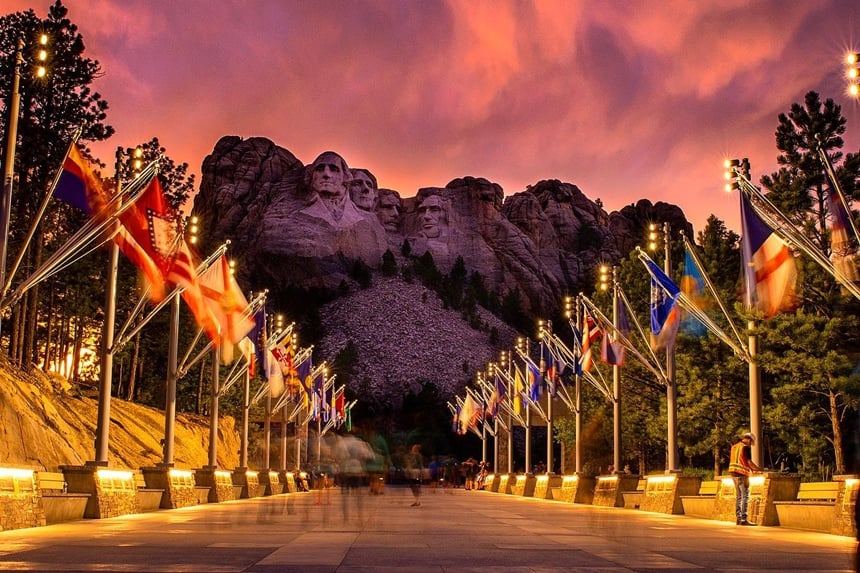
Every great American road trip has that one place everyone agrees you have to see.
For the Black Hills of South Dakota, it’s unquestionably Mount Rushmore.
You park the car, walk the Avenue of Flags, lift your face toward the 60-foot granite faces that have become shorthand for American history, snap the obligatory photo, watch the film about the construction, browse the gift shop, and maybe reward yourself with what is advertised as “Thomas Jefferson’s very own recipe” ice cream before jumping back in the car.
For generations of travelers, that’s been enough.
But the best thing about Mount Rushmore is that it gets people to the Black Hills in the first place. Once you’re there, you’ll find that there is more to the story.
As the United States celebrates its 250th birthday year, it’s worth remembering that America’s defining landmarks have always been about more than what’s on the surface. They’re starting points that help us discover the places that don’t always make the postcards but should.
Rapid City is often treated as “just” the gateway to Mount Rushmore National Memorial, but it tells a broader story about America and Americans: conservation, immigration, presidential history, and the enduring appeal of discovering what’s around the next bend in the road.
Mount Rushmore Immortalizes Four Presidents, but Rapid City Honors All
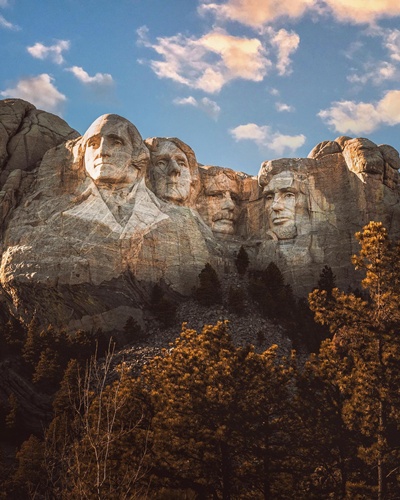
Sculptor Gutzon Borglum selected the presidents carved into Mount Rushmore to tell the story of the United States’ defining chapters at the time. Mount Rushmore was completed in 1941, shortly after Borglum’s death. Washington represented the country’s founding, Jefferson its westward expansion, Roosevelt its rise as a modern nation and commitment to conservation, and Lincoln its preservation of the Union during its greatest crisis to date.
But Rapid City offers a more immersive look into presidential history. Scattered throughout downtown are life-sized bronze statues of every U.S. president, an ongoing public art project known as the City of Presidents. Many of these statues show the human side of the presidents, giving a glimpse into the men behind the office. My favorite is the statue of Martin Van Buren sitting on a bench, where you can take a seat right next to him and ask him what life was like as our nation’s eighth president. He might not be the best-remembered leader, but he has a winning photo opp game, although taking selfie with a life-sized George Washington might run a close second.
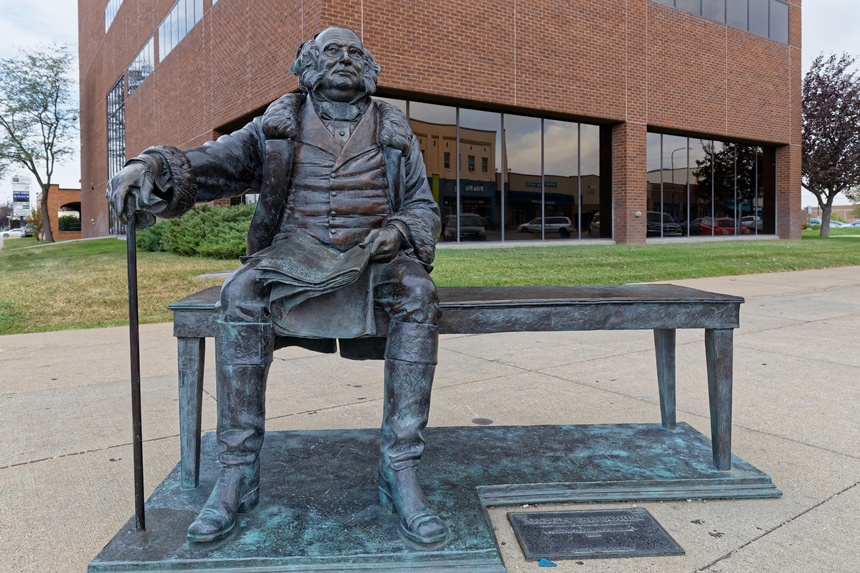
Unlike many monuments, these aren’t separated by gates or admission fees. They’re woven into everyday life and visitors only have to wander through downtown Rapid City to see them all. For those who want a deeper dive, Black Hills Adventure Tours offers a one-hour Historic Downtown Walking Tour that pairs the City of Presidents sculptures with the stories of Rapid City’s founding, architecture, and the city’s past. It’s a slice of Americana that doesn’t feel formal or structured and a history lesson that isn’t inside a museum.
Crazy Horse Memorial
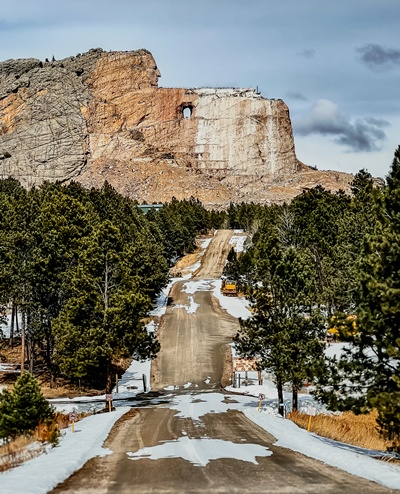
About 30 minutes from Mount Rushmore, the Crazy Horse Memorial offers visitors a different perspective on the history and heritage of the Black Hills. Begun in 1948 by sculptor Korczak Ziolkowski at the invitation of Lakota elder Henry Standing Bear, the mountain carving honors the Oglala Lakota leader Crazy Horse and remains a work in progress more than seven decades later.
The unfinished sculpture is the centerpiece; the memorial is also home to the Indian Museum of North America and the Native American Educational & Cultural Center, where exhibits explore the art, history, and cultures of Indigenous peoples. Whether you spend an hour or an afternoon, it’s a worthwhile stop that broadens the story of the Black Hills beyond the four presidents carved into nearby Mount Rushmore.
Lights, Camera, Black Hills!
The Black Hills have also become part of America’s cinematic landscape. The region has appeared in films ranging from North by Northwest and National Treasure: Book of Secrets to the Oscar-winning Dances with Wolves, whose sweeping prairie scenes helped introduce a new generation to South Dakota’s landscapes. Whether you’re a movie buff or not, there’s a good chance you’ve seen the Black Hills on screen long before you see them through your windshield.
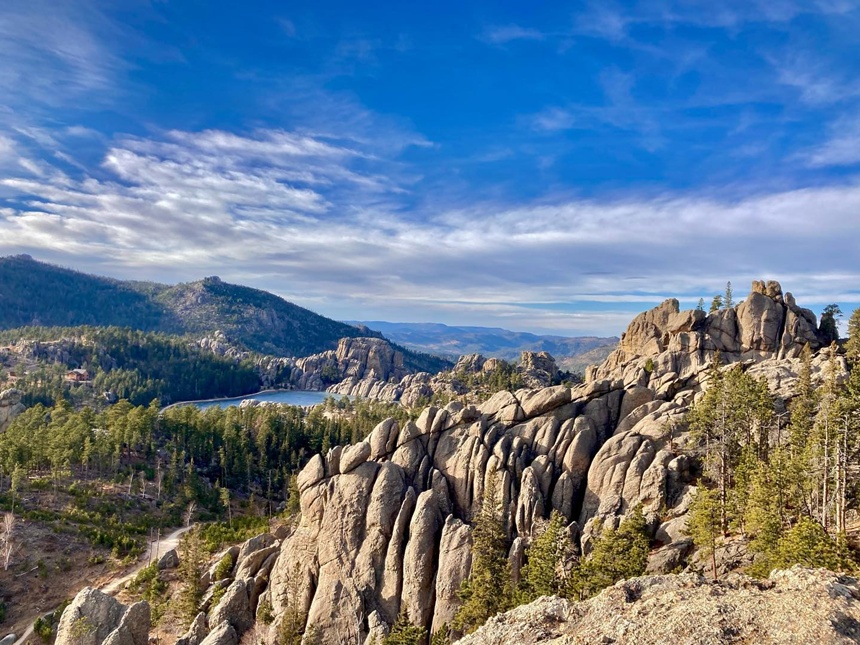
Movie fans can dig a little deeper into the area’s Hollywood connections at Fort Hays, home to the original Dances with Wolves film set. The former military outpost now offers tours, a museum, and film memorabilia, giving visitors a behind-the-scenes look at one of the movies most closely associated with the Black Hills.
Custer State Park Preserves One of America’s Conservation Success Stories
Located about 20 miles south of Rapid City and just beyond Mount Rushmore, Custer State Park is one of South Dakota’s signature attractions. The 71,000-acre park is known for its scenic drives, granite peaks, and one of the country’s largest publicly owned bison herds. Keep an eye out for the road signs, too. Colorful names like Lame Johnny Road are reminders that the Black Hills’ history includes its share of outlaws and frontier legends.
Wildlife Loop Road
Many visitors explore on their own via the 18-mile Wildlife Loop Road, where bison, pronghorn, prairie dogs, elk, and the park’s famously friendly burros often make appearances. The park also reflects an era when protecting America’s natural spaces became part of the national identity. The bison herd — now numbering well over a thousand animals — is among the largest publicly owned herds in the country.
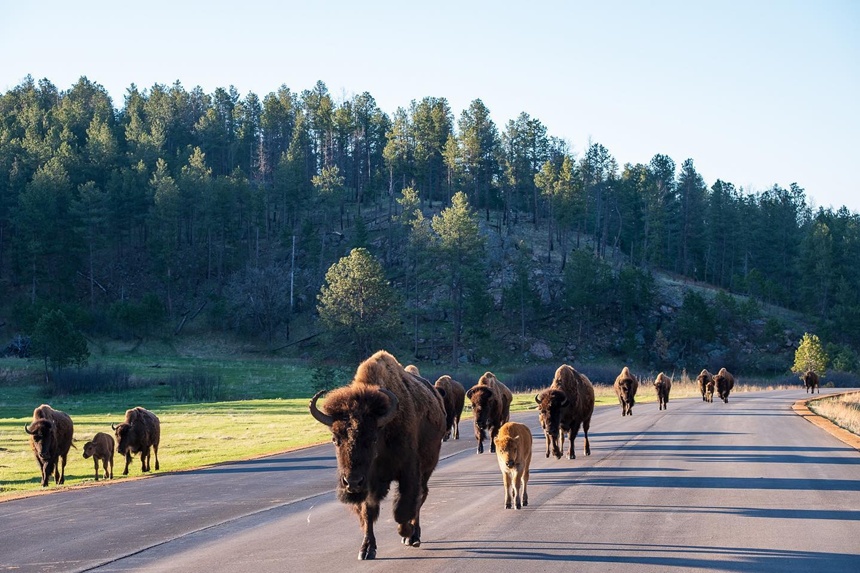
And, if South Dakota’s glorious summer weather tempts you to skip the driving and explore the park on foot, don’t. It’s generally not considered safe to traipse past buffalo herds. These are massive animals, and the sheer size of them can make it dangerous to be in close proximity outside the protection of a vehicle.
Buffalo Safari Jeep Tours
For anyone who wants to sit back and let someone else do the driving, booking a Buffalo Jeep Safari tour is the way to go. This pairs scenery with a knowledgeable guide who has the advantage of being connected to a radio network of other guides and rangers who are tracking the positions of the bison herds. If the herds happen not to be along the main park roads, the tour vehicle can access behind-the scenes areas where regular vehicles aren’t allowed to go.
You can also combine the safari with self-guided exploration. The two-hour tour is great for giving first-time visitors the lay of the land. Seeing the bison grazing just yards from the road feels both ordinary and extraordinary, exactly the kind of experience that reminds travelers why parks have become such a key part of the American road trip experience.
A New Deal Legacy
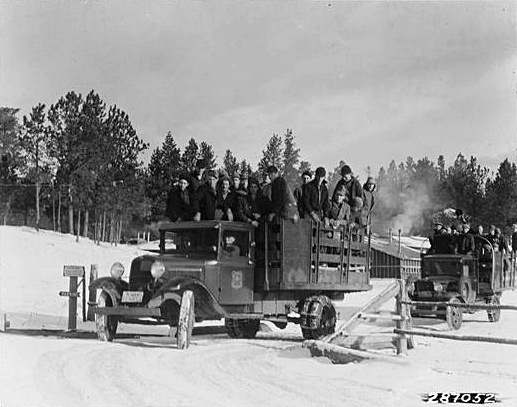
Long before interstate highways made family road trips commonplace, young Americans arrived in the Black Hills for a different purpose. During the Great Depression, thousands joined the Civilian Conservation Corps (CCC), one of President Franklin D. Roosevelt’s New Deal programs that put Americans to work building parks and public infrastructure. Across Custer State Park and the surrounding Black Hills, CCC crews built roads, hiking trails, campgrounds, picnic areas, and stone structures that visitors still use today.
Even if you don’t notice their handiwork right away, you’re likely driving on it, hiking it, or stopping to admire it. The CCC helped shape much of the visitor experience in the Black Hills, making this section of South Dakota more accessible to generations of travelers.
A Nod to South Dakota’s Scandinavian Heritage
One of Rapid City’s most unexpected attractions is Chapel in the Hills, a full-scale replica of Norway’s 12th-century Borgund Stave Church. Built in 1969 to honor the area’s Scandinavian heritage, the chapel is surrounded by walking paths, a small museum, and exhibits explaining Norwegian immigration to the Upper Midwest. It offers a different perspective on the immigrant communities that helped settle western South Dakota and the cultural influences they brought with them and it gives off a whimsical, storybook energy that is unlike anything else you’ll see in this area.
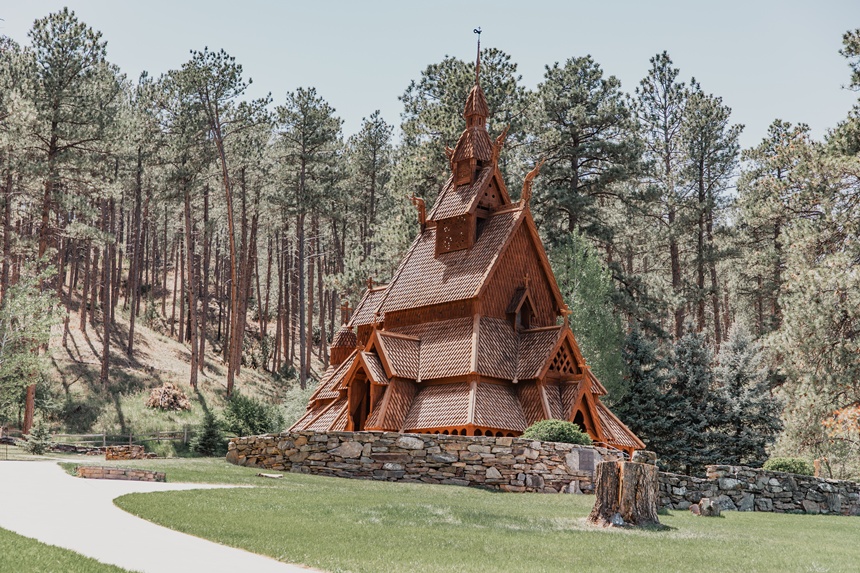
The Chapel in the Hills offers a free scavenger hunt for younger visitors, with a prize at the end. Although it’s designed for kids, it’s a fun way to quickly absorb all of the architectural details of the space.
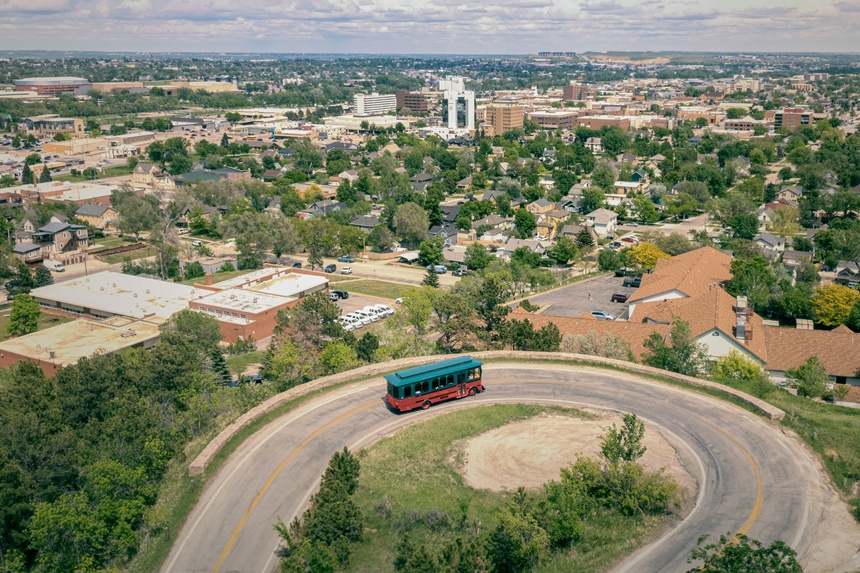
It’s also one of the stops on the City View Trolley Tour, which offers an easy introduction to Rapid City’s major attractions without having to navigate downtown traffic or parking. I 100 percent recommend the Trolley Tour as a way to orient yourself and to have a relaxed way to get a feel for where things are located in downtown Rapid City, although I don’t think the time allotted for the chapel is nearly enough to properly explore.
Roadside Traditions Are Alive and Well
Although Rapid City is filled with meaningful history, it also embraces the wonderfully quirky roadside attractions that have long been part of the American vacation. They’re reminders that not every memorable stop has to be iconic. Sometimes it’s the giant green dinosaur or the chance to hold a baby alligator that becomes the story everyone tells after the trip is over.
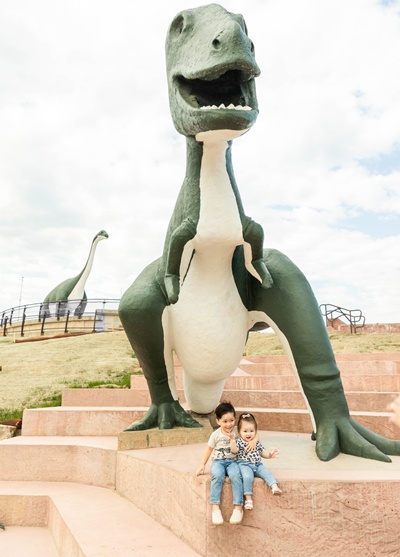
If your travel group includes younger kids, be prepared for these things to top the list of what’s remembered about a trip to South Dakota, especially in the short term. While my eight-year-old grandson might one day remember visiting Mount Rushmore with me, what he came home talking about was the giant T-Rex and holding an alligator, which isn’t what you typically associate with this part of the country.
Dinosaur Park
Rapid City’s Dinosaur Park has been delighting travelers since the 1930s, when Works Progress Administration crews built seven oversized concrete dinosaurs overlooking the city.
They’re unapologetically kitschy and do not represent natural history in this area whatsoever. There is no tie-in to paleontology or the site of an important discovery. They are simply larger-than-life green monsters you spot from a distance and decide to go in for a closer look. And that’s precisely what makes Dinosaur Park the sort of roadside attraction that has long defined American family vacations.
Bear Country USA
This drive-through wildlife park lets visitors drive through habitats filled with black bears, wolves, elk, bighorn sheep, and other North American wildlife. There’s a park and walk area where visitors can get an up-close look at the resident bear cubs, who are incredibly cute and playful.
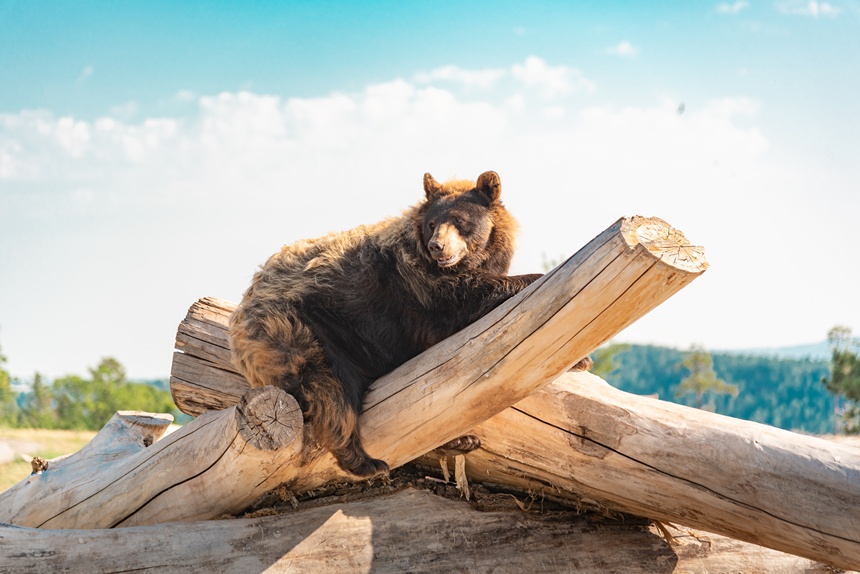
Most of the resident bears are there via wildlife agency rescue programs or were born on site.
Reptile Gardens
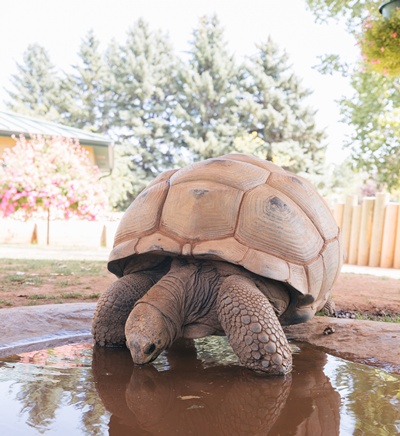
While a sign for something called “Reptile Gardens” might initially seem like the type of place that parents hope their kids don’t take notice of, it’s surprisingly worthy of a half or even a full-day stop. Part botanical garden, part animal park, Reptile Gardens is a lush, beautifully landscaped haven that happens to be home to one of the world’s largest collections of reptiles and a giant Aldabra tortoise that’s been greeting visitors for generations. The 120-year-old tortoise is impressively spry, and the venue is set up to allow visitors to get close enough to pet the turtles, who seem to be just fine with the presence of curious humans.
The don’t-skip attraction at Reptile Gardens is the educational, albeit slightly nerve-wracking, alligator show, which shows an animal handler within close proximity to the gators.
Keep Driving
None of these attractions would replace Mount Rushmore, but that’s the point. They don’t need to.
Mount Rushmore is unquestionably what brings people to this region, but everything else on this list is what builds memories. From presidential history and New Deal landmarks to wildlife safaris, immigrant heritage, and classic roadside attractions, Rapid City offers a reminder that America’s most memorable road trips have never been about just one stop.
Become a Saturday Evening Post member and enjoy unlimited access. Subscribe now

Comments
You are right on with this article. I’ll only add one more thing. It’s better if you can explore on a motorcycle.
I’m so sorry you only explored Rapid City and the southern Black Hills to Custer. (Did you notice Hill City as you drive through?). A few more miles south you could have found Hot Springs and their Mammoth Site. A short distance North, you could have explored the quiet ranching town of Sturgis that hosts the largest motorcycle rally in the world every August. You missed Spearfish and the beautiful scenery, wildlife, and incredible waterfalls of Spearfish Canyon, Deadwood and it’s rich history, the incredibly scenic 109-mile Mickelson Trail, and everything in between. Just east of Rapid City sits the awe-inspiring Badlands. You got a good start, but you should really come back and finish the article. Take a week (at least) to hike, ride bike, and drive more of Westen South Dakota. Then come back in the winter to snowmobile on 350 miles of groomed trails, downhill and cross-country ski, etc.
Great article about some of my favorite parts of the Black Hills (in my backyard). I’m 71 and LOVED the views from dinosaur park.
My other favorite spot is Spearfish Canyon Scenic Drive. Beautiful waterfalls and animals