This series by American studies professor Ben Railton explores the connections between America’s past and present.
Next week I begin a new semester of teaching, and with it my 22nd year at Fitchburg State University. I love and am very lucky to have this gig, but of course it has its challenges, many having to do with AI programs and use. There are various factors involved in the debates over AI in our classrooms and schools, but one pro-AI argument that gets made frequently — including by some of my FSU colleagues in other departments — is that AI is going to be part of the world and the workforce going forward, so it’s our job to help students learn about and navigate these evolving technologies.
While that argument might seem specific to the AI issue, I’d argue that it reflects a much more longstanding debate: the question of whether education is meant more to attain practical goals (such as preparation for the workforce) or to achieve philosophical ideals (such as helping young people become their best selves). There’s a long history of American activists who have made a compelling case for the philosophical side; here I’ll highlight a handful of reformers from the first half of the 20th century from whom we still have a great deal to learn in the 21st.
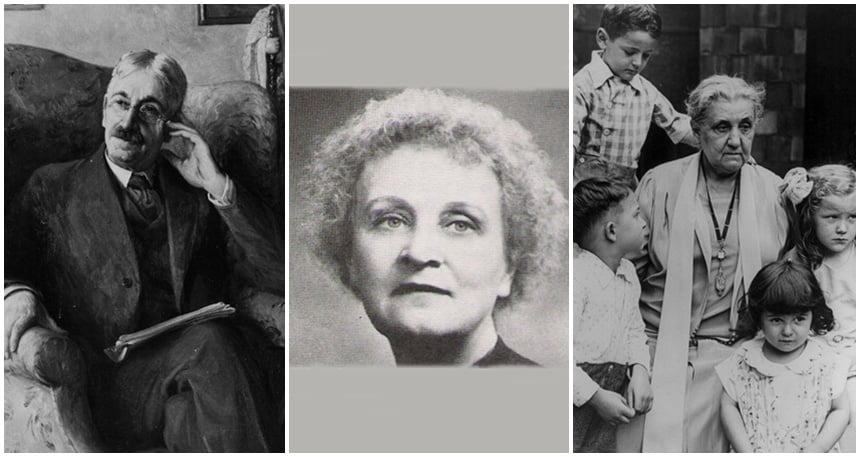
We have to start that list with John Dewey (1859-1952). In groundbreaking works like The Child and the Curriculum (1902) and Democracy and Education (1916), as well as in on-the-ground efforts with schools and teachers throughout his career, Dewey helped revolutionize many of the most basic concepts of education. Virtually everything we now associate with preschool and elementary school classrooms, from the use of movement and experiential practices to learning as a partnership between teacher and students was strongly influenced by Dewey’s ideas and works. Even more basically, in an era where universal public education was still a new idea and where many continued to insist that education was not necessary for every individual, Dewey argued with great force for the exact opposite position: Chapter One of Democracy and Education is entitled “Education as a Necessity of Life,” and for Dewey no individual or community (and certainly no nation) could ever succeed with a consistent educational presence that was meaningfully connected to each and every person.
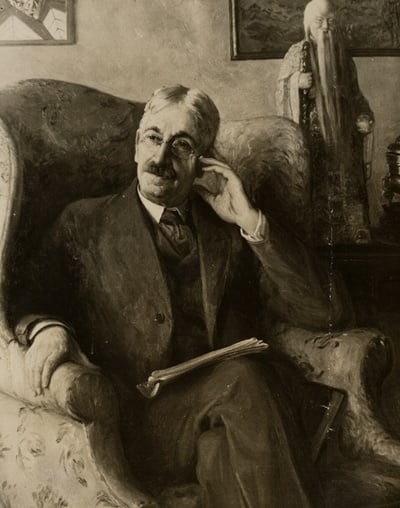
Dewey maintained relationships with many other prominent progressive reformers, and one with whom he exchanged letters for decades was Jane Addams (1860-1935). Addams is best known for founding the Settlement House movement that offered a wide range of supports for immigrants and their families, but she was also a dedicated education reformer (as well as a suffrage activist and pacifist, among other causes). In her 1909 book The Spirit of Youth and the City Streets, Addams argued for recreation programs, games and play, and other ways of protecting the best of childhood from urban, social, and capitalist forces that might mature children more quickly than would be ideal. And at Hull House, her famous Chicago Settlement house, Addams worked with multiple reformers who brought that emphasis on play and imagination to the fore: Neva Boyd, who founded the Recreational Training School at Hull House to emphasize the importance of games and play in children’s education and lives; and her protégé Viola Spolin, the inventor of the influential Theatre Games program, who returned to Hull House to carry forward these legacies.
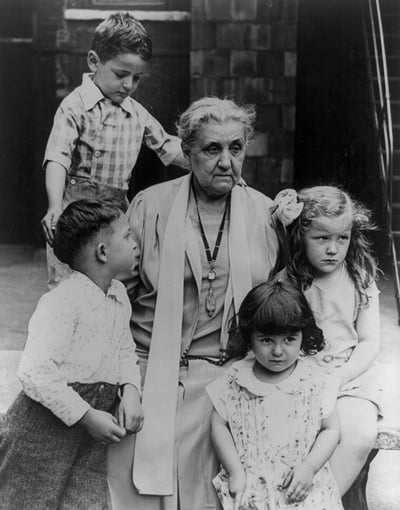
While Addams fought to make sure that immigrant Americans and their children could benefit from these Progressive education reforms, the groundbreaking Black educator and activist Dorothy Waring Howard (1893-1988) did the same for the African American community. In 1929, Howard founded the Garden of Children, one of America’s first Black nursery schools, in Washington, D.C. It’s impossible to overstate the importance of Howard’s insistence, in the depths of Jim Crow America, that every Black child deserved to experience the best of American education throughout their life. In this 2016 blog post for the Smithsonian’s National Museum of American History, intern Evelyn Mantegani writes about how a former Garden of Children student named Eunice saw a picture of the school on the museum’s Facebook page and reached out to share her memories and experiences. Eunice had a great deal to say about just how important the school was for these young Black children in segregated D.C. (and America), a perspective she distills with “It was something we all knew, that we were as good or better than anybody else.” But without doubt my favorite quote of hers is when Mantegani asks how she feels knowing that a photo of her nursery school is in a Smithsonian exhibit, and Eunice replies, “I think it’s great, but to me it’s no big deal. It should be in there.”
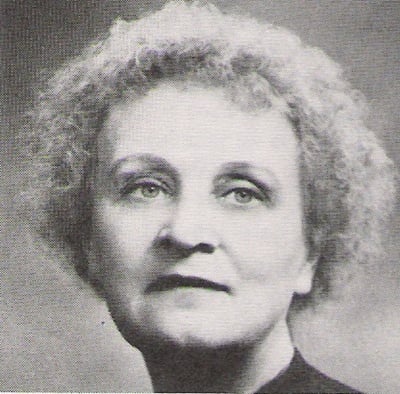
While those education reformers often emphasized the importance of universal and holistic early childhood education — a lesson we desperately still need to learn in this moment when programs like Head Start are on the chopping block — there were others who crucially extended these principles to older students. A compelling example is Helen Parkhurst (1886-1973), who studied with Maria Montessori in Italy and later served as the director of all Montessori schools in the U.S., but who likewise worked to bring her education philosophy of developing the “whole child” into the middle and high school arenas. She did so especially through her 1919 founding of the Dalton School, a K-12 college preparatory school in New York City that exemplified Parkhurst’s idea of the “Dalton Plan” (first created for Dalton High School in Massachusetts), which focused on balancing each student’s individual identity and needs with social and civic instruction designed to build communal ties. Among Dalton’s many advocates was Eleanor Roosevelt, who while First Lady worked to expand the school and plan to other educational institutions and American students.
Inspired by models like Parkhurst, other education advocates fought to bring this philosophy into additional secondary schools. At New Hampshire’s prestigious Phillips Exeter Academy, for example, the philanthropist Edward Harkness donated money to create the Harkness table method, a seminar-style pedagogy in which every student’s voice is given equal weight with that of the instructor (and which has since spread to many other institutions). In my own teaching, I’m dedicated to a student-centered pedagogy, one in which content (while important of course) is always secondary to helping each and every student develop and strengthen their voices, perspectives, identities, and best selves. The use of AI specifically, like an emphasis on “job training,” would minimize, if not indeed actively threaten, those individual elements. As we begin another school year, I hope we can learn from these education reformers who made the case instead for a philosophical vision of education and its aims and ideals.
Become a Saturday Evening Post member and enjoy unlimited access. Subscribe now

Comments
Thanks for the comment, Toby. Any individual column is definitely going to be more simplified than the complex realities, and I don’t want to suggest that more practical preparations for the future aren’t part of higher ed (especially in specific majors and programs). But I worry a lot about our over-emphasis on “workforce preparation,” and so want to make the case for the other end of that spectrum at least.
Ben
Interesting take. I’m not sure I agree, but it is an intriguing and informative viewpoint.