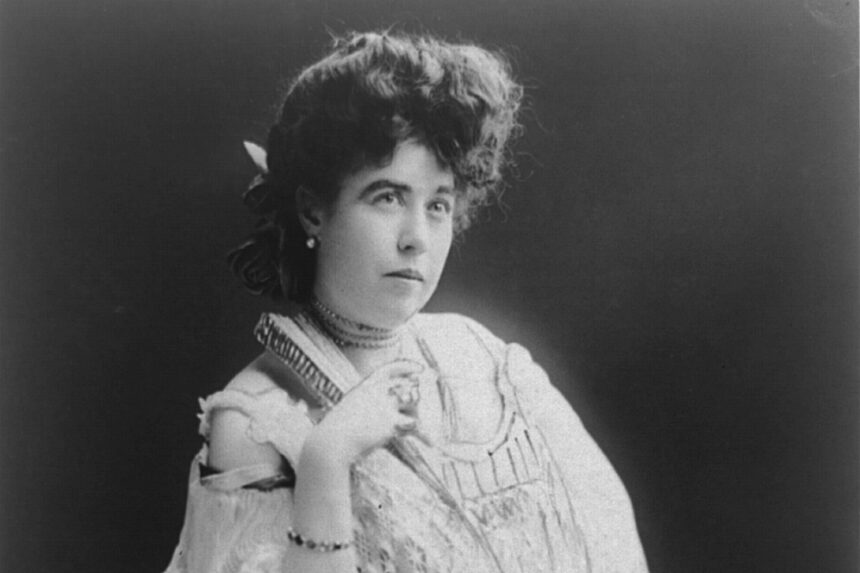
If anyone knows anything about Margaret “Molly” Brown, it’s probably the larger-than-life figure who has appeared on stage and screen for decades — most memorably portrayed by Kathy Bates in James Cameron’s 1997 blockbuster Titanic. Draped in furs and diamonds, brash and outspoken, this Molly Brown is a colorful Western outsider with a heart of gold — and, when disaster strikes, more courage than many of her first-class companions.
Yes, there’s a snippet of the real Margaret Brown in that character. But only a snippet.
“She was a wife, a traveler, a supporter, a philanthropist,” says Stephanie McGuire, curator of collections at Denver’s Molly Brown House Museum. “She was a writer, an actress, a linguist.”
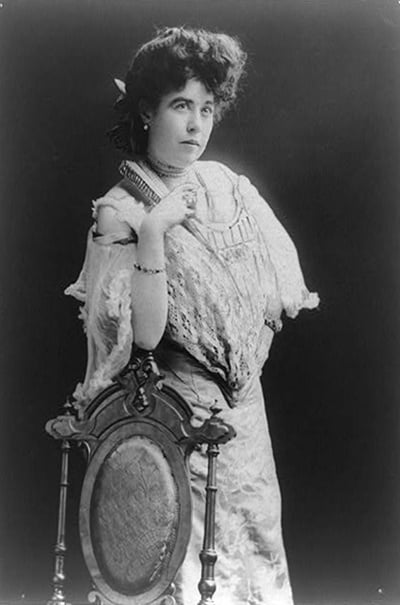
Above all, McGuire says, Brown refused to be confined by what society expected of her. Her story is far richer — and more remarkable — than the tall tales that followed in her wake.
Making Her Own Way
Margaret Tobin was born on July 18, 1867, in Hannibal, Missouri, to Irish Catholic parents who had immigrated to the United States. She grew up in a working-class family, left school as a teenager to work in a tobacco factory, and in 1886 followed family members west to Leadville, Colorado, a rough-and-tumble mining town high in the Rockies.
There she met James Joseph “J.J.” Brown, a self-taught mining engineer with a steady job, and they married September 1886. While raising their two children, Brown became involved in efforts to help struggling mining families and developed an interest in women’s suffrage.
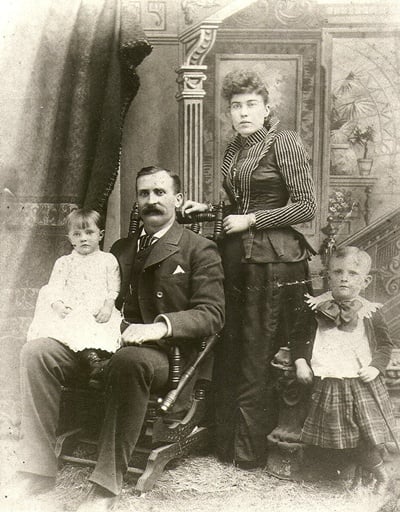
The Browns’ fortunes changed dramatically in 1893, when J.J., working for the Ibex Mining Corporation, helped devise a way to reach a rich gold deposit in the Little Jonny Mine. He was rewarded with company stock and a seat on the board.
“J.J. had been working — and dreaming — nearly twenty years to reach this point,” biographer Kristen Iversen writes in Molly Brown: Unraveling the Myth. “This was no overnight success.”
The family moved to Denver the following year, purchasing the Pennsylvania Street house that is now the Molly Brown House Museum. Brown embraced her new circumstances without abandoning her long-held values. “It isn’t who you are, nor what you have, but what you are that counts,” she told the in 1912.

She became a charter member of the Denver Woman’s Club, raised money for charitable institutions, and worked with Judge Ben Lindsey on efforts to protect impoverished and neglected children. She also traveled and studied widely. Her marriage, meanwhile, grew increasingly strained, and the Browns legally separated in 1909 but never divorced.
The Titanic
In spring 1912, while traveling in Europe, Brown learned her grandson was ill and booked passage home aboard the RMS Titanic. Four nights after boarding at Cherbourg, the ship struck an iceberg.
Brown, who said she had been reading in bed, went into the corridor to investigate. “I again looked out and saw a man whose face was blanched, his eyes protruding, wearing the look of a haunted creature,” she later recalled in the . “In an undertone [he] gasped: ‘Get your life-saver.’”
Brown’s own descriptions of what followed were notably devoid of heroics. “As I went on the deck [when] the boats were being lowered, I found many opportunities to be useful and I was glad to be,” she told the “The less you think of yourself at such times, the better off you are.”
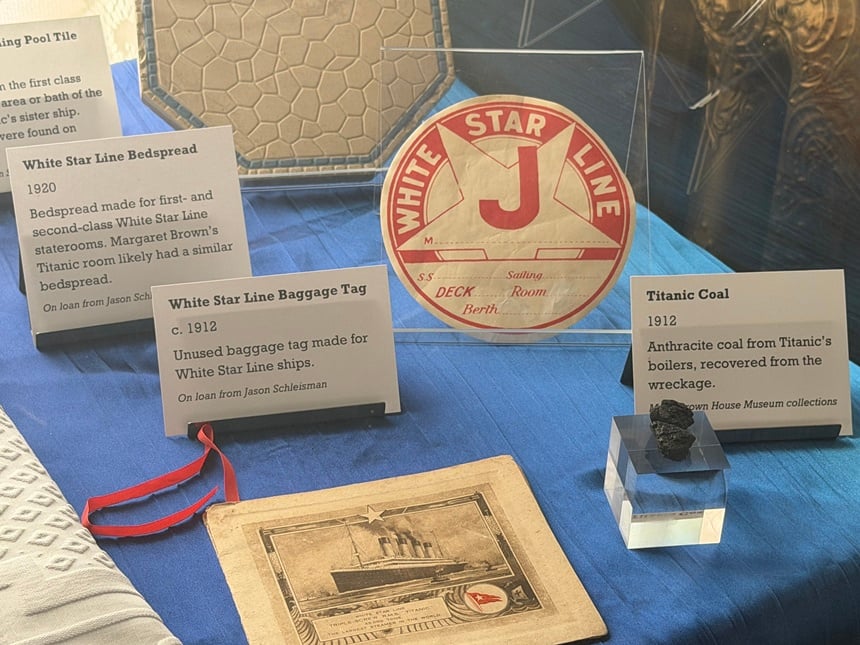
She helped other passengers reach the lifeboats before being placed aboard Lifeboat No. 6, where she clashed with quartermaster Robert Hichens, whom she described in the Newport Herald as “shivering like an aspen.” Brown challenged his pessimism and urged the women to row to keep warm; accounts also describe her pressing him to return toward the wreck in search of survivors.
But some of her most important work began after the survivors reached the RMS Carpathia.
“She had the status of being a first-class passenger, but she was seeing these immigrant survivors who had come over to start a new life and had lost everything,” McGuire says.
Brown helped organize a survivors’ committee and began raising money for those in greatest need before the rescue ship even reached New York. Her language skills, particularly in French and German, helped her communicate with immigrant survivors. By the time the rescue ship docked, the fund had grown “to the extent of $10,000,” Brown reported, citing the committee’s secretary.
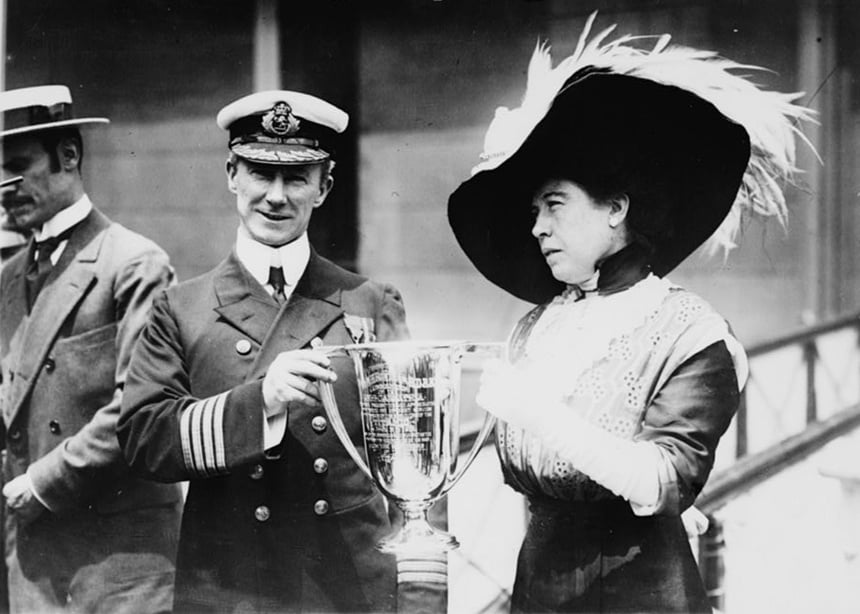
Brown resisted the heroic narrative already forming around her. “I simply did my duty as I saw it,” she told the Denver Times, according to Iversen. In a letter to her daughter Helen, she wrote: “I have had flowers, letters, telegrams — people until I am befuddled. They are petitioning Congress to give me a medal.”
More Than Unsinkable
The Titanic was hardly an epilogue. The disaster greatly enlarged Brown’s public profile.
“I am a daughter of adventure,” she told the Denver Post in 1923, an apt description of the life she continued to lead.
Already deeply involved in women’s suffrage, Brown announced a campaign for the U.S. Senate from Colorado in 1914 — six years before ratification of the 19th Amendment guaranteed women the right to vote nationwide.
“There will be no mincing matters — no pink tea policies,” she declared. “It will be a regular man’s kind of campaign, stump speaking, spread-eagle and all.”
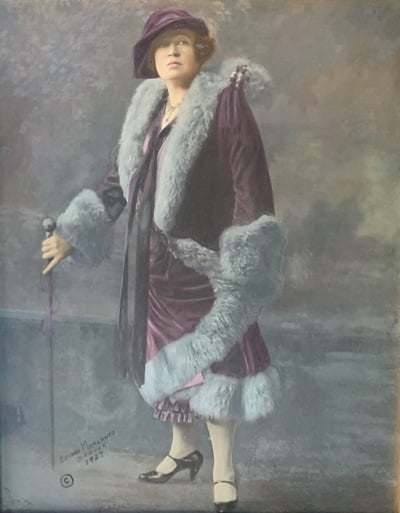
She ultimately withdrew but continued her activism, participating with Alva Vanderbilt Belmont in an international women’s-rights conference and supporting miners in the aftermath of Colorado’s Ludlow Massacre. During World War I, she worked on relief and reconstruction efforts in France; in 1932, France awarded her the Legion of Honor.
Beyond the Myth
After Brown’s death in 1932, fact increasingly became entangled with invention.
“The myth of Margaret as a bawdy, eccentric social outcast began with storyteller historians such as Gene Fowler and Caroline Bancroft,” Iversen writes, arguing that they freely amplified and invented details to create a more colorful story.
Bancroft produced the bestselling tourist booklet The Unsinkable Mrs. Brown, while wisecracking Denver Post reporter Gene Fowler devoted a chapter of Timberline to her. Fowler and Bancroft also helped popularize the fictionalized “Molly” persona — a name Brown herself never used.
The legend reached Broadway in the 1960 musical The Unsinkable Molly Brown, starring Tammy Grimes, and received the Hollywood treatment four years later in a film adaptation with Debbie Reynolds. Other fictionalized versions followed.
But reducing Margaret Brown to the “Unsinkable Molly Brown” misses the more interesting story: a working-class girl from Hannibal who acquired wealth and then devoted much of her money — and formidable energy — to children’s welfare, labor rights, women’s suffrage, disaster relief, and other causes.
“She was fiery. She was a huge personality,” McGuire says. “And she used that personality to make a difference in the world.”
Brown herself may have put it best. “I don’t know what my destiny is,” she told the Denver Post in 1922, “but it isn’t to be sunk in the sea or blown into the air.”
She was right. Surviving the Titanic was only one remarkable episode in a life full of them.
Become a Saturday Evening Post member and enjoy unlimited access. Subscribe now