Last spring, while researching No Mow May for this column, I noticed a pattern. Every time I explained the movement to friends and family, the next question was almost always the same: “So should we ‘leave the leaves’ too?”
It’s a fair question. Catchy environmental slogans spread awareness, spark curiosity, and encourage people to think differently about the landscapes around them. The downside is that they can also flatten complex ecological ideas into what sound like simple yes-or-no decisions.
I ran into this tension myself in March. My sister and I volunteered at a local park to pick up litter, but I worried the event might turn into a large-scale leaf cleanup in the name of “beautifying” Indianapolis for the Final Four tournament. Sure enough, online photos of the event showed volunteers filling trash bags with leaves rather than litter. I had a surprisingly emotional reaction to what most would consider ordinary yard work.
The truth behind leaving the leaves is that the answer is the same one we encountered with No Mow May: It depends.
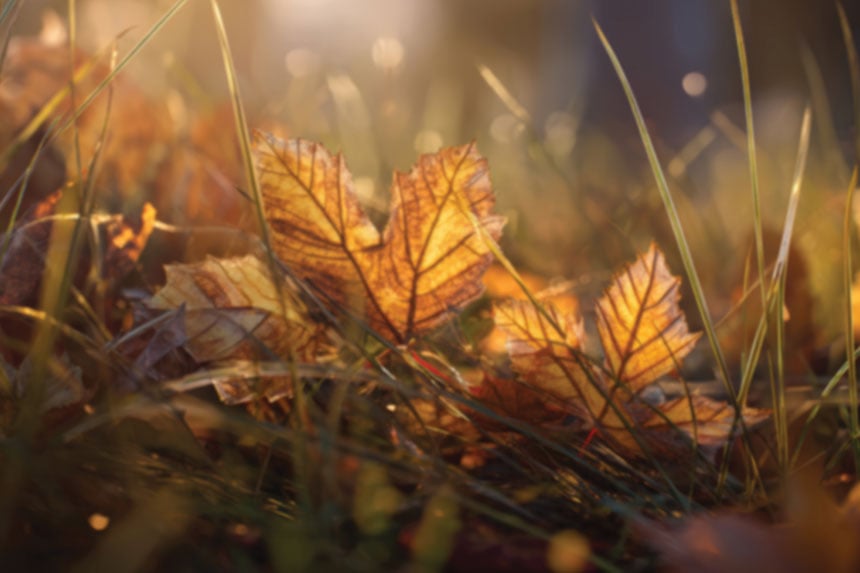
The Leave the Leaves movement grew from the recognition that fallen leaves are far more than seasonal clutter. They help protect soil, conserve moisture, and slowly return nutrients and organic matter to the ground as they decompose. Importantly, leaves also provide habitat for countless small creatures that help ecosystems function.
According to the Xerces Society, many insects spend part of their life cycle among fallen leaves. Fireflies, butterflies, moths, bees, beetles, and other pollinators use leaf litter as food, shelter, and overwintering habitat. Research published in American Entomologist this spring found insects from 24 families in bagged leaf litter in western New York, highlighting just how much life can be hidden within “yard waste.”
Insect activity in soil supports a healthy soil microbiome. Predators, including small mammals, amphibians, and birds, feed on insects. Leaving the leaves — and planting native plants around keystone tree species — could be how I hit 62 bird species on my backyard life list without much effort.
Despite these benefits, many Americans still remove leaves in fall, thanks mainly to the dated aesthetic of the “perfect” American lawn: a resource-greedy, ecologically barren monoculture of non-native grass. Homeowner associations that enforce stringent lawn rules further this standard.
You might assume I am Team Leave Every Leaf Where It Falls. Admittedly, my own reaction to a leaf blower is not entirely objective. Somewhere between the noise, the dust, and watching the Sisyphean spectacle of pushing leaves from one corner of a yard to another, I find myself contemplating whether we have perhaps lost the plot.
As with No Mow May, the goal isn’t necessarily to follow a slogan to the letter. Climate, site conditions, landscape goals, and even the ability of leaves to naturally decompose all play a role. Leaving every leaf may not be practical — or even beneficial — in every situation.
For homeowners who are not ready to abandon the rake altogether, small changes, such as leaving leaves beneath trees and shrubs or moving them into garden beds instead of bagging them, can help retain some ecological benefits of leaf litter.
Another option, leaf mulching, can return nutrients and organic matter to the soil more quickly. However, intact leaf litter provides better habitat for overwintering insects and other wildlife, and mulching can destroy insect life. In other words, chopping leaves to bits may be preferable to disposal, but it is not necessarily equivalent to leaving leaves undisturbed.
With water and fertilizer overuse causing real environmental problems, a more laissez-faire approach to lawn care can make a lot of sense. Before firing up the leaf blower this fall, it may be worth asking whether at least some of those leaves could stay right where nature intended.
Mary Margaret Moffett is an ecologist and Advanced Indiana Master Naturalist.
This article is featured in the September/October 2026 issue of The Saturday Evening Post.
Become a Saturday Evening Post member and enjoy unlimited access. Subscribe now