This series by American studies professor Ben Railton explores the connections between America’s past and present.
In our increasingly divided moment, historical celebrations can feel as if they fall into competing camps. Through that lens, cultural commemorations like Native American Heritage Month (celebrated throughout November) seemingly represent the progressive, inclusive historical vision of the American story that has come under recent attack as “woke,” while longstanding national holidays like Veterans Day (which began as the post-World War I Armistice Day and evolved into Veterans Day in the 1950s) seemingly represent a more “traditional” narrative of our shared history. These commemorative contrasts are concisely illustrated by the Trump administration’s emphasis on Columbus Day in direct response to celebrations of Indigenous Peoples’ Day.
There are many important ways to challenge such divisive dichotomies, but to my mind the most meaningful is this: They are entirely inaccurate to the realities of our collective histories. When it comes to these two November holidays, for example, the truth is that there is no American community that has more consistently and comprehensively served in our armed forces nor sacrificed in our wars than have Native Americans. And better remembering that enduring story can help us celebrate the Native American World War I veteran, performer, and orator who built on his wartime service to help all members of this American community gain full citizenship.
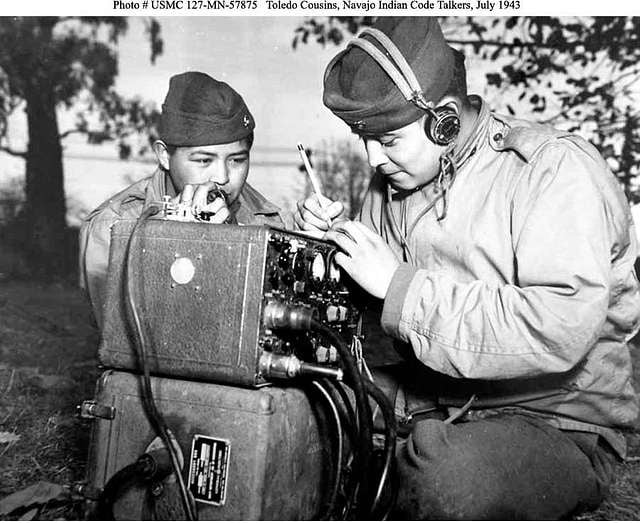
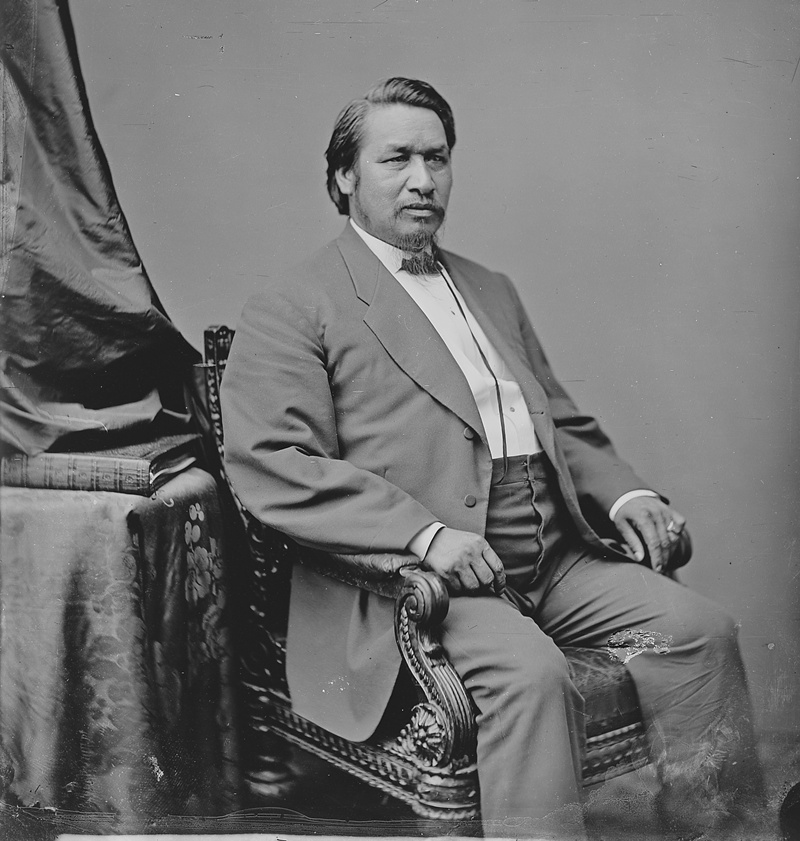
Native American military service became especially visible during World War II, as I’ve traced in past Considering History columns featuring both the Navajo code talkers and the iconic individual Ira Hayes. And in subsequent wars Native Americans have served at a considerably higher percentage of their overall population than any other American community, as seen with particular clarity in both the Vietnam War and the post-9/11 conflicts. But every U.S. military conflict back to the American Revolution and the War of 1812 has featured both significant collective contributions and striking individual service from Native Americans, as illustrated by the Civil War: more than 20,000 Native Americans served overall; and no individual U.S. Army officer was more significant than the Seneca Lt. Colonel Ely Parker, who drafted General Grant’s terms of surrender for General Lee at Appomattox.
World War I (or the Great War as it was known in its own time) was no exception: Nearly 12,000 Native American men volunteered for the U.S. military; and another 10,000 men and women joined the Red Cross to support those troops and the war effort. Yet at the time of that 1910s conflict, as I traced in this prior Considering History column, most of those Native American servicemen and -women, like most Native Americans period, were not able to become U.S. citizens. As the photographer and longtime indigenous ally Joseph K. Dixon put it after the war, “The Indian, though a man without a country,…threw himself into the struggle to help throttle the unthinkable tyranny of the Hun. The Indian helped to free Belgium, helped to free all the small nations, helped to give victory to the Stars and Stripes. The Indian went to France to help avenge the ravages of autocracy. Now, shall we not redeem ourselves by redeeming all the tribes?”
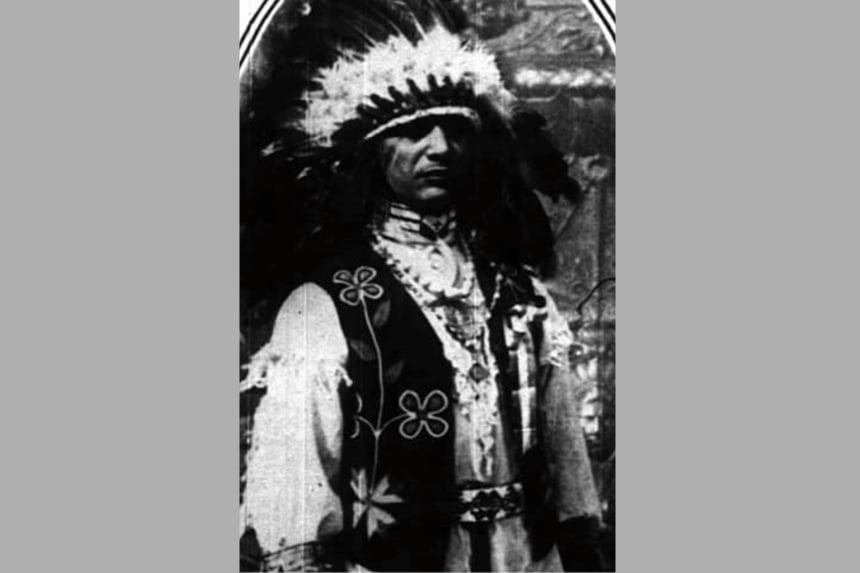
No individual did more to help answer that need and secure citizenship for all Native Americans than the performer, orator, and activist known as Nipo Strongheart (1891-1966). The details of his early life are somewhat mysterious, but Strongheart was apparently born in May 1891 on or near the Yakama Reservation in Washington State to a white father named George Mitchell and a Native American mother known as both Lenora Williams and Chi-Nach-Lut-Schu-Wah-Elks; he was christened George Mitchell Jr. but also called Strongheart (Chtu-Tum-Nah in Yakama). As a child he performed horseback stunts alongside his father in Buffalo Bill Cody’s Wild West Show, and when young Strongheart supposedly fainted during a show and came back to life, he received the nickname Nipo (roughly translated as “He lives!” in Yakama). When he came of age, Strongheart joined the U.S. military, serving first with the 5th Cavalry Regiment during the early 20th century “Border War” with Mexico and later with the 16th Infantry Regiment; after being wounded and discharged he found work as a technical advisor for and occasional actor in Western silent films such 1916’s Indiana.
When the U.S. entered World War I in April 1917, Strongheart found a unique way to bring together both military service and performance. In May he attempted to volunteer for Teddy Roosevelt’s famous new volunteer brigade (known as the Roosevelt Roster) as an “expert rider and sharpshooter,” but was rejected, likely due to his prior war injury. So Strongheart went to work instead for the YMCA War Work Council, and from 1917 to 1919 he toured both hundreds of soldiers’ camps and numerous other locations across the Eastern United States, using his oratorical skills to keep up morale, encourage enlistment, raise funds, and more. In the course of these two years of speeches, presented under the name “Chief Strongheart” and frequently reported in local newspapers, Strongheart began to make a case as well for both his fellow Native American servicepeople and for the broader cause of Native American citizenship. He also befriended white allies in the cause, including Congressman Melville Clyde Kelly and Bureau of Indian Affairs Commissioner Cato Sells.
The end of the war was only the beginning of Strongheart’s tours and efforts. From 1921 to 1924, amidst many other personal and professional activities and milestones (such as the birth of his first child), Strongheart was a consistent presence on the Chautauqua speaking circuit. Chautauqua fairs, which emerged as a successor to the 19th century’s prominent Lyceum movement, were known as “the most American thing in America,” and Strongheart used his Chautauqua speeches and performances to make an explicit case for Native Americans, past and present, as profoundly American. He also carried with him petitions for Indian citizenship, garnering thousands of signatures over these years of performances. Those petitions, like Strongheart’s own voice and advocacy, were instrumental in the final push for the Indian Citizenship Act, which passed Congress in May 1924 and was signed into law by President Coolidge on June 2nd.
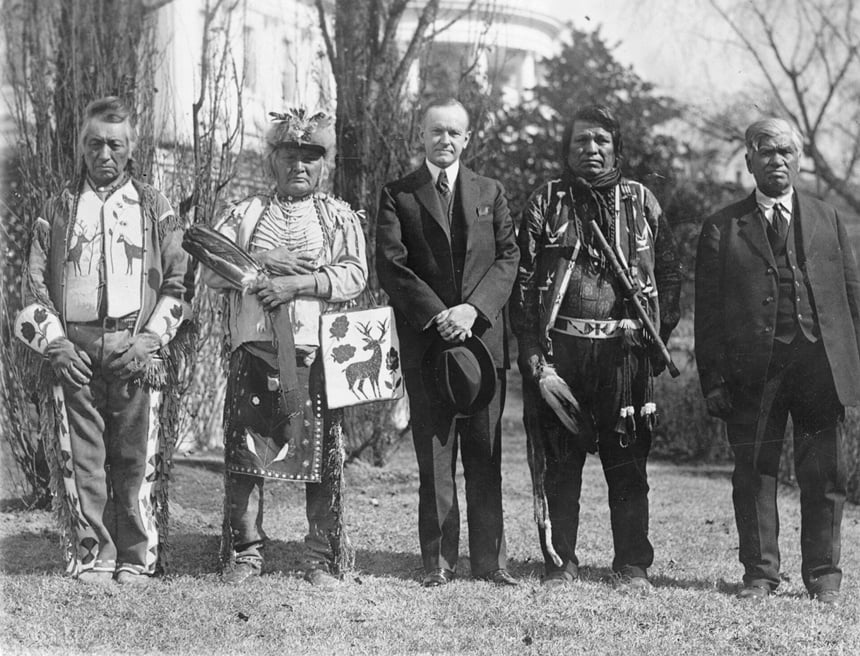
That federal law finally guaranteed U.S. citizenship for all Native Americans. But the deeper truth, as embodied by the countless Native Americans who have served in our armed forces and wars across our history, is that no American community has more consistently demonstrated the true meaning of citizenship. This November, for Native American Heritage Month and Veterans Day alike, let’s commemorate those foundational and enduring stories.
Become a Saturday Evening Post member and enjoy unlimited access. Subscribe now