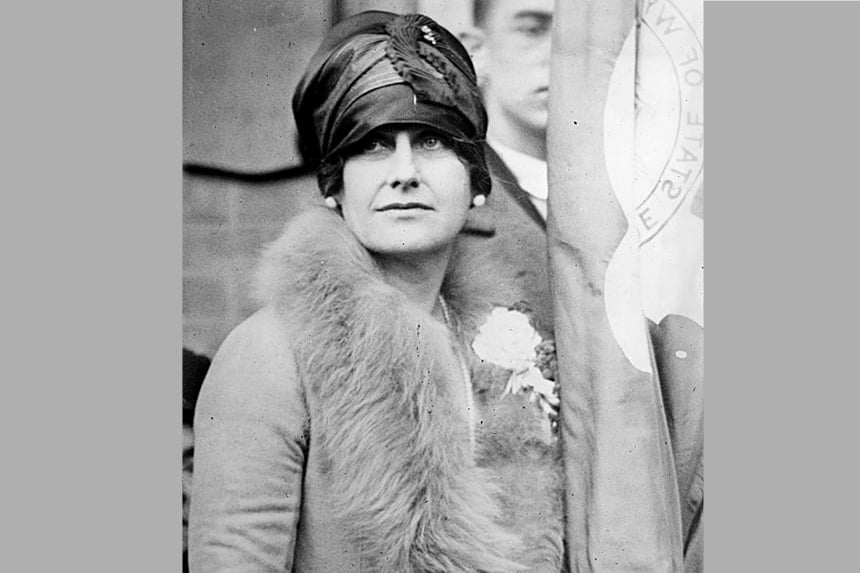
1924 was a record-breaking election, with more women elected to become state governors than ever before in the nation’s history. The 19th amendment, guaranteeing women the right to vote, had been ratified just four years earlier, but Wyoming women had already had that right since 1869. On November 4, 1924, Wyoming claimed another first: the first woman governor in the United States, Nellie Tayloe Ross.
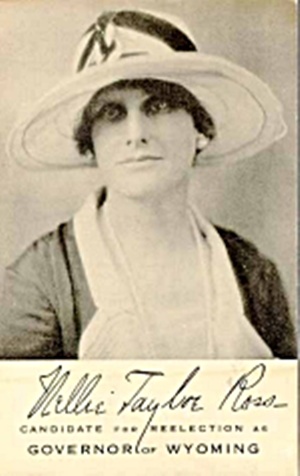
Nellie Tayloe Ross had no lifelong dream of political office and did not even campaign in her election. Becoming governor was, instead, a labor of love and a tribute to her late husband, Governor William Ross, who died partway through his term on October 2, 1924. On October 18, 1924, the Washington, D.C., Evening Star quoted Ross as saying “Of course, I am deeply interested in politics…and I think women are as well qualified to hold administrative places as are men, but I have never aspired to public office, and do so now only that I might carry to fruition the policies and plans of my husband.”
If elected, Ross also promised to serve in a way that would support women’s future political interests. “I will exert myself to the utmost in so conducting State affairs that it may never again be said women are unfit for executive office. I feel very keenly my responsibility toward all womanhood because of the position in which I may be placed.”
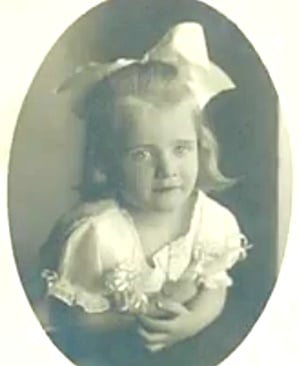
Nellie Tayloe was born on November 29, 1876, in St. Joseph, Missouri. As a child, her family had lived in Kansas and Nebraska, and she met her husband while visiting relatives in Tennessee. William Ross established his legal firm in Cheyenne at the turn of the 20th century because he had fallen in love with the region, and Nellie joined him there when they married in 1902. She gave birth to four boys; one died as an infant, but in 1924 her twins were in college and her youngest son was 12 years old. As election results rolled in, she told a reporter that her new job “will not mean in the least any tendency to the breaking up of our home life.”
Governor Nellie Ross took office on Monday, January 5, 1925. It was a somber inauguration, “an atmosphere that was hushed and reverent out of respect to the newly elected governor’s late husband.” Governor Ross spoke only briefly, arguing that she believed the circumstances of her election made a traditional inaugural address “not only unnecessary, but inappropriate.” Hers was not “the beginning of a new administration, but rather the resumption of that which was inaugurated in this chamber two years ago” when her husband stood in the same position.
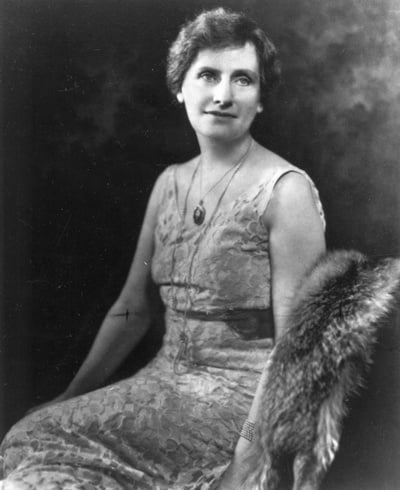
Nellie Ross was not the only woman elected governor in 1924: In Texas, Miriam “Ma” Ferguson put her name on the ballot after her husband was denied the opportunity. James “Pa” Ferguson had been governor of Texas from 1915 to 1917, then impeached, convicted, and removed from office, and under Texas law, barred from running for state office again. “Pa” Ferguson ran unsuccessfully for president in 1920 and for Senate in 1922, then fought to run for governor again. In June 2024, the Texas Supreme Court upheld the earlier decision to bar him from holding state office.
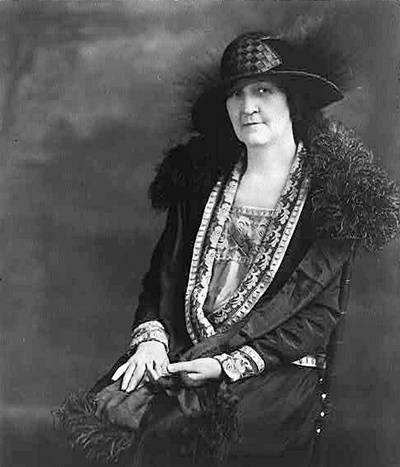
The next day, Miriam Ferguson filed as a candidate for governor. Unlike Ross, she campaigned actively, telling voters that she was running for office in part as a “rebuke” to the Texas Senate keeping her husband out of office.
Texas voters elected Ferguson as governor the same day Wyoming elected Nellie Ross, and the Washington, D.C., Evening Star readily offered a distinction between the two women: “Mrs. Miriam A. Ferguson Wants Only One Term to Vindicate Husband – Mrs. Nellie Tayloe Ross Would Prove Feminine Ability.” By mid-November speculation about Ferguson’s husband’s role began: “Way back in campaign days in Texas it was stated that if Ma Ferguson became governor her husband…would be the power behind the throne, would be the governor in everything but name, but since the election it is announced that Jim will be listened to if he wants to advise, just like any other citizen, but the governor will be governor,” according to the November 13, 1924, Leader-Enterprise and Press. Governor Ferguson took office several weeks after Governor Ross, making her officially the second American woman to become governor.
Ferguson ran for office as a candidate who would stand up to the Ku Klux Klan; in the primary, she had run against someone who was supported by the KKK. Once she took office, Ferguson signed legislation to ban masks, which was created with the KKK in mind. As governor, Ferguson gained a reputation for her willingness to pardon Texans convicted of crimes. During her two years in office, she pardoned more than 2,000 people.
In 1926, both women were up for reelection. After nearly two years in office, reporters had a lot to say about the candidates the second time around. The Thermopolis Independent in Wyoming argued, “If one wants to find encouragement from the participation of women in politics he studies Wyoming and Governor Ross; if he seeks despair from the same cause, he turns to Texas and Governor ‘Ma’ Ferguson.” The editors reported that Ferguson had let her husband “run the state.” In contrast, “Governor Nellie Tayloe Ross has been an unusually able governor.”
Governor Ferguson lost the primary election in Texas.
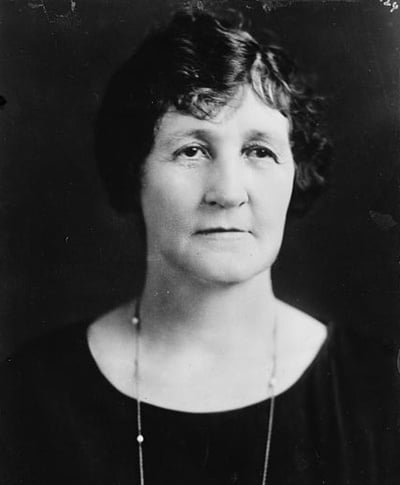
Journalist Mayme Ober Peak conducted an in-depth interview with Governor Ross in the summer of 1926 and proclaimed “She has measured up to a man in every way.” As a Democratic governor with a Republican-dominated legislature, Ross used dialogue to work together with legislators. The Wyoming attorney general told Peak, “In her woman’s way, Mrs. Ross has done more to shape legislation than any man who ever occupied the governor’s chair.”
Five days before the election, the Thermopolis Independent argued “Governor Ross…has actually DONE more for the state in two years than any other governor has done in four…Governor Nellie Tayloe Ross is the woman who made good. She deserves re-election!” As governor, she supported Prohibition enforcement, cut the budget, and provided loans to Wyoming citizens who worked in farming and ranching. Generally seen as a progressive governor, she worked to fight child labor and protect women workers. Other efforts included her work to get local-level government entities, like counties and school boards, to create budgets that would guide their own work. Years before the stock market crash, Ross also fought for ways to keep banks from going under in times of financial crisis.
But Governor Ross narrowly lost the election on November 2, 1926. An editorial from Powell Tribune tried to comfort her supporters. “Not a Defeat to Womanhood,” the headline proclaimed. “It was no blow to equal rights of the sexes when Nellie Ross was defeated for governor. It was simply a case wherein she and the Democratic ticket with whom she made the race proved not to be the popular choice, just as any man or any woman in any other state might meet with an election defeat.”
Former Governor Ross went on to give lectures and to write for a magazine. In 1928, delegates to the Democratic National Convention put her forward as Al Smith’s vice presidential nominee, although she failed to get enough votes to run on his ticket. She went on to serve the Democratic National Committee as vice chair and then as the director of its women’s division. Back in Texas, Miriam Ferguson ran for governor again in 1932 and won, serving until 1935.
In 1933, one month after taking office, President Franklin Roosevelt appointed Nellie Ross as director of the United States Mint. This appointment made Ross the first woman director of the U.S. Mint, a role she held for the next two decades. In that time, the U.S. Mint grew larger, particularly during World War II, when the Mint had to provide employees around the clock to support the war effort. Under Ross’s tenure, the gold depository at Fort Knox opened, along with a silver depository in New York and a new mint in San Francisco. During her time as director, the Mint began to manufacture zinc-coated steel pennies and changed their use of metals like copper and nickel to address wartime needs. When Ross retired in 1953, she was “regarded as having done an unusually good job during these last 20 years. She’s had as many compliments from Republicans on the House Appropriations Committee as Democrats,” according to the Evening Star.
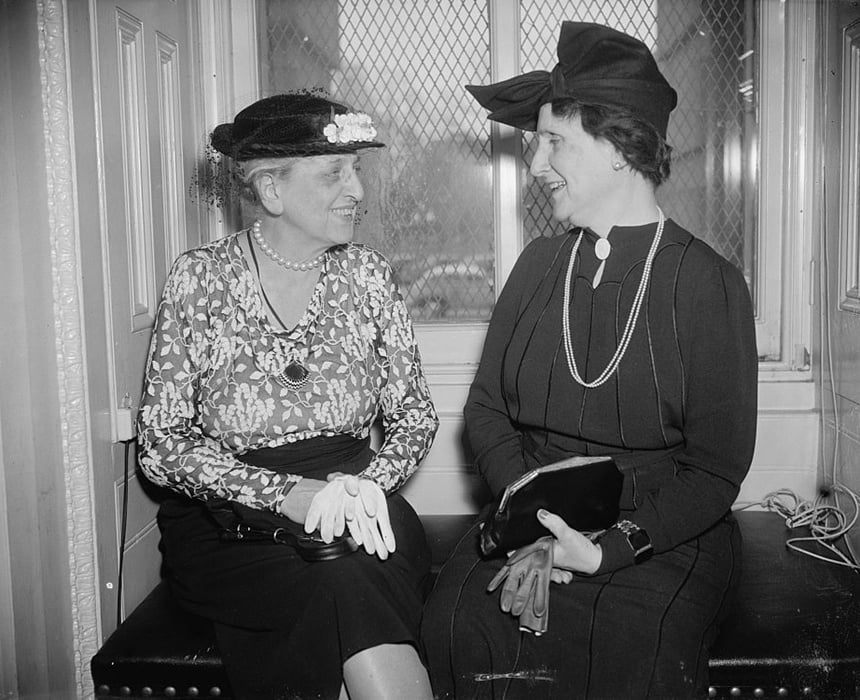
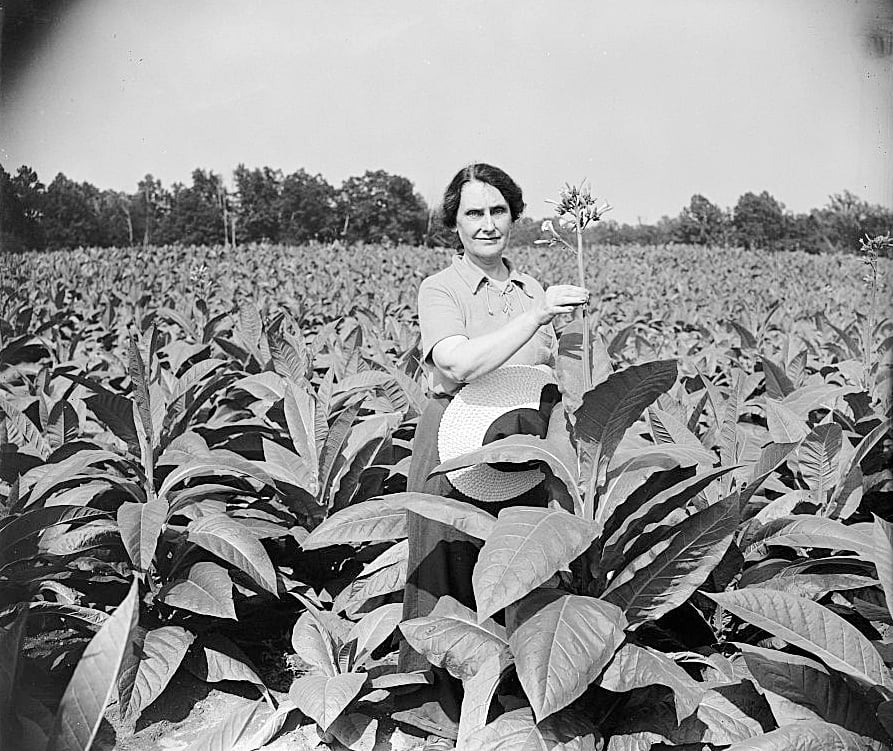
Ma Ferguson tried once more in 1940 to become governor, then stayed out of political life. She passed away in 1961. Nellie Tayloe Ross lived to be 101 years old, spending most of her later life traveling and at her home in Washington, D.C. When she died in 1977, there were once again just two women serving as governors, this time in Connecticut and Washington. One of them, Connecticut Democrat Ella Grasso, became the first woman to win a governorship without following a husband or family member into the office.
Become a Saturday Evening Post member and enjoy unlimited access. Subscribe now