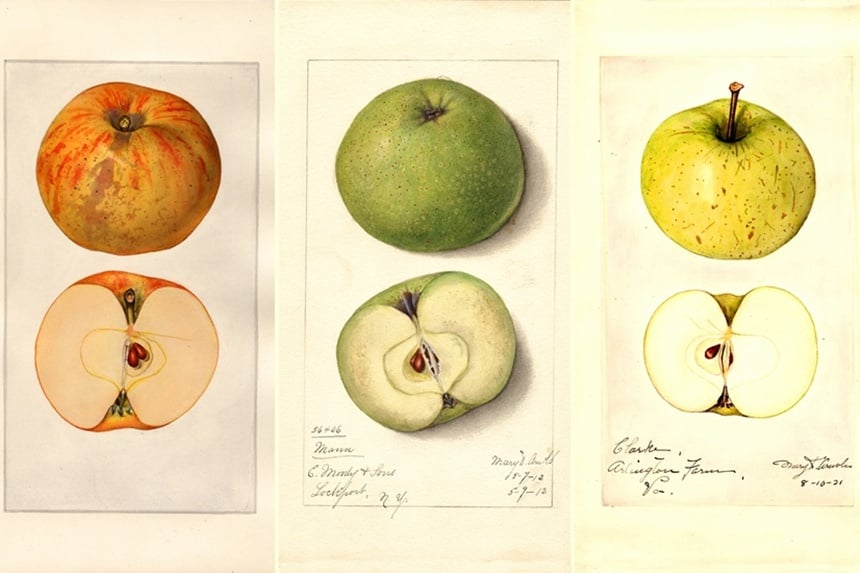
Move over, pumpkin spice: September has long belonged to apples, ripening on the trees and ready for the picking. In 1886, the pomologist of the United States, Henry E. Van Deman, proclaimed the apple the “best of all fruits” in his first annual “Report of the Pomologist” for the United States Department of Agriculture (USDA).
That year, the USDA was just 24 years old, and its new Pomological Division had been created to support the farmers of America, focusing on a crucial question: “What can science and the latest results of experience and information teach [the farmer] in the matter of adaptation of fruit trees to particular soils and climates?” Farmers responded readily to the support the new office promised and began sending specimens. Within a year, the Pomological Division had settled on a key method for its work, documenting the nation’s fruits scientifically through detailed illustrations. Until the division hired its first artist, William Henry Prestele, in 1887, “there was no one to make drawings of the fruits which were being daily received for study and comparison,” aside from the pomologist.
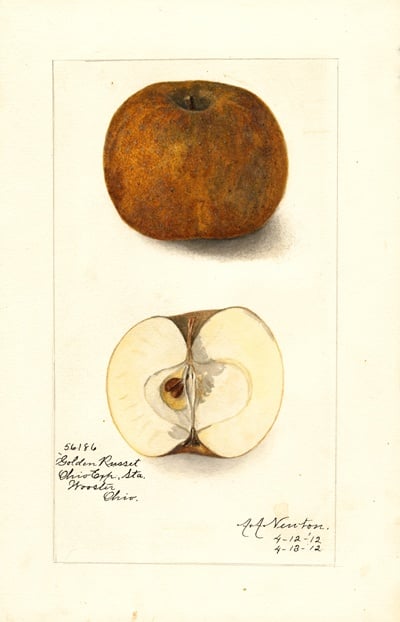
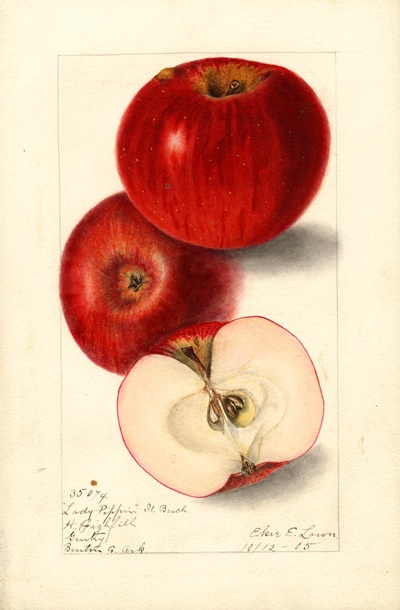
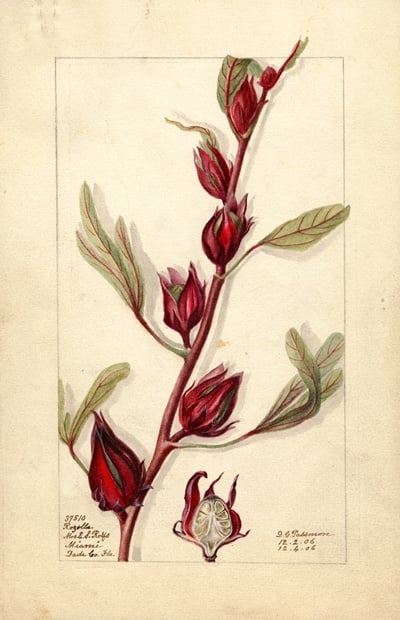
Five years later, Deborah Griscom Passmore became the first woman artist to join the division, just as they were in the process of preparing illustrations and models for the 1893 Columbian Exposition in Chicago. The office was busy creating wax models and illustrations of about 1,000 different specimens of fruit to be exhibited, including twenty models of one kind of apple. Passmore trained at Philadelphia’s School of Design and the Academy of Fine Arts, becoming an art teacher before she joined the USDA. Over the next two decades, Passmore produced more than 1,500 individual watercolor illustrations of fruits, from apples to pears and beyond.
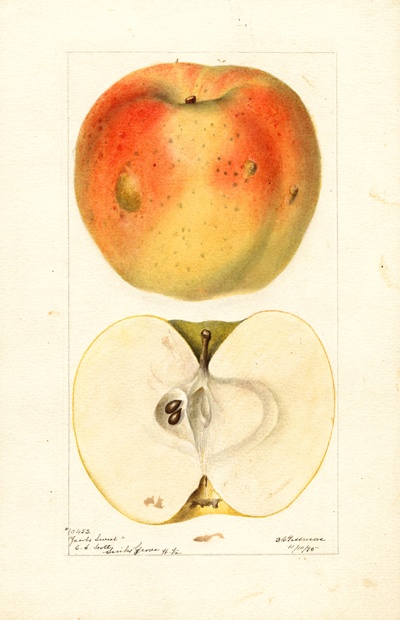
Women artists like Passmore would become some of the most prolific of the Pomological Division’s illustration team. Between 1886 and 1942, the Pomological Division compiled a library of 7,497 watercolors, in addition to 87 line drawings and 79 surviving wax models. Though they were a minority of the roughly 21 artists credited, women created well over half of the collection. Like Passmore, Amanda Newton and Mary Daisy Arnold each prepared more than 1,000 individual specimen images. Ellen Isham Schutt contributed over 700. Bertha Heiges created more than 600 items; Elsie Lower, more than 250; Roberta Cowing was an additional contributor.
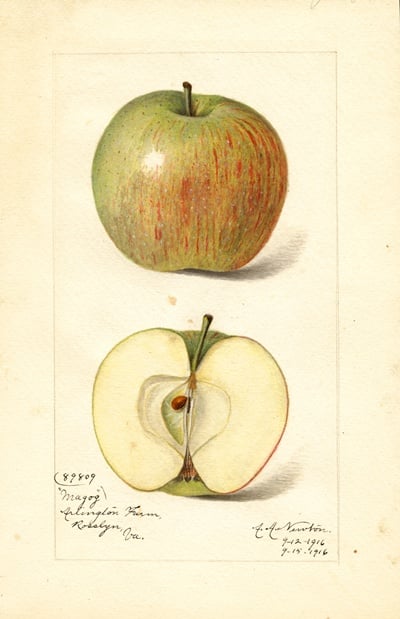
The work was meaningful, even if recognition was rare. In May 1915, the Washington Evening Star profiled Amanda Newton’s work making fruit models. By that point, she had been with the USDA for almost two decades and explained that their goal was to make each illustration “a perfect reproduction in form and color of what is before us. Every tint of fruit and leaf and twig must be exact to a tone.” Over the course of her career, she had been tasked with preparing items for a number of exhibitions, from Chicago to Atlanta, Paris, Omaha, and Buffalo, and beyond. She regretted that she could not show her interviewer one of her best models, “a particularly fine branch of apples I modeled not long ago from life. The fruit was of the York imperial variety and the spray was fully five feet long and contained twenty-six apples.”
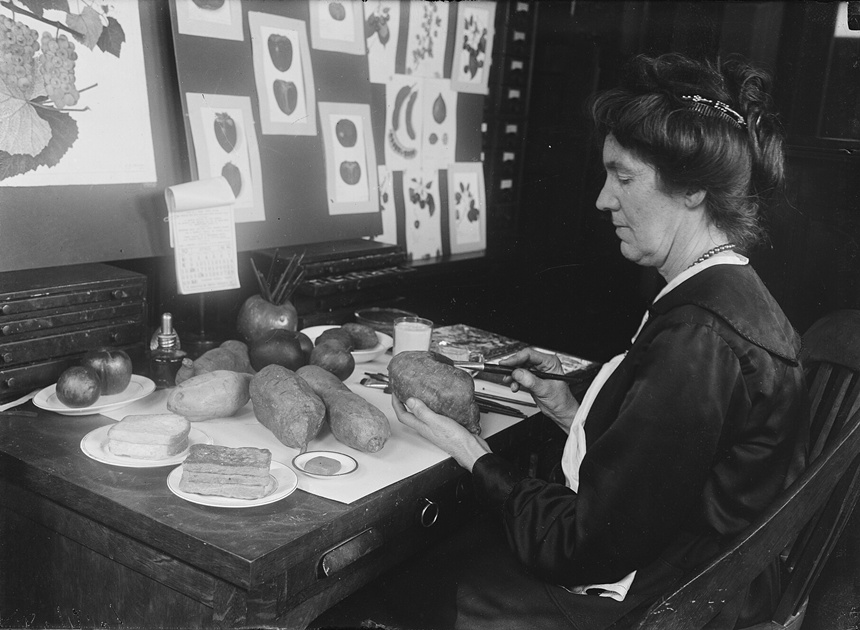
Another profile of her work in 1924 argued that “Old Mother Eve knew less about apples than does Miss Amanda Newton, [who] makes apples while you wait – makes them of wax and coloring matter, and makes them so perfect that her own mouth often waters when she beholds her handiwork.” By that time, Newton estimated, she had made “an apple a day, or its equivalent in other fruit.” The goal was to give American fruit producers certainty, the reporter wrote: “A man in New York or Michigan or Oregon is about to buy an apple orchard. He wants to be sure that he is getting what the contract calls for. He sends samples to Washington. These samples go to Miss Newton’s room full of models and are compared with the model of what they are supposed to be. Whether they are genuine or not, the prospective buyer is advised of the fact. Sometimes the advice saves a man from sinking a fortune in a comparatively worthless orchard.”
Elsie Lower was a rare USDA illustrator whose artwork expanded beyond the government’s offices. While at the USDA, she met and married pomologist Carl Stone Pomeroy. They moved to California in 1913 and Lower began painting works that moved beyond still lifes of fruit specimens. In the 1930s, her work was exhibited at the Art Institute of Chicago alongside art by Picasso, Matisse, Dali, and others.
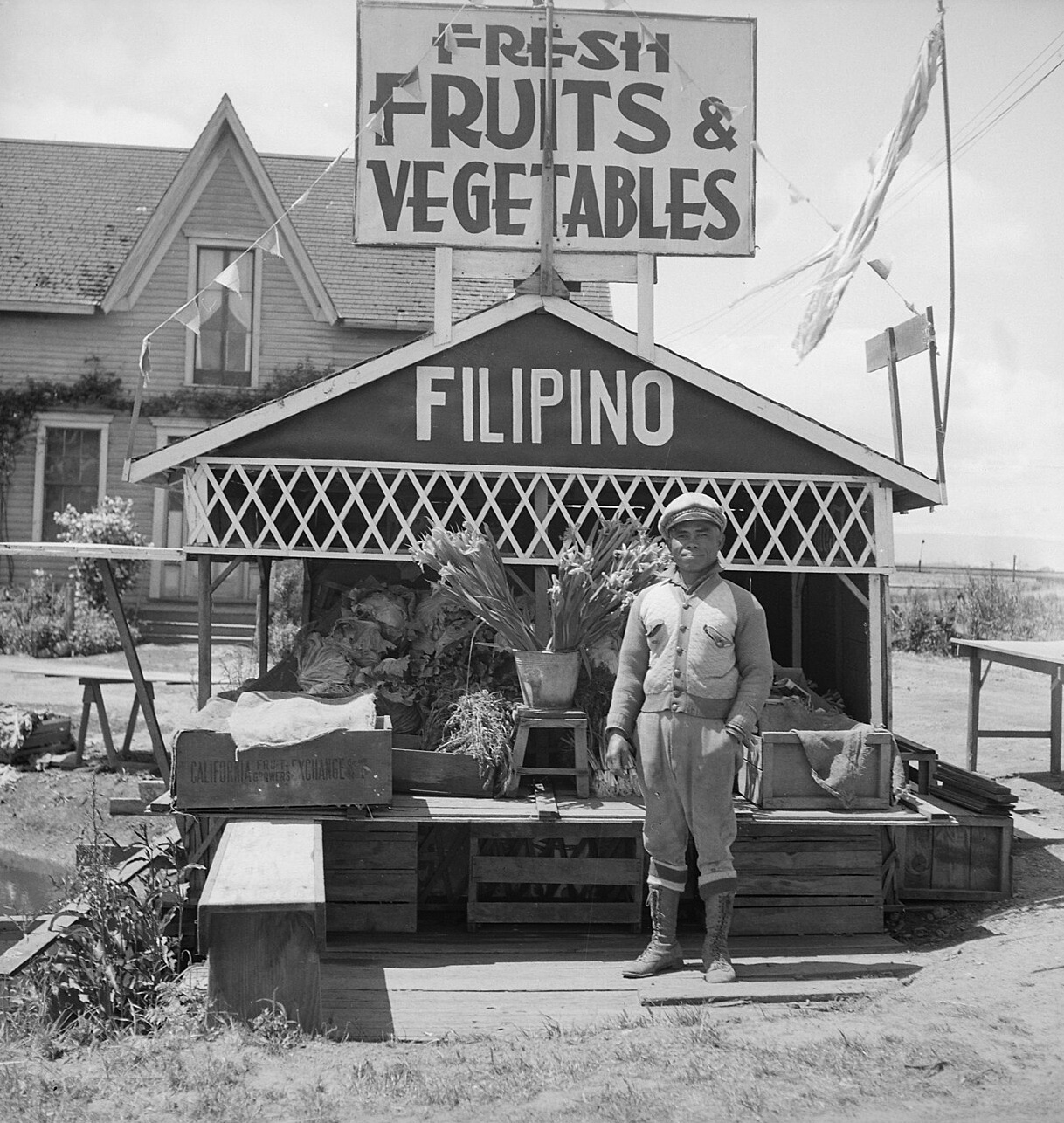
By that time, fewer models and illustrations were being made in the Pomological Division. As of 1916, a large amount of the work to catalogue and capture American fruits seemed to have been accomplished, although Newton and others continued their efforts on a smaller scale. In the 1930s, New Deal programs in the USDA Farm Security Administration brought cameras into the department’s work in new ways, as the special photography section documented life in rural America in 272,000 photographs. Images by photographers like Dorothea Lange captured the nation’s imagination, and “had a major impact on defining documentary photography,” according to Alan Fusonie of the National Agricultural Library. The camera increasingly offered ways of doing the work so long produced through artists’ brushes and wax models.
According to Fusonie, Deborah Passmore’s work “may be the finest example of the artistic quality of the early USDA illustrators,” but it went largely unknown, pointing out that her personal watercolor series, Wildflowers of America, a “one-of-a-kind botanical manuscript was unfortunately never published.”
Writing in 1990, Fusonie highlighted a wide range of USDA materials, from the Pomological Watercolors Collection to the Farm Security Administration photographs. “I fear for the fate of important visual agricultural knowledge which is threatened by aging, deterioration, and a lack of adequate financial support,” he wrote. Calling out the importance of preserving this material, Fusonie asked, “Can we afford to wait until it is too late?” Passmore, Newton, Arnold, Schutt, Heiges, Lower, and Cowing had all been active participants in the mission to capture agricultural knowledge so that Americans could benefit in the present and future. Fusonie argued that preserving their work was the latest piece in that mission.
Two decades later, the National Agricultural Library secured a grant to help them digitize the Pomological Watercolors collection. Progress was slow and high-resolution images remained behind a paywall that had earned just $565 until public pressure made them freely available in 2015.
Apple-picking season has returned, and it won’t last for long. But those apples painted so long ago by often forgotten women artists can still be seen and remembered long after the last of the fruit has left the trees.
Become a Saturday Evening Post member and enjoy unlimited access. Subscribe now


Comments
These women’s paintings here definitely would rival any equivalent color photos of the same fruits (and hibiscus sabdariffa) if they were put side by side. Thank you for this report.