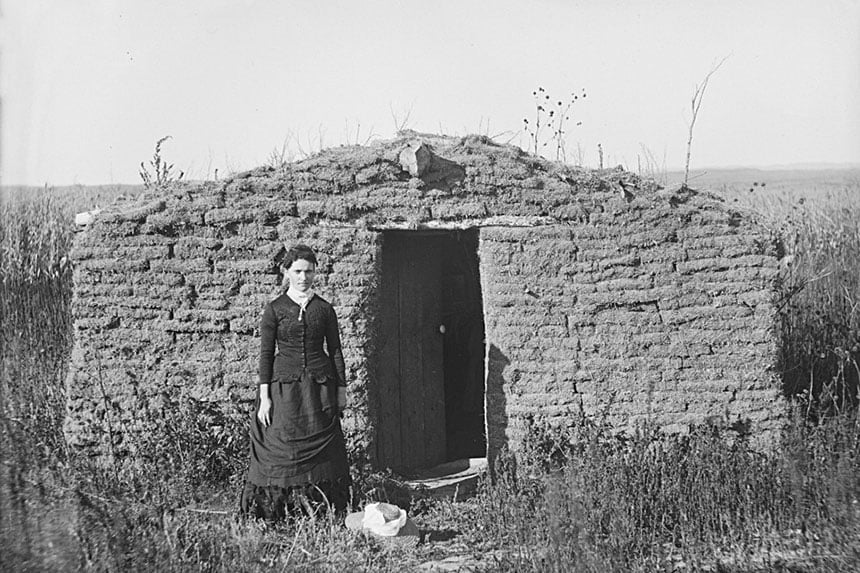
On May 20, 1862, President Abraham Lincoln signed the Homestead Act, a new law that offered Americans the opportunity to own 160 acres of land in western states. Any citizen over the age of 21, or someone who planned to become a citizen, could file a land claim. (Black people were not considered citizens in 1862 and were unable to take advantage of the Homestead Act until 1866.) Homesteaders, as they were called, had to live on the land and farm it for five years; after that time, the land would belong to them and their descendants. In the midst of the Civil War, the Homestead Act promised Americans homes of their own, a fulfillment of the American dream.
The Homestead Act was anything but front-page news. Two days after Lincoln signed it, the New York Times briefly noted the new law in the middle of the second column on page five, buried amongst a variety of pieces of “News from Washington.” One year into the Civil War, the editors wrote about worries of upcoming battles and the need for more troops, plus the imprisonment of “fifty rebel nurses.” Regarding the new law, the editors noted simply, “The Homestead Bill A Law: The President has approved the Homestead bill and it is therefore a law.” It would take effect January 1, 1863.
While news of the Homestead Act may have seemed less newsworthy to New York Times editors than the ongoing conflict, many Americans saw the law as the opportunity that could change their lives — including women. As written, the Homestead Act made it possible for any head of household to file a claim.
Today, Homestead National Historical Park in southeast Nebraska interprets the history of the Homestead Act and its impact on the nation. The national park sits on land that is believed to be the first claimed under the Homestead Act in January 1863, by Daniel Freeman.
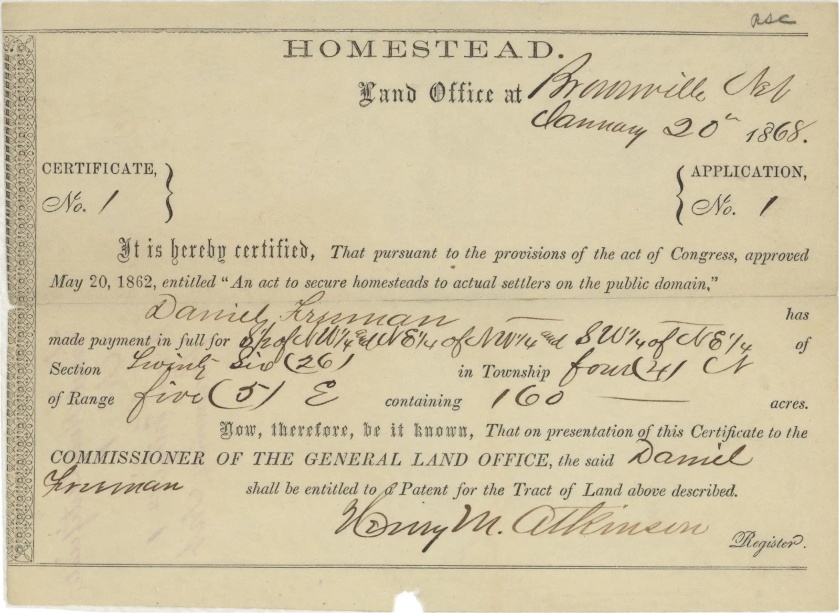
A few weeks later, his neighbor Mary Meyer likely became the first woman claimant. From its earliest days in 1863 until the law ended in the late twentieth century, American women followed Meyer’s footsteps to stake their own claims. Government officials estimate that at least ten percent of all homestead claims nationwide came from women: single, widowed, and divorced women all counted as heads of households.
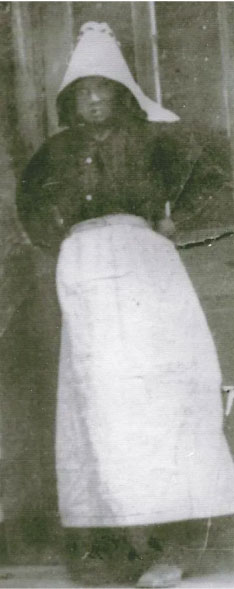
Women like Mary Meyer who filed claims, then farmed and lived on (“proved up”) their land left behind a trail of government records, but did not always leave stories of their own experiences. The Montana Cowboy Hall of Fame includes Agnes “Annie” Morgan, who began life as an enslaved woman in Maryland and later became the only Black woman homesteader in Granite County, Montana from the 1880s until she died in 1914.
In 1913 and 1914, Wyoming homesteader Elinore Pruitt Stewart’s letters about her experiences gained national attention, captivating many Americans with her account of life in the West. As a widowed mother, she had gone west to work as a housekeeper on a widower’s homestead. Stewart filed her own homestead claim near her employer and later married him, but gave her claim title to her widowed mother-in-law: After her remarriage, Stewart no longer qualified as a head of household.
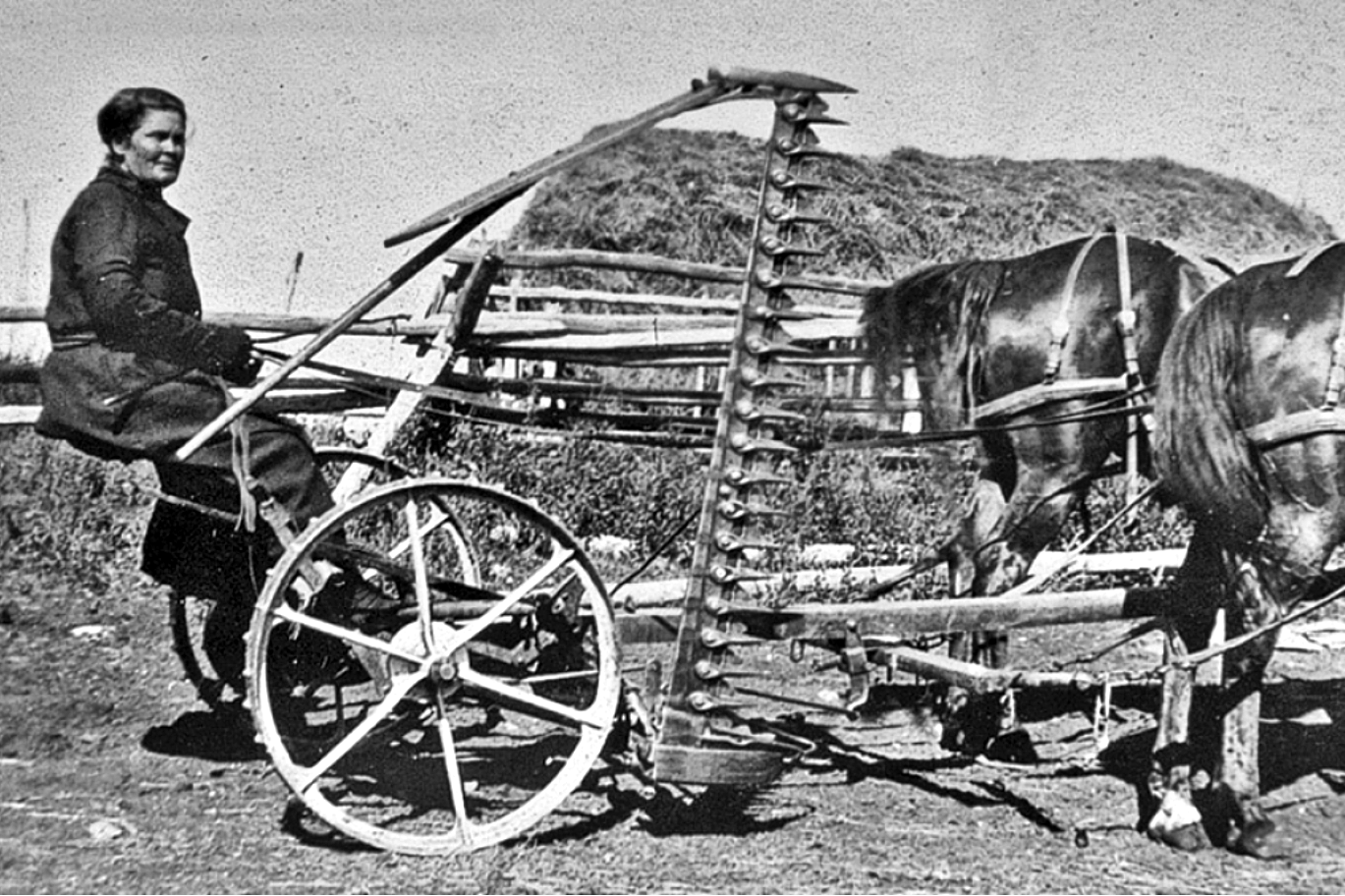
In 1912, a young Jewish woman named Cecelia Weiss followed her sister to southwestern Utah to file her own homestead claim. Speaking to a reporter in Sunset magazine in 1916, Weiss explained that her homestead was “so close to the main line of the railroad that I can hear the puffing of the locomotive on still nights when the wind is in the right direction.” Proving up a claim in this area was challenging, and Weiss relied on hiring neighbors to support her efforts, getting a neighbor to set up a small “board structure” she could live in, and hiring someone else to clear the land. “I am not strong enough to drive two teams of horses dragging a railroad iron over the ground…to clear it of sagebrush. For heavy work of this kind I have always paid cash. A neighbor brings over his team and his implements and does the plowing, seeding, hauling and other heavy work for $3.50 a day. The arrangement suits both of us,” Weiss explained, “though it increases my cash outlay and, worst of all, adds to the hours of leisure at my disposal.” Having so much time on her hands, she found, was “one of the worst features of homesteading.”
Other women homesteaders also hired people to help them as they established themselves on their land, but not all found homesteading gave them as much free time as Weiss professed. Eliza Jane Wilder filed for her homestead in South Dakota in August 1879, then “hired a man to build me a house on my land which he did using sod for the walls, hay for the shingles, boards for the door and window frame.” Later family documents clarified that the hired man was her brother Almanzo, who was also homesteading in the area at that time. Six years later, Almanzo would marry Laura Ingalls from a family in De Smet. About half a century after that, Eliza Jane was immortalized in Laura Ingalls Wilder’s Little House books, which famously detailed Laura’s own family’s homesteading life.
Eliza Jane Wilder split her time between her homestead and her work as a school teacher in Valley Springs more than 100 miles away. By the early 1880s, Eliza Jane Wilder had found homesteading far more time-consuming than Weiss would a few decades later: “School, home, and farm work together with exposure to the harsh cold winds tolled rapidly upon a system that had had no rest from toil often beyond its strength for nearly two years.” When Wilder filed for her title, she submitted a lengthy document explaining her efforts on the property over the years, which Laura’s father, Charles Ingalls, witnessed and supported.
After the 1930s, the National Park Service notes that “successful Homestead claims dropped sharply.” Even so, homesteaders continued to make claims in the decades that followed. Historians are still working to understand the impact the Homestead Act had, including how the law affected Native Americans and their lands.
On October 21, 1976, 50 years ago this month, the Federal Land Policy and Management Act ended the Homestead Act as federal policy shifted toward keeping public lands. Alaska, a young state with few settlers, was granted ten more years of homesteading. There, in 1984, Elizabeth M. Smith became the last woman homesteader, joining more than a century of women across the nation whose land patents established them as landowners, but only hint at the stories behind their efforts to create homes of their own.
Become a Saturday Evening Post member and enjoy unlimited access. Subscribe now
Comments
Thank you for this report, Tanya. I’d heard of it in passing in high school American history classes, but not this kind of in-depth reporting. There was A LOT of exhausting work that had to be done if this was going to work.
I applaud those that succeeded, and those who did not, as well. One can only be pulled in so many directions under harsh conditions that never let up without one or more of those things sabotaging many of the homesteading efforts, having them turn to stone.