These Things Happen
I’m giving the baby a bath in the white plastic tub that’s parked across the bathroom sink, looking like a small boat going nowhere.
“How do we raise our hand in school, Sara?” I ask, and tickle the baby under her arm as her hand shoots obediently upward. “Very good,” I say, tickling her some more. She tips her head back and laughs hard, as if she’s just heard something hilarious. Watching her, I savor a moment of deep pleasure before giving in to extravagant laughter that brings me to my knees. On the bright bathroom tile I rock back and forth, wheezing and snorting, until finally, inevitably, I retreat into silence, breathless and a little stunned at having lost control like that.
“Oh, Chuck,” I hear myself say. I’m busy with the baby now, soaping her perfectly straight back, her pot belly, -running the washcloth under her neck and down both plump shoulders. It’s been nearly a year since Chuck took off for Florida with his girlfriend. He left me on the hottest day of the year, one day before my 30th birthday. Although I had no intention of dying just then, when I awakened the next morning, I found myself fantasizing about what would be said at my funeral. I wanted to be remembered as someone who was never a complainer despite her losses. Closing my eyes, I could hear the minister praising my resourcefulness, my ability to get by in New York without a husband, a Roku box, or a walletful of credit cards. The minister didn’t know it, but I’d lost it all to Sherri Holloway, a gracious and sympathetic 20-year-old who would later send me postcards from Key West, wanting me to know that she was -thinking of me and wondering how I was doing. I never wrote back because that would clearly have been too much, but the postcards kept coming all the same, and every now and then it occurred to me that I was grateful for them.
“Out?” says Sara. She rises to her knees and thrusts both arms in the air.
“Out of the bathtub and into the fire,” I say as I lift her from the water.
“Nah,” says the baby, and smacks her palm against her forehead in a gesture of exasperation. She is 15 months old — a child of such sweetness and good humor that even strangers on the street find her irresistible and are drawn to her side without quite knowing why. Only Chuck was able to resist her; distracted, I guess, by Sherri’s delicately shaped hands, her quiet, high-pitched voice, her faintly apologetic manner, so much like my own. They fell in love shortly after the baby was born, when I was at my worst — exhausted, bewildered, my body soft as a down-filled pillow, my breasts leaking milk through my shirts. Chuck left just before the baby learned to smile. For a long time I thought that if only he hadn’t missed that — her very first blossoming — he would never have been able to leave. When I told this to him over the phone, he simply fell silent. “I can’t,” he said finally, and sighed. “I mean I can’t even begin to figure out where you come up with these things.”
“Mom,” the baby is saying now. “Mah mom.” Her legs are clamped around my waist, her moist cheek fastened devotedly to mine. We stay that way, in heaven, in love, for what feels like a long while, and then, without warning and without apology, she pees on me.
Pushing Sara in her stroller along the littered streets of upper Broadway, I slow to a stop in front of a store window where mannequins wearing the heads of donkeys, cows, rabbits, and sheep are dressed in the latest sportswear. “Pretty cool,” I say to my daughter and, sighing, wipe the perspiration from the back of my neck. I have to admit that the heat has gotten to me this summer, that all summer long I’ve moved slow as an old lady through the rooms of my apartment, ignoring most of the housekeeping, but frowning hard at the clutter, as if that were all that were needed to make it disappear.
“Hi,” the baby says shyly. “Hi there?”
“Hi yourself,” I say as I wheel the stroller into the boutique. I go through racks of clothing impassively, without interest. I think of Sherri Holloway and Chuck standing together in my living room, the only time I ever saw them together, the two of them standing over the baby while she slept in her bassinet, her behind slightly raised in the air, arms stretched out in front of her. “What a little love,” murmured Sherri. She was there, she said, because she wanted me to see that she wasn’t someone awful, someone who went around wrecking other people’s lives without any thought at all. “I’m sure you gave it a lot of thought,” I said. “I want you to know how much I appreciate it.” Sherri looked unhappy at this, as if she suspected that I had been mocking her. “Honey?” she said, tapping my husband on the shoulder. “We’ve got to get a move on, honey.” In Sherri’s ear there were three earrings, one each of gold, diamond, and pearl. Fingering the diamond, she turned away from my husband and smiled at me. “Thank you for letting me come through the door,” she said. Still smiling, she told me that Chuck had said many good things about me, but I couldn’t imagine what they might have been. Only a few days earlier, Chuck had criticized me for not being “a real person,” which he defined as someone who could cook a decent dinner every night, drive a stick shift, and change a sleeping baby’s diaper in the dark without waking her. It was true that I couldn’t do any of those things, at least not with any confidence or expertise. I had a master’s degree in Comp Lit and could talk about books with insight and enthusiasm with my undergrads, but I could not change a sleeping baby in the dark. “So what?” I’d yelled at Chuck, hating him for making me feel ashamed. “Why does that make me any less of a person?” I hollered. “I’m just telling you the way things are,” he said, still keeping to himself all the rest of it — that somewhere in the city there was an impossibly young woman who called him honey, so gently, so expectantly, that tears would spring to my eyes at the sound of it.
“I’d like the striped shirt that jackass in the window is wearing,” I tell the salesperson approaching me now.
“You’ve lost me,” says the salesperson, who is very pale and very pretty and looks a lot like David Bowie. “I’m not following you at all.”
“The donkey in the pink-and-white striped shirt,” I say. “The one with his arm around the cow.”
“Ohhh,” says the woman, looking toward the display window. “And here I was thinking you’re on drugs or something. I’m thinking, this person is totally wasted, for sure.”
“First impressions,” I say, and shake my head.
Halfway down 107th Street, just before I reach home, my path is blocked by a street musician standing alongside the open case of his electric guitar. A handful of quarters gleams against the maroon velvet that lines the case. The musician is tall and emaciated-looking; there’s a bit of toilet paper stuck to his upper lip, at the point where he’d probably cut himself shaving this morning. The guy is in a daze, strumming the same minor chord over and over again. Impulsively, I empty all my change into his guitar case. And add a couple of dollar bills.
“I don’t know why I’m bothering to say this,” I tell him, “but please go get yourself something to eat, okay?”
The musician goes on with his playing. “All mothers are mothers from hell,” he sings in a monotone.
“Don’t!” I say, bending over to cover the baby’s ears with my palms. Sara pushes me away instantly, and jams her bare foot into her mouth. She sucks on it a while and then gives it up, her foot making a small popping sound as she pulls it out of her mouth. In the fierce sunlight, the tiny foot glistens with saliva.
At the entrance to my building, I put myself in reverse and pull the stroller backward up the pair of brick steps leading to the courtyard. The usual crowd of teenage boys is having its afternoon smoke, filling the courtyard with the sharp, sour smell of burning weed.
“Hey, how’s it going, how’re you doing?” one of them calls out to me.
“I’m not speaking to you, Curtis,” I tell him. “You know how I hate it when I see you with all those -potheads.”
Two women, both of them in their 20s, hold the door open as I struggle to lift the stroller over another set of steps and into the lobby.
“You aren’t going to carry that all the way upstairs, are you?” one of them asks. She is the smaller of the two, and ghostly pale; her short straight hair is bleached nearly white, and she is wearing a dark T-shirt with a rhinestone spider web radiating outward across the front.
“It’s only one long flight,” I say. “Sometimes, if I happen to be here at just the right moment, I can find a neighbor to help. Otherwise, I can manage by myself.”
The blonde and her pal insist on carrying the stroller up the stairs for me. They’re panting a little by the time we reach the apartment.
“This heat is killing me,” the blonde says.
“Would you like to come in and have something cold to drink before you go?” I ask. “There’s orange juice, Diet Coke, anything you’d like.”
“Water would be great.”
They stand quietly outside the kitchen as I fill their glasses from the tap.
“This is super,” says the blonde. “I mean, great water.” She introduces herself, saying her name is Dream. “And this is Metro,” she adds, gesturing toward her friend, who is staring at me and shaking her head so that the single star hanging from a chain in one earlobe swings from side to side.
“Never, ever wear a watch on your left hand,” Metro says. “And I mean never.”
“What?” I say.
“All the energy from your body flows through your left arm,” Metro explains. “The watch will just absorb it all and leave you with nothing. I thought that was a commonly known fact.”
“Maybe in some circles,” I say, and surprise myself by contemplating, for only a moment, a switch to my other wrist.
“It has something to do with physics,” Metro says. “Really.” She moves a hand stiffly over her dark crew cut.
Dream sneezes quietly, almost politely, three times in a row. “I’ve been fighting a cold all day,” she says. “Or maybe it’s allergies.”
“Yeah, well, everyone’s fighting something,” Metro says. “Colds, hay fever, personal demons, whatever.” She is staring at me again, looking at me sharply, as if she doesn’t like what she sees.
“Now what?” I say. “Don’t tell me I’m wearing my shoes on the wrong feet.”
“There are only two directions in life,” Metro announces. “Toward the heart and away from the heart.”
“Your baby’s out of the stroller and into the garbage,” Dream says. “I just thought I should point that out to you.”
I scoot over to the plastic garbage pail and fall to my knees next to Sara, who is rolling a cigarette butt between her fingers. “Drop it,” I say. She smiles at me lovingly, showing off all four of her teeth. Pitching the cigarette butt to the floor, she examines a peach pit carefully before putting it into her mouth.
“Cute baby!” Dream says. “I’d die for a baby like that.”
Metro shrugs. “Would you mind if I used your bathroom?”
Walking to the kitchen doorway, I point down the hall. Dream is behind me, I see now, her fingers laced around the middle of her water glass. Like a bracelet, a bolt of blue lightning is tattooed across one of her wrists.
“My husband has a tattoo,” I say. “A little flowery thing near his shoulder.” I remember my shock at discovering it the first time we undressed each other, so many years ago in his dormitory room. I love it that an accounting student at Wharton had gone to a tattoo parlor in some sordid part of Philadelphia and decorated himself with a single, tiny long-stemmed rose. Newly in love, I wanted to be amazed by him, to be taken by surprise. One night in bed, a few months after we were married, I drew a vase around his rose with a felt-tipped pen, added daisies and lilies and a droopy-looking morning glory. Chuck watched without a word as I drew, and there was something about his silence that made me realize he’d seen all of this before, that I was not the first who had claimed him for my own. I stopped what I was doing and went into the bathroom for a washcloth. I rubbed away every bit of my work, rubbed away at his skin so fiercely that Chuck cried out in pain. It was only when he seized my hand and I jerked it away from him that I finally gave up.
“Oh yeah?” Dream is saying. “So where is the lucky guy?”
I let out a long, noisy sigh that sounds like a whistle. “Gone,” I say.
“Bummer,” says Dream, “but most of the time friends are a whole lot better than family anyway. They love you and forgive you. Like Metro and myself. We fight but it’s not bad, not too serious.”
Looking downward, I see that the baby is negotiating her way between my legs and past me, heading up the hallway to the living room, grabbing onto anything that will make her passage easier — a door frame, the arm of a couch, the edge of a table. She lets out a squeal of happiness and races on her knees to the middle of the room, where a vast mountain of Chuck’s belongings is covered by an orange Indian print bedspread. Rising five feet from the floor, under the bedspread, are all the things he left behind last summer: cartons of books and record albums; a lamp he made out of spare parts from his Triumph GT6; a file cabinet full of tear sheets clipped from Motor Trend and Car and Driver; a porcelain sink attached to a white column that he’d been planning to make into a table; and a clay bust he had sculpted that failed as a self-portrait but turned out to bear a startling resemblance to Jesus Christ. God knows what else is under there — I haven’t had the heart to take inventory since the day Chuck left, and, like a whirlwind, I gathered up his things and carried them off. I only got as far as the living room when exhaustion set in, and for all these months the mountain has stood there, ignored and almost forgotten. I barely even see it anymore. I vacuum around it, occasionally dusting off its peaks when the mood strikes me. Once, in the middle of a winter night, I dreamed that the mountain had simply vanished; awakening, I came out into the living room, heart thumping, and approached it in the dark. I settled myself at its foot and drifted in and out of sleep, my head resting through the night on one of Chuck’s cartons.
Dream circles the mountain with her hands held behind her back. “Whoa,” she says respectfully. “Is this, like, you know, modern art or something?”
“Hardly,” I say, and swoop down over the baby, putting an end to her mountain-climbing. “It’s just some junk that belongs down in Florida with my ex.”
“Florida?” Emerging from the bathroom, Metro is rubbing her hands together, smoothing some of my cocoa butter across her knuckles. The sweet heavy scent of vanilla is overwhelming for a moment, almost sickening, and then it begins to fade.
“I was in Florida once,” Metro reports cheerfully. “The sun was so hot it burned a hole right through my pocket.”
I admire the slender fingers traveling soundlessly in circles along the back of Metro’s hand. I notice another bolt of blue lightning across her wrist as well, and wonder if Metro and Dream are lovers. For some reason this worries me, and I take a small step backward. But now Dream is leaning over me, bending to drop a tiny kiss high on my cheek.
“Thanks,” she says.
“For what, a glass of water?” I say, sounding a little cranky.
“I mean, like, for your company,” Dream says. “It was neat, wasn’t it, to hang out and talk. People don’t talk to each other enough. They go about their business and that’s that.”
I nod my head. I see the tall, slightly stooped figure of my husband leaning against the kitchen table, hear his announcement that he’s going off to Key West, going off to spend the rest of his life without me, but not alone. Why? I ask him, once, twice, and twice more. A few answers would be helpful, I say in a wobbly voice. And there is Chuck shrugging his shoulders, raising them almost to his ears and looking at me in surprise, as if he is just as surprised as I am, as if his astonishing betrayal is news to him, too. These things happen, he says, and strangely enough, in that moment he sounds like an ordinary man.
“Well, take it easy,” I say now, seizing Dream’s hands and then Metro’s, pressing firmly against the bone and flesh of their cool fingers before closing the door behind them. In the kitchen, I rinse out their water glasses, fill the baby’s bottle with apple juice, then take her with me into my steamy, sunlit bedroom, where I undress us both in slow motion. Sara yawns gently as I lay her down along the middle of my bed for a nap. She sucks on her bottle, strokes the soft corners of my mouth sleepily, her eyes half-closed.
Leaving her there, I stand in my underwear in front of a gleaming rosewood dresser. I undo the tortoise-shell clip at the back of my hair and watch as it falls in a deep-brown shawl past my shoulders. I reach into the dresser drawer for my silver-backed brush, an engagement gift from Chuck’s grandmother. The brush is gone from the drawer, along with everything else left over from my marriage, and I let out a thin, sharp cry of pain, as if I had sliced into my finger with a razor. Everything — three or four gold bracelets, a string of silver beads, my diamond wedding band. Gifts from another life, it seems, the one that slipped away from me so fast I didn’t even notice it was already, impossibly, out of reach.
“Metro,” I say out loud. Senselessly, I look around for a note of apology or explanation.
These things happen, I hear Chuck saying, and I stare in disbelief as Metro helps herself to my gold and silver, her hands searching delicately through my things while Dream stands alongside me, close enough for a kiss.
Marian Thurm is the author of eight novels and five short story collections. Her stories have appeared in The New Yorker, The Atlantic, and many other magazines, and in numerous anthologies, including The Best American Short Stories. Her new novel, I Don’t Know How to Tell You This, will be published in 2025.
This article is featured in the July/August 2024 issue of The Saturday Evening Post. Subscribe to the magazine for more art, inspiring stories, fiction, humor, and features from our archives.
News of the Week: Willie Mays’s Catch, Wood’s American Gothic, and Why 7-Eleven Plays Classical Music
A 2024 Baseball Game (1954-Style)
To commemorate the 70th anniversary of the amazing catch Willie Mays made in the 1954 World Series, Fox did a rather neat thing for the Giants/Cardinals game: They recorded an inning of the broadcast the way it looked and sounded on TV 70 years ago.
Uploaded to YouTube by Fox Sports
Why Does 7-Eleven Play Classical Music Outside Their Stores?
If your first guess is because classical music is quite beautiful and timeless, that’s not it. It’s actually because the stores believe that music as sophisticated as classical will keep away undesirable loiterers, like teenagers and homeless people, and help prevent crime.
They’re not the only stores doing it. Some Walgreens and abandoned department stores are doing it too, some for decades. But they always have to contend with those rare teens who drink cheap beer but also happen to like Debussy.
Who is Alex Trebek?
The late Jeopardy! host got his own stamp this week, and they made the sheets look like the board from the game show.
Something I Learned This Week
I always assumed that the people in Grant Wood’s painting American Gothic were husband and wife. But they’re actually supposed to depict a father and daughter! And to make things even more interesting, the models for the painting were Wood’s daughter and…his dentist!
RIP Kinky Friedman, Bill Cobbs, Frederick Crews, Al Schultz, Russell Morash, Spencer Milligan, Taylor Wiley, and Tamayo Perry
Kinky Friedman was a singer, songwriter, columnist, and satirist. His band opened for Bob Dylan, he wrote several novels (featuring himself as a detective), and he even ran for governor of Texas in 2006. He died Wednesday at the age of 79.
Bill Cobbs was one of the most recognizable character actors over the past 50 years. He appeared in such films as The Hudsucker Proxy, The Bodyguard, The Color of Money, The Cotton Club, Silkwood, Air Bud, and the Night at the Museum films. On TV you saw him on I’ll Fly Away, The Drew Carey Show, Go On, The Sopranos, The Slap Maxwell Story, Kate & Allie, and dozens of other shows. He died Tuesday at the age of 90.
Frederick Crews was an author, essayist, and critic. He died last week at the age of 91.
Al Schultz was a top makeup artist who worked on such shows as The Carol Burnett Show, All in the Family, The Sonny and Cher Show, The Dean Martin Show, and The Merv Griffin Show. He was the husband of actress Vicki Lawrence. He died last week at the age of 82.
Russell Morash created the PBS shows This Old House and Victory Garden and was a director/producer on Julia Child’s iconic show The French Chef. He died last week at the age of 88.
Spencer Milligan played Rick Marshall on the ’70s show Land of the Lost. He died Saturday at the age of 86.
Taylor Wily was a former sumo wrestler who became an actor. He was a regular on the Hawaii Five-0 reboot and appeared in many other shows. He died last week at the age of 56.
Tamayo Perry was a champion surfer and actor who appeared in such movies as Pirates of the Caribbean: Dead Man’s Chest and TV shows like Hawaii Five-0. He died Sunday at the age of 49.
This Week in History
First Scholastic Aptitude Test (June 23, 1926)
It was given to 8,040 students. Here are a few of the questions from that test.
I did rather well on the reading part of the SAT. I’d rather not talk about the math part.
Dark Shadows Premieres (June 27, 1966)
It’s weird to think that there was once on TV – on a major broadcast network, every single afternoon – a soap opera about vampires, ghosts, and time travel. I was really into this show when I was a little kid, even though the theme song used to freak me out.
This Week in Saturday Evening Post History: French’s (June 27, 1953)

I’m not sure if you can zoom in to see those recipes – you can if you have a subscription to the Post – but they’re for Frenchwise Potato Salad and Frenchwise Barbecue Sauce.
Fourth of July Recipes
In addition to those recipes from French’s, here are more to try next week.
The Beef Checkoff gives us this recipe for Sweet Hawaiian Mini Burgers, and our own Curtis Stone has a Veggie Flatbread Sandwich with Feta-Yogurt Spread. Country Living has recipes for Salt-and-Pepper BBQ Ribs and Root Beer Baked Beans. For a patriotic dessert, Food Network has a Flag Cake and a Red, White, and Blueberry Trifle. And you can wash all of that down with a Frozen Cherry Coke Slushie or Homemade Lemonade, both from Delish.
Next Week’s Holidays and Events
Wimbledon Begins (July 1)
A guy on Jeopardy! last week lost money because he said Wimbleton instead of Wimbledon. Happens all the time. ESPN will have full coverage every day and Tennis Channel will rerun the matches you may have missed.
The Dog Days of Summer Begin (July 3)
It’s not just a general phrase. There are actually official dog days, from July 3 until August 11.
Listen Again: Can’t Get Enough of Barry White
Barry White had already made his name as a performer, writer, and producer by the time he dropped his third album, Can’t Get Enough, on August 6, 1974. His work with Love Unlimited Orchestra on “Love’s Theme” the year before proved vital to the development of disco, and his solo work combined that dance sound and R&B.
White’s trademark bass voice drove Can’t Get Enough, particularly its two major hits, “Can’t Get Enough of Your Love, Babe” and “You’re the First, the Last, My Everything.” His signature sound and subject matter earned him nicknames like “Dr. Love,” “The Icon,” “King of Disco,” and the unabashedly awesome “Prince of Pillow Talk.” Can’t Get Enough hit No. 1 on both the Billboard 200 and R&B album charts.
Though the album is brief, barely topping 31 minutes, it remains a slab of solid R&B. Rolling Stone places it among the 500 Greatest Albums of All Time. The two big hits remain essential listens, but stick around for slower jams like “I Can’t Believe You Love Me.”
This article is featured in the July/August 2024 issue of The Saturday Evening Post. Subscribe to the magazine for more art, inspiring stories, fiction, humor, and features from our archives.
Women’s Work: Give Her Liberty — Mitsuye Endo and the Fight Against Japanese American Internment
In 1940, Sacramento’s Japantown was one of thirty in the state. Just half a mile from the state capitol building, Japanese immigrants built a community with businesses and homes. By the early 1920s, Sacramento had the state’s fourth-largest Japanese population. More than 400 Japanese-owned businesses served customers from their Japantown locations.
In 1940, Jinshiro and Shima Endo lived on the outskirts of Japantown, at 604 O Street, with their four children, who ranged in age from 14 to 21. Shima was a homemaker; Jinshiro worked in a nearby grocery store, perhaps in Japantown. The children were all American citizens, born after Jinshiro and Shima settled in Sacramento. Their oldest daughter, Mitsuye, graduated from Sacramento High School, the second-oldest high school west of the Mississippi River. She continued her education with a secretarial training course, then began to work for the state of California.
Mitsuye Endo’s life changed forever over the course of 175 days, from December 7, 1941, to the end of May 1942. During those months, she saw friends and neighbors arrested. Her employer questioned her loyalty to the United States. Endo was fired from her job. All residents of Japanese descent became subject to a curfew, and then were not allowed to move out of their homes. A little more than a month after that, Endo and her family were forced to report to the Sacramento Assembly Center, a temporary place for all of Sacramento’s Japanese American population to live while internment camps were built. It was better known as Walerga. Mitsuye Endo celebrated her 22nd birthday the month she and her family were sent to Walerga.

Japanese Americans came under intense scrutiny immediately after the attack on Pearl Harbor. In January, the state of California had begun investigating Japanese American employees, planning to fire all of them. In mid-February, they asked Japanese American employees to complete a 10-page loyalty questionnaire. One day later, the U.S. government set into motion the events that would lead to Japanese American internment camps. Altogether, there were approximately 120,000 Japanese Americans living in the United States at that time.
After she lost her job, Mitsuye Endo decided to fight back. With the support of the Japanese American Citizens League (JACL) and a lawyer named James Purcell, Endo and 63 other fired employees appealed their termination. The appeal was pending when the order came for the Endo family to go to Walerga.
The orders for Japanese Americans to report to assembly centers like Walerga, and then the internment camps, changed Mitsuye Endo’s legal fight. Now, it was no longer a fight for her job, but for something more — her freedom, and that of every other Japanese American.
In July 1942, shortly after Endo arrived at Tule Lake War Relocation Center, her court case began. While Endo remained interned, Purcell filed a petition for habeas corpus on her behalf. In other words, this petition claimed that Endo should be released from internment because being interned was against her constitutional rights. She was an American citizen whose parents happened to be Japanese immigrants and, Purcell argued, there was simply no reason to confine Endo, who was just a loyal American citizen.
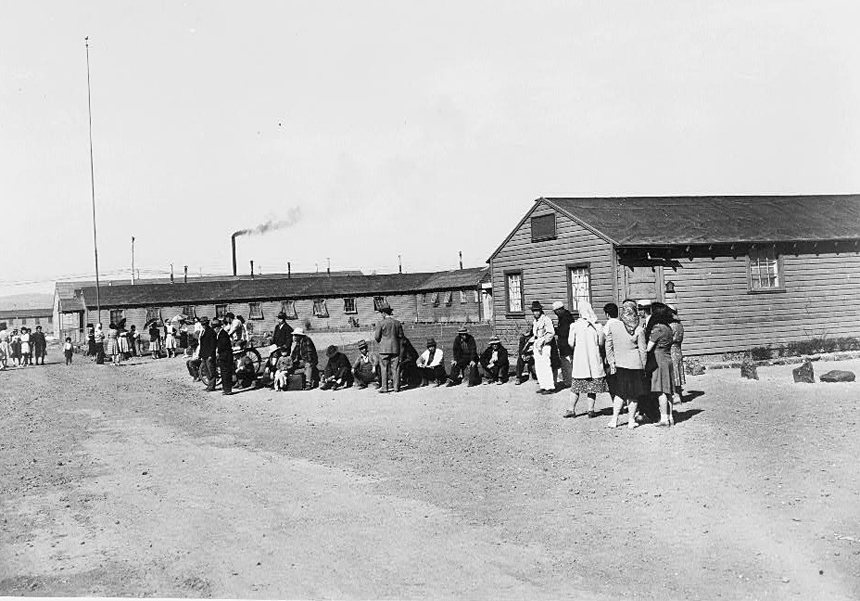
Habeas corpus petitions are supposed to be decided very quickly, but the judge held the case for nearly a year. Endo remained at Tule Lake, waiting for news. In July 1943, the judge denied the petition.
Endo’s fight was far from over. Purcell appealed the decision on her behalf, going to the Ninth District U.S. Court of Appeals. At the same time, things were changing for Endo and other interned Japanese Americans. The government had begun a program that would allow internees to apply to be able to leave the camps, if they were not a risk to the public or if they agreed to move away from the West Coast. The first step was to complete an application for leave clearance, so that the government could determine whether an interned person was a threat or not. Endo submitted her application for clearance in February 1943. She was approved for the second step of the process in August 1943, but declined to submit the application. Government lawyers wanted her to complete the process: If Endo left Tule Lake under the leave program, her case would not move forward. Instead, she chose to stay in the camp.
Endo persisted. In September 1943, Tule Lake became reclassified as an internment camp for those labeled as disloyal, and Endo was sent to Utah to Topaz Relocation Center. Meanwhile, the Ninth District Court of Appeals recommended that Endo’s case go directly to the Supreme Court, where a similar case was also heading — that of Fred Korematsu.

On October 11 and 12, 1944, more than four months after D-Day, the nine Justices of the Supreme Court heard two cases on Japanese American internment, back-to-back. The first, Korematsu vs. United States, has become the most famous. But Korematsu’s case was not identical to Endo’s: Korematsu engaged in civil disobedience in 1942, refusing to go to an assembly center. He was arrested on May 30, around the same time that Endo and her family were already in residence at Walerga. But Korematsu did not win his case: the Supreme Court ruled that it was constitutional for the government to require Japanese Americans to evacuate, due to national security needs.
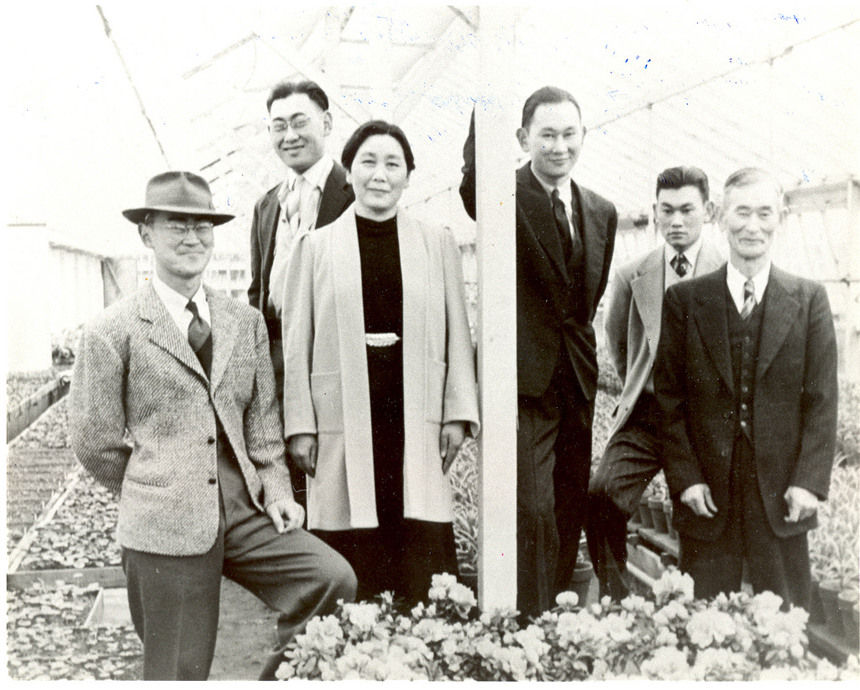
Mitsuye Endo’s case, known as Ex Parte Endo, however, focused on the fact that she had followed the law. Endo and her family had gone to the internment centers when ordered. On the same day that the Supreme Court ruled against Fred Korematsu, the Justices ruled in favor of Mitsuye Endo. They found that Endo should be set free, and they also found that the War Relocation Authority, which managed Japanese American internment camps, could not keep anyone in the camps who was loyal and had also followed the proper leave procedures, as Endo had.
It was a unanimous ruling.
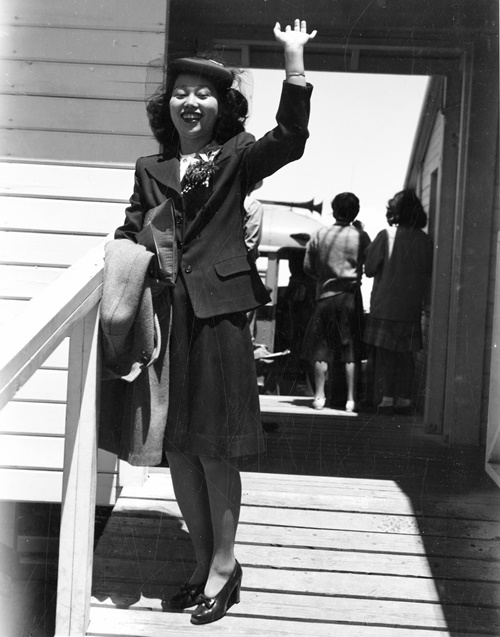
In May 1945, Endo left Topaz and moved to Chicago to be near family members. There, she became a secretary with the Chicago Mayor’s Committee on Race Relations, continuing to help others in the fight for equal rights.
Review: Treasure — Movies for the Rest of Us with Bill Newcott
Treasure
⭐️ ⭐️ ⭐️ ⭐️
Rating: R
Run Time: 1 hour 51 minutes
Stars: Lena Dunham, Stephen Fry
Writers: Julia von Heinz, John Quester, Lily Brett (based on her memoir)
Director: Julia von Heinz
It is a somber concession to the passage of time that we have come to the point where films about survivors of the Nazi Holocaust must, of necessity, be set in the past.
I find this particularly sad because the prime mission of those now nearly-gone survivors, from 1945 on, has been to remind the world that the death camps really did exist, and that otherwise civilized people are, under the right circumstances, entirely capable of complicity in mass murder and even genocide.
This seems to be the concern of German director Julia von Heinz, who co-wrote and directed this poignant road movie. It’s the story of Ruth, (Lena Dunham), a young New York woman who, shortly after the collapse of the Iron Curtain, accompanies her father Edek (Stephen Fry) to Poland for a tour of his childhood home, the remnants of the family’s business, and the concentration camp at Auschwitz, which he miraculously survived while the rest of his large Jewish family perished.
Edek remembers those harrowing years all too well, but he has chosen, throughout his life, to avoid discussing them. The past, he says, is past, and there is nothing he can do to change it.
But Ruth isn’t buying it. Scraping together her meager savings as a Manhattan journalist, she arranges flights, train passages, and hotels for her and Edek — who, to her surprise, has insisted on accompanying her.
He’s an alternately encouraging and frustrating travel companion. Reluctantly revisiting the milestones of his early life, Edek seems always to be trying to talk Ruth into skipping stops on her itinerary. When she stubbornly announces she’ll go on without him, though, he drops his head and tags along.
It’s a sobering journey. In his old home town, he points out the window beneath which he wooed Ruth’s mother — an apartment she would soon have to surrender as the Nazis moved the Jews to a ghetto. The pair locate the factory Edek’s family owned until it was confiscated by the government — and are chased away by the people to whom it was given.
Most heartbreaking is the pair’s impromptu visit to Edek’s childhood home. He is content to stand outside for a minute or two, but the investigative reporter in Ruth can’t resist storming up the stairs and knocking on the door. Following her like a lost puppy, Edek wanders through his old front door after the current resident reluctantly invites them in.
We have no idea who lived here before us, the man of the house insists. It was empty when we got here in 1940, his wife adds. But as Edek’s eyes wander along the walls, he spots, even 50 years later, fragments of his childhood: His mother’s china. A silver bowl.
Finally, he cannot contain himself. That’s my mother’s teapot, he says. It’s her bowl.
When the owner offers to sell the china and bowl to Ruth, we (and she) ought to be outraged. But writer/director von Heinz isn’t content with superficial reactions. This family, she reminds us, has just endured 50 years of Soviet repression. They sit on the same furniture Edek’s parents bought not because they like it, but because their life has, for a half-century, been its own kind of deprived hell. Their very survival has depended on denial—much like Edek’s.
With his bushy beard, twinkling eyes, and booming Eastern European accent, Fry could be Tevye the milkman returned to the scene of the pogroms — philosophical, witty, and undeniably haunted. When Ruth casually announces they must board the train she’s booked at the Warsaw station, Edek’s eyes go blank as he is transported to the last time he ever set foot on a railroad car, bound for almost certain extermination. It’s a mesmerizing, wordless moment of hesitation that encompasses both a long-ago season of horror and an ensuing lifetime of incomprehensible sorrow. One of England’s most versatile actors, Fry — hilariously anarchic in his BBC comedy days, devastatingly complex as the conflicted author in 1997’s Wilde — brings his whole artist’s palette to the role of Edek. Funny and thoughtful, outspoken yet repressed, his Edek welcomes us with outstretched arms and an infectious smile while nevertheless keeping us, and his daughter, at arm’s length.
Affecting as Fry’s performance is, perhaps the more difficult role falls to Dunham — writer, producer, and star of the landmark HBO series Girls. Exasperated as Dunham’s Ruth is with her dad, she seldom loses sight of how difficult this journey must be for him. And when she finally learns the real reasons why he would not let her take this trip alone, her reaction is a miraculous blend of relief and compassion.
Even as a precious remnant of Holocaust survivors remains with us, it’s deeply disturbing to think we live in a world where a weirdly large percentage of people suspect Hitler didn’t really kill all those people. We’re about to lose all our Edeks. Soon, Treasure reminds us, it will be up to us to carry on, insisting on the unthinkable; depicting the unimaginable.
Preview the July/August 2024 Issue of The Saturday Evening Post
March/April 2024 Limerick Laughs Winner and Runners-up
I raise high the fork on display.
My wife proclaims I’ve saved the day!
I must acquiesce,
For I dare not confess
I’m the dumbbell who threw it away.
Congratulations to Laurie O’Connor Stephans of Plano, Illinois, who won $25 for her limerick describing Stevan Dohanos’s cover illustration from our October 3, 1959, issue.
If you’d like to enter the Limerick Laughs Contest for our upcoming issue, submit your limerick via our online entry form.
Here are some more great limerick entries from this contest, in no particular order:
Two garbage cans he had gone through
Before the fork came into view.
But the poor man’s relief
Soon turned into grief
When she yelled, “There’s a spoon missing too!”
—Joyce Petrichek, Finleyville, PennsylvaniaThe neighborhood oft tells the fable
Of when the poor husband was able
To find the lost fork,
Obscured in some pork,
He threw out while clearing the table.
—Todd Kiefer, Ormond Beach, Florida“I found it!” the husband proclaimed.
Her shocked look need not be explained.
Disaster averted,
Depression was skirted,
And her silver place settings retained.
—Chris Gibbs, Greenville, South CarolinaPete’s eagerness now is ballooning!
The fork work is done … on to spooning
Inside his new house
With his huggable spouse,
Serving June dessert till she is swooning!
—Denise Nipps, Peoria, IllinoisAn expensive utensil was tossed.
3 a.m. and it’s no longer lost.
But disturbing the peace
Has alerted police,
And a three-figure fine is the cost.
—Helen Ksypka, Eliot, MaineThe search for the fork was extensive.
Replacement would be too expensive.
The hero that night,
With his trusty flashlight
Had luck, but his smell was offensive!
—Judith Stoner, Northridge, CaliforniaYou found it! You’re really fantastic!
I mean it. Don’t think I’m sarcastic.
I was such a dork
To chuck that Spode fork.
For our next party, dear, let’s use plastic.
—Rudy Landesman, New York City, New YorkBy the light of a cold winter moon,
Amidst garbage he’s pawed through and strewn,
When he holds up the prize,
And “Eureka!” he cries,
She says, “Now find the knife and the spoon.”
—Sjaan VandenBroeder, Stockton, CaliforniaWhile some fellas may tempt you with cash
Show me one that’s so bold or so brash
As to dig through your waste
For utensils misplaced
Just to prove that not all men are trash!
—Gennadiy Gurariy, Athens, Ohio
Top 10 Books for Steamy Summer Days
Visit our store at bookshop.org/shop/satevepost. If you purchase from bookshop.org using the links below, we may receive an affiliate commission.
Fiction
Entitlement
by Rumaan Alam
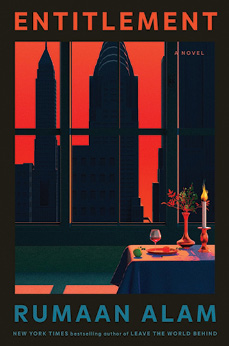
When Brooke takes a job for billionaire Asher Jaffe, she sees what money can do, and wants it. Brooke is the daughter Jaffe never had, but she imagines herself a protégé; tension builds as each vies for a different type of relationship.

A Reason to See You Again
by Jami Attenberg
When their father passes, the Cohen sisters and their mother seem rudderless and strike out in opposite directions. Spanning 40 years, this moving saga asks if love can heal brokenness.
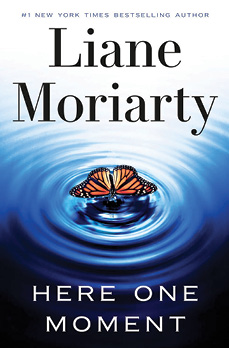
Here One Moment
by Liane Moriarty
Jane Austen meets Final Destination in a story from the author of Big Little Lies. Airline passengers encounter “The Death Lady,” who predicts how and when they will die. Is she right?
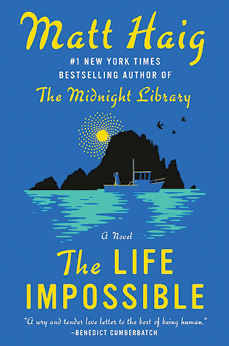
The Life Impossible
by Matt Haig
When Grace inherits her friend’s Ibiza home, she uproots her life, moves in, and quickly discovers a mystery behind her friend’s death that may be connected to Grace’s past.
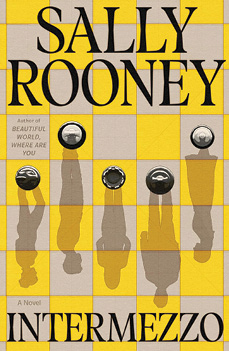
Intermezzo
by Sally Rooney
The Irish sensation delves again into Dublin’s millennials and their existential crises. Here, two brothers, reeling from the grief of their father’s passing, chase comfort with questionable women.
Nonfiction

It’s A Gas
by Mark Miodownik
The author of Liquid Rules explores one of the most evasive substances in our world: gas. With insight and humor, he traces the effect of 12 types of gases on the planet and our psyche. You’ll leave this book with a better understanding of something you can’t see.

The Third Gilmore Girl
by Kelly Bishop
Fans of Gilmore Girls will recognize Kelly Bishop as Emily Gilmore, but they might not know — but will learn in this frank, generous memoir about a life in and out of the spotlight — that Bishop’s journey to stardom began on stage in the original cast of A Chorus Line, which landed her a Tony.
 The Golden Road
by William Dalrymple
A historian and writer long focused on India reframes that nation’s historical significance by looking at its exports in ancient Asia — including religion, language, and innovation in art and architecture, — and their deep and ongoing influence.

Nexus
by Yuval Noah Harari
As humanity increasingly struggles with truth, fiction, and A.I., the Sapiens author probes how we — as individuals and civilizations — acquire, distill, and share information and offers insight into how we might forge a more humanity-centered future.
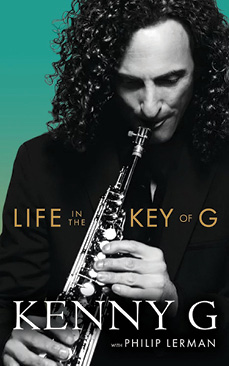
Life in the Key of G
by Kenny G
With humor and wisdom, one of the best-selling artists of all time gives a rare peek behind the curtain of his sax life. From high school performances for Barry White to the soundtrack for The Bodyguard and more, G forged an incredible and unlikely path.
This article appears in the July/August 2024 issue of The Saturday Evening Post. Subscribe to the magazine for more art, inspiring stories, fiction, humor, and features from our archives.
Cartoons: Fishing Fun
Want even more laughs? Subscribe to the magazine for cartoons, art, inspiring stories, fiction, humor, and features from our archives.
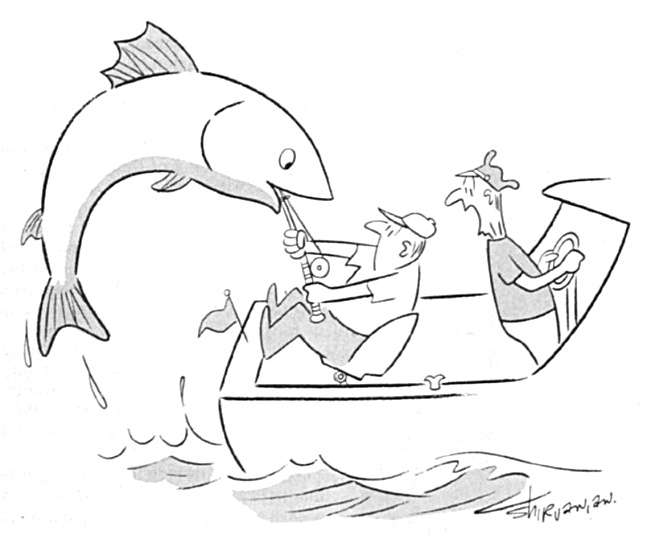
Vahan Shirvanian
June 23, 1962
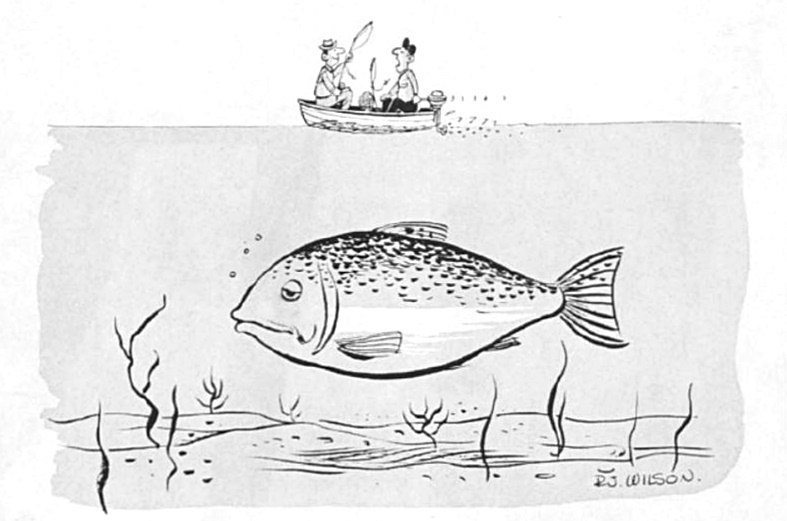
R.J. Wilson
November 15, 1958

Peter Vatsures
April 17, 1954
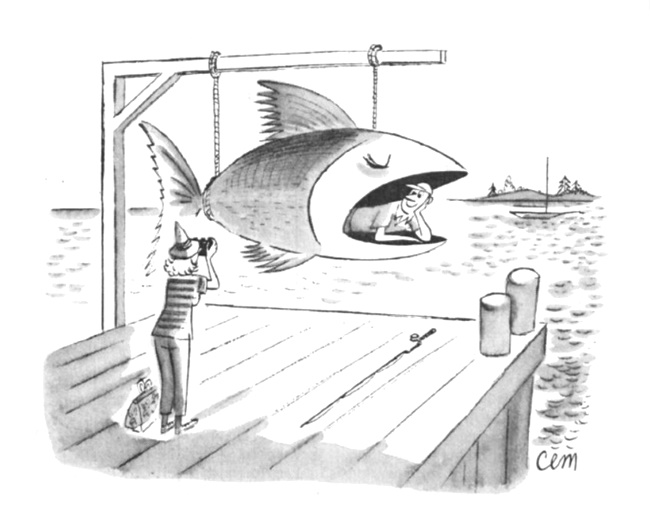
June 23, 1962
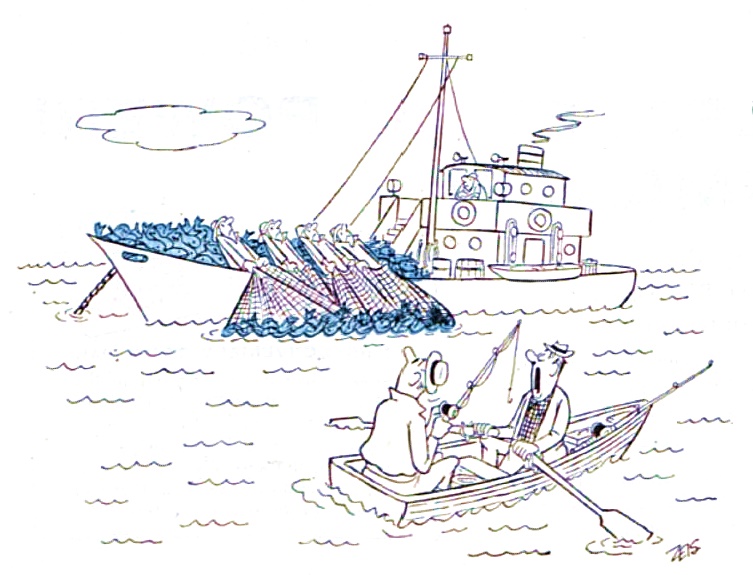
Joseph Zeis
July 1, 1961

Bill Yates
July 27, 1957

Harry Mace
April 29, 1961
Want even more laughs? Subscribe to the magazine for cartoons, art, inspiring stories, fiction, humor, and features from our archives.
The Saturday Evening Post History Minute: The First Photos
See all of our History Minute videos.
Infectious Generosity
You wouldn’t think that a cluster of atoms weighing less than one-trillionth of a gram could amount to much. Yet one such cluster, following a tiny tweak to its shape, entered a human body in late 2019, sparking a chain of events that killed more than seven million people and shut down the world economy.
Among the many lessons of COVID-19, one of the most profound is this: You don’t need to be big to be powerful. You just need to be infectious.
Any pattern that can replicate itself can have unlimited impact. Coronaviruses do it by avoiding human immune systems, creating billions of copies of themselves, and then triggering us to cough or sneeze those copies into other people’s air supply.
But many other types of infection are possible.
I want to persuade you that one such possible contagion could actually transform the world for the better. Its name? Generosity. If we figured out how to make generosity truly infectious, it could turn the tide on the growing divisiveness of our world and usher in a new era of hope.
Generosity? Really?!
It’s an odd word, to be sure. A little old-fashioned, perhaps. It seems, on first blush, too soft a force to be deployed against the challenges we’re facing. You, as an individual, may be as generous as you like, but how can your well-intentioned individual gestures and sacrifices amount to anything?
But that’s the whole point. They can. Any generous act can have extraordinary impact if it can make the leap from isolated to infectious. With a few little tweaks to their shape, acts of generosity can become explosively powerful.
Generosity’s infectious potential draws from two key drivers: human nature and the connectedness of the modern era. Overlooked traits that lie deep inside every human can combine to create chain reactions of generous behavior, and these ripple effects can be turbocharged by the internet for world-changing impact.
The internet is of course famous for enabling contagions of all kinds, from social media memes to viral marketing. As with a virus, humans are the vector for the internet’s infectiousness. Instead of replicating in noses and lungs, words and images ignite in our brains, provoking our fingers to press Like or Share.
Alas, many of the contagions that spread online are not healthy. Fueled by ad-driven business models that seek to glue people to their screens, social media platforms have turned the web into an outrage-generating machine. Instead of seeing the best in one another, we’re often seeing the worst, and it’s driving us apart.
Along with many others, I used to dream of the internet as a force for bringing people together. And I’m not willing to let that dream go. I believe there’s a pathway to reclaiming a healthier internet, with infectious generosity playing a starring role.
My belief is anchored by two complementary themes: The internet can turbocharge generosity and Generosity can transform the internet. Each theme feeds the other. If we see the internet as a scary, inhuman mass of strangers ready to judge and exploit us, it will be hard for us to trust it with our good intentions. But without people making efforts to connect with others online in a generous spirit, the internet can’t deliver its potential as a force for good. It’s tempting to dismiss the internet today as a downward spiral of toxicity. What is desperately needed is for us to start an upward cycle in which the growing visibility of a more generous version of humanity inspires people to play their part in contributing to the common good.
I feel a real sense of urgency about this. We’re in the early stages of seeing our world turned upside down by artificial intelligence. Guess what the source of the power of A.I. is? It’s the internet. In essence, the most powerful A.I. systems are designed to digest the sum of what humans have posted online and create predictive models. Do we want to rely on A.I. trained with today’s internet? No! We really don’t. We’ll risk amplifying much that is dangerous. If we can find a way to nudge the internet to a kinder, more generous, more positive place, it could have an incalculable impact on our future, both directly and by providing a healthier foundation for A.I.
It may seem absurd to you to imagine us humans, with all our imperfections, ever overcoming the internet’s woes: division, disinformation, data surveillance, addiction, social media-fueled insecurity, and so much more. I hear you. But under the radar, there are remarkable things afoot. They’re worth learning about.
Moreover, we must take on this problem. I see no choice. Our whole collective future is at stake. Paradoxically, the very urgency of the problem may help us. The greater the sense of crisis, the more humans shift from me to we. We’re in a moment when people are really worried. I think that means we’re also craving things that could draw us together.
The good news is that the ingredients to infectious generosity are hiding in plain sight. Simple, ordinary, unremarkable human kindness, for example, now has the potential to ripple outward like never before.
Take the following story. You’re sitting in your car at an intersection when a rainstorm hits. You notice two people by the side of the road getting soaked. One of them is in a wheelchair. So you jump out of the car, run to them, and give them your umbrella. No doubt, acts like this have happened countless times throughout history between people stuck outside in rainstorms. It might seem mundane.
However, when this act of kindness happened in Washington, D.C., in 2022, a stranger in another car captured it on video. When the clip was posted online, it attracted millions of views and more than 90,000 likes on Reddit. Comments from inspired viewers poured out: “I wanna be like him.” “Gives me hope.” “If he did that to me I’d feel the inescapable urge to pay it forward.” “I’m going to start carrying extra umbrellas.”
An act that, pre-internet, might have meant something to just three people ended up inspiring a multitude.
But an instance of everyday kindness captured on a viral video is just one example of infectious generosity. There are countless other ways to ignite it. Everyone can do something that has the potential to spread: A retired engineer posting invaluable know-how on You-Tube. An artist sharing work that provokes and enchants. An act of human courage that inspires millions of people on social media. A company that offers free courses on a technical subject in which it has expertise. A storyteller who highlights a powerful cause that an online community can fund. Or just someone who wakes up grateful for something in their life and decides to pay it forward, sparking an online chain reaction.
As head of TED for the past 20 years, I’ve had a ringside view of many of the world’s most significant discoveries, inventions, technologies, and ideas. I’ve come to see generosity as the essential connecting thread between the most important lessons I’ve ever learned — as an individual, as the leader of an organization, and as a citizen of the world. For years, TED’s tagline has been “ideas worth spreading,” and I have come to believe that generosity is the ultimate idea worth spreading.
Chris Anderson has been the curator of TED since 2001. His TED mantra,“ideas worth spreading,” continues to blossom on an international scale, with some three billion TED Talks viewed annually.
From the Book Infectious Generosity: The Ultimate Idea Worth Spreading by Chris Anderson. Copyright 2024 by Chris Anderson. Published in the United States by Crown, and Imprint of the Crown Publishing Group, a division of Penguin Random House LLC.
This article is featured in the July/August 2024 issue of The Saturday Evening Post. Subscribe to the magazine for more art, inspiring stories, fiction, humor, and features from our archives.
Considering History: The Boston Celtics and the City’s History of Race and Sports
This series by American studies professor Ben Railton explores the connections between America’s past and present.
On Monday, June 17, 2024, the Boston Celtics defeated the Dallas Mavericks in Game 5 of the 2024 NBA Finals, securing their record-breaking 18th NBA championship in the process. Cheering on the Celtics together has been a defining tradition for my sons and me for a decade, and getting to sit beside them as the Celtics won the championship is without question one of my favorite parenting moments to date — and a particularly poignant one as it’ll be the last significant sporting event we watch together before my older son begins his first year of college in August.
The Celtics don’t just connect to Railton family memories, though. Across its more than 75 years of history, the team has exemplified some of the best and the worst of professional sports in Boston and America, particularly in the context of race and racism (and often in conversation with the Boston Red Sox).
From the earliest era of professional sports in Boston, one of the city’s foundational teams reflected racial stereotypes. As I highlighted in this Considering History column on the Atlanta Braves, that professional baseball franchise began in Boston — initially as the 1871 Boston Red Stockings, but as of 1912 as the newly renamed Boston Braves, with a Native American mascot and logo to go with the new moniker.
By 1912 Boston was also home to a second professional baseball team, founded in 1901 as the Boston Americans but known as the Boston Red Sox since 1907. The team would come to be associated with a history of racism in both professional sports and the city. The Red Sox were the last Major League Baseball team to integrate, resisting the league’s inclusion of Black players for more than a dozen years after Jackie Robinson’s 1947 debut with the Brooklyn Dodgers. Owner Tom Yawkey and other team officials were threatened with a lawsuit (and later sued by another player for discrimination), the NAACP charged the team with “following an anti-Negro policy,” and the Massachusetts Commission Against Discrimination held public hearings on the team’s racism; the Red Sox didn’t add their first Black player until July 1959.
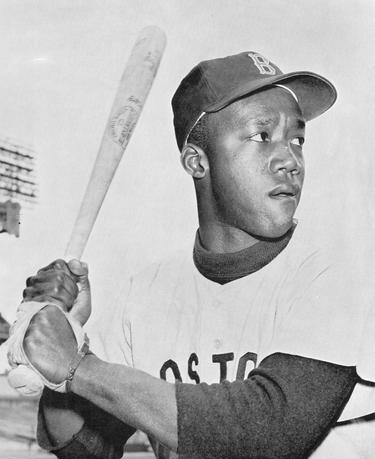
The Red Sox’s resistance to integration is particularly striking when contrasted with the Celtics, who in their first decades of existence were consistently ahead of the curve when it came to racial inclusion. The team was formed in June 1946 as part of the newly created Basketball Association of America, which in 1949 merged with the longstanding National Basketball League to form the NBA. Just four years after the team’s founding, in the April 1950 draft the Celtics made Duquesne University standout and current Harlem Globetrotter Charles “Chuck” Cooper the NBA’s first drafted Black player. When Celtics owner Walter A. Brown was asked on draft night if he had any qualms about Cooper’s race, Brown famously replied, “I don’t give a damn if he’s striped, plaid, or polka dot. Boston takes Charles Cooper of Duquesne.”
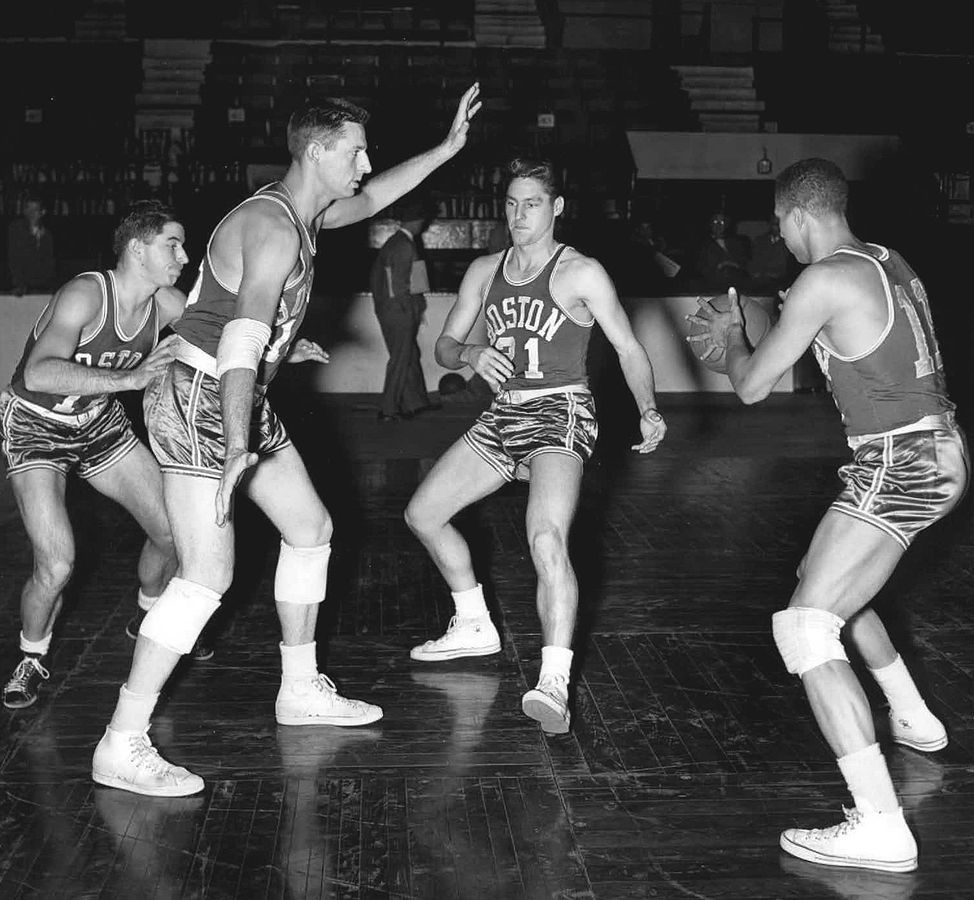
Cooper would play with the Celtics for four years before he was traded to the Milwaukee Hawks, and the Celtics would continue to consistently draft and acquire Black players in an era when they represented a minority of the league. That trend culminated on December 26, 1964, when the Celtics became the first NBA team to feature an all African-American starting lineup; as guard Sam Jones described the moment and the team’s innovative coach, “Red shocked me. I really thought that Red was going to start Havlicek as the fifth man in place of Heinsohn. But Red Auerbach is just different. So there’s five of us, and I said, ‘my gosh, we better win.’” The team did indeed win that game and went on to win the next eleven as well with that groundbreaking starting line-up of Jones, Willie Naulls (starting for the injured Tommy Heinsohn), Satch Sanders, K.C. Jones, and one of the single most dominant and successful NBA players of all time, Hall of Fame center Bill Russell.
Russell’s thirteen seasons with the Celtics produced eleven NBA championships, including a stunning eight in a row between the 1958-59 and 1965-66 seasons. After that 1965-66 season, Auerbach retired as coach (moving fully into the role of general manager), and convinced an initially reluctant Russell to become the team’s player-coach, another innovative idea that made Russell the first African-American coach in any American professional sports league. As Russell noted in his introductory press conference, “I wasn’t offered the job because I am a Negro. I was offered it because Red figured I could do it.” And indeed he could, reaching the Eastern Conference Finals in his first season as player-coach and then winning his final two championships in 1968 and 1969 before retiring on top.

But while Russell consistently dominated the basketball world during his years with the Celtics, his experiences with the city as a Black man were far more frustrating. In August 2020, just two years before he passed away, Russell wrote with precision and passion about those experiences for a SLAM magazine special issue on social justice and basketball. He detailed everyday instances of institutional racism, such as unwarranted police stops; extreme examples of racial terrorism, such as when Russell and his family moved to the predominantly white town of Reading and were greeted with vandalism and racist graffiti; and even racial epithets directed at Russell from Celtics fans, whom he argued “yelled hateful, indecent things” at him during games in his early years with the team. All of these issues led Russell to call Boston a “flea market of racism.”
These painful legacies, as well as the inspiring ones, are present in this 2024 Celtics team. Star Jaylen Brown (who was named the Bill Russell NBA Finals MVP) has talked at length about the systemic racism still present in Boston’s fan culture, but has also worked to create educational, economic, and social justice programs that challenge and transcend institutional prejudice. And head coach Joe Mazzulla, who became the youngest coach since Russell to win an NBA Championship, is the son of a mixed-raced couple; he won the title less than a week after the nation commemorated Loving Day. As we celebrate the triumph of Mazzulla, Brown, and the whole Celtics team, we can also remember these histories of race and professional sports in Boston and America.
Flamenco
The guitarist strummed a lively Spanish flamenco tune in a rapid rush of notes as his fingers flew across the strings. Next to him, the male singer began the cante, the song, which is the essence of the art form. His deep melodic voice conveyed a full range of passionate emotions — sadness, pain, joy, love — as he softly lamented, wailed, and powerfully expressed the song’s story to the audience.
In a setting no bigger than an average living room space, about 40 folding chairs, the durable plastic type that are commonly used at family parties or community events, lined the back walls of the room in a U shape. People of all ages and sizes filled the seats, motionless as the sounds of flamenco music resonated within the packed space of the tablao.
A tablao is a venue for flamenco shows; it’s not a large theater. A tablao is typically an intimate setting with a wooden stage for the artists to perform on, like a small nightclub or café. The audience normally sits at scattered cocktail or café tables facing the stage.
But this tablao was different. We were not separated from the performers by a raised stage; we shared the same floor. Our chairs left enough space in the middle so that they could dance right in front of us.
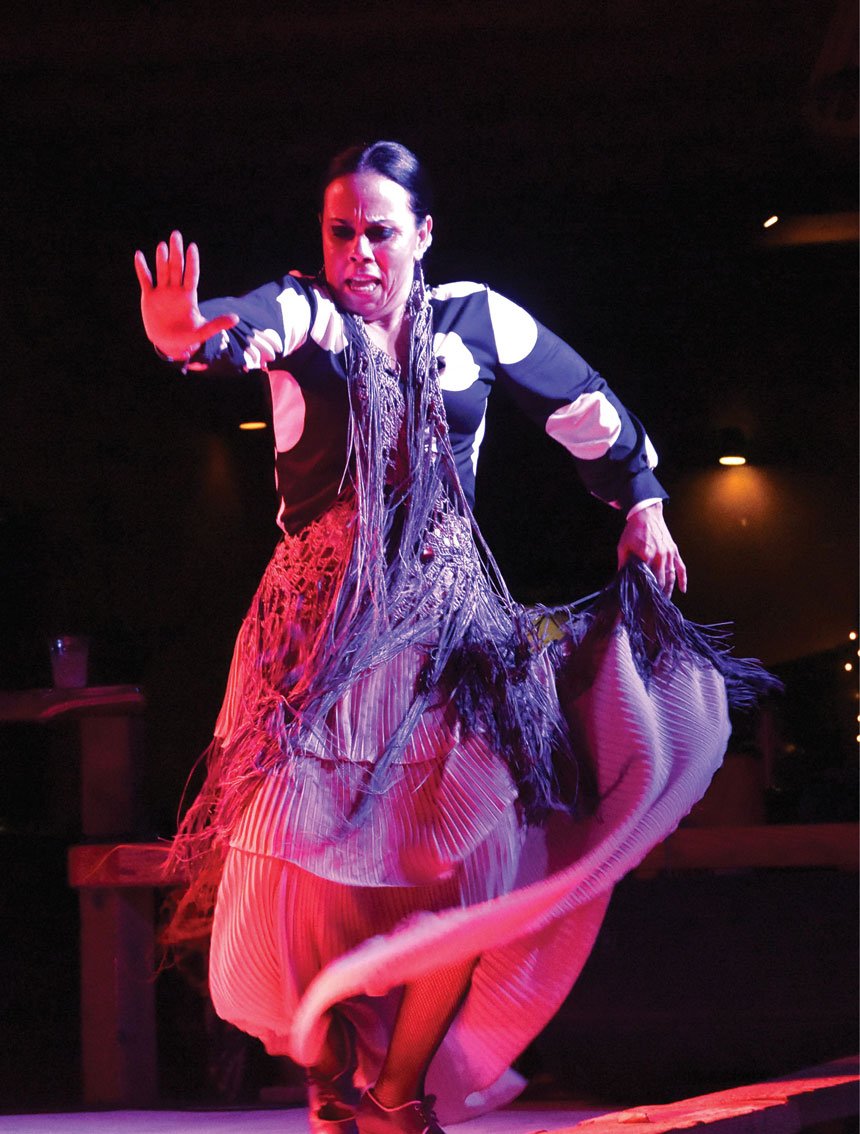
Suddenly, a woman wearing a long red dress entered the room, her sleek hair pulled back in a bun adorned with flowers. She swept past me, her ruffled skirt swishing with each step. Her feet drummed against the wood floor, creating a staccato sound. Each twist, turn, and twirl brought her closer to the guitarist and singer. I, like everybody else in the room, was transfixed, our eyes and ears at full attention, watching and listening to the trinity of artistic interplay happening before us.
I’ve been lucky enough to get front-row seats at performance arts events before, but nothing like this. I wasn’t accustomed to being within a few feet of a performer. Here, as an observer, I was on stage too. I felt the floor vibrate with every percussive stomp of the bailaora (female Flamenco dancer) with her energetic zapateado — a Spanish term for creating rhythms with the feet.
Later, Carmen Montes, the executive and artistic director of Casa Flamenca, the flamenco nonprofit organization where I watched the show, tells me, “There are caves in Granada, Spain, where flamenco is presented the way we do, with people sitting around the walls. We try to bring that same essence where flamenco is literally in your face. It’s a very unique experience.”
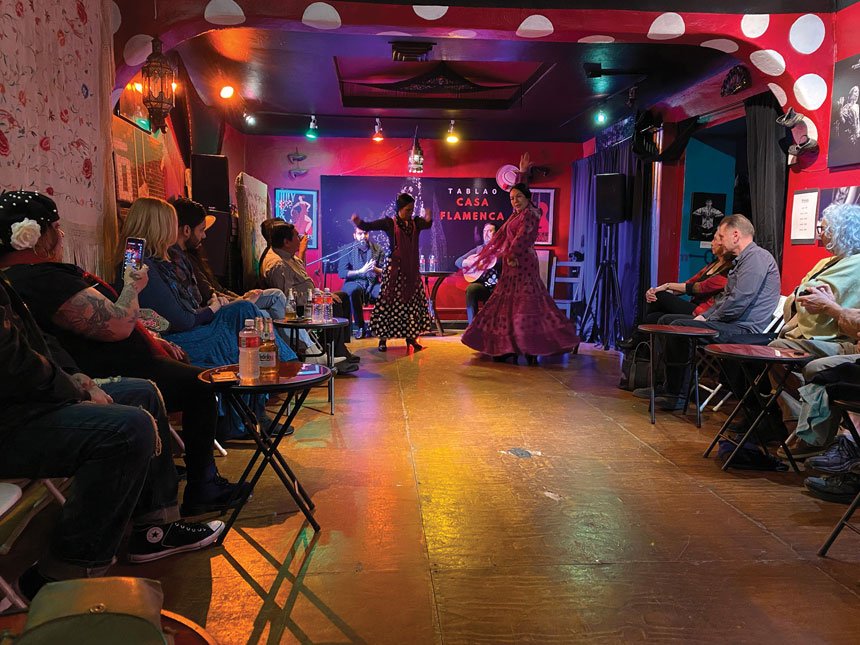
For an hour and a half, I was transported to a Spanish flamenco tablao in Andalusia, though physically I was far from it. I was in the southwestern United States in Albuquerque, New Mexico, where over the past 100 years, the art form has flourished, establishing deep roots in the state.
Flamenco has become a vibrant part of the cultural voice of New Mexico, so much so that Albuquerque — which hosts the largest flamenco festival outside of Spain — is recognized as the flamenco capital of North America.
Like the threads of a colorful and intricate tapestry, Spanish culture and traditions were woven into New Mexican society long before it became a state in 1912. Even before the first English settlers inhabited Virginia in 1607, the Spanish had already explored and claimed, and in some cases colonized, much of the southwestern territory of America. New Spain, what is now known as Mexico, was the launching pad for a number of expeditions into the far northern territory of the Spanish Empire.
In 1540, the Spanish conquistador Francisco Vázquez de Coronado set off from Compostela, New Spain, in search of gold, following trails formed by the indigenous people who had inhabited the lands for millennia. Coronado led his party deep into the interior on a route that became known as the Camino Real (“Royal Road”). In 1598, roughly half a century later, upon orders from the Spanish Crown, Juan de Oñate led a group of 200 soldier-colonists from Zacatecas into Nuevo Mexico. The expedition traveled along the Rio Grande, which stretches north into modern-day Colorado, creating settlements along the way.
These migration routes were also established trade routes that connected Central America with Mexico and North America. For 400 years the Camino Real was bustling with diverse ethnic groups seeking to settle or trade within the lands north of Mexico. There were not only Spaniards, says Marisol Encinias, executive director of the National Institute of Flamenco (NIF) in Albuquerque. It was a mix of people from different countries, many from lower classes, who brought with them their cultural ideas and traditions. There were people of Mexican indigenous heritage, those of African ancestry, and Spaniards who were actually gitanos — Romani from Southern Spain, primarily Andalusia, who were once disparagingly known as gypsies.
This confluence of cultures created an exchange of ideas, music, and dance and made its way north into modern-day New Mexico. Encinias explains that many songs and traditional dances of today have a connection to this time before flamenco as a form even existed.
The same type of cultural fusions happened in southern Spain, too. It was here, in the late 19th century, that flamenco proper took root, specifically among the gitano population of Andalusia, as a way to artistically express what they were feeling during a tumultuous time. It’s this chrysalis of dance, disparate traditions, shared hardships, and music that took flight as an art form — emerging as flamenco. “It’s an incredibly complex musical hybrid that is really beautiful,” says Encinias.
Learned within the family and passed down through generations, the music and dance form communicated and described their angst, joy, pain, and suffering.
At the end of the 19th century, small nightclubs in Spain called café cantatas started featuring flamenco musicians, with singers and dancers on stage. Curious travelers, locals, and aficionados interested in the emerging art form filled the venues.
During the early part of the 20th century, Spanish communities in New Mexico held local fiestas to celebrate their heritage with folkloric dances and songs performed in the plazas. Though the dancing was not quite flamenco, there were certain elements that resonated as flamenco style. It wasn’t until the 1940s that flamenco as a professional art form really took off in the United States. Jose Greco and his Spanish Ballet created elaborate touring productions showcasing flamenco dancers in colorful costumes with theatrical set designs, offering audiences a chance to attend professional flamenco productions on the big stage.
As the art form gained recognition throughout the latter 20th century, other flamenco artists and companies gained popularity across the States. Two of the most celebrated were from New Mexico: Vicente Romero studied and toured in Spain with Greco and is credited with bringing the fiery style of Gitano Flamenco to New Mexico in the 1960s. He and Maria Benitez, a talented Spanish dancer, performed and toured together for years before eventually setting off on their own. Both were flamenco legends. Benitez split her time performing in New York and Santa Fe, where she founded the Institute for Spanish Arts that offered flamenco classes and performances.
Other educational opportunities to learn flamenco guitar, singing, and dance began popping up across the state. “I was very influenced in my life by my mother and my grandmother as educators,” says Encinias, who along with her brother Joaquin grew up dancing at their grandmother’s dance academy in Albuquerque. Besides instruction in ballet, modern, jazz, and tap dancing, she recalls, her grandmother taught a variety of Spanish classical dance forms, including flamenco. “My brother and I studied flamenco with my grandmother and with my mother.” Their mother, Eva Encinias-Sandoval, is another flamenco legend of New Mexico and is considered a matriarch of the flamenco family.

Of her many accolades, in 2022 Eva Encinias-Sandoval was honored as a National Heritage Fellowship recipient by the National Endowment for the Arts for her dedicated work in preserving the culture of flamenco in the United States. Without a doubt, she has been a tour de force in promoting and developing flamenco educational programs in New Mexico for more than 40 years.
As a dance instructor at the University of New Mexico in the 1980s, she was asked by the university to develop a concentration of flamenco in the Department of Theater and Dance. To date, UNM is the only accredited university in the United States that offers a dance degree with a concentration in flamenco.
That was just a stepping stone to expanding the art of flamenco on a larger scale. She then founded the NIF in 1982 with the intent to promote the art of flamenco by providing a mix of educational and cultural programming. This included the creation of the annual Festival Flamenco Alburquerque — with a nod to the traditional spelling of the city’s name — which has become the largest and most renowned flamenco festival outside of Spain. This year marks the 37th festival of this prestigious week-long flamenco event, where performances, workshops, world premiere shows, and international performers and companies will fill Albuquerque with the sounds of flamenco.
Both of Eva Encinias-Sandoval’s children, Marisol Encinias and Joaquin Encinias, are instrumental in fulfilling the legacy to perpetuate flamenco’s history, artistry, and culture through their work at the NIF. As executive director, Marisol sees much of her role as creating a community and foundation where the art can continue to exist well into the future. Her brother Joaquin, a respected choreographer, is artistic director of the Conservatory of Flamenco Arts, the dance and music school of the NIF. He’s also artistic director of Yjastros: The American Flamenco Repertory Company, the only professional flamenco repertory company in the United States.
Through their work with the NIF, the Encinias family has opened the door for flamenco artists in New Mexico to thrive while helping audiences recognize the value of the art form throughout the United States.
A large part of what keeps the flame of flamenco alive is the rich community programs so tirelessly offered by flamenco professionals in Northern New Mexico, from Albuquerque to Santa Fe. Outreach programs provide access to the culture and music of flamenco to all manner of people, including underprivileged youth, remote communities, and economically challenged families.
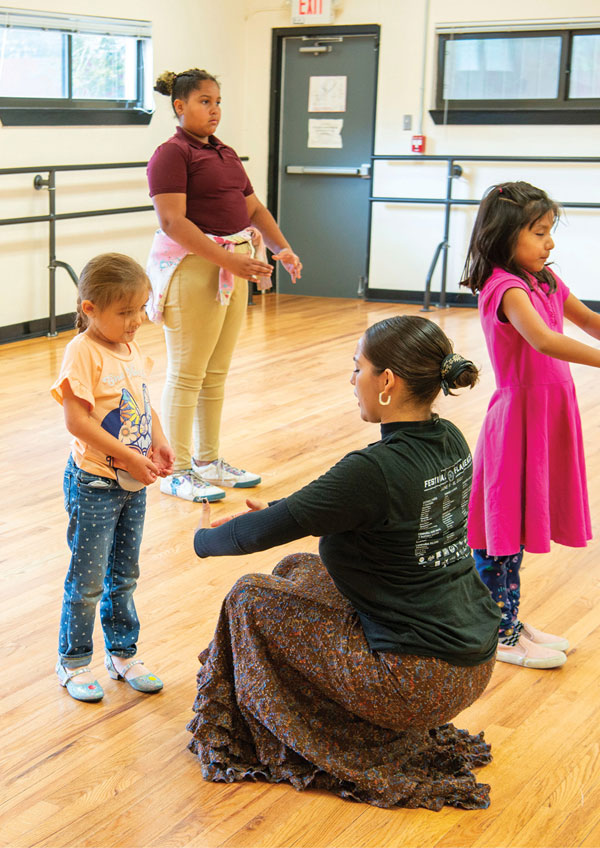
(Ungelbah Davila)
In Albuquerque, Carmen custcu of Casa Flamenca created a free Family Sunday event, offered once or twice a month and sponsored by the City of Albuquerque Arts and Culture and New Mexico Arts, in which the community can take part in an entertaining and cultural flamenco experience. “The program is mostly geared toward young children and their families,” says Montes. The outdoor space, Tablao al Aire, is alive with the strumming of guitarists and energy of fleet-of-foot dancers. It gives the community a chance to learn more about the traditions of flamenco.
Casa Flamenca’s motto is “Flamenco Is for Everyone.” They not only offer tablao flamenco performances with visiting artists from Spain but also host a range of programs and classes for anyone who wants to learn the music and dance of flamenco.
Close to Montes’s heart is what she calls Casa Flamenca’s “special programs” — like the one offered at a local hospital for children with cerebral palsy. Through techniques of flamenco, she worked on getting the kids to move in different ways and to work on posture and strength. She also developed a flamenco program for children with Down syndrome. “It was great to see the parents at their final presentation. They saw their kids remembering how to do things to dance and have fun,” she says.
It’s a lot to pack into a seven-day work week. Montes acknowledges that it’s a labor of love: “I have a dedication to an art form that I love and have a lot of respect for. I want to share that with the community.”
Marisol Encinias firmly believes that the arts are a powerful thing that more people should have access to. She has developed ways for the NIF to reach more people, like an initiative called Flamenco in Your Neighborhood. “It’s a community arts engagement where we are going out to different parts of rural New Mexico in areas with fewer resources to share flamenco with those communities.” Free flamenco dance and music classes are offered to kids for eight weeks. There’s a free community class every week for children, followed by a technique class for adults, offered at minimal cost. “At the end of the program,” Encinias says, “I see the kids dancing across the floor with their arms held high above their head. There’s a sense of empowerment as they engage in the culturally relevant art form.”
When someone travels to New Mexico, Encinias is hopeful that they will go see a flamenco performance or event. “Every time somebody supports the work that we’re doing, they are supporting part of the movement.”
Gigi Ragland is a travel journalist based in Longmont, Colorado. Her stories cover outdoor soft adventure, culture, nature, and good eats. Her credits include AARP, Conde Nast Traveler, National Geographic, and more. Follow her global gallivanting on Instagram.
This article is featured in the May/June 2024 issue of The Saturday Evening Post. Subscribe to the magazine for more art, inspiring stories, fiction, humor, and features from our archives.
Con Watch: Combatting Malware on Your Mobile Phone
Steve Weisman is a lawyer, college professor, author, and one of the country’s leading experts in cybersecurity, identity theft, and scams. See Steve’s other Con Watch articles.
Malicious software downloaded onto your cell phone can cause many problems, including making you a victim of identity theft, stealing your bank account or other assets, or leaving you more vulnerable to scams. Malware can end up on your phone when you click on infected links or files or when you download a malware-infected app.
To avoid infected links in texts or emails, be suspicious of any link that is sent you. They often appear to come from a trusted source such as UPS or your bank. If you’re concerned that the notice might be legitimate, contact the company via their website (not by clicking on that link!) to inquire about the issue.
As for infected apps, the first rule in avoiding them is to only get your apps from the official stores for Google (Google Play) and Apple (the App Store). These stores do their best to weed out malicious apps, but policing the app stores is a huge job: Google Play has more than three million different apps and Apple’s App Store almost two million.
Apple reported that in 2023, it rejected 1.7 million app submissions; 2022, Google indicated that it banned 173,000 developer accounts from Google Play. However, their efforts are by no means fool-proof. Recently, cloud security company Zscaler disclosed that it had discovered more than 90 malicious apps in the Google Play store that had been installed more than 5.5 million times.
Often the malicious apps such as the Anatsa malware, which allows cybercriminals to access your banking information, are hidden inside innocuous, legitimate-appearing apps such as PDF readers or QR code readers. It’s common for cybercriminals to create multiple developer accounts to upload malicious apps on to Google Play and the App Store so that if Google or Apple bans the developer, the crook can just use a different account. A common strategy is to upload their apps initially without malware, and then once it has passed inspection by Google or Apple, they add the malicious functionality in an update. Security patches and updates are added regularly by legitimate app developers, so a change to the app does not automatically raise suspicion.
Android phones are targeted by scammers more than iPhones, but not because Android phones are less secure. The two primary reasons that scammers target Android phones for their malicious apps is that the Android system is an open system and thus more available to scammers to exploit. Also, more than 70 percent of phones in the world are Android based.
One important way Android users can protect themselves from malicious apps is to use the Google Play Protect option, which is on by default. Google Play Protect does a safety check on apps in the Google Play Store before they are downloaded to your device and will remove harmful apps as well as warn you about questionable apps before they are downloaded.
Along with only getting your apps from the official App Store and Google Play, you should also carefully read reviews of the apps. Even here you need to be a bit skeptical because scammers often will submit phony positive reviews. Also look for the number of downloads a particular app has. This can be an indication of the app’s legitimacy. In addition, during installation consider what permissions the app requests and be skeptical of apps that ask for unnecessary or excessive permissions that appear to be unrelated to the functioning of the app. For instance, a calculator app doesn’t need to have access to your camera, location, contact list, or photos.
Finally, install security software on all of your devices. Most importantly, install updates as soon as they are available.
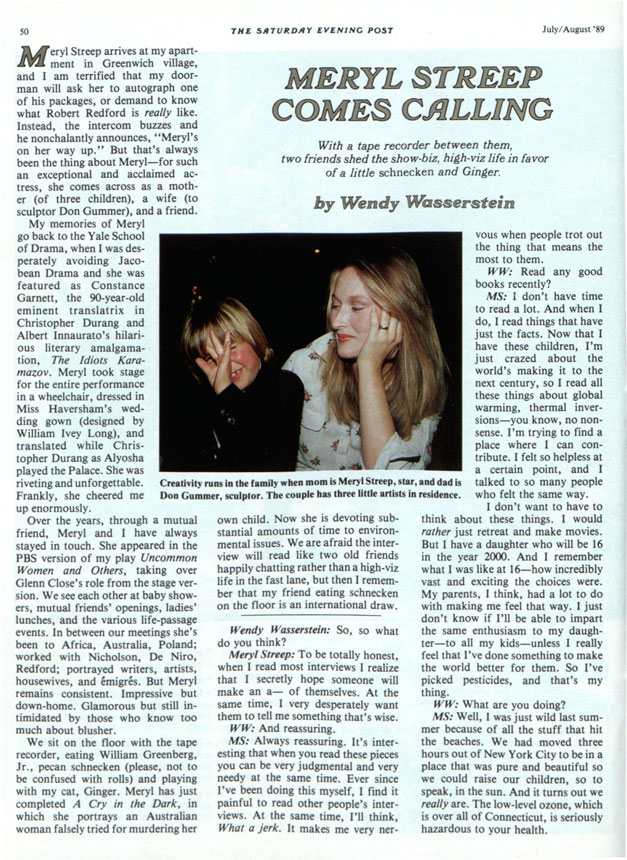
From the Archive: Meryl Streep on Acting
—From “Meryl Streep Comes Calling” by Wendy Wasserstein, from the July/August 1989 issue of The Saturday Evening Post
So many people who write about the movies don’t understand either the process or the creation of the actor. Most of them — even the most sophisticated — are swept away by whether it’s a character they like or dislike. They confuse the dancer with the dance. With my work, they get stuck in the auto mechanics of it — the most obvious stuff, like what’s under the hood. They mention the accent or the hair — as if it’s something I’ve laid on that doesn’t have anything to do with the character. The news is that most of the great practitioners of the art of acting know exactly what they’re doing. u
But you rarely if ever see it written about in reviews, in critiques, in specific language.
Every actor I’ve ever met knows about the process and talks about it. So you would think the people who judge actors would at least familiarize themselves with the art form and its process.
They’ll give credit for the wrong thing — God knows I’ll take it however it comes — like the easiest moment in the film for the actor, because all you do is appear. Say you’re supposed to have been dead for 15 years and you come around the corner and the music swells, and they write, “The moment when she came around the corner — she wasn’t dead! And the look on her face.” Well, if she’s beautiful and backlit, all she has to do is think about lunch and the shot will work.



This article is featured in the May/June 2024 issue of The Saturday Evening Post. Subscribe to the magazine for more art, inspiring stories, fiction, humor, and features from our archives.
Marjorie’s Last Run
I’m a Secret Service agent, but not the kind with the sunglasses who protect politicians. The Service also chases counterfeiters, and that’s been my job for almost 20 years. I’ve caught some big-time forgers and foiled some crafty schemes, but my favorite case still doesn’t feel like a crime to me.
It ended in a hospital room, where I met the culprit for the first time. She was a 90-year-old painter, and so famous that I’ll just call her Marjorie, though that’s not her name. My name’s been changed too.
“I think I know why you’re here,” she said from her hospital bed after I’d shown my credentials.
“That’s refreshing.” I pulled up a chair. “Most people pretend they don’t have a clue.”
“Let me guess. When the police found me keeled over in my workshop, they noticed a few things.”
“If it helps, they didn’t want to report it. You’re popular in your town. That’s why your neighbor asked them to do that welfare check. But the equipment they saw, as well as the bills you were working on, didn’t leave them much choice.”
Marjorie set aside the book she’d been reading, along with a pair of plastic glasses. She was tall and slim, with gray hair almost to her shoulders. Over her pajamas she wore a light pink robe with thin blue pinstripes. The lines in her face were pronounced, from decades of studying minor detail. She smiled and shook her head.
“So if I’d collapsed in my kitchen, you’d be none the wiser.”
“I certainly wouldn’t be here, but I actually know a lot about what you’ve been doing. I was given the first evidence of your activities ten years ago.”
“And I’ve only been doing it for 15.” She lowered her chin in playful rebuke. “You’ve been on this for ten years? Not very energetic, Agent Horrigan.”
“It’s never been an official case, and for good reason. Near as we can tell, you only work on low-denomination bills. Don’t get me wrong; technically you’ve violated the law. But you couldn’t have been making any money doing it.”
“Oh, I don’t need more money,” she fairly tittered. “I’ve been in this room for three days, so you must have done some research on me.”
“I have. You’re highly regarded in your field, and not just as a painter. You’ve helped with some serious art restoration, in every painted medium. That’s talent.”
“That’s painstaking work, actually. It all was.” She leaned forward. “I’ve found that if you look at anything long enough and hard enough, you will figure it out.”
“You certainly did that with the nation’s currency.” I spread my hands palms-up. “Listen. I haven’t read you your rights, and I promise none of this is being recorded. What you’ve been doing isn’t easy, and some of it we can’t even explain. I’d like to understand it.”
“Fair enough. Besides, at my age I’m not terribly worried about jail. Why don’t you tell me what you know, and I’ll fill in the rest?”
“Thank you. I was pretty junior when we first spotted your handiwork. Notes in circulation are routinely examined for wear and tear. The folks checking those bills noticed that someone was giving a very thorough cleaning to old singles, fives, and tens.”
“I developed my own stain removers. It’s a slow process, washing off the oil left by all those hands and the ink from all the graffiti. The real chore was lifting the pieces of tape on the torn parts without doing more damage.”
“It probably wouldn’t make much difference if you did. On your most recent work, you’ve been sealing those rips with a compound that almost exactly matches the original material.”
“That was a product of trial and error. I don’t sleep very much anymore, so there was plenty of time to experiment. I knew I got the formula right when scanners started accepting the bills I’d repaired.”
“Your processes improved over the years. As the Service’s point of contact for these notes, I get to see the ones you’ve altered.”
“I prefer to say I restored them.”
“That’s accurate enough. Your technique took a big jump when you started filling in the colors and lines on the repaired parts. The people at the Bureau of Engraving and Printing say it’s almost impossible to detect. They’ve framed and hung some of your more complete restoration jobs. After getting official approval, of course.”
“Approval. If I’d ever sought that in life, I never would have succeeded at anything.”
“There’s one question the Bureau folks keep asking. When a note’s worn down enough, they destroy it. So why do all this work, when sooner or later every printing run eventually gets replaced with clean new money?”
“The same reason I got into restoring old paintings. Respect for the art.”
“I’m not sure I understand. Art?”
“Ever hand a dollar bill to a toddler? Children have no idea what money is, and yet their eyes light up instantly. They see the imagery, the colors, the composition. That excitement they show? That’s the human reaction to art. Printed money is art, and your system leaves too much of it in a degraded condition for too long.”
“I’ve always seen it as a tool for commerce. A medium of exchange.”
“Exactly.” Her eyes shone as she pointed a finger at me.
“What did I say that was so exact?” We both laughed, but I was honestly lost.
“Exchange, Agent Horrigan. Everyone handles money. Especially the small bills. That’s why they wear out so fast. They’re passed from hand to hand, dropped in collection plates, put inside greeting cards. They’re the most accessible form of art, because anyone can hold them.”
“Don’t have to go a museum or a studio.”
“And even there, you can only look. Money is art that you hold in your hand, put in your pocket, carry around with you.”
“That explains the cleaning. But you started replacing some of them.”
“Oh, not completely. I used as much of the existing note as I could.” Marjorie shrugged. “Granted, some of them didn’t leave me much to work with.”
“They still don’t know how you managed to reuse the security strips. But I’m more interested in knowing why you put in all that time on bills that were so damaged.”
“It’s a tribute to the artists. Every time an old bill is destroyed, someone’s creation is removed from the world. We don’t do that with famous paintings and murals that get dirty and faded, do we? No, we restore them. Every bill that’s printed is a collaboration from engravers, designers, printers, dye makers, and many others. They work so hard to put their art out there, why shouldn’t I work hard to preserve it?”
“Eventually, every note from an old run leaves circulation.”
“But what if that was the last run one of those artists ever worked on? I’m keeping their final creations alive—and universally accessible—that much longer.” Her eyes roamed around the room and then back to mine. “You view time differently when there’s not a lot of it left.”
We chatted for another hour, but most of that was too technical (or confidential) to repeat here. The knowledge she’d gleaned from studying our money was staggering, but I didn’t have the heart to ask her to stop. My superiors didn’t know I had a suspect and didn’t officially consider this a case. I decided it was enough to quietly confiscate the more specialized equipment from her workshop, and went back to headquarters.
Marjorie passed away that night. She’d known the end was near when we spoke, but didn’t tell me. Her funeral in that small town was standing room only.
Several years have gone by, but every now and then one of her old restored bills gets forwarded to me. It’s comforting to see that Marjorie’s last run hasn’t ended quite yet. But even when that happens, and they stop sending me those lovingly repaired notes, I’ll still have something she gave me.
Now, when I’m examining a bill, I see more than a tool for buying and selling. I recognize the fine lines and the watermarks not just as protection against forgery, but as delicate and caring creations. I appreciate the colors and the imagery the way Marjorie’s toddler would. I recognize the intense effort and personal expression.
I see the art that I hold in my hand.