Walt Whitman, Abraham Lincoln, and the “Terrible Duties” of Democracy
“The United States are destined either to surmount the gorgeous history of Feudalism, or else prove the most tremendous failure of time,” wrote American poet Walt Whitman in his 1871 work, Democratic Vistas. Despite writing in the wake of a brutal civil war and a failing Reconstruction Era, Whitman remained optimistic. “Not the least doubtful am I on any prospects of their material success.”
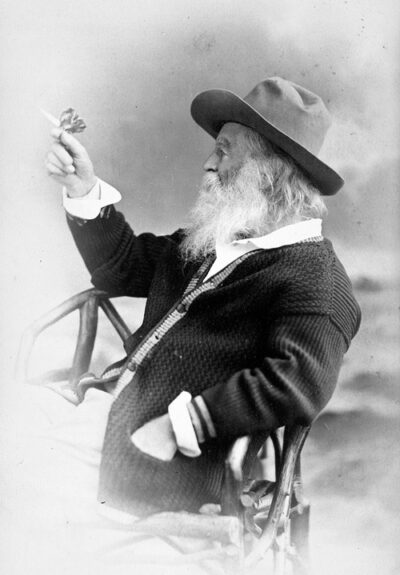
Known more for his poetry, exemplified by Leaves of Grass (1855), Whitman’s dark 1871 treatise on the nation remains a harsh but ultimately optimistic appraisal of the American experiment. It serves as a useful tool for thinking about the nation’s current state on the 250th anniversary of the Declaration of Independence.
Whitman’s revolutionary patriotism had long been part of his worldview. He celebrated the Declaration of Independence and the Revolution in the preface to Leaves of Grass, noting that a poet must “enter the essences of the real things and past and present events,” among them “the haughty defiance of ’76, and the war and peace and formation of the constitution.”
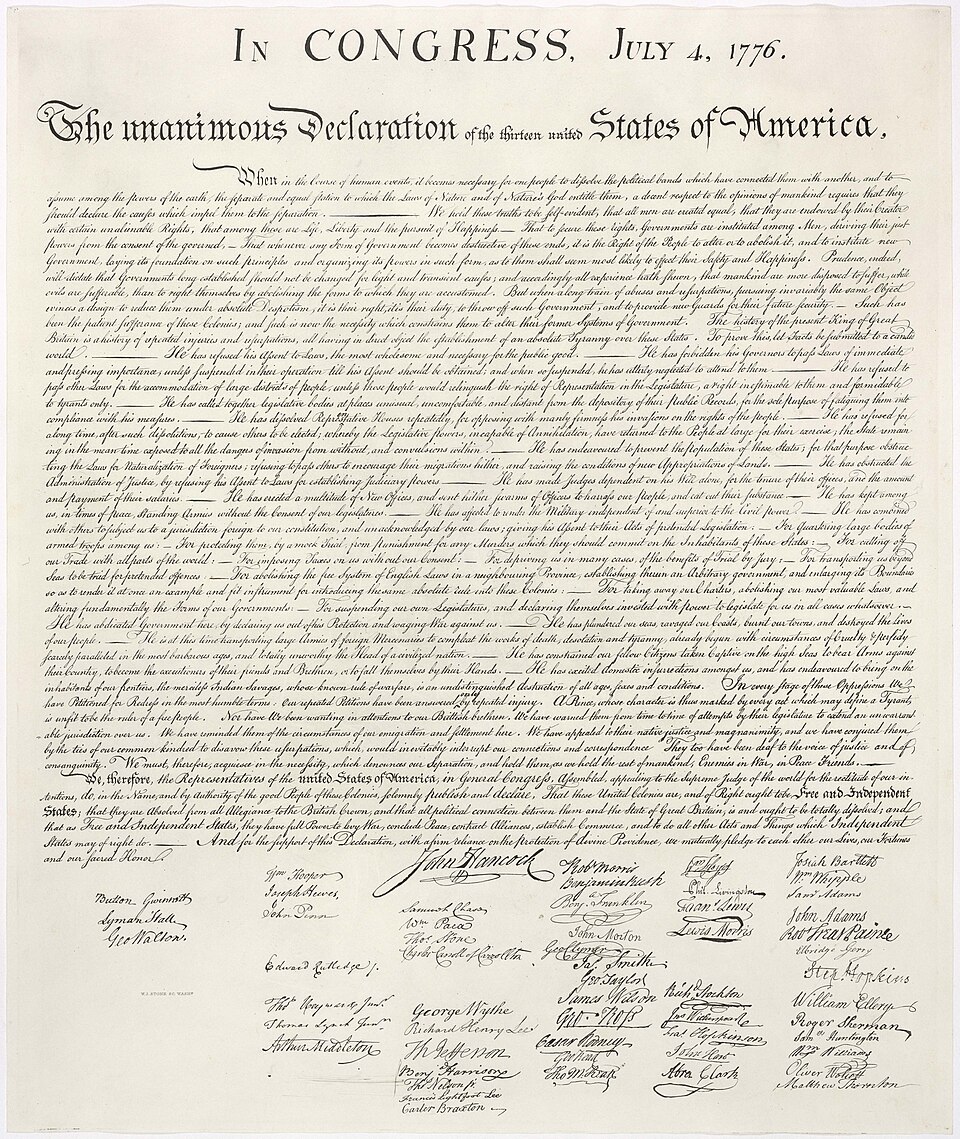

But for all his celebration of the Declaration and the nation’s founding, he did not mince words regarding the nation’s failings. He wrote of a “hollowness” at the center of American life at the time, calling the business classes depraved and the government saturated in corruption.
Whitman thought that the best answer to such corruption and malfeasance was the Democratic process itself. “I know nothing grander, better exercise, better digestion, more positive proof of the past, the triumphant result of faith in humankind, than a well contested American national election.”
However, Whitman did not necessarily point to institutions or political parties as the nation’s salvation. He believed that the actions of individual Americans defined and redeemed the nation, and that we should ignore “the antics of the parties and their leaders, these half-brain’d nominees, the many ignorant ballots, and many elected failures and blatherers.” As New York’s Al Smith put it over fifty years later, “All the ills of democracy can be cured by more democracy.”
Critically, Whitman wrote several years after Abraham Lincoln’s Gettysburg Address reshaped how America thought about the Declaration of Independence, and Whitman’s writings were heavily influenced by Lincoln’s faith in the nearly forgotten document. Despite the Declaration’s centrality to American life today, for much of the first two decades following the revolution, it fell into some level of obscurity. “In the years immediately after 1776, the Declaration did not enjoy special reverence in American culture,” observes historian Michael Hattam in his 2024 work, The Memory of ’76: The Revolution in American History. It took the advent of political parties in the 1790s for it to reemerge when it became a “weapon of partisan warfare,” observed early Americanist Robert M.S. McDonald.
But from the outset of his political career, Lincoln honored the Declaration. As historian Douglas S. Wilson observes in Lincoln’s Sword, “Lincoln’s attachment to the Declaration was neither temporary nor merely expedient.” During an exuberant 1858 speech in Chicago, Lincoln argued that the Declaration functioned as an electric cord that linked “the hearts of patriotic and liberty loving men together.” He then called on Americans to “discard all this quibbling about…this race and that race and the other race being inferior…and unite as one people throughout the land, until we shall…stand up declaring that all men are created equal.” Lincoln believed that the Declaration was fundamentally opposed to slavery, which he made clear in his most famous speech on November 19, 1863.
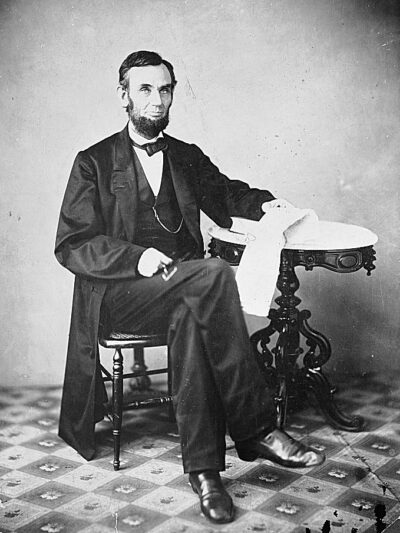
At Gettysburg, Lincoln referenced the Declaration of Independence when he spoke of “a new nation, conceived in Liberty, and dedicated to the proposition that all men are created equal.” He had uttered such rhetoric before, but the circumstances of the war and the significance of Gettysburg itself gave his words a new level of solemnity.
Historian Garry F. Wills wrote in his 1992 book, Lincoln at Gettysburg: The Words that Remade America, that Lincoln, “not only presented the Declaration of Independence in a new light, as a matter of founding law, but its central proposition equality, in a newly favored position as a principle of the Constitution.” The American people had accepted as “its great assignment what was addressed in the Declaration.”
Though the Confederacy called upon the Declaration’s assertion the people’s right to abolish a tyrannical government, the South largely defined itself in opposition to the Declaration, choosing to emphasize the Constitution, which pointedly did not privilege equality before the addition of the Fourteenth Amendment.
Lincoln critics of the day, such as the Chicago Tribune, recognized immediately Lincoln’s rhetorical maneuver. “Abraham Lincoln and, in considerable degree the authors of the post-civil war amendments, attempted a new act of founding, involving…a startling new interpretation of that principle of the founders which declares that ‘All men are created equal,” the newspaper observed shortly after the speech at Gettysburg. He had reinvoked “the spirit and emotional resonance of Jefferson’s own aspiring words,” writes Wilson, and placed equality at its center in a time when critics assailed the principle that “all men are created equal…as a self-evident lie.”
Lincoln’s famous address remained an important touch point for Whitman. “Few probably are the minds…that fully comprehend the aptness of the phrase, ‘the government of the people, by the people, for the people,’ which we inherit from the lips of Abraham Lincoln,” he wrote in Democratic Vistas.
Obviously, Whitman recognized the potential perils of democratic rule. “The People! Like our huge earth itself…is full of vulgar contradictions and offense,” he wrote. Democracy is hard, even dangerous, which is why he portrayed “life in a democratic culture as heroic.”
Such heroism was on display in the Civil War. As Bill Kristol recently wrote in the Bulwark, at the time Minnesota was the newest addition to the United States and the first state to volunteer a regiment for the war, the 1st Minnesota Volunteer Infantry Regiment. “Why did the Minnesotans volunteer? For what were they fighting? Their own security wasn’t endangered by Southern secession,” writes Kristol. “They weren’t at risk of being conquered by a foreign people or culture.” Yet they did fight, and suffered dire casualties, over 80 percent by some estimations, in securing the Union’s position on the Battle of Gettysburg’s second day. It’s a sacrifice that ultimately enabled Union victory. Some have argued that Americans won’t fight for abstractions, yet that is exactly what Minnesotans fought for over 160 years ago.
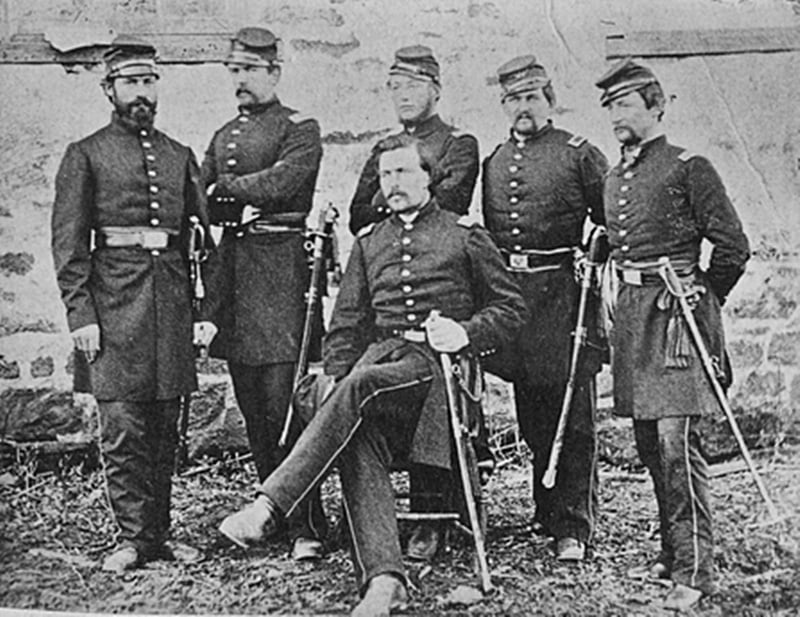
Despite our collective dedication to the Declaration and its ideas, the nation has not always lived up to them, as evidenced by the persistence of slavery, the eradication of Native Americans, and the need for a suffrage movement. The responsibility for achieving the Declaration’s ideals falls to all of us, but such a task requires of its citizens real work, or as Whitman argues: “The founders have passed to other spheres – but what are these terrible duties they have left us?” Minnesota demonstrated such dedication in 1863.
As America turns 250 this year, many of Whitman’s observations remain as true today as they did in 1871. The ideals of the Declaration of Independence can be achieved. If Whitman could see a future after a horrific Civil War and a Reconstruction that failed to deliver true equality, so too can we find a way through whatever divisions continue to afflict us.
But such “terrible duties” require real commitment. Political parties, as Whitman notes, are not always the answer, but individual action, in concert with others, can deliver change. We must not lose the “haughty defiance of ’76” but rather embrace it all the more.
Green Space: Planting with Direction
Being born in Florida but raised in Indiana, I never felt like I truly fit in with my Hoosier peers. I read Cross Creek in elementary school, and Marjorie Kinnan Rawlings’s depiction of rural Depression-era Florida shaped how my young mind imagined “my” Florida: an enchanted land of orange groves and winding waters. When I found myself back in Gainesville last December, I knew a trip to Cross Creek was in order.
That visit to the Marjorie Kinnan Rawlings State Park found me in the midst of a thinning citrus grove, its sparseness due in part to the invasive citrus psyllid. These tiny insects transmit a bacterial disease known as citrus greening, and no treatment or cure is currently available; once a tree is infected, it will eventually die. Spanish explorers were responsible for introducing citrus trees to Florida, and it’s hard to imagine a Florida without oranges. In fact, the official state flower is the nonnative orange blossom.
Restoration does not always mean returning a place to what it once was. Ecological restoration, as defined by the Society for Ecological Restoration, is not about re-creating a frozen moment in time; rather, it is about helping landscapes recover along a path that makes sense for the place, history, and present conditions. When systems have been transformed beyond easy repair — as with Florida’s citrus groves — restoration asks us to look ahead, using history as a guide rather than a blueprint. The same logic applies to home landscaping: Restoration at any scale is less about perfection than it is direction.
Each spring, that question of direction begins to take shape with the return of native plant sales. Their rows of trays, handwritten labels, and colorful pictures can spark a kind of runaway vernal enthusiasm at once exciting and overwhelming. To avoid decision fatigue and future letdown, it helps to step back and ask a simple but important question: What is my site like?
Spend time in your space and make a few observations. Notice the amount and quality of light, moisture levels, general soil characteristics, and any practical constraints (space, HOA regulations). Understanding the conditions in your space inevitably rules some things out, but it yields clarity that steers you toward plants suited to where you’re asking them to grow.
After you take stock of your site, you may be surprised by how many options remain. With so many worthy choices, it can be tempting to collect one of everything. But a few species planted in meaningful numbers with seasonality in mind will do more to support pollinators and recolonize a space than a long list of single specimens.
While all native plants play a role, some do more ecological work than others. Tools like the National Wildlife Federation’s Native Plant Finder
(nativeplantfinder.nwf.org) help narrow those choices by highlighting plants and trees that support the greatest number of insects, an essential foundation of the local food web.
Some homeowners’ associations are slower to embrace the wilder edges of native plantings. Fortunately, many short-stature native plants offer ecological value while still fitting within more traditional expectations.
Choosing native plants is ultimately less about the plants themselves than the relationships they make possible, between insects and birds, soil and water, people and place. When we plant with attention and humility, we participate in restoration not as an act of nostalgia, but as a forward-looking practice rooted in care.
Mary Margaret Moffett is an ecologist and Advanced Indiana Master Naturalist.
This article is featured in the March/April 2026 issue of The Saturday Evening Post. Subscribe to the magazine for more art, inspiring stories, fiction, humor, and features from our archives.
Considering History: Reframing Cesar Chavez Day to Focus on the Collective Farm Worker Movement
This series by American studies professor Ben Railton explores the connections between America’s past and present.
Since 2011, when President Obama issued a proclamation declaring it a federal commemorative holiday, March 31st has been celebrated in many communities as Cesar Chavez Day. The famous Mexican American labor leader and political activist was born on March 31, 1927, and the annual commemorations have provided an opportunity to celebrate both Chavez as an individual and the movements he helped lead.
But earlier this month, an explosive New York Times article detailed numerous allegations against Chavez of sexual assault, child molestation, and other horrific crimes, a report that was quickly followed up by both a social media post from and interviews with fellow labor leader Dolores Huerta telling the story of her own multiple sexual assaults by Chavez.
While Chavez himself passed away in 1993, it’s still vital to confront these allegations, not only so we can seek justice for the victims, but also to understand the systems that enabled and covered up Chavez’s decades of abuse. And when it comes to the holiday, we have an opportunity to move away from tributes to a single figure (however influential they may be) and toward memories of the farm worker movement as a whole. The history of that movement exemplifies the best of collective action, activism, and the communal battle for rights and justice for all Americans.
Many of the earliest moments of that farm worker movement came from Filipino American communities. In the early 20th century, aided in their migration by the islands’ status as a U.S. territory (if an occupied and conflicted one), a number of Filipinos journeyed to both Hawaii and the U.S. West Coast, and many found work in settings like Hawaii’s sugar plantations. There they found extremely difficult and dangerous conditions, and as the community became more sizeable and established, the workers began to push back on those conditions and to argue for more protections, better wages, and other rights. On August 31, 1919, the movement coalesced into an organization, the Filipino Labor Union (FLU), with Pablo Manlapit elected as its first president and Pedro Esqueras its first treasurer.
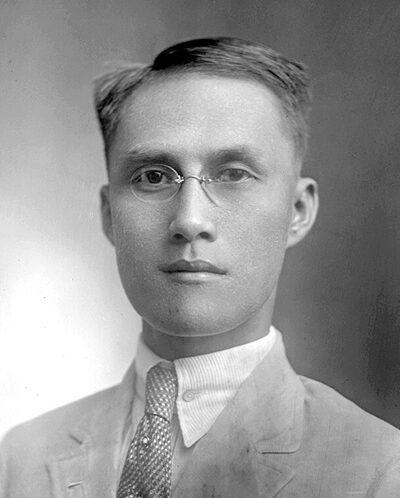

The FLU quickly organized collective actions, in the process bringing together not only Filipino American but also Japanese American workers from a number of island plantations. The first such strike took place on Oahu in January 1920, and was successful at gaining both higher wages and guaranteed breaks during the work day. A far more comprehensive and extended labor action was the plantation workers’ strike that began in April 1924, spread across all the Hawaiian islands, and lasted for more than five months, culminating in a far more violent and horrific way: Kauai’s September 1924 Hanapepe Massacre, in which police officers killed a number of workers and exiled others (including Manlapit) from the islands. We can’t tell the story of the farm worker movement without including such violence and oppression, but those periods of backlash have never stamped out the movement nor stopped its momentum.
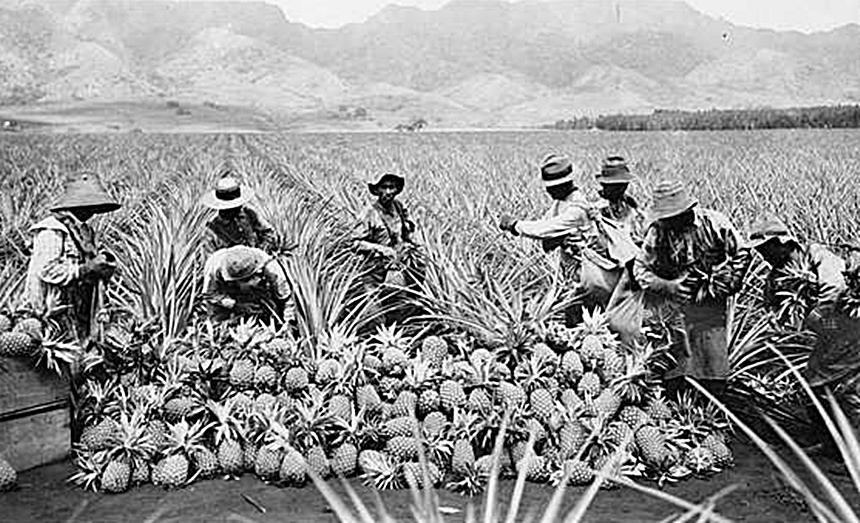
That building momentum brought individuals like Manlapit as well as communities like Filipino migrants to the mainland United States, and in the next couple decades they joined an increasingly multicultural movement fighting for farm and migrant workers. In January 1930, Filipino American, Mexican American, and white farm workers in California’s Imperial Valley joined together to organize the Agricultural Workers’ Industrial League (AWIL) and strike against oppressive conditions on lettuce farms; once again corporate and law enforcement forces collaborated to end the three-week strike, but the AWIL would endure for decades. Hawaii saw similar movements of multiethnic solidarity, such as the September 1946 longshoremen’s strike in which Japanese, Chinese, Filipino, Puerto Rican, Portuguese, and native Hawaiian workers struck for 79 days, shutting down 33 of the islands’ 34 plantations and earning concessions including higher wages and a 40-hour work week.
.jpg)
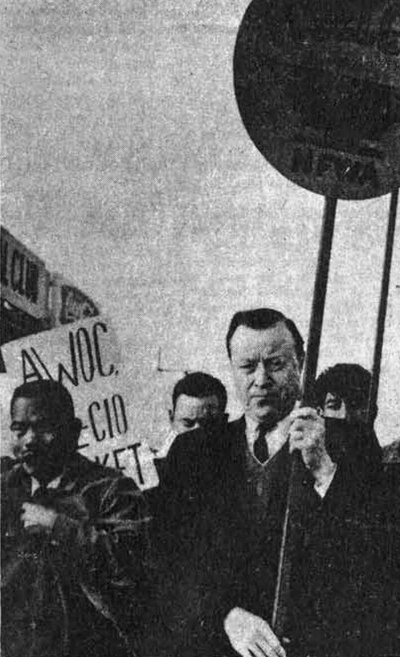
As I traced in this Considering History column, by the 1950s one of the main sources of farm and migrant labor throughout the United States was the controversial Bracero Program that brought Mexican laborers to the U.S. between 1942 and 1964. While both employers and the authorities worked hard to make it difficult for these hundreds of thousands of migrant workers to organize and to punish them if they tried, braceros did begin to take collective action nonetheless, often in solidarity with other workers like those in the Filipino-majority Agricultural Workers Organizing Committee (AWOC). Working in conjunction with AWOC organizers like Larry Itliong, bracero labor leaders and allies like the scholar and activist Ernesto Galarza pushed for organization and action for years, and between 1959 and 1962 a number of strikes across the Southwest and West brought together these multiple migrant worker communities as well as domestic farmworkers.
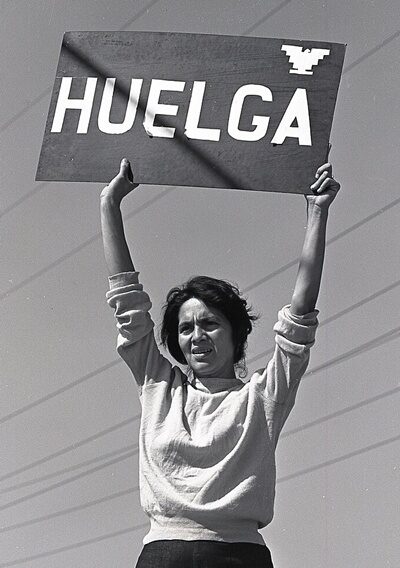

All of those efforts provided the inspiration for the September 1965 Delano (California) grape strike and boycott that truly launched the farm worker movement into the national consciousness. That strike was begun by Filipino farmworkers associated with AWOC, who were pushing for higher wages and other protections; it expanded to include the Mexican American migrant workers at the heart of the newly formed National Farm Workers Association (NFWA), which had been co-founded a few years earlier by Chavez, Huerta, and Gilbert Padilla; and the accompanying boycott that began in December 1965 was supported by activists from civil rights movement organizations like the Student Nonviolent Coordinating Committee (SNCC) and the Congress of Racial Equality (CORE).
The Delano strike and boycott would last for nearly five years, and would produce sweeping results and reforms far beyond that specific setting. Perhaps most importantly, the strike set the stage for the California Agricultural Labor Relations Act of 1975, a historic piece of legislation that for the first time established in law the right to collective bargaining for farmworkers. While migrant workers have continued to struggle with oppressive conditions and countless other fraught realities — never more so than in our current moment — the farm worker movement has across its more than a century of activism become one of the most defining American social movements.
Meow Wolf: What You Think You See Isn’t the Whole Story
First, the Selig family disappeared, leaving behind a Victorian house filled with portals. Then, other portals opened after grocery store workers spilled a mysterious liquid. After that, the pace of these incidents picked up. A transportation hub in Denver began whisking people away to other realities, and 10-year-old Jared Fuqua went missing with someone or something named Happy Gerry. Then, in 2024, a Texas radio station somehow became lost in another dimension.
Meow Wolf, a Santa Fe-based art collective and entertainment company that creates interactive worlds, promises this isn’t the end — they have more stories to tell. Not only that, but all the stories weave into one overarching storyline, which they plan to reveal in the not-so-distant future.
The House of Eternal Return
The story of Meow Wolf began in 2008 when a group of risk-taking Millennial artists founded an art collaborative because they didn’t fit into the traditional Santa Fe art scene. After choosing a name by drawing two random words out of separate hats, they rented a warehouse, scavenged materials from dumpsters, and created elaborate fort-like structures, the forerunners of the interactive art exhibits they’re known for today.
Over time, they graduated to pop-up exhibits, including a grocery store with fictional products and a Noah’s Ark-like spaceship, The Due Return. Those successes inspired them to dream even bigger, and they rented an abandoned Santa Fe bowling alley from George R.R. Martin, author of the Game of Thrones series, and started work on The House of Eternal Return. The project took 150 artists roughly two years to complete and cost $2.7 million, raised mostly through investors.
House of Eternal Return at Meow Wolf Santa Fe (Uploaded to YouTube by Meow Wolf)
When it opened in 2016, Meow Wolf hoped to break even with 125,000 visitors. Instead, it welcomed 500,000 that year and became New Mexico’s number one tourist attraction.
Vince Kadlubek, the company’s first CEO, explained when I interviewed him in 2017 that he felt The House of Eternal Return largely owed its success to how unexpected it is. Day after day, people enter cookie cutter spaces that look and feel the same. A Home Depot in New Jersey will look almost exactly like a Home Depot in California. Meow Wolf takes the expected, such as a refrigerator, and transforms it into something unexpected.
At The House of Eternal Return, visitors enter the yard of a Victorian home at night. Even though it looks like a typical suburban house, it soon becomes obvious that the house holds secrets. Its occupants, the Selig family, have disappeared, and visitors can explore two-story house at their own pace, reading journals, rifling through the mail, and checking their computer for clues to their whereabouts.
Interactive Art
The unwritten rule is touch everything. Open every drawer, every container, every household appliance. Behind these common items lurk surprises, anything from glowing dishes in the cabinet to a washing machine that visitors can crawl through to the Meow Wolf multiverse, a world with towering neon plants, mushrooms that play notes when they’re touched, and giant aliens.
It’s in the multiverse that local artists’ work is largely featured, and visitors are encouraged to let their imaginations run wild. According to Kadlubek, the mystery surrounding the story and the interactive nature of the artworks attracts people to Meow Wolf who normally wouldn’t get excited about art. Being part of a Meow Wolf exhibit also exposes artists to a wider audience.
Claudia Bueno knows the difference that exposure can make. She created two pieces for Meow Wolf’s second permanent exhibit, Omega Mart, and it changed her career.

“I talk about Meow Wolf as my life before Meow Wolf and my life after Meow Wolf,” she says, adding that before working on Omega Mart, she spent a lot of time applying for grants and looking for opportunities. Now the work comes to her, especially since her Omega Mart installation, Pulse, has resonated with so many . Featuring handpainted patterns on layers of glass on three walls, the installation seems to organically move as light shines through it. Beuno describes it as a mediative break from the stimulus overload that the multiverse tends to be.
Since working with Meow Wolf, she received a commission for a “multi-gallery, mini-Meow Wolf with a storyline” for the Hermitage Museum & Gardens in Norfolk, Virginia, and she created a 20-foot-high piece similar to Pulse for the META Headquarters Building X in Redmond, Washington.
Common Threads
Meow Wolf launched Omega Mart in Las Vegas in February 2021. Like their earlier grocery store pop-up, Omega Mart contains fictional products such as Nut Free Salted Peanuts and Organic Rose Beef. (All 300 original items are available for purchase in the store.) It also has a fairly elaborate plot, involving the missing Omega Mart CEO and his granddaughter and a hostile company takeover by his daughter.

James Longmire, a writer, says that while all five Meow Wolf exhibits have different storylines and settings, certain elements reappear, namely portals and missing people. Some characters also reappear. But what visitors might not realize is the stories reflect what Meow Wolf is dealing with at the time.
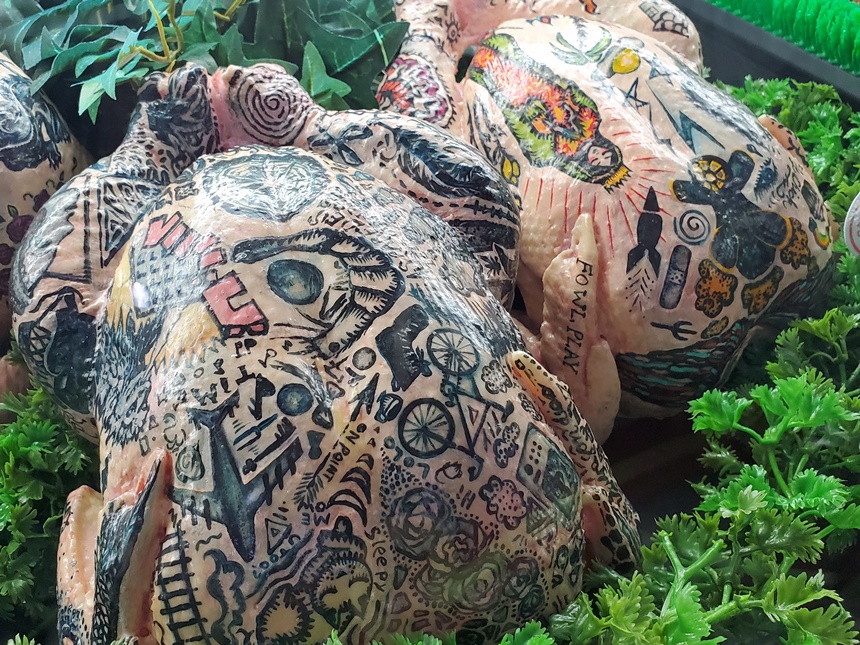
“Whether people get it or not, there’s usually a lot of us in the story,” he says.
He uses Omega Mart as an example because it tackles themes of capitalism, consumerism, and family, topics Meow Wolf had to contend with, to some extent, as the company grew. But you can also see art imitating life at their third exhibit, Convergence Station, in Denver. There, a transit hub allows travel between four dimensions. In real life, Meow Wolf was juggling multiple locations.

Expanding Stories
After Convergence Station opened in September 2021, Meow Wolf waited two years to open The Real Unreal. Located inside a Grapevine, Texas, shopping mall, this experience resembles the one in Santa Fe, down to a similar house layout. Only this time, a boy goes missing, not an entire family.

Although it doesn’t seem to add much to the overarching story, Longmire cautions visitors against making assumptions since Meow Wolf writers don’t “nail down every possibility” when they launch a new exhibit. That way, the story can evolve and grow.
This flexibility also gives Meow Wolf the opportunity to eventually tie all the storylines together, which Longmire assures will happen someday. He admits it may not seem that way right now, especially since the latest exhibit, Radio Tave, takes another twist.

Centering on a radio station that is transported to another dimension, this Houston exhibit focuses on a multiverse that draws from local Texas influences and features a dive bar for angels, demons, aliens, and time travelers.

The multiverse expands later this year when Meow Wolf makes its Hollywood debut with an exhibit at the Westside LA entertainment complex HHLA. Longmire, who is lead writer for the project, says this Meow Wolf exhibit in a converted movie theater will pay homage to movies and storytelling. However, he can’t comment on the upcoming New York site’s theme.
“As we get closer to the unveiling of where this is all heading, fans and guests will see more connections between stories,” he promises.
Keeping Things Fresh
As Meow Wolf enters its tenth year of permanent installations, Longmire says fans don’t need to worry about running out of new Meow Wolf experiences. At The House of Eternal Return alone, it would take more than 200 hours to review all the available materials onsite. In fact, Meow Wolf has created so much material that Meow Wolf sells some online, like the Dramcorp Factory Manual from the Omega Mart storyline.
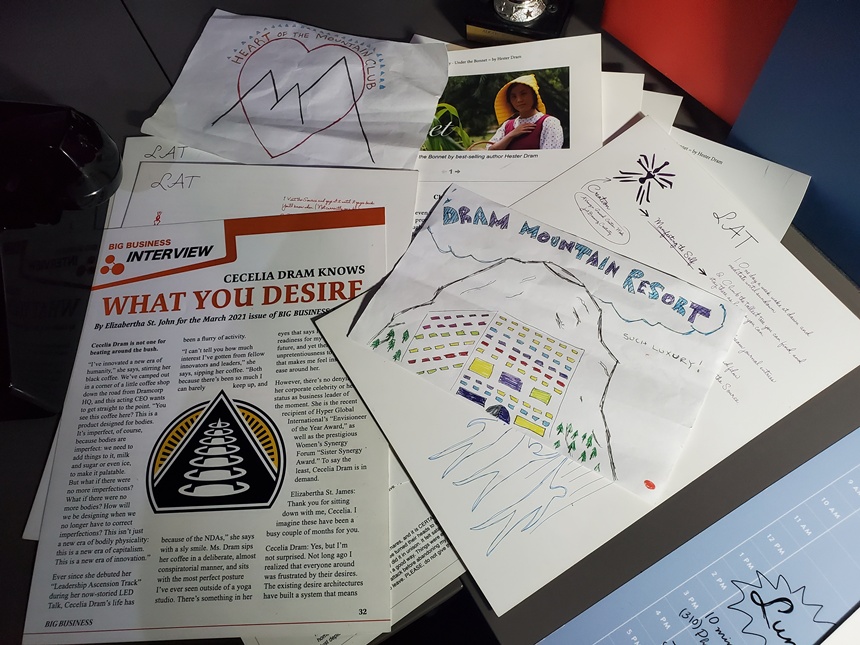
Visitors can find additional resources online, like the information on the Selig family computer, and exhibit videos, like the Omega Mart Training Video, on Meow Wolf’s YouTube channel. Even some of the characters, like Lucius Selig, have Facebook pages.
Additionally, Meow Wolf now has an app that provides additional insights and interactive experiences. Although the app currently only works for the Santa Fe, Grapevine, and Houston locations, visitors can purchase a RFID card onsite at Denver and Las Vegas that gives a similar experience.
Finally, Meow Wolf has partnered with Exalted Funeral to produce a not-yet-released role-playing game, called Tavers, where players collaborate to create worlds based on the Meow Wolf multiverse. It’s a fitting project for Meow Wolf’s 10th year designing permanent worlds since creativity and collaboration have always fueled the company. Now, players can add to the Meow Wolf multiverse with their own imaged worlds and stories.
From the Archive: F. Scott Fitzgerald
“I’d like to get a thrill like that again,” wrote F. Scott Fitzgerald to his publisher in 1925. He was describing how he felt the day he learned he’d sold his first story to The Saturday Evening Post. At the time, having your story appear in the Post meant it had met the magazine’s high standard for fiction, and that your work was placed before an audience of 3 million people. Having written that,
he added wistfully, “but I suppose it’s only once in a lifetime.”
In 1920, Fitzgerald recounted his writing career, how he’d moved to New York and written movie scripts, song lyrics, advertising slogans, poems, sketches, and jokes — that nobody wanted:
On the Fourth of July, utterly disgusted with myself and all the editors, I went home to St. Paul and informed family and friends that I had given up my position and had come home to write a novel. They nodded politely, changed the subject, and spoke of me very gently. But this time I knew what I was doing. I had a novel to write at last, and all through two hot months I wrote and revised and compiled and boiled down. On September 15th, This Side of Paradise was accepted by special delivery.
In the next two months, I wrote eight stories and sold nine. The ninth was accepted by the same magazine that had rejected it four months before. Then, in November, I sold my first story to the editors of The Saturday Evening Post. By February I had sold them half a dozen. Then my novel came out. Then I got married. Now I spend my time wondering how it all happened.
—Who’s Who and Why, September 18, 1920
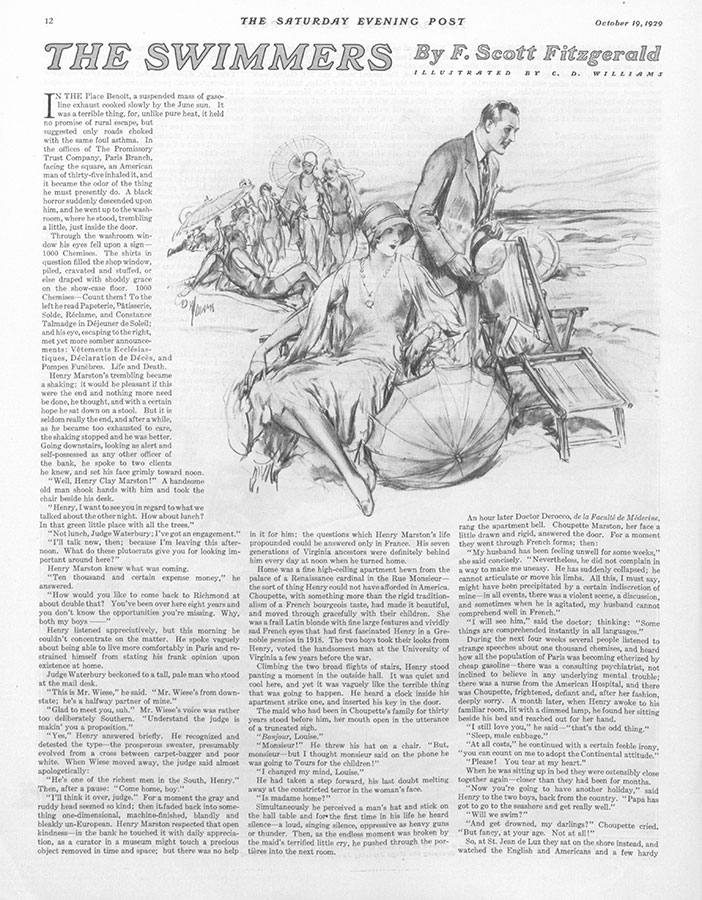
The Swimmers
by F. Scott Fitzgerald
In “The Swimmers,” one of Fitzgerald’s 65 stories for the Post, a man regains his health by learning to swim. It helps him retain custody of his boys when his unfaithful wife leaves him. As the story ends, he sails for Europe and muses on the opportunities and chances for rebirth that America gives.
In October, Henry left his sons in school and embarked on the Majestic for Europe. He had come [back to America] as to a generous mother and had been profusely given more than he asked — money, release from an intolerable situation, and the fresh strength to fight for his own. Watching the fading city, the fading shore, from the deck of the Majestic, he had a sense of overwhelming gratitude and of gladness that America was there, that under the ugly debris of industry the rich land still pushed up, incorrigibly lavish and fertile, and that in the heart of the leaderless people the old generosities and devotions fought on, breaking out sometimes in fanaticism and excess, but indomitable and undefeated. There was a lost generation in the saddle at the moment, but it seemed to him that the men coming on, the men of the war, were better; and all his old feeling that America was a bizarre accident, a sort of historical sport, had gone forever. The best of America was the best of the world.
France was a land, England was a people, but America, having about it still that quality of the idea, was harder to utter — it was the graves at Shiloh and the tired, drawn, nervous faces of its great men, and the country boys dying in the Argonne for a phrase that was empty before their bodies withered. It was a willingness of the heart.
—Originally published October 19, 1929
This article is featured in the March/April 2026 issue of The Saturday Evening Post. Subscribe to the magazine for more art, inspiring stories, fiction, humor, and features from our archives.
News of the Week: Baseball Begins, Joanie Loves Chachi, and Howard Johnson’s at 100 (OK, 101)
Play Ball! (Already?)
Did you know that baseball season started this week? I did not. Seems a little early, no?
It’s amazing how things can change over the years. Every year up until my late teens I loved baseball. I was obsessed with it. I would watch every Red Sox game, I played in Little League (actually, Minor League, the league for younger kids, right before Little), and even kept score of games in one of those baseball scorebooks. I don’t think I could do that now because I don’t remember all of the little symbols and lines and numbers.
I even cried when the Sox won the World Series in 2004.
But now? If you offered me a million dollars I couldn’t name one person on the Red Sox except the manager (though if anyone wants to make me that offer I can use Google). I have no idea what’s going on with the team, and the last time I watched a game was in 2018. And the only reason I watched then is because they made the World Series (I didn’t watch any of the regular season games). If I tried to watch a night game now I’d probably fall asleep like the kid on the cover above.
Anyway, baseball season has started! You can buy me some peanuts and Cracker Jack, but I don’t ever see myself getting back to liking the game the way I used to.
Okay, So Where Did “OK” Come From?
It’s something all of us say at least once a day, and we probably don’t even realize it because it’s so common and only two letters. (It’s four letters if you use “okay.”)
It’s so common I’ve already used it six times in this column.
The first use of the term that is accepted by most experts is in Boston during the 1830s, as a mistaken abbreviation of “all correct” (“oll korrect”). Of course, there are approximately 27,000 other theories, so who knows?
Howard Johnson’s at 100
I’m cheating a bit here. The official 100th anniversary of Howard Johnson restaurants was last year, but I thought it was still worth mentioning.
The last location, in Lake George, New York, closed in 2022, but many people of a certain age have fond memories of the orange-roofed establishments. It was once the largest restaurant chain in the United States.
The Howard Johnson hotels are still around. They’re owned by Wyndham Hotels and Resorts.
Quote of the Week
“Fictitious friends and mannequin copilots won’t cut it.”
– California Highway Patrol, after stopping a man in the carpool lane with a fake passenger
RIP Chuck Norris, Valerine Perrine, Robert Mueller, Nicholas Brendon, Ed Overmyer, Ed Bernard, and Kiki Shepard
Chuck Norris starred in the CBS action series Walker, Texas Ranger, as well as in films like Missing in Action, Code of Silence, The Way of the Dragon, and Lone Wolf McQuade. He died last week at the age of 86.
Valerie Perrine appeared in such films as Lenny (for which she received an Oscar nomination), Superman, The Border, The Electric Horseman, Slaughterhouse-Five, and The Border. She died Monday at the age of 82.
Robert Mueller was former director of the FBI. He died last week at the age of 81.
Nicholas Brendon starred on Buffy, The Vampire Slayer and had roles on Criminal Minds and Kitchen Confidential. He died last week at the age of 54.
Ed Overmyer created the TV series Bosch and produced/wrote for such shows as Law and Order, The Wire, Treme, Boardwalk Empire, The Man in the High Castle, Homicide: Life on the Street, and The Days and Nights of Molly Dodd. He died last week at the age of 74.
Ed Bernard had roles on such shows as Police Woman and The White Shadow and appeared in films like Shaft, Across 110th Street, and The Hot Rock. He died in January at the age of 86.
Kiki Shepard was a dancer and actress and one of the hosts of Showtime at the Apollo. She died last week at the age of 74.
This Week in History
Joanie Loves Chachi Premieres (March 23, 1982)
Along with AfterMASH, Joey, Three’s a Crowd, and The Brady Brides, Joanie Loves Chachi is known as one of the worst spinoffs in TV history. It lasted for 17 episodes and then the stars went back to Happy Days.
Tennessee Williams Born (March 26, 1911)
He was known as a playwright, of course, penning such American classics as The Glass Menagerie, A Streetcar Named Desire, Cat on a Hot Tin Roof, and Night of the Iguana. But he was also a screenwriter.
He died in 1983 and wanted to be buried at sea in a very specific way. But he did not get his wish.
This Week in Saturday Evening Post History: Howard Johnson’s Clamboree (March 27, 1965)
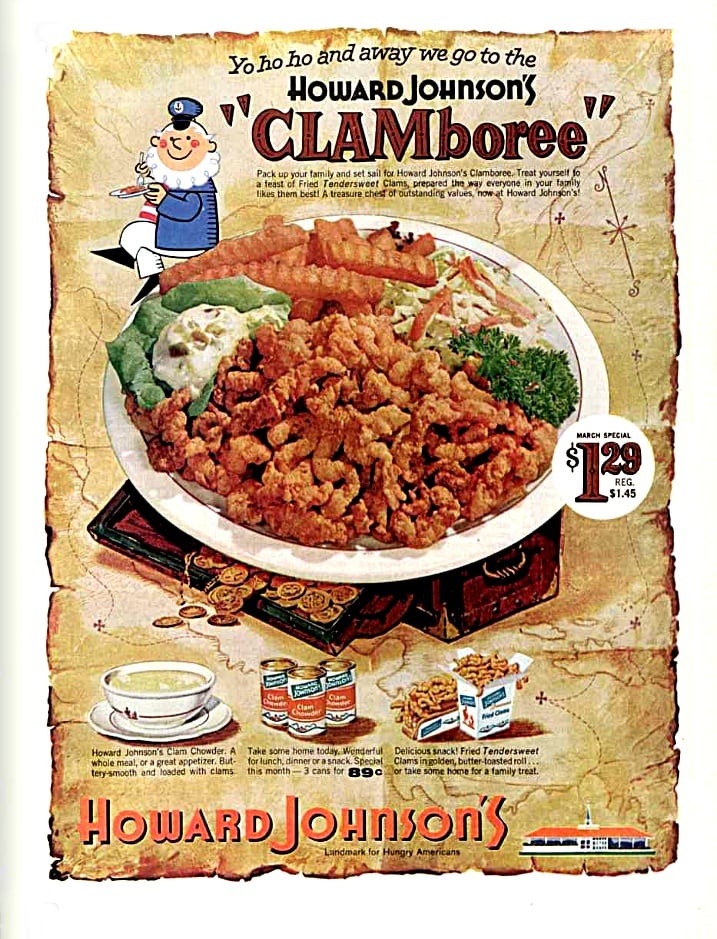
I had clams at Howard Johnson’s more times than I can count. Never the clam chowder though (I’m one of those people who loves clams but not the chowder).
April Is National Brunch Month
Clams for brunch? Why not?
Or you could make Curtis Stone’s Bagel, Egg, and Mushroom Brunch or his Easy Asparagus Omelet. Good Housekeeping has this Grilled Fruit Salad with Vanilla Yogurt, the New York Times has Overnight French Toast, and The Pioneer Woman has a Conbread Casserole. If you like Breakfast Tacos, Love & Lemons has them, and Food52 has this Hot Chicken & Jalapeño Bacon Cheddar Waffle.
Next Week’s Holidays and Events
Aprils Fools’ Day (April 1)
Too bad I didn’t mention Howard Johnson’s 100th a few months ago. You could have bought your spouse some Fried Clam Soap (it’s sold out).
National Walk to Work Day (April 3)
If you work from home, you do this every day.
One Small Step
The din of Yiddish, Hungarian, and other accented voices halts when Walter Cronkite leans forward, rips off his glasses, and declares: This is it. They’re committed!
A hush descends over the Grand Lounge of the worn, century-old Palace Hotel. Below lazily turning ceiling fans, men in untucked cotton shirts and women clutching handbags sit shoulder to shoulder on sagging couches and mismatched armchairs, all staring at the Zenith console squatting at the front of the room like an altar. Young children sprawl cross-legged on the floor, elbows knocking, whispering until shushed.
I’m perched on a folding chair wedged into a corner. Fifteen, narrow as a sapling, wearing thick horn-rimmed glasses, the only thing about me that could pass for cool is my blue T-shirt with Mets written across the chest in looping script.
When a picture flashes of the Eagle descending, the silence is broken by a woman shrieking with joy. Turning toward her, I spot a girl about my age settled next to a punch bowl table laden with seltzer bottles sweating onto paper doilies and plates of rugelach cut into careful thirds. A magazine rests in her lap, likely one of the many moon-landing specials stacked high on every newsstand.
Feeling like I’ve seen her before, I keep peeking at the girl as she watches the room more than the television. When she turns her head again, quick and birdlike, her eyes find mine. For a suspended second, we’re locked together, before she looks away.
From the TV, Cronkite’s voice surges forth: Velocity looks good!
The image suddenly shivers, dissolving into a storm of gray snow. A shared groan ripples through the room. Mr. Silberman — a gaunt Romanian tailor with sunken cheeks and nicotine-stained fingers who’s appointed himself master of ceremonies — springs to his feet, a lit cigarette clamped between his lips. With forearms marked by scars, he reaches for the rabbit-ear antennae swaddled in aluminum foil, twists them with theatrical precision, then smacks the side of the set with the flat of his hand.
The picture snaps back into focus.
“If there’s a problem,” Mr. Silberman announces solemnly, smoke curling from his mouth, “nobody touch nothing. I’ll fix. I know technology.” He stretches the word — tek-nolo-geee — pulling it long and thin, like dough rolled out on a kitchen table.
A ripple of laughter passes through the adults as they revel in their ability to watch two men and a fragile machine, a quarter-million miles away, inch toward another world. As a man with numbers on his arm once told me, they understand miracles. Their being here in this hotel is one of them.
The girl plucks absently at one of the embroidered threads on her sleeve. When she lifts her head, our eyes meet again. This time, she gifts me a smile, which lasts long enough for my stomach to jolt like an elevator that’s come to a stop between floors. I feel suddenly weightless, floating.
Cronkite’s voice brings me back: Fuel is going fast.
His tone carries an edge. The room tightens, every breath hinged on Cronkite’s words.
I force myself to turn back to the screen. But the afterimage of her face clings to my vision.
We stare at the ghostly white smudge of the lunar module while numbers — altitude, velocity, fuel remaining — are explained by Cronkite, each one sounding final. The broadcast periodically cuts to Mission Control in Houston: rows of engineers in white short-sleeved shirts, ties loosened, most smoking, all staring straight ahead as though afraid to blink.
The descent feels endless.
“Why so long?” a woman whispers.
“It’s the moon,” her husband murmurs back. “What, you want they should hurry?”
She smacks his knee without looking.
Altitude now five hundred feet.
Another woman’s voice rises from the back. “We should pray!” Others nod in agreement, pleased to be reaching back to words that once mattered when nothing else did. But the only vocal response to that woman is a man chiding, “There’s a prayer for a safe moon landing?”
Again, snow floods the screen. Mr. Silberman springs to his feet once more, cigarette glowing like a tiny beacon, and performs his ritual with the antennae.
Program alarm… one-two-zero-two! Mumbling breaks out. But before theories can take flight about what “1202” means, Cronkite adds: That’s a computer alarm. We don’t yet know what it stands for.
“So why worry us if you don’t know what it is?” someone grumbles.
A minute later, Cronkite adds: We’ve learned that the alarm was caused by radar feeding extra, unnecessary data into the computer. This is not a failure of the system.
The adults don’t need him to explain it. They just sit there. Waiting. Not panicking.
Suddenly, I feel a light brush of a leg against my shoulder. I look up, and my heart stutters as if it’s slipped briefly out of orbit.
She looks down at me, hazel eyes set in a face that’s too pretty for words. We may be the only people in the room not glued to the TV. She gestures toward my shirt. “You a Mets fan?” she asks rhetorically.
As I nod yes, I peek at what the girl’s holding. Three familiar faces float on the cover — Jerry Grote, Jerry Koosman, and Tom Seaver. It’s the Mets yearbook!
Cronkite’s words surround us, but I barely register them. With every seat in the room occupied, I take a risk, scooting over and patting the narrow space now empty on my folding chair. She hesitates, then sits. There’s barely an inch separating our tushes. Electricity sparks across it.
Fuel… sixty seconds.
A shared gasp ripples through the room, while I blurt out the first question that pops in my head. “You think they can catch the Cubs?”
“Yeah,” she whispers. “’Cause they have Seaver.”
She says his name worshipfully and, however irrational, I now dislike my former favorite baseball player.
They’re picking their landing spot manually now.
I realize the question I need to ask. “What’s your name?”
“Marsha.”
“Jeff.” I stick out my hand, hoping it’s not clammy. When her hand meets mine, my insides flutter. I want us to keep speaking, but the pull of events is too great to resist. We turn back to the screen, where an animation shows the lunar module descending. Then back to a live shot of Mission Control and those same stone-faced engineers.
Thirty seconds.
A reverent silence descends over the group, which leans forward as one.
Houston, Tranquility Base here. The Eagle has landed.
Cronkite exhales, slips off his glasses for the hundredth time, and exclaims: Man on the moon. Oh boy. Oh boy!
Meanwhile, the Grand Lounge explodes.
Applause crashes into shouts, chairs scrape, bodies surge. People embrace whoever is closest. Children are pulled into arms. Kisses are planted on cheeks. Mazel tovs ricochet off the walls. Someone pops a seltzer bottle too fast; it bursts forth in a silver fountain, earning only laughter. An elderly Polish woman clamps down on her granddaughter’s shoulder so tightly the girl squeaks. Mr. Silberman plants a kiss on the crown of his wife’s head.
Somewhere in the noise are Marsha’s shriek and mine. We turn to each other at the same instant. Heat floods my cheeks. I’m seized by a sudden, overwhelming urge to kiss her — right there, in front of everyone — but fear freezes me in place. The wanting alone is almost too much to bear.
Cronkite comes back on the screen to clarify that the astronauts will now prepare for EVA — extravehicular activity — which will take hours. The crowd begins to disperse. Women head for the kitchen, already planning dinner. Men shuffle outside to smoke, shaking their heads in disbelief. Others wander upstairs, still visibly excited, as if afraid the feeling might vanish if they don’t cling to it.
Mr. Silberman rises, folding his arms as if satisfied that, for tonight, everything that needed fixing has been fixed. As he walks out, he pauses just long enough to glance at us, a faint smile tugging at the corner of his mouth.
Marsha and I stay seated, watching the tide recede. Soon only a handful remain — the geeks who will watch every second of coverage. In the thinning room, with the moon finally claimed, everything feels newly possible. I turn to Marsha and blurt out, “Wanna listen to the Mets play the Pirates? I’ve got a radio. We could hang out on the porch.”
She considers this, then frowns slightly. “You play ping pong? I saw a table out back.”
“Yeah,” I reply too quickly. “Sure.”
I lead her through the communal kitchen, past counters cluttered with dishes and utensils, and out the back screen door.
The yard slopes unevenly away from the hotel, the grass patchy and worn thin by kids, dogs, and neglect. We’re serenaded by cicadas, the sound thick and insistent. Near a tool shed rests the ping pong table, its green paint bleached by sunlight, with a net that sags in the middle.
I shrug. “Sorry. It’s not the best table.”
“It’s fine,” Marsha says. She bends to drop her yearbook on the grass and retrieve paddles, tapping one against her palm, testing the weight. Then she grabs the ball and tosses it to me.
“Let’s warm up.”
I send over my usual serve, the ball skimming low, barely clearing the net. I expect her to chunk it into the mesh the way my mother always does. Instead, Marsha makes an athletic lunge and returns with a sharp wrist snap. The ball streaks toward me faster than I expect. I place only the tip of my paddle on it, and the ball slices off the table into the grass. She grins at me.
We rally for a minute, with Marsha moving quickly, cutting angles, using spin, winning exchanges. Panic crawls up my spine.
I call the flip for serve correctly, the paddle falling with the SPALDING logo facing up. But my nerves betray me — my ball floats high, hanging in the middle of the table. Marsha smacks it past me.
In the middle of the next rally, with Marsha chasing down every shot of mine, I catch myself watching her instead of the ball — her hair falling into her face, the way she keeps brushing it back without thinking.
After I smash one of her returns into the net, I pause to consider the situation. As good as Marsha is, I’m stronger, I’ve got a few extra inches in reach, and I know this scarred table, with its unpredictable bounces. So I slow the pace, place my shots deeper, aim for the chipped edges. We start trading points evenly until I finally inch ahead.
At 20-19, the ball feels tinier, the table narrower, the air heavier. We fall into a prolonged rally, neither of us willing to gamble on a kill shot. When she finally pushes one a hair too wide, I exhale like I’ve been holding my breath underwater.
Marsha leans on the table, breathing hard, strands of hair stuck to her cheek. “You’re better than you let on.”
I nod, but the win already feels small. “I only won ’cause I know this table.”
She beams. I gesture toward the back of the yard, where the fence gives way to a narrow path leading into a strip of trees, and work up the nerve to ask, “Wanna go skip rocks?”
Seeing her puzzled expression, I add, “There’s a brook back there. We throw rocks. It’s stupid, but — ”
“Let’s go,” she blurts out.
We leave the paddles and ball tucked beneath the table and slip onto the narrow path, the ground springy underfoot. The trees draw closer as we walk, their branches knitting overhead, sunlight breaking into pale shards that flicker across our faces.
As we amble along, Marsha says, “Esto es hermoso.” She smirks, and suddenly an image of her in the front row of a Newtown High School classroom emerges. I know why she’s familiar. I say slowly, “Estás en mi clase de español.”
“Si,” she blurts out with a wide grin. “Took you long enough.”
The sound of running water swells, and the brook appears — shallow and clear, stones visible beneath the rippling surface. We stop at its edge. The air feels cool, almost alive.
I crouch and close my fingers around a flat, slate-gray stone cool from the water. With a quick snap of my wrist, I send it skipping across the surface — tap, tap, tap — each kiss of water clean and sure, before it disappears with a quiet, satisfying plunk.
“Three skips,” Marsha gushes. “I can’t do that.”
“Try.”
She selects a stone, steps to the edge of the brook, and with a sharp twist of her wrist, hurls it parallel to the water. The rock slaps the surface once and sinks. I look away, embarrassed by the secret victory curling in my chest.
“Damn!”
“I think you’re holding it wrong. You gotta pinch it between your fingers and thumb.”
“Show me,” she demands.
I crouch, find another smooth stone, and place it in her palm, gently adjusting her fingers. When my hand touches hers, a jolt shoots through me, sharp and startling.
“Like this,” I say, aiming for casual. I snap my wrist through the air to demonstrate, suddenly convinced that skipping stones is the most important skill in the world.
“You want it flat,” I say, urgently. “Flat is everything.”
She giggles. “You don’t really like them flat, do you?”
It seems like she’s pushing her torso forward, and I oblige by glancing at a chest that’s hard not to look at.
Marsha throws again. This time the stone skips twice before sinking.
She beams. “You’re a good teacher.”
We stand shoulder to shoulder, tossing stones, watching the ripples bloom and dissolve. The moment feels suspended, as if the world has paused — school schedules, homework, expectations all held at bay by the simple pleasure of sending small objects skittering across moving water.
The sky deepens into evening. Marsha sighs. “We should head back. My mom hates when dinner gets cold.”
“Yeah. Mine too.”
As we walk back, I glance at her, then quickly away, aware of a steady feeling blossoming in my chest and settling in.
* * *
Hours later, as the clock approaches eleven, Marsha and I sit side by side once more, absorbed back into the same dense throng. On the screen, an ethereal black-and-white image flickers — indistinct shapes resolving and dissolving amid ominous shadows. The picture freezes, washes out, returns, never quite steady, never quite enough.
From time to time the broadcast cuts back to the CBS studio, where Cronkite mans the anchor desk, calmly narrating what we can’t clearly see — where Armstrong is, what he’s doing.
When Cronkite announces that Armstrong is moving down the ladder, there’s a communal holding of breath. I glance at Marsha. She isn’t looking at the screen. She’s looking at me!
He’s on the footpad now.
Her fingers brush my hand. Hesitant, testing. I don’t move. Then, as gently as possible, I turn my hand so our fingertips line up.
He’s at the bottom.
She closes her hand around mine. I tremble.
This is the moment we’ve been waiting for.
It sure is, I think.
Seconds stretch. Our hands remain locked. Somehow, in this jammed room, we’ve carved out a private orbit.
That’s one small step for man, one giant leap for mankind.
Again, the room erupts. Shrieks, cries, applause as Armstrong takes his first step onto the moon’s surface.
Mr. Silberman throws his arms wide. “You see! America! This is what a country should do!” Heads nod fiercely. Men and women weep openly.
I turn to Marsha and hug her. She hugs me back.
On an impulse that feels both reckless and necessary, I ask, “Wanna go outside and look at the moon?”
We slip out through the front porch door and settle onto the wooden steps. The air is cool, washed clean by darkness. The moon hangs high above the Catskill ridgeline, luminous and full.
And no longer untouched.
“Can you believe it?” I say, my voice barely louder than the crickets. “Two guys are on that.”
Marsha draws her knees up and wraps her arms around them. “Everything feels different now.”
Fireflies pulse over the lawn, brief yellow-green sparks blinking on and off. I swallow, suddenly aware of my own clumsy gravity.
“I’m really glad you came to this hotel,” I manage to say.
“Me too.”
Silence settles between us — not awkward, just full. As she tucks a strand of hair behind her ear, I peek at her profile, outlined in moonlight. She isn’t beautiful in the glamorous television way. Just in a way that feels true.
“I wish we’d met earlier this summer,” I say quietly. “I go home in a few days.”
She turns to look at me, and wiggles her eyebrows. “But then I’ll see you again in September.”
She leans in a smidgen — or at least I perceive her as doing so — and I follow suit, now close enough to see the faint constellation of freckles across her nose.
Cronkite might as well be sitting next to me screaming, “One-two-zero-two alarm!” because I’ve got severe sensory overload. As does Marsha, I sense. Driven by twin impulses equally charged with fear and desire, we tilt further. Carefully. Unsure.
And bump noses.
We freeze, mortified for a heartbeat. Then giggle.
“Try again,” she whispers.
This time we slow everything down. I maneuver my head the way I’ve seen in movies. When our lips meet, there are no fireworks. No trumpets. Just warmth, and the quiet relief of no longer hovering.
When we finally pull apart, we return our gazes to the moon, which remains serenely indifferent to unfolding human dramas. I now understand that two impossible things have happened tonight. Mankind has made the giant leap onto another world. And somehow, I too have arrived.
Review: She Dances — Movies for the Rest of Us with Bill Newcott
She Dances
⭐️ ⭐️ ⭐️
Rating: PG-13
Run Time: 1 hour 33 minutes
Stars: Steve Zahn, Audrey Zahn, Ethan Hawke, Rosemarie DeWitt
Writers: Rick Gomez, Steve Zahn
Director: Rick Gomez
Sweet and poignant and funny and thoughtful, She Dances traipses along, lighter than air, dispensing knowing chuckles and satisfied sighs while exploring the fraught dynamics of a father-daughter road trip.
Jason (the always-endearing Steve Zahn) is a depressed dad whose marriage has been shattered by a family tragedy. Still cautiously friendly with his estranged wife (Little Fires Everywhere’s Rosemarie DeWitt), Jason is nevertheless barely in the same emotional universe with his 17-year-old daughter, Claire (Audrey Zahn, Steve Zahn’s real-life daughter in her miraculously nuanced film debut).
Claire is a top-tier competitive dancer, about to head off to college, with one last competition in a distant city before she graduates high school. Mom usually serves as her chaperone on these trips, but this time she can’t make it, and so Dad is pressed – hyper-reluctantly – into service.
Jason could plausibly bow out of the trip: He is in the middle of negotiations to sell the distillery he founded with his closest friend, Brian (recent Oscar nominee Ethan Hawke in a small but lovely performance). But Brian insists Jason take advantage of what may be his last chance to bond with Claire. Besides, Brian says of the prospective buyers, “They like me better than they like you.”
On the road come the expected complications (a flat tire, a restaurant argument, generational playlist conflicts). The hotel reservation is predictably muffed by dad (and patiently explained by the desk clerk, played in a delightful uncredited cameo by Office Space veteran Ron Livingston). An onstage setback for Claire results in – what else? – a triumphant change of plans. In fact, I can’t think of a single narrative surprise that unfolds in the script, by first-time feature co-writers Steve Zahn and Rick Gomez (who also directs with loose-limbed appeal).
That’s not a criticism. She Dances is a warm blanket of a movie, following the heartening trajectory of a parent and almost-grown child rediscovering the things they love about each other – and maybe inspiring some of us to take up that dance ourselves.
The Colors of War
This story begins with an interruption: Look away from this sentence and take a gander at your surroundings with an eye toward the colors around you. The color of the walls; the color of your chair; the color of your laptop; the color of your desk, the implements on your desk, the containers to hold those implements; the color of your shirt. We are used to such a riot of color, but America wasn’t always so colorful. In fact, during World War I, America faced the prospect of a dangerously dull future — one that might sink the American economy, threaten American security, and imperil world peace. It was a future that the U.S. managed to avoid using legislation, technology, and a little spycraft. It begins with your shirt.
The commercial dyestuffs industry took off in the mid-1800s when the burgeoning field of chemistry, an Industrial Revolution, and a chemical accident led to William Henry Perkin’s discovery of the first synthetic aniline dye, mauve. Synthetic dyes had several advantages over natural dyes: They were more consistent from batch to batch, more colorfast and lightfast than natural dyes, and produced brilliant hues that consumers couldn’t get enough of. Mauve was a moneymaker; French and German chemists immediately set to work synthesizing dyes.
German chemists had a leg up: Industrial chemistry had more cachet in Germany than it did in Britain, where universities didn’t train chemists for industry, or France, where academic research was considered a more worthy use of one’s time. The cooperation between German industry and academia led to better processes, better dyes, and more efficient production. By the 1910s, the global commercial dyestuff industry belonged almost wholly to Germany.
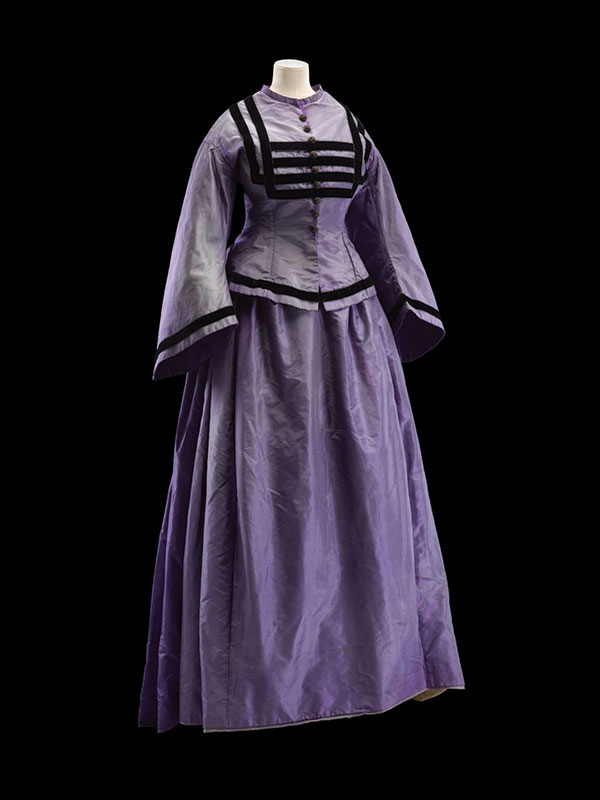
The Great War changed that. Shortly after Britain entered the war, it enacted a naval blockade that, while ostensibly allowing neutral parties through, essentially ground trade with Germany (and potential aid to Germany) to a halt. By 1915, the British Navy considered nearly everything bound to or from Germany to be contraband. This greatly displeased America, which imported nearly $170 million of goods from Germany, including 90 percent of our annual consumption of dyestuffs. Germany had hoped America’s insatiability for color would lure it into politically breaking the blockade. It did not. What it did, instead, was throw America into what is known as “the dye famine.”
It may seem ridiculous that a lack of dyes pitched America headlong into turmoil, but it did. Dyes were used everywhere: to print money, to dye cloth, to treat materials for buttons, in commercial stains and paints, in photographic processes, and in pharmaceuticals. In a widely syndicated 1916 article, the journalist Frederic Haskin summed up the problem facing America: “The dye shortage affects every one of the two million workmen who manufacture annually products valued at five billion dollars, as well as all the people depending on them, and the immense amount of capital invested in factories and plants.” The dye famine created catastrophically high prices for good dyes. Prior to the blockade, a widely used dye called sulfur black was selling for 20 cents a pound. A year later, it was selling for up to $3 a pound. Try passing that increase along to the customer, who is already under straits, and see how quickly your business is run out of town. Forget natural-colored overalls and white buttons on black shirts: The real risk is that our industries, which cater to consumers who have become accustomed to color, will collapse.
While Haskin was playing Cassandra about the economy, the Allied forces had their eyes on another, more pressing, concern. Many of the chemicals used to create synthetic dyes were also used in the manufacture of pharmaceuticals (much needed on the battlefield) and explosives. Suddenly, color became a national security concern. If German dyestuffs factories were no longer producing dyes from their ammonia, toluol, and phenol, would they instead turn them to making explosives? The German Supreme Command exceeded the Allies’ fears. Realizing that they didn’t have the raw materials to keep producing munitions, they instead turned to a common byproduct of manufacture, liquid chlorine, and used it to develop the first lethal chemical weapon of World War I: chlorine gas. The German dye industry was the supplier. Color and its manufacture were literally now a matter of life and death.
It goes without saying that the U.S. is a very large country that is much farther away from places like France and Germany than the United Kingdom is; therefore, many European companies that had exported to the U.S. established manufacturing facilities stateside. It saved shipping delays and costs and put some manufacturers closer to American sources of raw materials. It also became an uncomfortable problem when America began supporting the Allies in World War I. German-owned companies did their best to tread lightly, but after America declared war against Germany in 1917, all bets were off. The U.S. could no longer allow enemy companies to operate within her shores — but the country also couldn’t afford, frankly, to let these companies slink back to Germany. Wars are expensive, after all.
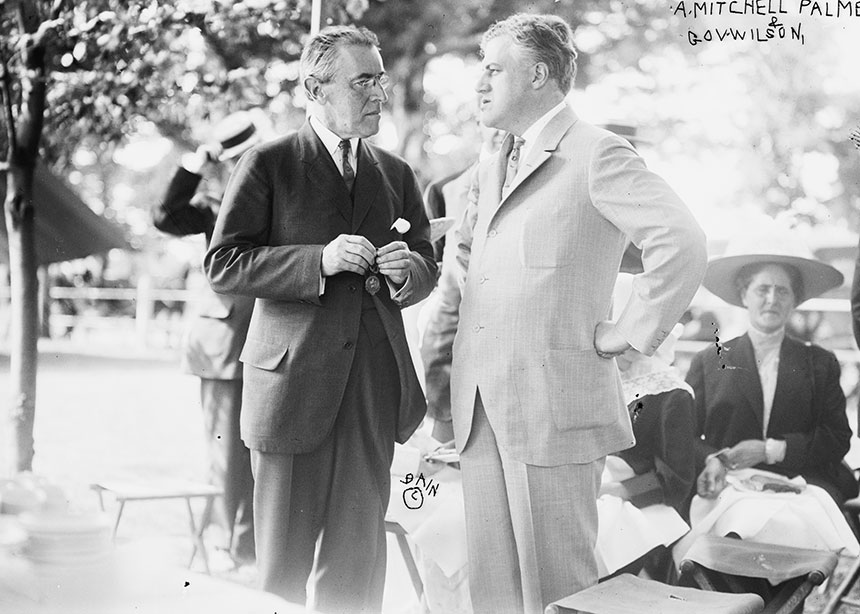
Six months after America went to war, President Woodrow Wilson proposed, and Congress approved, what came to be called the Trading with the Enemy Act. Today we think of the Trading with the Enemy Act as the point at which America became a sanctioning state, using the act as a lever to exert political influence, but its original mechanism was fairly direct. The act was intended to prohibit commerce with businesses owned by nations or citizens of nations that had been deemed enemies of the state — no sense in letting Germany make use of American resources — and, critically, to “conscript” any enemy property for the U.S. war effort. Wilson appointed A. Mitchell Palmer, a former Pennsylvania representative, as the Alien Property Custodian and gave him wide-ranging powers to seize enemy property, defined broadly.
Palmer went straight to Bayer. Bayer, of aspirin fame, was an established manufacturer pumping both drugs and dyes out of its Rensselaer, New York, factory, and one of the largest German companies doing business on American shores. Palmer’s agents seized the plant itself — and, critically, the German patents for all Bayer’s products.
But Palmer was after bigger game than the rights to aspirin and sulfur black. In 1919, he wrote a three-article series for The Saturday Evening Post about his time as the Alien Property Custodian. The articles contain quite a bit of patriotic hyperbole and Hun-hating rhetoric, but buried in the second article (published July 19, 1919) is Palmer’s explanation of why these seized patents, and especially the dye patents, were so important to national security. It wasn’t the financial importance of dyestuffs to the American economy that moved him; it was the talent and scientific know-how that those patents represented for applied chemistry. “No other industry in the world offers a livelihood to any such number of highly trained scientists or any such incentive to continuous and extended research,” he wrote. The patents, then, were a means to an end. Palmer campaigned successfully to have his powers expanded to include the redistribution of the seized German patents to American companies. Whole buildings and their stocks were auctioned off to the highest bidder, and the American dye industry began its stuttering ascent.
Why stuttering? American companies may have had the Germany patents, but they still didn’t possess the knowledge needed to produce the dyes recorded on those patents. The German patents were less step-by-step recipes and more general overviews that assumed a certain amount of knowledge of chemical processes that had been created and perfected by German chemists. In order to reach the utopian vision of an America free of German industrial dominance, American industries had to recruit and depend on the engineers of that German industrial dominance. In short, U.S. manufacturing needed German chemists.
Fortunately, there were plenty of them stateside. Some smaller American dyeworks had recruited chemists from Germany as early as 1915 to help them meet the demand for dyes, and German-owned companies had German chemists working at them. But those chemists, under scrutiny before America entered the war, suddenly became potential double agents as soon as the U.S. entered the war. Some of them, it turned out, were.
In July 1917, police arrested Louis Hihn — an American-born, German-heritage, German-trained dyer at Martin Dyeing and Finishing in New Jersey — after over 300 dye formulas, valued at more than $1 million, went missing. Martin Dyeing supplied khaki tents and uniforms for the U.S. military, and the disappearance of the formulas led to the plant’s temporary shuttering — and the loss of valuable time and supplies for U.S. forces. Police were tipped off that Hihn, head dyer at Martin Dyeing, had planned an open-ended trip to Mexico; police searched his home and found the missing formulas and dyed cloth samples stuffed inside a clothes press in his bedroom. Though Hihn never spoke about why he stole the formulas, it was broadly assumed it was to aid Germany. The relative value of the dye formulas to both the U.S. and Germany could not be overstated: The economic success of each country was now tied up in colors. Hihn was convicted of larceny just 23 days after the Trading with the Enemy Act was enacted in late October 1917.
Palmer and his successor Francis Garvan went rooting for spies with all the industrious eagerness of two truffle hogs in an autumnal forest. Summer 1918: Palmer seized the stock of Berlin Aniline Works outside of Boston and jailed two top executives as enemy aliens. Fall 1918: Five Bayer officials in the U.S. were arrested for setting up a shell company in Rhode Island and diverting Bayer profits to ensure that Bayer could resume operations in the U.S. after the war ended. Early winter 1918: Williamsburg Chemical Company, a Brooklyn dyeworks, was auctioned off for pennies on the dollar after it was seized by Palmer, who claimed that Germans controlled 56 percent of the company. The two company owners were arrested and interned. The December 6, 1918, edition of the Official U.S. Bulletin, put out weekly, listed 324 individuals who had been charged with violating the Trading with the Enemy Act; roughly one-quarter of them were connected with the dye industry.
The end of the war only saw an increased commitment to destroying any possibility of German mastery of dyestuffs manufacture. In 1919, Garvan testified before Congress that he had uncovered a plot by the German ambassador to the U.S. that had started as far back as 1915 to use the dye famine to turn Americans against the Allies. (It didn’t work — not only was American sentiment tipped more toward the Allies, but the fashion industry, ever resourceful, had already spun the dye famine into a new elegant craze for black-and-white design.) The former president of the American Chemical Society, Charles Herty, claimed in a 1919 address to the ACS that he had visited German dyeworks after the war as a member of the Reparations Committee, and that they were ready to step back into position as America’s chief dyestuffs manufacturer. Scientists and politicians made a compelling case that the American dye industry needed to be protected — national security depended on it. Newspapers took a slightly less restrained approach: “THE GERMANS STILL FIGHTING,” blared one headline from the December 20, 1919, edition of The Watchman and Southron from South Carolina.
But not all Americans were convinced. American dyes didn’t improve overnight, and the difference in quality was noticeable. Newspapers and magazines, still very much in wartime censorship mode, were happy to do their part. They ran soft-focus patriotic pieces aimed at the women in the house, the fashion-makers and fashion-keepers, warning them that longing for the good ol’ days of German dyes was not just “treasonous,” but “helping to crush out one of the greatest industries that the war has brought forth,” as one August 1919 scold put it. Good Housekeeping even extracted pro-American-dye statements from fashion houses in Paris — who were, to be sure, relying on their own chemists in France to create adequate substitutes for German dyes.
The industry was certainly fighting … for market share. The end of the war did not bring a flood of German scientists back to America; being interned as enemies of the state didn’t exactly give them warm fuzzies toward their jailers. Companies that had previously convinced German scientists to help them decipher their patents were now struggling to find qualified chemists in the States who could help. So they engaged in their own counter-espionage. In 1920, a DuPont representative in Switzerland quietly convinced four chemists who worked for Bayer in Germany to pack their bags and come to America. Each chemist was offered a salary of $25,000 a year, or about $450,000 in 2026 cash. And if those chemists wanted to, say, bring their bench notes from Bayer with them, well, who was the DuPont representative to argue? The five men attempted to cross the German-Dutch border; the trunks were searched and then seized by the Dutch, who alerted the Germans. Authorities in Cologne issued warrants for the arrest of the four scientists; two of them managed to slip aboard a Dutch ship that was setting sail to America, though they were not allowed to disembark once they arrived because the Dutch had heard about the warrants. After some negotiations in which a DuPont security officer pretended to be a police officer, and after Washington got involved, the two chemists were allowed to enter the U.S. and begin work for DuPont. The two chemists who remained in Germany were, a year later, escorted by a group of American soldiers and the chief of the U.S. Military Secret Police in Coblenz, Germany, out of unoccupied German territory and into the American sector — despite the fact that they were under heavy surveillance by the German police. The chemists arrived in Hoboken in 1921 and headed to DuPont despite the protestations of the German government (and DuPont’s insistence that they had done nothing wrong). The gambit paid off: In short order, DuPont became the leading dye manufacturer in the U.S. and remained so until it stopped producing dyes in 1980.
Thanks in part to an unprecedented expansion of executive power in World War I, America continues to be a Technicolor dreamland. And as long as color proliferates, so too will color-related spycraft. In the 1990s, DuPont claimed that the Chinese government had engaged in some corporate espionage and stolen a proprietary formula for producing titanium dioxide, a bright white pigment whose ubiquitous use nets DuPont over $2.6 billion a year; two engineers were tried and convicted of economic espionage in 2014. Companies also take part in preemptive strikes and feverishly protect the colors associated with their brands from being co-opted, whether intentionally or not, through cease-and-desist actions and lawsuits. For example, John Deere (green and yellow), Tiffany & Co. (their distinctive sky blue), T-Mobile (magenta), and Mattel (Pantone 219 C, or “Barbie Pink”) have all gone on the offensive at some point, and U-Haul has sued the company Public Storage over its attempt to file trademark registrations for all things orange (a U-Haul color since 1945).
As for the seized patents, there was a legal fix, but it barely changed anything: Though the 1928 Settlement of War Claims Act opened the way for seized property to be returned to German owners, the only property that was eligible for return was that still in the custody of the Alien Property Custodian — the very Custodian who had handed out seized patents like presents at Christmas. There was one recovery, however, 75 years later: In 1994, Bayer A.G. acquired the North American portion of Sterling Winthrop, an over-the-counter medication business, from another pharmaceutical giant. Turnabout is fair play: In 1918, Sterling Winthrop had bought the assets seized from Bayer using the Trading with the Enemy Act, including the Bayer patent for aspirin.
Kory Stamper is an author and former dictionary writer whose latest book, True Color, charts the intersection of history, color, and the dictionary. Her first book, Word by Word: The Secret Life of Dictionaries, was a 2017 Amazon Best Book of the Year.
This article is featured in the March/April 2026 issue of The Saturday Evening Post. Subscribe to the magazine for more art, inspiring stories, fiction, humor, and features from our archives.
Cartoons: Vets & Pets
Want even more laughs? Subscribe to the magazine for cartoons, art, inspiring stories, fiction, humor, and features from our archives.
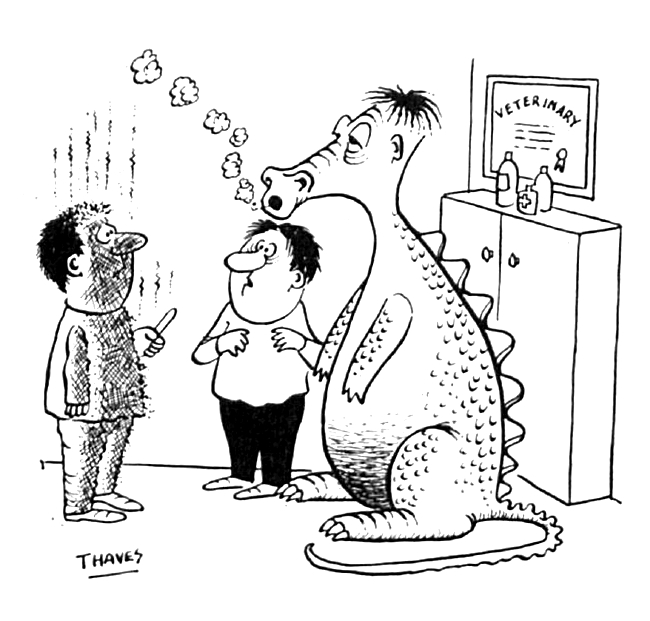
Bob Thaves
March 28, 1964
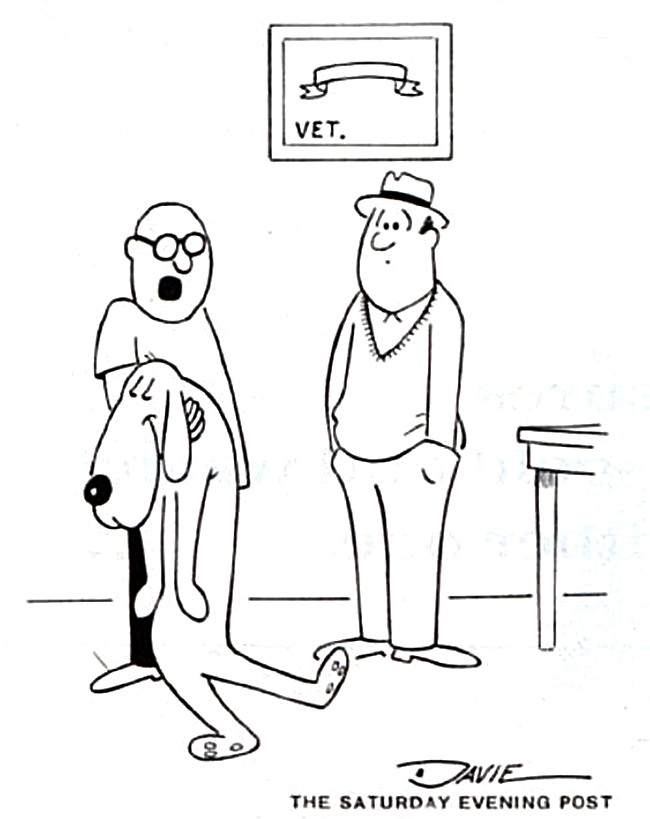
Davie
February 23, 1963
February 2, 1963
Orlando Busino
February 1, 1964
January 29, 1966
Jerry Marcus
April 12, 1958
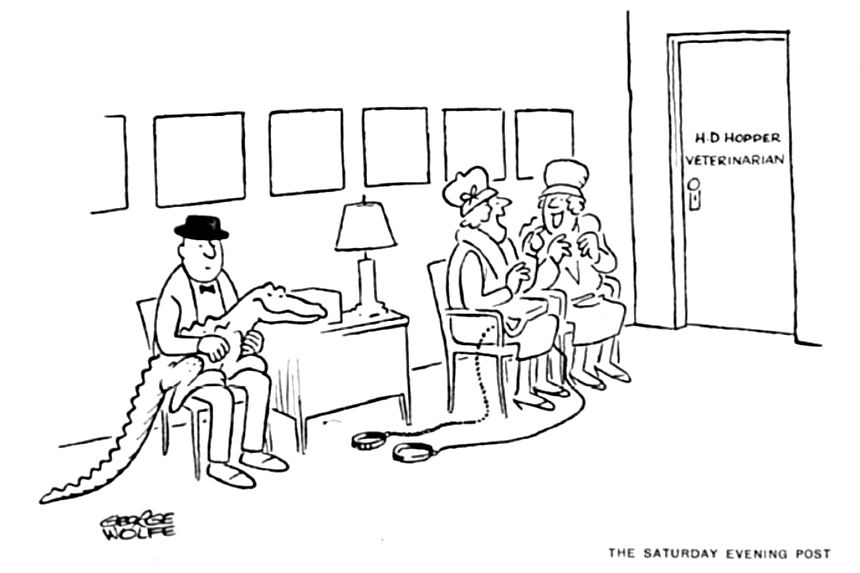
February 23, 1963
Want even more laughs? Subscribe to the magazine for cartoons, art, inspiring stories, fiction, humor, and features from our archives.
The Woman Who Refuses to Let History Disappear
When Megan Smolenyak was in sixth grade in Oxon Hill, Maryland, her teacher, Miss Berkowitz, assigned what seemed like a simple exercise: Go home and ask your parents where your ancestors came from. The next day, she pinned each surname to a giant world map tacked to the classroom wall.
When Smolenyak’s name was placed on the Soviet Union — alone in that vast expanse — the ten-year-old paused. Great Britain was crowded with pushpins. Ireland also held a large cluster. But her family stood solitary, marooned in a geopolitical nemesis. In that moment, the pins became a question: Where did we all come from?
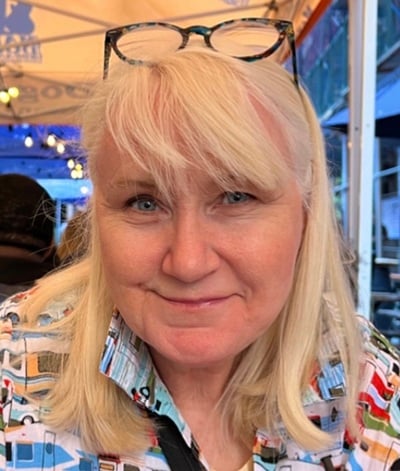
A simple classroom exercise sparked a curiosity that never let go.
Today, Smolenyak is one of the country’s most recognized genealogists — an author, researcher, and historical detective whose work has shaped television projects, rewritten immigration history, and helped restore the names of soldiers long listed as missing. She is the author of six books and has received the National Genealogical Society’s Award of Merit. She credits Miss Berkowitz for the spark.
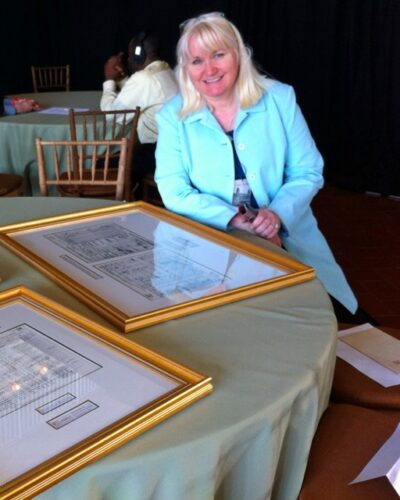
“It’s entirely her fault,” she says, laughing.
Smolenyak, however, is modest about her accomplishments, describing herself simply as a “history detective,” drawn to unanswered questions and long-buried truths. And, she adds, each life experience drew her to what has become “an addictive passion.”
As an Army brat, she grew up moving constantly, learning to read new landscapes and adjust quickly. Libraries became anchors. Records became puzzles.
“When I turned sixteen,” she recalls, “while everyone else wanted a driver’s permit, I was just happy I could finally get into the National Archives in D.C. on my own.”
The National Archives — home to the Declaration of Independence, the Constitution, and the Bill of Rights — also preserves billions of records: census data, military files, immigration and naturalization papers, maps, photographs, and more. As a young, self-taught researcher, Smolenyak began exploring her own family, such as finding the passenger arrival record of her great-grandfather Peter Smolenyak, and learning the rhythms and frustrations of collecting data, along with the quiet thrill of piecing together fragments to solve larger historical puzzles.
She did not begin as a professional genealogist. After college, she entered management consulting, helping organizations untangle messy systems. The skillset translated seamlessly: Analyze incomplete data, find patterns across disconnected sources, build a narrative strong enough to hold.

The work kept her constantly on the move. “I was gone nine months out of the year,” she recalls. “And inadvertently, I built an international network.” At the time, she had no idea that friendships formed and contacts made overseas would later shape her career.
A chance encounter with PBS led to her work on on Ancestors, a public television project launched in 2000. The series explored genealogy and family history and marked the first PBS production to feature Smolenyak as a lead researcher. While working on the series, she uncovered so many compelling stories that she asked permission to turn them into a book. She secured an agent and landed a publishing deal. “I lucked into so many things,” she says. But luck would have little to do with what followed, or with what she considers her most important work.
In 1973, a fire at the National Personnel Records Center in St. Louis destroyed millions of military personnel files. Entire service histories vanished. Decades later, the consequences lingered with soldiers still missing and families without answers.


The military turned to genealogists. Smolenyak became one of them.
For more than 25 years, she has worked on nearly 1,800 identification cases involving soldiers from World War I, World War II, Korea, and Southeast Asia. The work began with fragments — partial records, census notations, faded correspondence — and, if successful, ended with something simple and profound: a name restored to a body.
“The Army work has been a great training ground,” she says. “Reuniting families with loved ones they never expected to see again — that never gets old.”
Some of Smolenyak’s most lasting moments don’t happen on television or in print. They happen in phone calls. Sometimes, the person on the other end doesn’t even know they have someone to be found.
“A World War I American soldier was found in France,” Smolenyak explains. “He was an Irish immigrant who served with the U.S. Army. I found his American descendants and his family in Ireland.” A great-nephew, learning for the first time that he had an uncle who had sailed away to war and never returned, was both astonished and deeply moved. He stood at Arlington National Cemetery for the memorial, while relatives traveled from Ireland to witness, at last, the homecoming that had never come.
Other cases are more complicated.
“I once had to convince an elderly man that he had a brother who died in World War II,” she recalls. The two men shared a father who had concealed an affair; the half-brothers were born six months apart. The surviving brother had grown old without knowing he had lost someone. The truth required documentation — and emotional persuasion.
In the end, the extended family gathered at the memorial service together, absorbing a history that had been hidden for decades.
One case that lingers is Captain Lawrence E. Dickson, a World War II pilot and the first Tuskegee Airman to be accounted for after years listed as missing. “It was a doozy finding his family,” she says. His wife was still alive. At the ceremony, her daughter received the folded American flag. “She was overwhelmed,” Smolenyak says quietly. “And so very happy he was identified.”
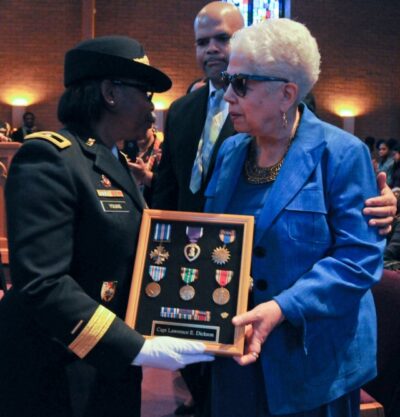
These are not tidy discoveries. They reopen family stories. They rearrange timelines. They expose secrets. But they also close circles.
Smolenyak was also an early advocate of DNA testing in genealogical research, long before companies like 23andMe and Ancestry made it mainstream. She faced skepticism at first. “People scoffed,” she says. “They thought it was impractical and unreliable. I realized it would be a great tool for adopted children who wanted to find birth parents.” Today, she is recognized as an early champion of DNA, helping move it into mainstream forensic genealogy and enabling researchers to solve cold cases and uncover hidden family connections.
Her most recent book, The Quest for Annie Moore of Ellis Island (2024), corrects a long-standing historical error. On January 1, 1892, 17-year-old Annie Moore of Ireland became the first immigrant processed at Ellis Island, a port that would see more than 12 million pass through by 1954. But Moore’s identity had been misassigned for decades. Smolenyak traced the authentic lineage, restoring the real story.
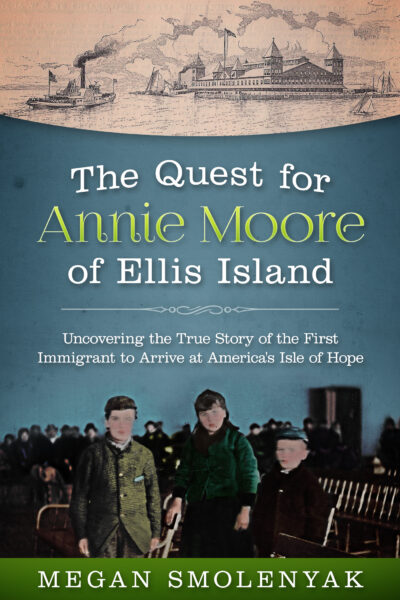
“I felt compelled to share it,” she says. “It’s rare to see a child making history.”
In the book, Smolenyak shows readers her investigative process and the painstaking verification required to piece together even small clues. “I wanted people to see how messy research is; how much you need to know to raise red flags. And just when you think you’ve seen it all, family dynamics always throw curveballs.” The result is a book so immersive that readers don’t just learn about turn-of-the-century immigration — they follow the twisting path of evidence, doubt, and discovery that brings a long-forgotten life back into view.
The research took 22 years.
Once you discover something that wasn’t known before, she explains, the work becomes addictive. “Research is like preparing for a performance at Carnegie Hall,” she says. “Practice, practice, practice.”
Before digitization, she recalls, you could wander archives freely. “It felt like Indiana Jones.” But what stayed with her was not the adventure—it was the discipline. “There is no finish line,” she says. “Only the next question.”
Smolenyak’s current projects include a Canadian American World War I nurse and many other historical cases. Above all, she remains committed to reuniting deceased soldiers with their families. But recently, she turned her lens inward.
The pushpin in the Soviet Union, it turns out, was wrong.
After decades restoring other people’s histories, Smolenyak traced her own. Her mother’s side proved fully Irish. Her father’s line led to the Rusyns — an East Slavic people long marginalized and scattered across shifting borders.

For Smolenyak, genealogy has never been about ancestry as ornament. It is about accountability — about asking who was misfiled, who was overlooked, who disappeared into archival silence. It is resistance against forgetting.
In classrooms, in cemeteries, in families who answer the phone not knowing what they are about to learn, her work carries the same quiet insistence: No one disappears if someone keeps looking.
Vintage Ads: Where Have All the Beautiful People Gone?
Coca-Cola introduced the diet soda Tab to a weight-conscious America in 1963, calling it the drink of beautiful people.
Among the many Americans who still recall its taste, or think they can, Tab lacked the sweetness of today’s diet drinks.
But for others, Tab became a lifelong passion. They appreciated its sharp, lemony flavor. They enjoyed the not-too-much sweetening of saccharine and cyclamate. In 1969, a health scare caused Tab to stop using cyclamate, relying instead on saccharin, which had a bitter taste.
In 1982, the company produced its own competition with Diet Coke. Tab lovers were discouraged to see the company give it more promotion. Demand fell until Tab was pulled from the market in 2020.
For devotees, the drink can evoke memories of life in perhaps more congenial times, when a cold can of Tab on their automobile console was the only thing making the drive to work endurable.
This article is featured in the March/April 2026 issue of The Saturday Evening Post. Subscribe to the magazine for more art, inspiring stories, fiction, humor, and features from our archives.
Poll: Do You Have a Valid Passport?
There has been a lot of discussion recently about having documents that prove one’s citizenship or legal residence, including birth certificates, REAL ID drivers’ licenses, and immigration credentials. In Europe, where nations are the size of states, a passport is a necessity for travel, but in the U.S., where you can drive all day without leaving the country, passports aren’t so imperative. It is nonetheless a good document to have to prove your citizenship … or to make a weekend getaway to the Caribbean feasible.
Do you have a valid passport?
Tour an Authentic Mir Space Station
At the Tommy Bartlett Exploratory in Wisconsin Dells, WI, you can lift a car with a pulley, frizz out your hair by touching a Tesla coil, and make colorful plastic balls float on cushions of air. Cool, but pretty standard stuff when it comes to kid-friendly science museums.
Still, there’s one exhibit here that you will absolutely, positively never find anywhere else on Planet Earth: This is the only place where you can climb aboard a genuine Soviet-era space station.
We’re not talking about a very good replica here. Tommy Bartlett’s Mir space station is a fully functional vehicle that, once upon a time, could have been strapped to the top of a Russian Proton rocket, hurled into orbit, and occupied by a crew of space-faring humans.
It’s the sort of thing you might expect to find at the Smithsonian’s National Air and Space Museum, or a wing of Chicago’s Griffin Museum of Science and Industry. But no, this priceless relic of the U.S./Soviet Space Race sits in a low-slung museum across the street from a Subway sandwich shop and next door to a decidedly modest double-decked motel.
And it’s here because a guy wanted to buy a car.
A flock of 8-year-olds is fluttering about my feet as I enter this long, low building that stands behind the main building of Tommy Bartlett’s Exploratory. As my eyes adjust to the darkness, I’m struck by the hulking, weirdly incongruous presence of Mir lying on its side, its 44-foot-long body disappearing into the distance. Above the spacecraft hovers a space-walking replica Russian astronaut, tethered to the mother ship.
This is one of three Mir stations built by the Soviets (the other survivor remains stashed somewhere in a Russian warehouse). I step inside an entrance cut in the side of the Mir module. The floor tilts at an odd angle, offering a disorienting, funhouse version of weightlessness. At the front of this school bus-sized space spreads the main console dotted with scores of illuminated buttons, all of them labeled in Russian. Above the panel looms a passage-sized porthole leading to a chamber with five ports, each of which would have led to a separate component, to be launched into service at a later date.

To the rear sits a vaguely self-explanatory orbital toilet. And on the right wall hangs a rustic guitar – original equipment, intended for in-flight entertainment.
From a 21st century vantage point, the then-cutting-edge Mir — launched in 1986 — seems quaintly analog: The padded seats resemble the stools you might have found at the counter of a mid-20th century Howard Johnson’s. The intercom boxes are reminiscent of those at a clunky drive-in theater. The floor-based viewing window, emphatically bolted into place, could be out of a steampunk Jules Verne movie.
All of this seems to be lost on the young kids now frolicking around me. Sure, they think Mir is cool. But they have no idea just how cool.
Tommy Bartlett wasn’t looking to buy a historic piece of space hardware. A leading figure in the Wisconsin Dells tourism industry, Bartlett had already been a beloved 1940s Chicago radio host when he launched his touring “Tommy Bartlett Water Ski & Jumping Boat Thrill Show.” The permanent, in-town version of the show was performed on Wisconsin Dells’ Lake Delton from 1953 until COVID-19 forced its closure in 2020.

In 1982 Bartlett and his business partner, Tom Diehl, opened the museum on the same property as their ski-and-boat show. Bartlett was the company’s visionary; Diehl was in charge of day-to-day operations, which included negotiating the prices of vintage cars for Bartlett’s collection.
“This all got started when I got in touch with a guy who had a car that Tommy wanted,” Diehl told me in 2021. “Tommy didn’t buy the car, but the guy happened to ask if we’d be interested in buying one of the three original Mir space stations.”
This was in the mid-1990s, when Russia’s economy was reeling from the breakup of the Soviet Union.
“The Mir was in some sort of government museum at the time, but they were selling everything over there, just trying to raise some money,” Diehl recalled.
Posted near the museum’s Mir is a photograph of 83-year-old Tommy Bartlett, resplendent in a white cowboy hat, standing with the seven Russian space scientists who accompanied the craft to Wisconsin and supervised its reassembly. The date was May 1, 1997. Bartlett died just over a year later.
“I’m glad he lived to see it,” said Diehl.
Diehl, who inherited the business from Bartlett, died three years after we spoke, in 2024. The museum was sold to Ripley’s Believe it or Not! World Entertainment, which plans to resurrect the boat-and-ski thrill show Bartlett and Diehl produced for 67 years.
No matter who owns the place, it’s clear that the 140-ton Mir isn’t going anywhere.
Our Noisy World
“Sound has power!”
The audiologist Deanna Meinke was holding a tuning fork in one hand, and in the other, a Ping-Pong ball dangling from a string — a representation of the inner ear. Her demonstration was well rehearsed: A professor of audiology at the University of Northern Colorado, Meinke is also the codirector of Dangerous Decibels, a nationwide initiative encouraging kids to safeguard their hearing.
Meinke struck the tuning fork against her desk and raised it slowly to the Ping-Pong ball, which sprang away, fell back, then jumped again, dancing spastically until the fork’s hum faded. When she made her wide-eyed declaration that sound has power, her voice lingered on the word power as if casting a spell.
While sound is invisible and ephemeral, it is, fundamentally, a wave of energy triggering a cascade of molecular collisions. From the standpoint of physics, the drop of a pin and an earthquake are close cousins.
Sound moving through the air at sea level cannot exceed 194 decibels, at which point the energy of the sound wave exceeds the atmospheric pressure, pushing the air rather than moving through it, producing a shock wave. In a denser medium, molecules smash together more rapidly, which is why sound moves through water about four times faster than it does through air. In the vacuum of space, by contrast, there are no molecules to vibrate, and silence reigns. As the famous tagline from the 1979 sci-fi classic Alien put it, “In space, no one can hear you scream.”
When we think of noise primarily as loudness and define it by decibels, we are measuring the energy punch that the sound packs, regardless of its source, its meaning, or any other context. This punch can indeed be powerful, potentially damaging the inner ear’s delicate anatomy and causing hearing loss. This alone makes exposure to noise a large and growing public-health problem. According to the Centers for Disease Control and Prevention, about 40 million American adults have noise-induced hearing loss, and by 2060, the number could top 73 million.
But the threat noise poses to our hearing is greater than degraded sensory perception. We hear with our brains as much as our ears, and the fallout of hearing trouble isn’t trivial: Kids who can’t hear well in school are more likely to have delayed cognitive development and struggles with learning, while adults with hearing loss are at an increased risk of social isolation, depression, and dementia.
The deeper we venture into our hearing system, the more the problem of noise expands from decibels alone to something much more complex — something that harms the intricate connections between ear and brain in ways that are far more insidious than we realize. The damage can also profoundly affect our connections with one another.

Any exploration of noise must begin here — before a sound is noise, before it is even a sound. A pulse of energy passes through the air until it vibrates your eardrum, the translucent membrane at the boundary to your middle ear. There, three tiny bones known as the ossicles work like a kick-drum pedal to transfer that energy to a much smaller membrane at the entrance to your inner ear and the spiraling snail of fluid-filled bone known as the cochlea. Inside your cochlea, wavelets in the fluid triggered by the vibrations jostle thousands of “hair cells,” which line the length of the spiral and are named for the tufts of hairlike stereocilia protruding from their tips.
A hair cell bent by acoustic energy releases the chemical neurotransmitter glutamate into neural connections at its base, which are known as synaptic ribbons. These synapses then fire off electrical impulses to the auditory nerve, which ferries the acoustic signals to the brain, allowing you to hear.
This is where loudness can start to cause trouble. Louder sounds carry more acoustic energy and trigger a larger release of glutamate. Too much high-decibel excitement causes hair cells to overfill their synaptic ribbons with glutamate, to the point where they swell up and pop — a grisly process known as excitotoxicity. Eventually, the battering caused by noise will kill off entire hair cells.
How much loudness is too much is a matter of ongoing debate. The National Institute for Occupational Safety and Health (NIOSH), for instance, suggests a limit of 85 decibels, which is as loud as heavy traffic, over an eight-hour workday. But that doesn’t mean that 85 decibels is “safe”; it is simply the threshold that a 50-year-old study had linked with a 15 percent rise in the risk of hearing loss for workers, compared to a 29 percent jump at 90 decibels. Both the Environmental Protection Agency and the World Health Organization, meanwhile, recommend that people cap their exposure at 70 decibels (dishwasher loud) over 24 hours.
Most of us have no idea how close we are to these decibel danger zones because almost all the loudness in our lives goes unmeasured. The best data comes from workplaces, and even that is quite limited. In the United States, NIOSH has traditionally focused on a handful of industries in which the most noise hits the most ears, namely, manufacturing, construction, and mining. There, workers’ rates of hearing loss hover between 20 and 25 percent.

Even less is known about our exposure to non-occupational noise. Spot-checks of New York City’s subway platforms, for example, found that trains screeching into stations emitted up to 111 decibels. A 2021 analysis of hour-long measures of sound levels at ten Nashville music venues found that they averaged 112 decibels and topped 101 decibels 90 percent of the time.
Some loudness is unavoidable, some is forced upon us, and some we choose. But it all adds up. Your ears don’t care if the decibels come from your job, your local bar, or your power tools. They don’t care whether the music blasting from your earbuds is rock, country, or hip-hop. If the sound is loud enough, it will cause damage, and a tiny piece of your sonic world will be lost.
Clearly, the most effective antidote to noise-damaged hearing remains prevention. Yet judging by NIOSH numbers alone, protecting our ears remains a hard sell, despite decades of noise guidelines and awareness campaigns. Outside of work, the idea of hearing protection barely registers.
“We protect what we value,” said Deanna Meinke, the Colorado professor who directs the Dangerous Decibels program, “and I don’t think people value their hearing consciously.”
She and other audiologists suggest that this apathy about our ears is driven by two main factors. First, many people falsely assume that hearing loss is simply part of growing old, like graying hair and wrinkles. Why worry about the inevitable? In truth, hearing acuity does degrade naturally with age, but studies show that a lot of “age-related” loss is likely due to a persistent auditory assault over the years, rather than the years themselves. Second, hearing loss is usually incremental; hearing erodes gradually, as sharpness declines and tones get muddled. And when our auditory inputs falter, our brains do their best to plug the gaps with a mix of memory and prediction. This slow decay disguises the true extent of what we lose as hearing fades.
Getting people to truly care about hearing before it fades will take a more powerful motivator than scary statistics and stricter regulations. It will require a shift in the social norms that swirl around hearing loss. Imagine a future in which hearing devices carry no more stigma than prescription glasses, in which awareness of hearing’s value, and vulnerability, at every age is more widespread, in which nobody looks askance at concertgoers who don a pair of musician’s earplugs before the show.
Despite their patina of permanence, social norms can change rapidly. In the late 1980s, for instance, hardly any musicians or their audiences wore hearing protection — it simply wasn’t rock ’n’ roll. That’s when the punk-rock bassist Kathy Peck found herself needing hearing aids in her 20s and founded HEAR, or Hearing Education and Awareness for Rockers. Soon, some of the world’s biggest rock stars started speaking out about the hearing loss and tinnitus they endured, thanks to their years onstage. Pete Townshend, guitarist for the Who and a tinnitus sufferer, kicked in $10,000 to HEAR’s cause and appeared in the nonprofit’s 1991 documentary Can’t Hear You Knockin’, along with other stars: Debbie Harry, Ray Charles, Lars Ulrich of Metallica, and Mickey Hart of the Grateful Dead. Years of awareness raising followed. Today, in-ear devices that both protect musicians’ hearing and provide them with a clear feed of their own audio are standard gear on stage.
There is also a growing focus on noise and hearing in the realm of personal health tracking, an expanding billion-dollar universe of wearable technologies that keep tabs on everything from sleep to stress to cardiovascular fitness.
While protecting our ears from loudness remains our best weapon against irreversible hearing loss, the motivation to do it will require a deeper appreciation of everything we are protecting. There is a link between defining noise as loudness and considering hearing loss only in terms of degraded sensory perception — this mechanistic framing undersells the threat. Hearing, like our other senses, connects us to our world and to ourselves, and severing these connections cuts deep.
Simply put, ear protection is pro-sound, something Meinke stresses. “Our intention is never to tell people to stop doing noisy things,” she said. “We want to equip them with the strategies to make healthy choices.” Sometimes that means using earplugs. Sometimes it’s turning down the volume. Other times, it’s knowing when to walk away. Meinke preaches flexibility. Some protection is better than no protection. Sooner is better than later, and it’s never too late.
Excerpted from Clamor: How Noise Took Over the World — and How We Can Take It Back. Copyright ©2025 by Chris Berdik. Used with permission of the publisher, W. W. Norton & Company, Inc. All rights reserved
Chris Berdik is a freelance science journalist and author of Mind Over Matter: The Surprising Power of Expectations. His work has appeared in Popular Science, Wired, New Scientist, and The New York Times, among other publications.
This article is featured in the March/April 2026 issue of The Saturday Evening Post. Subscribe to the magazine for more art, inspiring stories, fiction, humor, and features from our archives.
Women’s Work: Women Who Shaped the American Revolution
In 1969, a new musical opened on Broadway, bringing the Founding Fathers to life on stage. 1776 brought viewers front and center to the debates over drafting the Declaration of Independence. For the first time, many Americans could visualize scenes that had previously existed primarily in history books. A filmed version soon carried the story to an even wider audience, while revivals in 1997 and 2022 have ensured that the show continues to shape how Americans imagine the nation’s founding.

Almost half a century later, Hamilton offered a new interpretation of the revolutionary story many Americans thought they already knew. With fast-paced rap and diverse casting, the musical invited audiences to reconsider the world of the revolutionary generation.
Both shows have given Americans a chance to explore how the Founding Fathers imagined the future of the United States. In some ways, that task seems easy enough: The men left behind documents and records that preserved their ideas. They wrote the Declaration of Independence, the Articles of Confederation, and the Constitution, leaving historians a detailed record of their debates. Most Americans can name at least a few of the men who helped breathe life into the United States.
In Hamilton, Eliza Hamilton famously burns the letters her husband sent her; in composer Lin-Manuel Miranda’s words, she’s “erasing herself from the narrative.” Yet many more American women were never included in the original story. Their political engagement rarely took the form of speeches in Philadelphia, signatures on founding documents, or indeed in musical reenactments. Instead, it often appeared in the choices they made in their homes and communities — political engagement of a kind that rarely makes it into song-and-dance numbers on a Broadway stage.
More than ten years before the Declaration of Independence, American women began protesting the new laws that British Parliament imposed on them. After the French and Indian War ended in 1763, Britain needed more money, taxing the American colonists through the Sugar Act in 1764 and other laws. Protests began immediately, but the 1765 Stamp Act spread dissent to new levels. In August 1765, Boston men rioted under the leadership of the Sons of Liberty.
Women, meanwhile, became known as the Daughters of Liberty, participating in boycotts and other forms of protest. As the household purchasers, they could shape resistance through their choices. One of the first successes came with the Stamp Act’s repeal in 1766, celebrated with household objects like teapots inscribed “No Stamp Act” and silver spoons engraved “Repeal of the American Stamp Act.”
These items allowed women to express political views during everyday activities. Even after the repeal, many continued to limit their reliance on British goods. As historian Mary Beth Norton has shown, communities of women gathered to spin cloth. In the late 1760s, women organized public “spinning bees,” gatherings where they made cloth to replace British textiles. The Essex Gazette reported in May 1769,“I presume there never was a Time when, or a Place where, the Spinning Wheel could more influence the Affairs of Men, than at present,” referring to the Daughters of Liberty spinning in Newport, Jamestown, North Kingston, and Long Island. The spinning wheel had become more than a household tool; it had become a political instrument.

All too soon, those celebratory Stamp Act Repeal teapots themselves became ironic. The 1767 Townshend duties taxed a range of imported goods, including tea, leading to another boycott. The boycotts went even further when, in 1773, Parliament imposed the Tea Act, which gave the British East India Company control over all sales of tea in the North American colonies. In response to both these laws, many American women began brewing “liberty tea,” using materials on hand such as red root bush or red sumac berries to create alternatives to the tea imported by Britain.
The Tea Act famously prompted the Boston Tea Party, now the stuff of American legend. The following year, a group of 51 women in North Carolina staged their own protest called the Edenton Tea Party. The Morning Chronicle and London Advertiser printed an excerpt from a letter signed by the women, explaining their action: “[W]e cannot be indifferent on any occasion that appears nearly to affect the peace and happiness of our country.” While the Sons of Liberty had disguised themselves as they threw tea into Boston Harbor, the women of Edenton took ownership of their own, smaller action for all to see.

By 1776, women had already spent a decade invested in the struggle against Great Britain. They were not yet imagining their roles in a new nation, but they were asserting their stake in the society they inhabited. Through boycotts, spinning bees, and the brewing of liberty tea, women made clear that political decisions affected them. It was in this context that Abigail Adams wrote one of the most famous letters of the American Revolution.

While her husband John was in Philadelphia helping determine the future of the colonies in early 1776, Abigail Adams remained at home in Massachusetts with five young children ranging in age from four to eleven. By the end of March, John had been away for weeks, and there was no news from Congress. But on March 31, Abigail wrote to John that she wanted him to consider America’s women as he and the delegates did their work.
In the new Code of Laws which I suppose it will be necessary for you to make I desire you would Remember the Ladies, and be more generous and favourable to them than your ancestors. Do not put such unlimited power into the hands of the Husbands. Remember all Men would be tyrants if they could. If particular care and attention is not paid to the ladies we are determined to foment a Rebellion, and will not hold ourselves bound by any Laws in which we have no voice, or Representation.
Congress was still months away from even debating independence when Abigail penned those words. That did not matter. In reminding her husband to “Remember the Ladies,” she carried forward a tradition that American women had been building for more than a decade: asserting that their voices mattered, even if they were excluded from formal decision-making.
As the United States approaches the 250th anniversary of the Declaration of Independence, Americans are once again reflecting on the nation’s origins. Productions like 1776 and Hamilton have helped audiences imagine the debates that shaped the United States and the men who led them. Yet the founding was never only the work of the delegates at Independence Hall. Long before independence was even a consideration, women across the colonies were asserting their stake in the political future.