Two Great Horror Films from 50 Years Ago
When I looked at the abundance of classic films released in December of 1973, I deliberately chose to hold off on addressing two milestones of their particular genre: One was an exploration of folk horror that has only grown in esteem over the decades. The other was the biggest moneymaker released that year, a legitimate pop culture phenomenon that is regarded as perhaps the greatest horror movie ever made. They are The Wicker Man and The Exorcist, and here’s what makes them classics.
Based on David Pinner’s 1967 novel Ritual, The Wicker Man delves into the horror subgenre known as “folk horror.” Folk horror draws inspiration from sources that include folklore, mythology, and paganism, and typically occurs in rural settings or a more agrarian past. Playwright Anthony Shaffer, who would also adapt high-profile screenplays of Murder on the Orient Express and Death on the Nile during the decade, handled the scripting chores. Robin Hardy took the director’s chair; Hardy had been partnering with Shaffer in film production for many years and would later write an original novel, Cowboys for Christ, as a pseudo-sequel to The Wicker Man film.
Trailer for The Wicker Man (1973) (Uploaded to YouTube by Rotten Tomatoes Classic Trailers)
Hardy populated the cast with mostly familiar faces. Britt Ekland was something of a newcomer, but had made a major impression in 1971’s Get Carter. Ingrid Pitt was already horror royalty thanks to her seductive appearances in Hammer’s The Vampire Lovers and Countess Dracula. A fellow Hammer vet (in fact, perhaps the unofficial King of Hammer), Christopher Lee, played Lord Summerisle, and stage and screen veteran Edward Woodward took the leading role of Sergeant Neil Howie. The plot follows Howie as he investigates the case of a missing girl. Journeying to the island of Summerisle, he finds himself bewildered by the pagan population; his inability to comprehend the culture places him in grave danger.
Though the film wasn’t a massive, immediate success, it was well-reviewed by the likes of Variety and the Los Angeles Times. Over time, however, it developed a large following and has only grown in terms of critical praise. In 1977, Cinemafantastique devoted an entire issue to the film, crowning it “the Citizen Kane of horror movies.” Empire magazine has it listed among their 500 Greatest Movies of All time. Christopher Lee frequently referred to it as his favorite film (which is incredible, considered the man was a multi-time Dracula, the Frankenstein monster, the Mummy, a Bond villain, a Star Wars villain, and Saruman in The Lord of the Rings series). Woodward considered Howie his best role and believes that the final shot of the movie is the best final shot of any film.
The original The Exorcist trailer (Uploaded to YouTube by Warner Bros.)
Twenty days after The Wicker Man opened, The Exorcist arrived the day after Christmas. Adapted from the screen by William Peter Blatty from his novel of the same name, The Exorcist was helmed by the Oscar-winning director of The French Connection, William Friedkin. The book was a bestseller, and Blatty had insisted on adapting and producing it. He wanted Friedkin from the beginning, and the director’s Oscar win for The French Connection made the Warner Brothers studio amenable to him taking the chair.
Friedkin recruited Owen Roizman to serve as director of photography, as the two had worked together on The French Connection (with Roizman having been nominated for an Oscar for his work). Friedkin wanted Roizman to make the settings (the house, the buildings surrounding Georgetown, etc.) look completely realistic as a counterpoint to the supernatural happenings. The director, as he would later reveal in interviews like the documentary Leap of Faith: William Friedkin on The Exorcist, also used his love of great painters to compose shots. Various Rembrandt works inspired how he would block scenes, and René Magritte’s Empire of Light would provide direct inspiration for the famous scene of Father Merrin arriving at the MacNeil house.
For the cast, the critical role of Father Damien Karras was offered to playwright and actor Jason Miller after Friedkin caught him in his play, That Championship Season. Friedkin did not know that Miller had spent three years studying to be a Jesuit priest before his own struggle with faith forced him to switch his life path. Miller immediately recognized himself in the story. Legendary actor Max von Sydow took on the role of Father Lankester Merrin; ironically, von Sydow was only 43 during filming, his older look achieved using make-up. Tony Award-winner Ellen Burstyn took on the part of Chris MacNeil, the mother of young Regan, a victim of possession. The crucial role of Regan went to Linda Blair, who was 12 at the time. For the voice of demonic Pazuzu, Mercedes McCambridge was cast; once called “the world’s greatest living radio actress” by Orson Welles, McCambridge had won a Best Supporting Actress Oscar for All the King’s Men in 1949. The music of the film almost functions like another character, with the most famous piece being Mike Oldfield’s “Tubular Bells.”
“Tubular Bells (Pt. I)” (Uploaded to YouTube by Mike Oldfield)
Throughout filming, Friedkin’s obsession with getting everything exactly right sometimes frayed the nerves of the cast. During one of Miller’s scenes, Friedkin fired a gun (using a blank) off-camera to elicit the proper startled reaction with the actor. With McCambridge’s permission, he tied her to a chair during one voice recording session so that she’s actually sound like she was struggling to escape. During a scene where the possessed Regan tosses her mother, Burstyn really did land badly, hurting her head and fracturing her coccyx; Friedkin used that shot in the completed film. The director also spent $50,000 of the budget to install a cooling system so that the actors’ breath could be visible during the final exorcism scene, just as Blatty had described in the novel.
After post-production delays pushed back an earlier release date, Warner Brothers chose December 26th for The Exorcist to land in theaters. It exploded out of the gate, remaining the highest grossing Christmas-week release for 24 years, until Titanic replaced it (as of this writing, it’s still #2). The film’s $66.3 million in theatrical rentals made it, for a time, Warner’s biggest hit ever; it was easily the top film released in 1973. Its immediate success came with immediate controversy. Though a number of critics praised it, with many calling it the most frightening film ever made, other critics (like, perhaps unsurprisingly, given their overall history with genre reviews, Pauline Kael and Vincent Canby) derided it, with negative reactions landing between dumb and “evil” (The Village Voice).
Audiences flocked to the film, and there were reports of people fainting in theaters. Various offices of the Catholic Church and other faith groups lodged objections, , which the press enthusiastically amplified. There were few official complaints, however. The truth is that the film was massively popular, and remained the highest grossing R-rated horror movie until 2017’s It. The Exorcist was nominated for 10 Academy Awards, including Best Picture, Best Director, Best Actress (Burstyn), Best Supporting Actress (Blair), Best Supporting Actor (Miller), Best Adapted Screenplay (Blatty), Best Cinematography (Roizman), Best Art Direction, Best Editing, and Best Sound. It won for Sound and Screenplay.
Fifty years later, The Exorcist has retained its reputation as one of the greatest, and most frightening, of all horror films. It was re-released in theaters for its anniversary, and the latest sequel in what has become a franchise of six films and a television series, The Exorcist: Believer, also hit theaters in 2023. As for The Wicker Man, its reputation has only grown; an unsuccessful remake starring Nicolas Cage in 2006 actually brought more attention to the original film. For the film’s anniversary this year, StudioCanal released a 4K restoration of three distinct cuts of the film (including an earlier version trimmed for time and one with restored material); that release gave an opportunity for outlets like Slant and Filmhounds to conduct retrospective reviews that were universally effusive. Perhaps no one can ever be sure why December 1973 was home to so many classic movies, particularly two horror giants, but one thing is certain: Audiences had one hell of a good time.
News of the Week: Best of the Year, Resolutions, and Are You Using Aluminum Foil Correctly?
TV and Movies and Books, Oh My!
It’s the last week of December, and you know what that means: more lists than you possibly have time to read.
But that’s not going to stop me from linking to them!
TV: I used to watch a lot of TV, but even I can’t keep up with all of the shows these days, with broadcast and cable and streaming and other viewing options I probably don’t know about. Here are the best shows according to The Guardian, The Wall Street Journal, Vogue, The San Francisco Chronicle, and The Hollywood Reporter.
Movies: Indiewire has the 50 Best Movies of 2023, according to a poll of 158 critics. Variety, Esquire, Empire, and RogerEbert.com have their picks too.
Books: NPR has their annual interactive Books We Love feature. And here are lists from Town & Country, The New York Times, The Wall Street Journal, Literary Hub, and Time.
And if you want to browse one place that has everything, check out the Year-End Lists site. They also have the best in music, poetry, and podcasts.
In 2024 I Resolve To …
Also this time of year, many people insist that the only New Year’s resolution they make is that they’re not going to make any New Year’s resolutions. But that itself is a New Year’s resolution, which proves you make New Year’s resolutions!
What are yours? 2024 is an election year, so I’m going to drink more.
Did You Know …
If you were to make a list of movies that should never be remade, It’s a Wonderful Life would be high on that list.
But they did remake it! In 1977, as a TV movie starring Marlo Thomas.
It’s called It Happened One Christmas, and she plays Mary Bailey. It’s sort of a gender-switch, as the movie focuses on Mary while her husband George is away fighting in World War II. And look at the rest of the cast: Wayne Rogers as George! Cloris Leachman as the guardian angel! Doris Roberts as the mom! And Orson Welles (!) as Mr. Potter!
Here’s the original promo. I can’t find the entire movie on YouTube but there are several scenes you can find.
Uploaded to YouTube by Mass Media Past
Headline of the Week
“Reynolds Finally Settles the Debate: This Is What Each Side of Aluminum Foil Is For”
RIP Tom Smothers, Lee Sun-kyun, Laura Lynch, Mike Nussbaum, Ken MacKenzie, Kamar de los Reyes, and Sajid Khan
Tom Smothers was half of the Smothers Brothers comedy/music team that hosted the groundbreaking (and controversial) CBS variety show The Smothers Brothers Comedy Hour in the 1960s. He died Tuesday at the age of 86.
Lee Sun-kyun was the South Korean star of the multi-award-winning black comedy suspense film Parasite. He died Wednesday at the age of 48.
Laura Lynch was the co-founder and former lead singer for The Dixie Chicks. She died last week at the age of 65.
Mike Nussbaum played George in the original Broadway production of Glengarry Glen Ross and appeared in such movies as Fatal Attraction, Field of Dreams, Men in Black, House of Games, and several TV shows. He died Saturday at the age of 99.
Ken MacKenzie was the only winning pitcher on the infamous New York Mets 1962 squad. He died last week at the age of 89.
Kamar de los Reyes played Antonio Vega on One Life to Live, Jobe on Sleepy Hollow, and Coach Montes on All American. He also was one of the lead voices in the Call of Duty video games. He died Sunday at the age of 56.
Sajid Khan was the star of the movie and TV show Maya in the 1960s. He died last week at the age of 71.
This Week in History
The “Christmas Truce” (December 24, 1914)
In a rare moment of wartime civility, Allied and German soldiers laid down their arms and exchanged gifts, shared a drink, and sang songs.
Radio City Music Hall Opens (December 27, 1932)
The first show didn’t go that well.
This Week in Saturday Evening Post History: Alka-Seltzer® (December 23, 1961)

You might need it this weekend.
What Are You Making for New Year’s Eve?
If you’re going to drink, make sure you also drink a lot of water and eat some food. I don’t have any recipes for water, but Rachael Ray has a Gorgonzola Spinach Artichoke Dip, Smitten Kitchen has Cider-Glazed Bacon-Wrapped Dates, The Pioneer Woman has a One-Pot French Onion Pasta, Epicurious has a Hoppin’ John (don’t forget the clean penny for good luck!), and Food Network has New Year’s Resolution Cookies.
If you have any leftovers, wrap them in aluminum foil.
Happy New Year!
Next Week’s Holidays and Events
National Hangover Day (January 1)
This makes sense.
Fruitcake Toss Day (January 3)
Look, there are ways to make a good fruitcake, but if you got a bad one or simply don’t like fruitcake, this is the day to toss it.
Shanda
For the winter Grandpa lived with us, he seldom spoke, but he had a habit of smacking his lips and grinding his teeth together as if on the verge of communicating something important. On the nights Mom was at work, Marcy often warmed up meatloaf for me and Grandpa, though never without declaring she was performing gendered labor. Marcy had come home from college speaking a new language, one of regressive social politics and repressed identities. She said Mom had raised us without any connection to our Jewish heritage or reckoning with the fact my father had left us for another family. I didn’t go to Hebrew school, and I was too young to remember our father, but Marcy’s newfound voice and authority made me inclined to believe her — we didn’t know anything.
Marcy spent most of her winter break with old high school friends, especially Joel, who drove a faded green Chevy plastered in Al Gore stickers. I knew he had lost the election, and Marcy thought it was the end of democracy. From my bedroom window, I watched her jump into the passenger seat in her brand-new red peacoat, which she must have paid for with her new job as a research assistant, which sounded important and hard. I wished Marcy would stay home, especially since I wasn’t allowed to leave until I recovered from my surgery. As I grew, the curve in my back had worsened, and by the time I was 11, the doctors said they would have to fuse the vertebrae or else I would keel over into a permanent comma.
After the surgery, I thought I might become a different person, more outgoing and less nervous, but instead I just felt relieved. I could get around fine on my own, though I had to stay home from school for a month. My mom was happy I could spend more time with Grandpa. I don’t know what she imagined would happen between us. Maybe she thought he would impart the life lessons I never got from my father, but the truth was, even when we were together, Grandpa and I were pretty much alone.
Mom said the smacking and grinding was involuntary — something left over from Grandpa’s time in the war — and we weren’t allowed to complain or ask about it. My only respite came in the afternoons when it was warm enough, and Grandpa exchanged reruns of Friends for a few minutes in the sun on our icy front porch. Mom said Grandpa had come to stay with us because Uncle Dan was moving houses, and they hadn’t figured out where to put Grandpa yet. The way she and Uncle Dan talked about Grandpa was like a piece of furniture. Sometimes, I would watch Grandpa’s face while Mom paced in the kitchen on the phone, but I could never tell if he was listening.
After Grandpa moved in, my bedroom came to smell like the mixture between the inside of an old shoe and a dental office. I begged Mom to let me sleep in the living room, but she said Grandpa would be offended because he wanted to spend time with me, a fact which could neither be confirmed nor denied. Long after lights out, I flipped around like a beached whale under a sleeping bag while Grandpa slept prostrate under my good comforter. Once, Grandpa woke in the middle of the night and shouted They’re here! Mom had to shake him awake before he calmed down again.
After breakfast one morning, when Marcy and Mom were both out of the house, Grandpa finally broke his silence.
“Your sister is a whore,” he said.
I put down my book, a choose-your-own-adventure where I was living as a shipwrecked pirate. On TV, the friends were sitting down to a meal in Monica’s kitchen. We heard the laugh track once or twice while I thought of how to respond.
“No, she’s not,” I said. I knew what the word meant, but I hadn’t heard anyone use it to describe a person in real life. Maybe Patrick Russo had said it once or twice but only to voice a complaint, as in math was a real whore today.
I wanted to say something else to Grandpa in defense of Marcy, but he had already switched off the TV and gone into the kitchen. I decided not to tell Marcy or Mom because I was trying to give Grandpa the benefit of old age — maybe he had confused her with someone else. She did look a little like a celebrity, all lipsticked smile and thick hair. Plus, Mom made me swear to be nice to Grandpa no matter what, and I had very little to my name at that time except for my word.
Grandpa’s visit overlapped with Hanukkah that year, which fell during the first week of winter break. Normally, our family didn’t celebrate any of the Jewish holidays, but Mom said that while Grandpa was here, it was important we stick to the traditions. Once or twice, we had gone over to Uncle Dan’s house for Passover, but I was very young, and all I remembered was my cousin Albert making fun of me for not knowing how to read. I knew we were Jewish in theory, but we didn’t have any Jewish friends at school or in the neighborhood, and Mom didn’t want us to feel left out.
On the first night, we went to temple in our neighboring town and sat by ourselves in the back row. A security guard asked to check my mother’s purse on the way in, and I thought it was funny since Mom never got in trouble, but when I laughed Marcy elbowed me in the side and told me to shove it and stop being stupid. During the service, there was a lot of getting up and down and covering our eyes, and I kept forgetting that the books were backward. Mom knew all the prayers, and she recited them quietly under her breath along with the congregation, but except for the smacking, Grandpa was silent. On the way home, Marcy said she was embarrassed to not know any of the prayers.
“Are you ashamed of our identity or something?” Marcy finally asked Mom.
Mom gripped the steering wheel with tight knuckles. It was snowing outside, and Grandpa and I were in the back seat, staring out opposite windows. Even when she had the most justified opportunity, I never once saw my mother angry.
“Marcy, you’re old enough to make your own choices,” she said.
On the fourth night, Marcy didn’t come home for the candle lighting. We waited until the light had faded from the kitchen window, and then Mom said we better go ahead without her. Later, she came in while the three of us were watching It’s a Wonderful Life. George had just declared that he wanted to live again.
“Hi,” she said, bringing in a gust of cold air through the kitchen door.
She tried to squeeze past the couch and up the stairs to her room, but Grandpa stood up, blocking her path.
“Marcy,” he said, “What you’re doing is a real shanda.”
“Dad,” Mom said.
“What did you just say to me?” Marcy’s eyes had turned to daggers.
“You bring shame to this family,” my grandfather continued.
“Mom!” Marcy yelled. “Can you get this sexist out of our house?”
“Dad,” Mom said again. “Let her go.”
For a second, Marcy’s fists quivered like she might punch Grandpa in the face, but instead, she pushed him out of the way and stomped up to her room, closing the door. The three of us sat in silence until the movie finished, and when I looked over, Grandpa was asleep.
After the movie, I followed Mom into the basement.
“Why is Grandpa so mean to Marcy?” I asked while she folded a load of clothes.
“Grandpa’s had a tough go of it,” she said. “He escaped Poland when he was just a boy. Did you know that?”
I knew Grandpa had survived a war, the one against Jews, and I remembered once when I was six and we were driving through Indiana to Uncle Dan’s house. We stopped at a gas station next to an abandoned Dairy Queen, and there was a swastika graffitied on the crumbling walls. Mom said it was a symbol of evil, and that many of my relatives died because of it. Even though I didn’t understand what she meant, I was too scared to ask questions.
“Not really,” I said now.
“You’re old enough to know these things,” she said. “He was very lucky. He was the only one of his family who survived, and he did it by hiding in a house in the countryside eating nothing but rats and cabbage.”
“Wow,” I said. I suddenly had so many questions for Grandpa, like what did rats taste like? But also, things started to make sense, like how Grandpa could go so long without speaking and not get bored of staying inside.
“He doesn’t like to talk about that time,” Mom said. “So don’t ask him about it, okay? He prefers to be here in the present with us.”
“Is that why he cried at temple?” I hadn’t wanted to say anything because I didn’t want to embarrass him, but I had noticed it when we left: wetness around his eyes and his cheeks.
“What happens when you are young is very difficult to let go of,” my mother said. “I hope you’ll never understand that in the same way Grandpa does.”
“But I still don’t like what he said to Marcy,” I said. “What does he mean she brings shame? Because she stays out too much? With Joel?”
“He means,” Mom said, “That once you have seen your entire world disappear, it’s very difficult to ever feel safe again.”
My mother was a wise woman, but then I thought she was avoiding my question.
Close to New Year’s, I was cleared to go on walks again. Once my spine healed, it turned out that one leg was shorter than the other, but I didn’t mind. I thought my limp lent me a certain gravitas and maturity that would give me a leg up, so to speak, with the girls at school. On sunny days, the sidewalks were icy and slick, so I took small steps and always turned around at the end of the cul-de-sac. I thought about inviting Grandpa, but since the incident with Marcy, I had kept my distance. Even after what Mom told me, my loyalty was always to my sister, and I didn’t understand why Grandpa couldn’t just leave her alone.
On New Year’s Eve, Marcy was out, but Mom and Grandpa and I watched the ball drop on TV, and Mom popped a bottle of champagne, the cork leaving a black mark on the ceiling. She and Grandpa didn’t usually drink, but they both had one glass, and Mom even offered me a sip from hers. It tasted like bubbly candle wax. Afterward, she put a Prince tape in Marcy’s boom box, and we danced around the back of the couch. The music drowned out Grandpa’s smacking, and he even waved his hands in the air a little when “Raspberry Beret” came on.
Marcy didn’t come home for a couple of days, but Mom said not to worry. She was just testing the limits of her freedom. Putting her on a leash would only drive her further away. I began to wonder what it would be like to have Grandpa as a father and if he would have forced us to go to temple and pray every Friday night and not let Marcy leave the house. My real father was not Jewish, and at times, I wondered if that had anything to do with his departure. Of course, it didn’t, I would later learn, but I would feel even more unsure of what identity I could hold onto.
When Marcy finally returned, she shut herself in her room for a couple of hours. She was leaving to go back to school in three days, and I was desperate to spend time with her, though I would never say. I knocked softly on her door, holding the boom box as an offering.
When she finally opened it, her hair was frizzy and unkempt, and mascara made black rivers down her cheeks. She left the door open and went to sit on her bed without saying anything. I followed her inside.
“What’s wrong?” I said. I hadn’t been in Marcy’s room in weeks, and it reeked of old takeout and marijuana. She still had her high school track trophies on her dresser, but she’d torn down her old music posters, leaving just the staples in the wall.
I joined Marcy on the bed, pushing aside a pile of magazines and clothes. For a few minutes, we didn’t speak.
Then, Marcy said: “Grandpa was right.”
“What?” I said.
Marcy looked up from burying her face in her hands. “You can promise to keep a secret, can’t you?” she said.
“Of course,” I said.
“I aborted a baby,” she said.
“Oh,” I said. I got the sense that Marcy didn’t want me to look at her then, so I stared at my hands in my lap.
“Do you know what that means?” she said.
“Yes, I think so,” I said.
“It means I was pregnant, and now I’m not.”
“Yes,” I said, even though my mind was thrumming with questions.
I allowed myself just one.
“Was it Joel’s baby?”
Marcy nodded. I noticed Marcy’s red coat in the closet, hanging alone, and I suddenly felt very sad for her and sad for the baby that would have been my relative, but I didn’t dare say it. I didn’t know what to think, but I knew that I wouldn’t betray Marcy to Mom or Grandpa or anyone. I would take her secret to my death.
A few minutes later, we heard Grandpa’s footsteps on the stairs, and then the grinding and smacking as he opened and closed my bedroom door.
The next week, the house was empty again. Marcy flew back to New York, I returned to school, and Uncle Dan came to pick Grandpa up and take him back to Ohio. They had decided that Grandpa wouldn’t live with Uncle Dan after all but in an assisted living facility, where Mom and Uncle Dan agreed he would get the best care, especially as he was having more of those dreams, and it was getting harder and harder to wake him up.
When I saw Grandpa the next summer at a barbecue, he didn’t seem frightened. He patted me on the shoulder and smiled, as if he didn’t quite remember who I was. Marcy wasn’t there; she was studying abroad in Florence. She had sent us a photo of her in front of an enormous cathedral, the stained-glass window behind her glowing in the sun.
That September, two planes flew into towers in New York, and the president declared that the country had to come together to fight a new and different war. I thought about the Holocaust and Grandpa. I didn’t want to eat rats and live in a basement, but Mom told me this time was different. We weren’t the enemies anymore.
When Grandpa died the following spring, Mom and I flew out to Ohio for the funeral. Marcy didn’t come because she was studying for exams, but I didn’t have any excuses. Mom didn’t cry when they lowered Grandpa’s plain pine casket into the ground, or when Uncle Dan read a poem about the resilience of the Jewish people and how Grandpa could now finally be reunited with his lost loved ones. I threw a shovel of dirt into the grave as instructed and thought about how Grandpa’s jaw could finally rest in peace.
Years passed. Marcy graduated. I graduated. Mom retired from the library, and then a few years later, she died peacefully in her sleep from a brain tumor. As is the case with mothers, she was buried along with many of my questions.
I stayed in the Midwest for college, and then for some years afterward, floating through a series of temp jobs while I worked on my writing, which I never showed to anyone, not even Marcy. Close to my 30th birthday, I met Heather in a dancing class my physical therapist advised me to take for my leg. Heather’s crooked, too — her left leg is shorter than the right, the opposite of mine. She’s from Texas, and she has the loudest voice of anyone I’ve ever met.
We moved to Houston for Heather’s job in museum curation. I took a job at a bookstore a couple of days a week. Heather keeps signing me up for readings and bringing home flyers for writing groups, but I don’t have the heart to tell her I’ll never go.
A couple of months after we watched a crowd chanting Jews will not replace us on TV, we attended a wedding for one of Heather’s high school friends in Austin. I was standing on the sidelines of a group of strangers who were laughing and telling drunken anecdotes while, in the privacy of my own head, I was trying to work out a plot hole in one of my stories.
As such, I was only half-listening when a man with a thick neck like Buzz Lightyear said, “I need a raise, dude, but my boss is a real Jew.”
“What did you just say?” Like a match, I had sprung to life and into the conversation.
“I was joking, man,” the guy said. “I was just joking.” Feet shifted nervously. I could feel the painful spotlight of attention on my face.
“I’m a real Jew,” I said. I had not declared my Jewish identity like this before in any context. I wasn’t even sure this identity belonged to me anymore, if it ever had.
“I’m sorry, man,” the man said, holding his hands up in a gesture of surrender. I waited a half-second to see if anyone would respond then left for the bar. By the time I reached it, I could feel my heart pounding in my chest, the barbecue turning in my stomach. I ordered a drink and looked around, as if expecting someone to come after me, but no one did.
I decided not to tell Heather about what happened, not because she wouldn’t understand, but because she would want to take some kind of action. After she went to bed, I called Marcy, who now lives in Brooklyn in a shoebox apartment with her journalist husband, Ben, and her baby, Naomi. They go to services every Friday. Marcy said moving there felt like coming home.
“Yikes,” she said after I told her.
“I know,” I said.
“Do you remember what happened with me and Grandpa?”
“Of course,” I said.
“For a long time, I resented him. Of course, I felt sorry for what he went through, but I didn’t see why he had to punish me. Then, I realized the two things were inseparable, his pain and his fear. He just didn’t know how to keep them apart.”
“Did you ever forgive him?”
“I don’t think so,” Marcy said. “But I do regret not coming back now, because the truth was, I was afraid, too.” In the background, I could hear Naomi begin to cry.
“God, I wish I’d told him that,” she said. “I wish I’d told him I was going to be okay.”
After our talk, I sat at the kitchen table for a long time, thinking. It was November, and I wanted to walk outside into a rush of cold, but like many autumn nights in Houston, the air teemed with heat and moisture, and a storm churned in the distance. For a moment, I thought I glimpsed Grandpa standing in the doorway, his skeletal frame towering over me, his phantom jaw trying but failing to communicate, but it was the shadow of a branch waving in the wind. I thought about how often history repeats itself, our collective and personal, and how impossible it feels to respond. How often words are like the tip of an iceberg failing to convey the enormity of what’s underneath.
In the living room, I turned on an episode of Friends, the one where Ross sleeps with another woman after his fight with Rachel. I switched it off before she discovers his betrayal and sat in the dark trying to work out the plot hole in my story, in which a man visiting his runaway father’s hometown finds inspiration to rekindle his relationship with his wife and children. I couldn’t make the ending work — it all seemed too contrived. What could the father say that would allow for their forgiveness?
Once the father says what he’s going to say, there’s no going back for him. But isn’t silence a worse fate? Silence has no aftermath, only potential, infinite but lonely. What I like about my stories is that I can return again and again to the moment that will determine everything. I can imagine all of the ways loneliness tries to speak.
The Post would like to extend special thanks to its staffers who helped with the selection of finalists, and to its distinguished panel of guest judges who shared their time and talents: Michael Knight and past Great American Fiction Contest winners Linda Davis, Celeste McMaster, and Michael Mack.
This article is featured in the January/February 2024 issue of The Saturday Evening Post. Subscribe to the magazine for more art, inspiring stories, fiction, humor, and features from our archives.
Review: Freud’s Last Session — Movies for the Rest of Us with Bill Newcott
Freud’s Last Session
⭐️ ⭐️ ⭐️
Runtime: 1 hour 48 minutes
Rating: PG-13
Stars: Anthony Hopkins, Matthew Goode, Liv Lisa Fries, Jodi Balfour
Writers: Matt Brown, Mark St. Germain
Director: Matt Brown
You’d have to be crazy to skip just about any performance by the inestimable Anthony Hopkins, and, despite a scattershot script, there are reasons aplenty to keep this appointment with his crusty, cantankerous take on Sigmund Freud.
“Religion’s eleventh commandment,” Freud wrote, “is ‘Thou shalt not question.’”
Freud may have been right about a lot of things, but that particular sentiment was proven wrong by C.S. Lewis, the Oxford instructor and Christian apologist who spent much of his career asking hard questions about faith and faithfulness in books like The Problem of Pain and The Screwtape Letters.
Freud’s Last Session imagines a 1939 encounter between Freud, among the 20th century’s most adamant atheists, and Lewis (Downton Abbey’s Matthew Goode), who was at the time just emerging as one of England’s leading Christian thinkers. Lewis’s Chronicles of Narnia books were still several years off, and not for another year or two would he become a familiar voice on BBC radio, but here director/cowriter Matt Brown (The Man Who Knew Infinity) has Freud nevertheless welcoming young Lewis — albeit grumpily — into his London study.
The two exchange pleasantries, but there is an unspoken agenda to the meetup: Lewis, whose satiric but earnestly faith-based book, The Pilgrim’s Regress, had lampooned Freud a few years earlier, seeks to make his case for Christianity to the Great Man — who, in turn, relishes the notion of flattening this pesky believer’s arguments with the twin hammers of science and reason.
I approached Freud’s Last Session anticipating a powerfully claustrophobic two-hander, with a pair of heavyweights hurling 12 rounds of intellectual roundhouses à la Spencer Tracy vs. Fredric March in Inherit the Wind, Laurence Olivier vs. Michael Caine in Sleuth, or Tommy Lee Jones vs. Samuel L. Jackson in The Sunset Limited.
In his Freud/Lewis face-off, however, it seems co-writer/director Brown doesn’t trust the power of either man’s arguments. Rather than go toe-to-toe, the two spend much of the film talking past each other, spouting plucky observations without bothering to dissect the comments that elicited them.
When Freud gets into Lewis’s face and demands that he defend a God who allows children to die in war, I want Lewis to push his face even closer and say something that will hit home with the guy. Instead, he leans back and utters some bromide about the Creator’s inscrutable ways — an argument that even a believer who understands the nuances of the point realizes will come off to anyone else as an empty platitude.
Likewise, when Lewis narrows his eyes and demands, “Why does religion make room for science, but science refuses to make room for religion?” the best Freud can come up with is a sarcastic, “Please, you’re breaking my heart.” It all resembles a modern-day Internet comment board where every scathing observation exists in a vacuum.
Perhaps in an effort to make the tete-a-tete more cinematic, Brown keeps interrupting the dialogue with flashbacks to the two men’s formative years, recounting the traumas that helped shape their disparate philosophies. Less helpfully, the film introduces an entire subplot involving Freud’s daughter, Anna (Liv Lisa Fries), herself a psychoanalyst of note and — to her father’s dismay — a lesbian in a not-very-secret relationship with a colleague (Jodi Balfour, who played Jackie Kennedy in The Crown).
Still, not even Freud’s conceptual shortcomings can diminish the fine performances at its center. Hopkins, congenitally incapable of letting an audience down, is positively splendid here. His Freud pursues Lewis with the cunning of an old cat, at times wheedling his opponent to catch him philosophically off-guard, then hissing his objections to what he sees as contradictions in humanity’s universal delusion.
As Lewis, Goode is called upon to assert the emotional restraint you’d expect of an Oxford scholar, a task that risks allowing the energized Hopkins to swallow him whole. But while this Lewis lacks bombast, he brings a measure of empathy and, through flashbacks of his traumatizing World War I experience, stoic vulnerability. Intellectual to a fault, his Lewis seems to be examining Freud as something of a specimen, fully aware he will not walk out of that house having initiated a paradigm shift in the old man (although he professes his desire to do so). One senses this Lewis, having glimpsed his emerging celebrity, is here largely to try out his powers of persuasion against the strongest imaginable opponent, just to see how far he can get.
“Doesn’t it hurt to smoke?” Lewis asks Freud when the psychotherapist, suffering mightily in the end stages of mouth cancer, takes a deep draw from his ever-present cigar.
“Yes!” he laughs with a startling guffaw, as if he understands he is a living example of his pioneering pain/pleasure principle.
Lewis is momentarily startled, but a glimmer of understanding emerges. I was hoping at this point to hear some version of what Lewis would someday write in The Problem of Pain: “God whispers to us in our pleasures, speaks in our conscience, but shouts in our pain: it is His megaphone to rouse a deaf world.”
But the words never come.
Perhaps it’s too much to ask for a script as smart as Freud and Lewis were, but at any given point along the way, Freud’s Last Session could have at least heeded the advice of Lewis himself: “You can’t go back and change the beginning, but you can start where you are and change the ending.”
10 Reads for the New Year
Visit our store at bookshop.org/shop/satevepost. If you purchase from bookshop.org using the links below, we may receive an affiliate commission.
Fiction
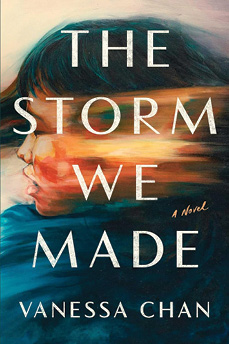
The Storm We Made
by Vanessa Chan
A well-positioned woman courted to become a WWII spy looks back at the role she played in the Japanese invasion of Malaysia. A moving portrait, told from multiple points of view, of a family devastated by war.
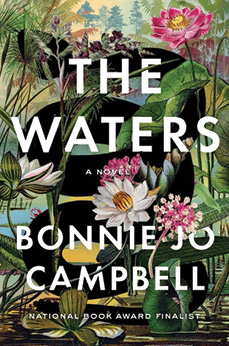
The Waters
by Bonnie Jo Campbell
In this haunting tale by a National Book Award finalist, “Herself,” a witchy herbalist in the swamps of Michigan, grapples with the secrets her family has kept from each other and her grand-daughter’s coming of age and desire for truth.
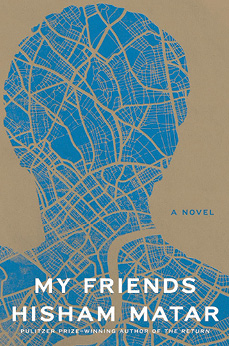
My Friends
by Hisham Matar
In an artful depiction of Libyan history during the Qaddafi regime, with real events driving the story line, a Pulitzer Prize-winner tells the story of three expats forced by the revolt in 2011 to make tough choices.
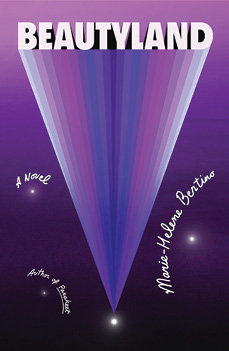
Beautyland
by Marie-Helene Bertino
Four-year-old Adina finds out she’s not human but an alien expected to report her experiences on Earth. A delightful but heart-wrenching story of womanhood, differentness, and trying to feel less alone.
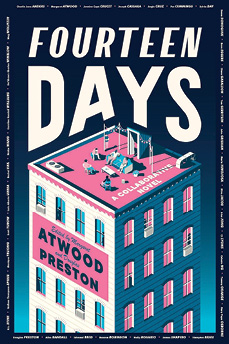
Fourteen Days
by The Authors Guild
At the start of the pandemic, neighbors in a Lower East Side building gather to tell stories. Each neighbor’s tale is written by a different beloved author, but who wrote what isn’t revealed.
Nonfiction
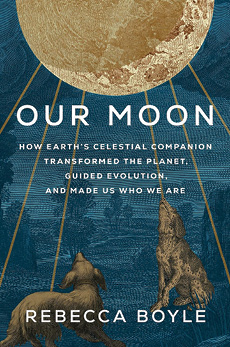
Our Moon
by Rebecca Boyle
A scientist offers a singular interrogation of the significance of the moon. From tides to horoscopes, and so much in between, Boyle highlights all the ways the moon shaped the past and is integrated into our daily lives.
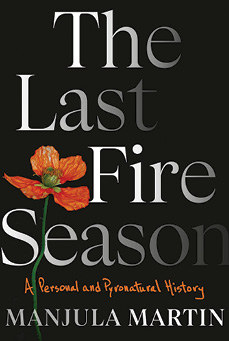
The Last Fire Season
by Manjula Martin
This Northern Californian is no stranger to the fire seasons affecting the region and has noticed the fires growing in size, length, and intensity. In this personal memoir, Martin asks how we can adapt to the new reality and what we urgently need to change now.
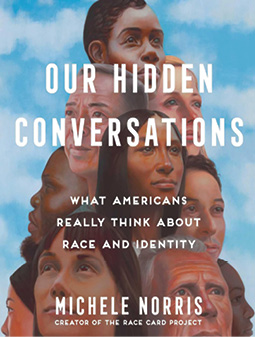
Our Hidden Conversations
by Michele Norris
The former NPR host began The Race Card Project 12 years ago with a simple prompt: Describe yourself. The results, discussed in this book, are an affecting portrait of contemporary American identity.
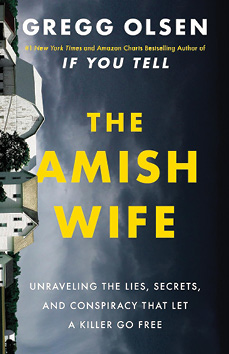
The Amish Wife
by Gregg Olsen
Gruesome murders in an Amish community all pointed to one man, Eli Stutzman. But no one ever thought to look into Stutzman’s wife’s mysterious death until now. A must-read for true-crime buffs.
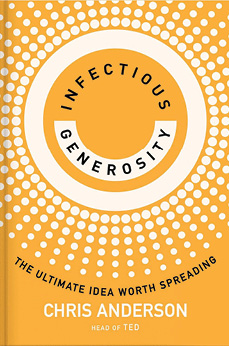
Infectious Generosity
by Chris Anderson
In these divisive times, the head of TED offers a hopeful and actionable option: generosity. With stories and research, Anderson argues that people want to be more generous, and the practice is easier than you think.
This article appears in the January/February 2024 issue of The Saturday Evening Post. Subscribe to the magazine for more art, inspiring stories, fiction, humor, and features from our archives.
In a Word: The Best of 2023
We’ve printed a lot of words about words in this column of the last 12 months. These were some of my favorites, and I hope some of yours.
Taking Apart the Parts of Speech
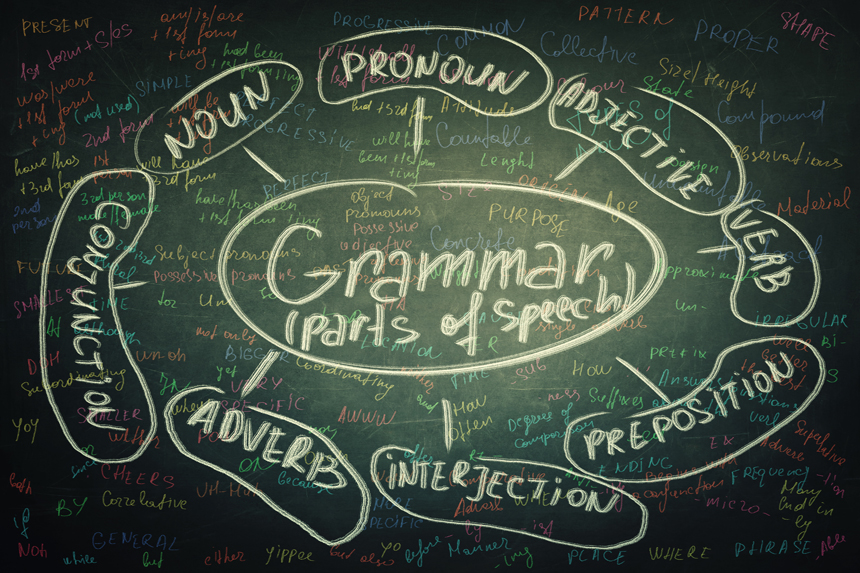
Writing words about the words we use to categorize the words we use is like a delicious multi-layer cake for a logophile like me. We were all taught the names of the parts of speech back in grade school, but few of us were told where those names came from. In “Taking Apart the Parts of Speech,” from May 25, I briefly outline how well-meaning academics forced English grammar through a Latin-shaped hole, what came out the other side, and how it led to some of the snootiest snooting among prescriptivist grammarians.
The Slowest Sleuth

Researching the word sleuth was fun for me because I didn’t realize, going in, that I would end up at sloth, sort of. Find out how Sherlock Holmes and the three-toed sloth aren’t related in “The Slowest Sleuth,” from August 31.
What’s So Casual about Casualties?

On September 14, I scratched an itch that had been irritating me for ages. When I started researching “What’s So Casual about Casualties?” I expected to discover that the similarities between causal and casualty were just some weird coincidence. What I found was even more interesting.
Black Record, White Album

I knew from words like albino, albumen, and even Albus Dumbledore that alb- words usually indicate something white, but it wasn’t until this November that I consciously recognized that the word album is an alb- word too. So I did a little digging, and on November 30, in “Black Record, White Album,” I showed how we got from a Latin word for “white” to the Beatles’ self-titled album.
Sending Out an SOS

Most of the time, this column takes us back into Greek and Latin and Old English, but on February 2, all that was put aside for some straight-up history to answer a question we’ve all asked at some point in our lives: What does SOS stand for? Short version: It doesn’t stand for anything except for what it is. After the Titanic had its misfortunate brush with an iceberg, the ship’s telegraph operator sent out the message “SOS,” but it wasn’t his first choice. Find out what was in “Sending Out an SOS.”
The Proof of Liquor

Many of the ideas for this column come from friends, family, co-workers, and the occasional hairdresser just stopping to ask “why’s it called that?” That and the age-old question “why is a liquor’s proof exactly twice its alcohol content?” were the answers I sought when I wrote “The Proof of Liquor” on March 16. What I found, in part, was that we should be thankful that the conversion is so simple; a little over 200 years ago, 100-proof liquor was 57.06 percent pure alcohol. Try doing that math in your head.
Fiddle vs. Violin

Music plays an oversized part in my life. Occasionally, when conversations among friends turn toward musical styles, someone will ask “what’s the difference between a fiddle and a violin?” and then turn to me expecting an easy answer. I won’t wade into the differences in style and playing technique — that misstep is a great way to start an argument with an actual string player — but I will look at the differences in the words. And as I wrote in “Fiddle vs. Violin” on January 26, the differences aren’t so great. In fact, both words come from the same etymological source.
More Bang for Your Buxom

I’m not sure what it says about people on the internet, but my story from June 29 about the origins of buxom was by far my most popular word history of the year. In fact, “More Bang for Your Buxom” is the only In a Word column to make it onto the list of “The Most Popular Articles of 2023.” It does have an interesting and unexpected history, but it isn’t nearly as risqué as some readers may have hoped.
The Most Popular Cartoons of 2023
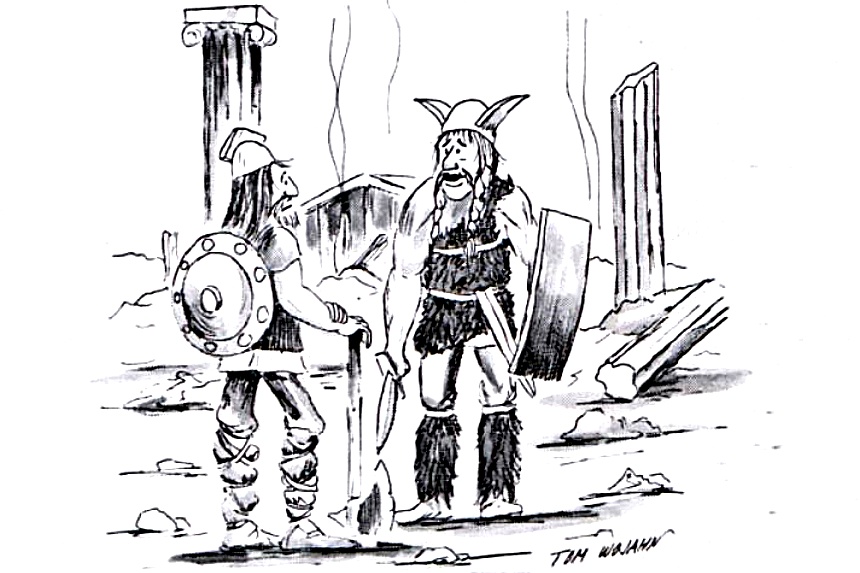
1. Ancient History
These laughs are timeless!
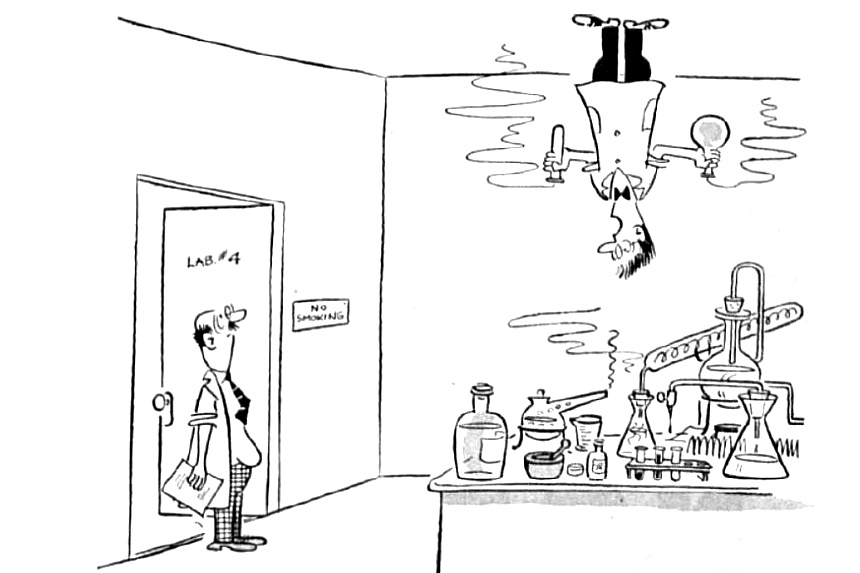
2. Science Snickers
We have humor down to a science!
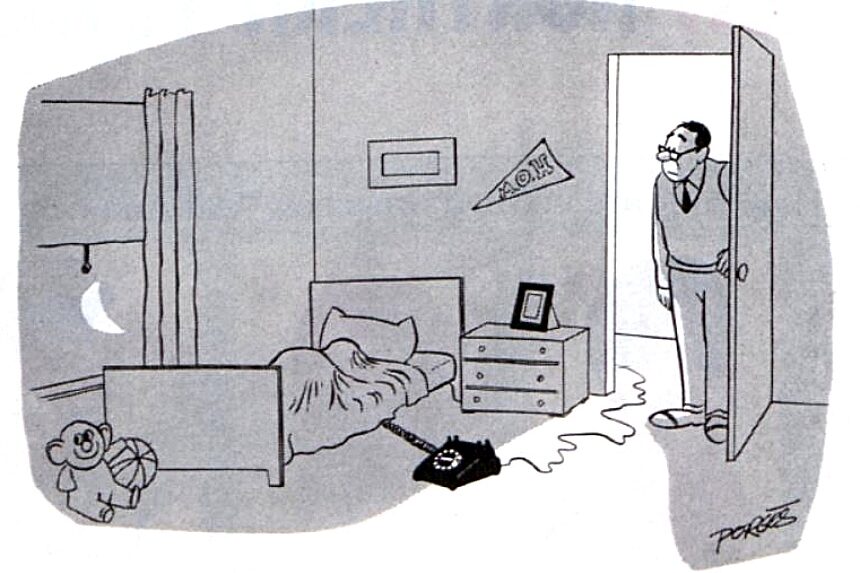
3. Phone Fun
Before you could carry them around in your pocket, phones caused all sorts of other problems!
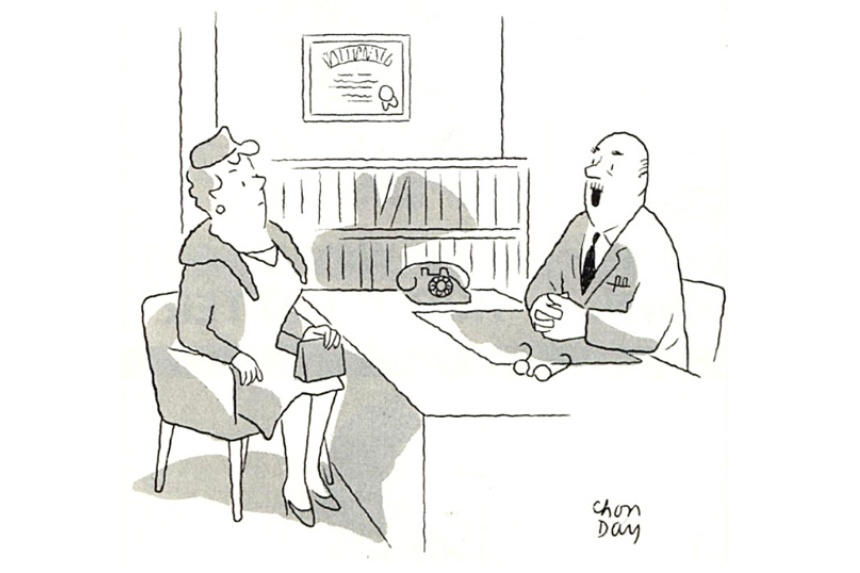
4. Physician Fun
A cartoon a day keeps the doctor away!
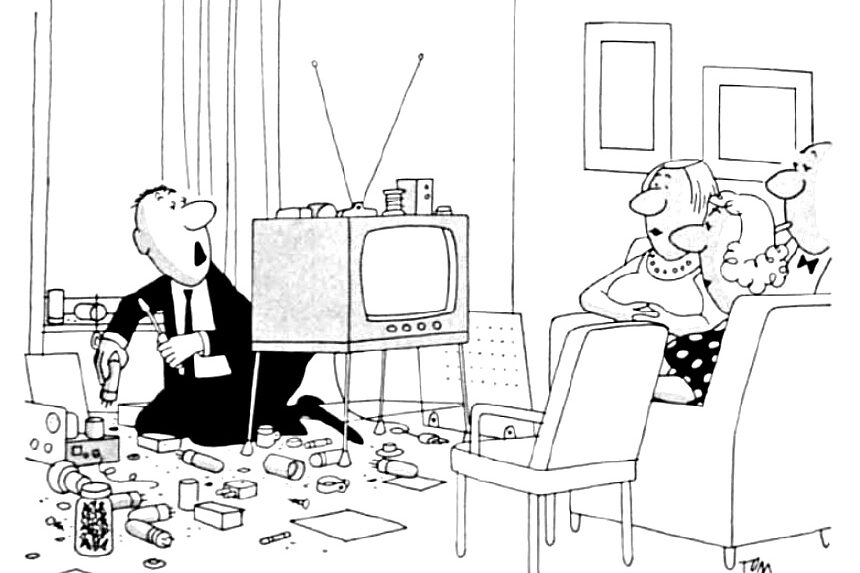
5. TV Time
Sixty years ago, there may have only been four channels, but there was no shortage of humor!
6. Maddening Mechanics
If you have fuzz in your filter or soil in your oil, your local mechanic will get you sorted (don’t forget your credit card).
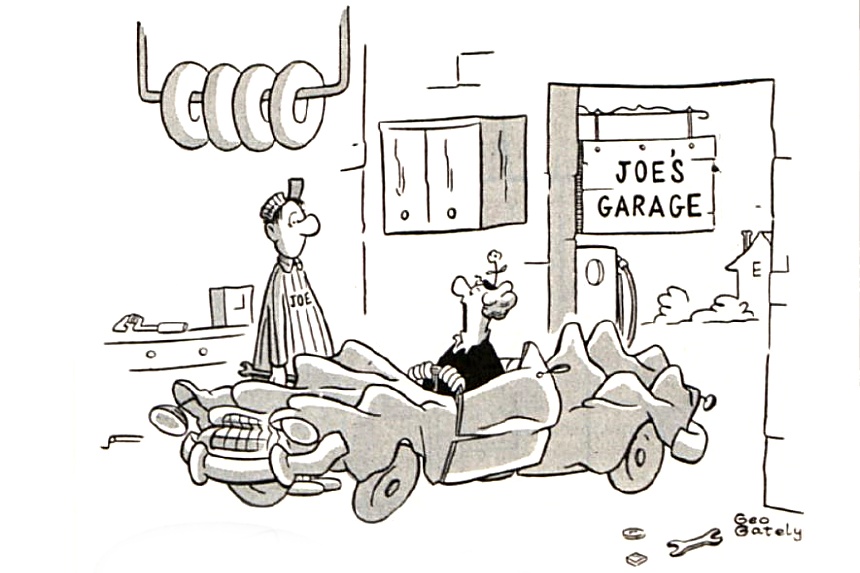
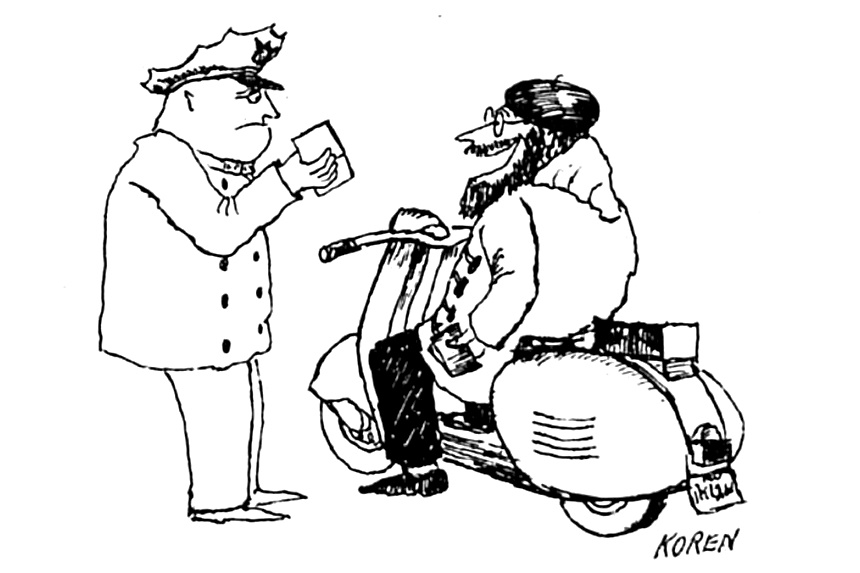
7. Citation Aggravation
When a traffic cop means laughs non-stop!
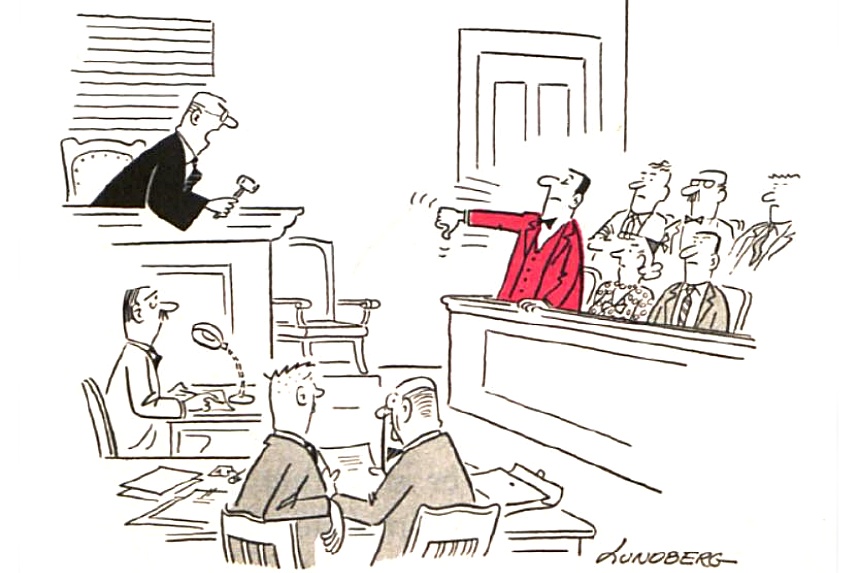
8. Jury Jokes
The verdict is…funny!
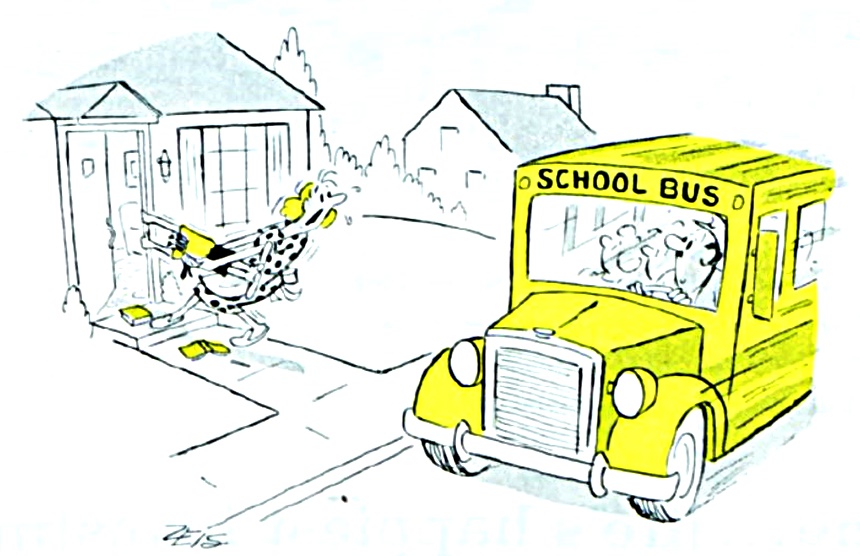
9. Class Act
Sharpen your pencils and your sense of humor. It’s back-to-school time!
10. Lunch Break
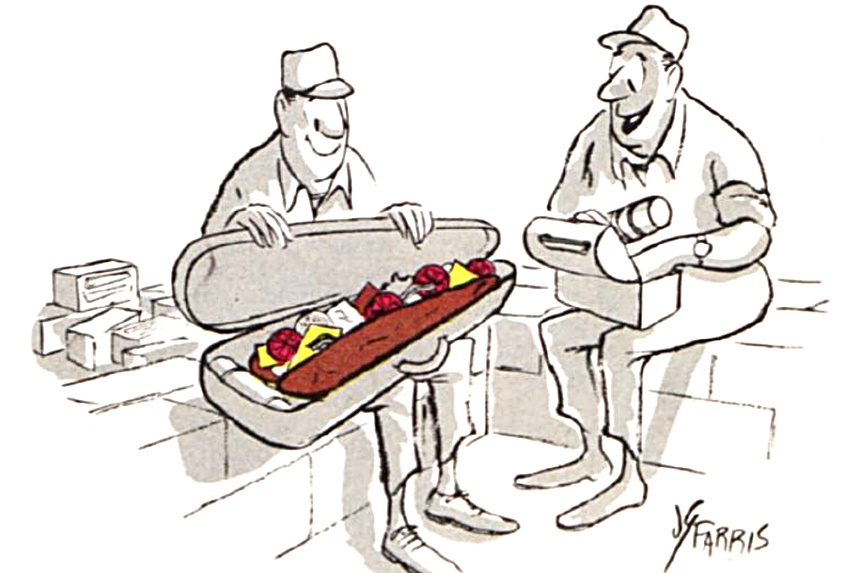
Whether it’s from a lunch pail or a bit more upscale, everyone needs to eat lunch!
September/October 2023 Limerick Laughs Winner and Runners-up
What a rollicking night to be had.
Oh, this little one’s badder than bad.
She will muss; she will fuss.
If she could, she would cuss.
What a girl! She’ll be just like her dad.
Congratulations to Helen Ksypka of Eliot, Maine, who won $25 for her limerick describing Howard Scott’s Early Morning Feeding from the cover of our January 27, 1945, issue.
If you’d like to enter the Limerick Laughs Contest for our upcoming issue, submit your limerick via our online entry form.
Here are some more great limerick entries from this contest, in no particular order:
Now the trouble with feeding a child
Is his guts then proceed to go wild.
So the best thing of all
Is to just let him bawl
If you don’t want your nostrils defiled.
—Bob Turvey, Bristol, United KingdomThere stood a tired man with his son
Who’d been crying since quarter past one.
Now at half past three
He was wishing that he
Had left the loud lad to his mom.
—Paul White, Olathe, KansasFred wanted to join the fraternity
Of men who embrace their paternity.
But the two o’clock feedings,
Met with unwelcome greetings,
Seemed to lengthen the task to eternity.
—Karen Dansereau, Warren, Rhode IslandDaddy is certainly tryin’
To get baby’s eyes to be dryin’,
But soon the tear wiper
Will have to change diaper.
Then it will be his turn for cryin’.
—Scott Talbot Evans, Rochester, New YorkI love our wee toddler, but yet,
I do have to say with regret —
His screaming like this
Means that something’s amiss.
His blanket’s with wee a wee wet.
—Rudy Landesman, New York City, New YorkThe baby is crying full throttle
Because daddy was late with his bottle.
It was half past the hour —
All the milk had gone sour.
So much for the perfect role model.
—Dineen Lovasco, Ridgewood, New YorkSo cute in her darling pink dressing,
She should have been Dad’s greatest blessing.
But, as sweet as she seemed,
No one could have dreamed
She could utter a cry so distressing.
—Nora Straub, Lillington, North CarolinaThe feeding — dad’s ultimate test.
With a gulp he embarks on his quest.
Most seek out compliance
With nutritional science,
But he wasn’t keeping abreast.
—Gennadiy Gurariy, Milwaukee, WisconsinWhat’s wrong? I do not have a clue.
I’ve done everything I can do!
I’m tired of trying
To make her stop crying.
I soon might be shedding tears too.
—Joyce Petrichek, Finleyville, Pennsylvania
2024 Great American Fiction Contest: Meet the Winners!
Meet the Winner! Sophie Newman
Read Sophie Newman’s story, “Shanda”
“My initial reaction is disbelief,” said Newman when notified her story “Shanda” had won first place, print and online publication, and a prize of $1,000. “It’s so strange to send a story out into the world, after working on it for so long in isolation, and hoping but not really knowing if it will connect with anyone on the other side. And to have the story connect strongly with editors at The Saturday Evening Post, where so many writers I admire have been published over the years, is truly exciting. I’m touched.”
Newman’s story was inspired by her personal experiences, including what it means to be Jewish. She says, “Because I’m Jewish but didn’t grow up practicing Judaism or really leaning into this identity, I’ve always struggled with what it means for me (or others like me) to be Jewish, and I find that fiction is a really fruitful avenue to explore these questions.”
Familial history also played an important role. Newman says, “I was interested in looking at several generations of a Jewish family because I think so much of identity is informed by historical context.”
Born in Berkeley, California, Newman holds a B.A. in English from Rice University and an MFA in fiction from The Ohio State University, where she was a Distinguished University Fellow and taught undergraduate creative writing. Newman’s writing has appeared in The New York Times, Writer’s Digest, The American Scholar, and elsewhere. By day, she’s a ghostwriter, editor, and educator. She lives in Los Angeles with her partner and rescue pup, and she’s also at work on a novel.
Writing itself is obviously a critical part of Newman’s identity. She says, “By day, I’m a ghostwriter and editor, and the research I do for that certainly informs my fiction. Although I try to write (or at least think about my writing) every day, I also can’t stand sitting at a desk all the time, so I like to break up my schedule by working with horses a few days a week.”
Meet the Runners-Up
Each runner-up receives $200 and publication of their work on our website. We salute these fine writers and the more than 250 others who entered our 2024 contest. —The Editors
Neko Catanzaro

TITLE: Old Growth
STORYLINE: In a moving coming-of-age story, young Marcus struggles with feelings of love and loss beyond his few years.
BIO: Catanzaro earned a B.A. in literary arts from Brown University. This is her first story to be published by a national magazine.
Joyce Donovan
TITLE: White Horse Running
STORYLINE: As the white horse runs, a girl realizes some things should be free — including her grandfather.
BIO: Donovan attended St. Louis University on a creative writing scholarship. She graduated from St. Cloud State University and earned her master’s degree from the University of Minnesota. She has taught English and worked with incarcerated youth in Colorado. “White Horse Running” is her first story ever to be published.
Joyce Finn
TITLE: The Pinch-Eyed Dog
STORYLINE: Ignatius Jones unearths a mystery in the strange mounds he finds in his yard.
BIO: Finn attended Northeastern University. Her background includes journalism, biochemistry, and geology. She has written for The Robb Report, Poets & Writers, and Inc. magazine.
Gary Wadley

TITLE: V.J. Day
Storyline: The simple act of repairing broken bowls reveals hidden truths to a pair of neighbors.
BIO: A playwright, photographer, graphic designer, and actor, Wadley holds a BFA from Florida Atlantic University. He has self-published three books on Amazon. This is his first short story published by a national magazine.
Ethan Cunningham

TITLE: Earle Elaborates on Electrodynamics (and Other Such Ecstatic Evangelisms)
STORYLINE: Scientist Earle Bauer grapples with his past while crafting his manifesto.
BIO: Cunningham holds an MFA in screenwriting from Boston University. His stories have been published in Beatnik Cowboy, Cobra Milk, and others. He advocates for the well-being of both humans and animals.
This article appears in the January/February 2024 issue of The Saturday Evening Post. Subscribe to the magazine for more art, inspiring stories, fiction, humor, and features from our archives.
Cartoons: Life of the Party
Want even more laughs? Subscribe to the magazine for cartoons, art, inspiring stories, fiction, humor, and features from our archives.
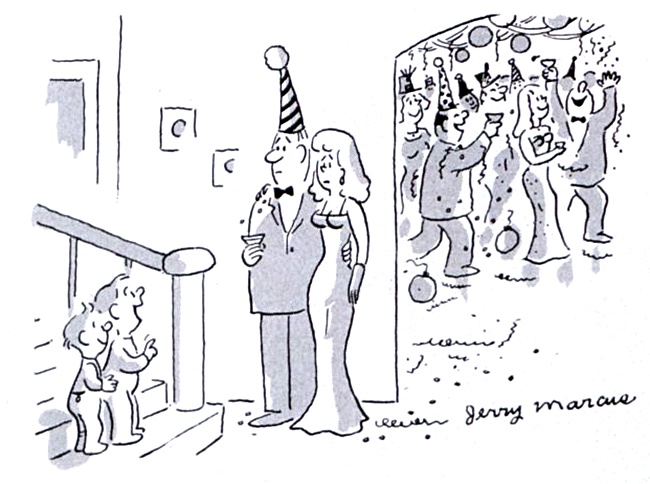
Jerry Marcus
December 19, 1964
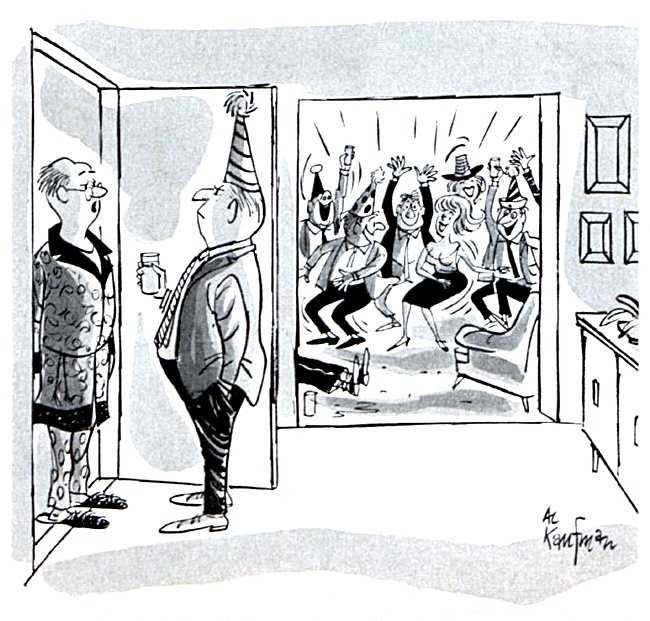
Al Kaufman
April 4, 1964
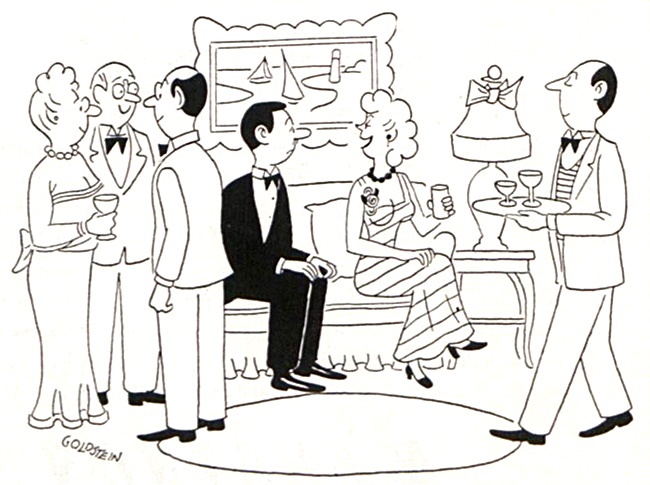
Walter Goldstein
September 30, 1950
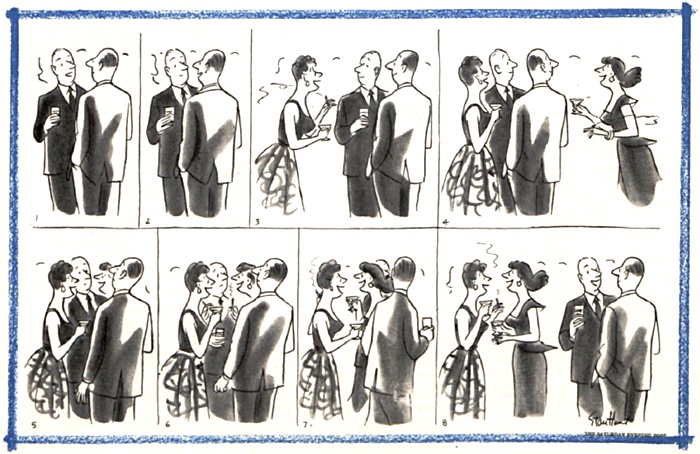
July 20, 1957
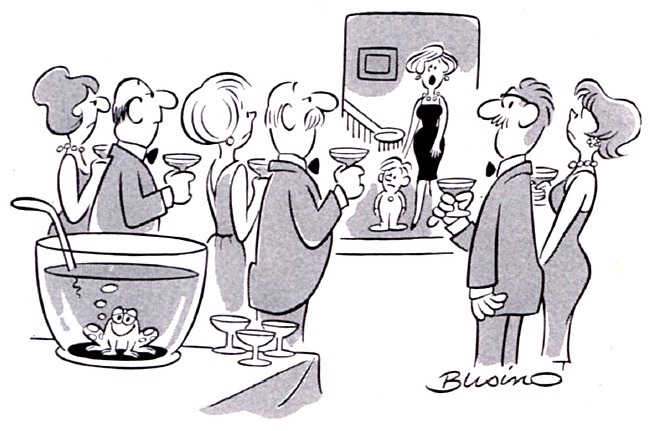
Orlando Busino
March 21, 1964
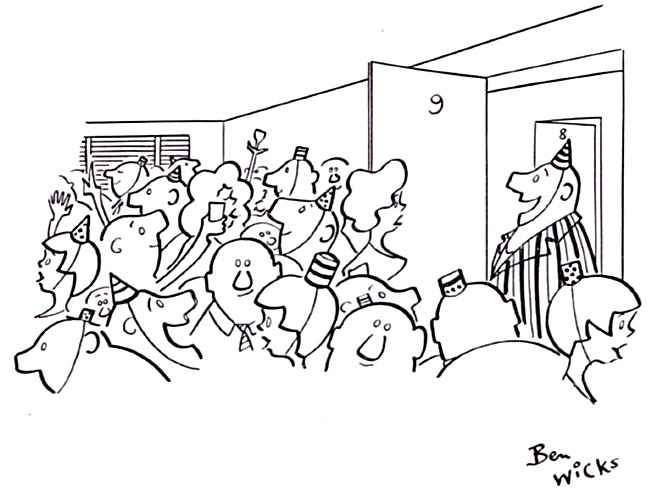
Ben Wicks
January 26, 1963
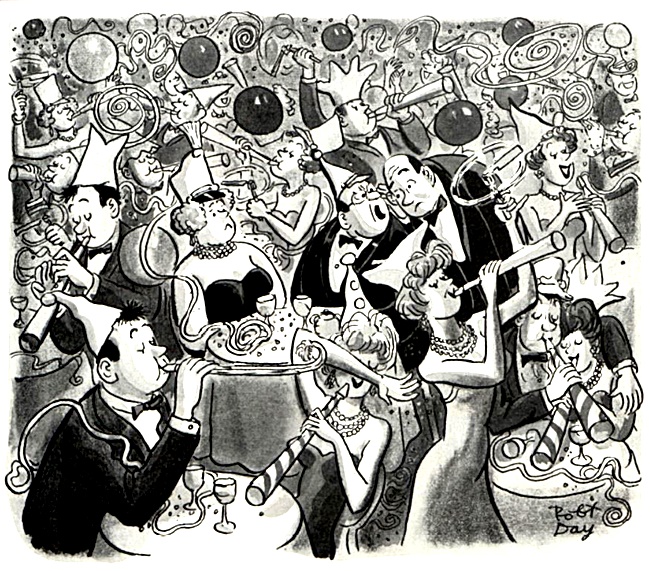
Robert Day
January 6, 1962
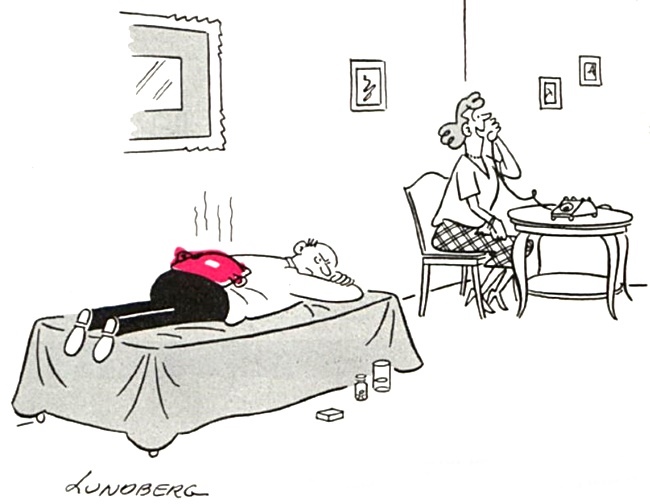
Gus Lundberg
January 6, 1962
Want even more laughs? Subscribe to the magazine for cartoons, art, inspiring stories, fiction, humor, and features from our archives.
America’s Castles
The term “castle” conjures images of remote, turreted strongholds in Europe, the Middle East and Asia. But while America’s castles are admittedly a bit newer, they’re no less impressive.
Mohonk Mountain House
New Paltz, New York

Picking my way through the fog on this winding mountain road, I have no trouble obeying the periodic signs that urge me to drive “slowly and quietly.” Presently, the tunnel of trees falls away. I make a sharp turn. Instinctively, I roll to a stop.
Gray on gray in the swirling mist, the outline of a great Victorian castle fills my field of view. From their turreted tips, stone walls plunge vertically, seeming to disappear into the depths of a black mountaintop lake, its dark, glassy surface alive with its own dancing, steamy wisps. Beyond, on the narrow lake’s opposite shore, the profile of a sloping mountain would barely register if not for the stone tower standing at its apex, piercing the fog with a bright guiding light.
“I’m at Hogwarts,” I gasp.
Not quite, but close: Close enough for Mohonk Mountain House, sitting at 1,300 feet atop the Shawangunk Mountains, 90 miles north of New York City, to do a brisk business selling the complete set of Harry Potter books in its gift shop.
Celebrating its 155th season in 2024, the 259-room hotel reigns as a one-of-a-kind fantasia of 19th century Victorian grandeur mixed with the era’s vogue for communing with nature without sacrificing the comforts of even the most lavish home. Eighty-five miles of mountain trails, open to the public, radiate from the castle keep, many dotted with rustic wood shelters that have given rest to visitors ranging from Booker T. Washington to Teddy Roosevelt. (Hanging near the front desk is a vintage guest book page signed: “Theodore Roosevelt, Washington, D.C.)
Like every self-respecting castle, Mohonk even has its own royalty: The Smiley family has owned the place from its inception, beginning with Albert and Alfred Smiley, twin Quaker brothers from Connecticut.
“My ancestors built this hotel with the same native quartz conglomerate that the mountain is made of — that’s why it seems to rise out of the rock that surrounds the lake,” says Mohonk’s president, Eric Gullickson, representing the fifth generation of Smileys running the place. (His aunt, Nina Smiley, used to manage the property with her late husband; now she serves as Director of Mindfulness Programming, conducting meditation sessions in open-air pavilions on the Mohonk grounds.)
Besides the aesthetic value, Gullickson adds, the brothers also had a practical matter in mind when they decided to build with stone: In the nearby Catskills, wooden resorts were burning down with alarming regularity.
“They wanted to avoid that fate,” he says. “And, I’d have to say, it worked.”
Mohonk’s castle vibe isn’t just on the outside: Wander past the front desk and you’ll find The Parlor, a century-old gathering room with not one but two five-foot-high fireplaces that seem transported straight from Camelot. And the enormous, timbered dining room is so Harry Potter-like you’ll look upward expecting to find floating candles.
Hotel guests and day visitors alike nearly always take the half-hour walk around Mohonk Lake, following a century-old trail that hugs the eastern shoreline before rising halfway up the cliffs that define the lake’s west side. They’ll inevitably stop on the opposite shore to gaze at the mountaintop castle, watch its pointed reflection dance on the rippling water, and listen to the silence.
An hour-and-a-half to the south, the streets of Manhattan scream with traffic and commerce. Here, the loudest sound you’ll hear is a cawing crow, skimming the water’s surface before arcing skyward, then banking gently as the castle wall approaches.
Montezuma Castle
Camp Verde, Arizona

Misnamed by modern-day tourists from the get-go, this remarkably preserved millennium-old cliff dwelling was abandoned by the society that built it long before the legendary Aztec emperor was even born.
Still, the indigenous Sinagua people constructed this five-story, 20-room fortress, 90 feet up a sheer limestone cliff with castle-like intentions: To discourage invaders and to avoid calamitous flooding from Beaver Creek below. In its long-ago prime, the castle was home to as many as 50 people who used ladders to commute between their “apartments” and their farm plots below.
Looters had a field day here after the castle was rediscovered in the late 1800s, but now the rangers at Montezuma Castle National Monument make sure everyone stays on their designated paths. Just an hour-and-a-half north of Phoenix, the place is a short drive to the distant past.
Belvedere Castle
Central Park, New York City

Motorists and taxi riders who cut across Manhattan’s Central Park at 79th Street might not even notice the rock-walled Civil War-era tunnel they rumble through — and they almost certainly don’t realize that just a few feet above them, created almost entirely from excavated Central Park stone, is an honest-to-goodness castle.
Belvedere Castle was built as a “folly” – a purely ornamental structure – to crown 130-foot-high Vista Rock. For a century or so it was a beloved feature of the park but, like just about everything else in the Big Apple, in the 1970s and ’80s Belvedere fell prey to vandals who defaced it and drug dealers who hid in its Victorian shadows.
Happily, today the castle, which now houses a Central Park visitor’s center, has been restored to its former glory. Also, since the castle is about as far away from bright lights as you can get in Manhattan, the Central Park Conservancy sponsors regular stargazing events there.
Sleeping Beauty’s Castle
Disneyland, Anaheim, California

Yep, Walt Disney’s fanciful 77-foot-tall castle, standing at the hub of his landmark Anaheim theme park, qualifies as a genuine castle, inspired by Germany’s Neuschwanstein Castle. It even has a working drawbridge that has been lowered only twice: in 1955, for the park’s opening, and in 1983, after the park’s Fantasyland was rededicated.
And if you’re wondering about the castle’s royal family, look no further than above the entrance: Three lions, representing the Disney family crest.
Castle Gatehouse, Washington Aqueduct
Washington, D.C.

Tucked into a corner of Washington, D.C.’s Palisades neighborhood, this miniature castle has stood guard over the Georgetown Reservoir, just above the Potomac River, since 1899.
Walk past the castle later at night, when traffic on nearby MacArthur Boulevard has died down a bit, and you’ll hear rushing water. That’s the sound of the castle’s sluice gate which, in a striking example of democracy in action, helps control the flow of water for everyone in D.C., from homeless shelter residents to the President of the United States.
D.C. residents who get a little homesick for their home town need only seek out the nearest Army Corps of Engineers project: The Corps’ informational signs always bear a schematic image of the Castle Gatehouse.
Hearst Castle
San Simeon, California

The architect Julia Morgan designed more than 700 homes, churches, and public buildings during her long career, but today she is famous for a single project, one that consumed her attention for nearly 30 years: La Cuesta Encantada (“The Enchanted Hill”), better known as Hearst Castle.
On a hilltop looming over the central California coast, within grunting distance of a colony of elephant seals, publishing magnate William Randolph Hearst commissioned Morgan to build a family retreat. The assignment soon exploded into one of the most ambitious private residence projects of the 20th century.
The official count: 68,500 square feet, 115 rooms in the main house, 46 rooms in the scattered guest houses. The colonnaded outdoor pool consumes 345,000 gallons of water.
Hearst, along with his longtime mistress Marion Davies, left his castle for good in 1947. Today, visitors roam his hallways ogling the artworks and architectural elements that flowed through the gates in an endless procession of crates from around the world.
George Bernard Shaw reportedly summed it up: Hearst Castle is “the place God would have built if He had the money.”
Iolani Palace
Honolulu, Hawaii

There is only one legit royal palace in all of the United States, and it sits in downtown Honolulu, a daily reminder that for nearly a century, until the U.S. forcibly took over in 1898, these islands were governed by monarchs.
The plush interiors of Iolani Palace rival the most lavish Europe has to offer. The crimson-and-gold Throne Room is dominated by the thrones of King Kalakaua and Queen Kapiolani (who seldom sat on them, preferring to mingle with their guests). Also in this room, Hawaii’s last monarch, Queen Lili’uokalani was put on trial for trying to resist American pressure to abolish the monarchy. She was forced to abdicate (and was imprisoned in the upstairs apartments for eight months), but every time Hawaiians sing “Aloha ’Oe,” they’re subtly honoring Lili’uokalani, who wrote the Islands’ most famous song.
Coral Castle
Miami-Dade County, Florida

As a tourism magnet, mid-century, pre-Disney Florida had its alligator farms and monkey jungles and Everglades airboat rides — but there was nothing quite like this quirky collection of enormous coral blocks, some weighing 30 tons, erected by a loner who asked guests to drop a dime in a box for entry.
A Latvian immigrant named Edward Leedskalnin spent 28 years on his castle. He jealously guarded the secret to how he single-handedly quarried, erected, and finished the enormous walls and carved installations, saying only that he utilized something called a “perpetual motion holder.” Some teenagers swore they witnessed him levitating the stones like balloons.
Stories like that made Leedskalnin’s project a must-see attraction for motorists, even after his sudden death in 1951. He called the place Rock Gate. Fortunately, for purposes of this story, his successors changed the name to Coral Castle.
The Most Popular Articles of 2023
1. 50 Years Ago: Lynyrd Skynyrd Debuted
By Troy Brownfield

The Southern Rock legends came out swinging.
2. There Are Tiny Critters Who Live on Your Face and Eat Your Dead Skin at Night. But That’s Not the Worst Part.
By Paul Hetzler

It’s bad enough they’re having sex on your face, but now we’ve discovered that skin mites are in the process of merging their DNA with ours.
3. In a Word: More Bang for Your Buxom
By Andy Hollandbeck

The word “buxom” started from unexpectedly humble origins.
4. TV’s Greatest: Best and Worst Dads
By Troy Brownfield
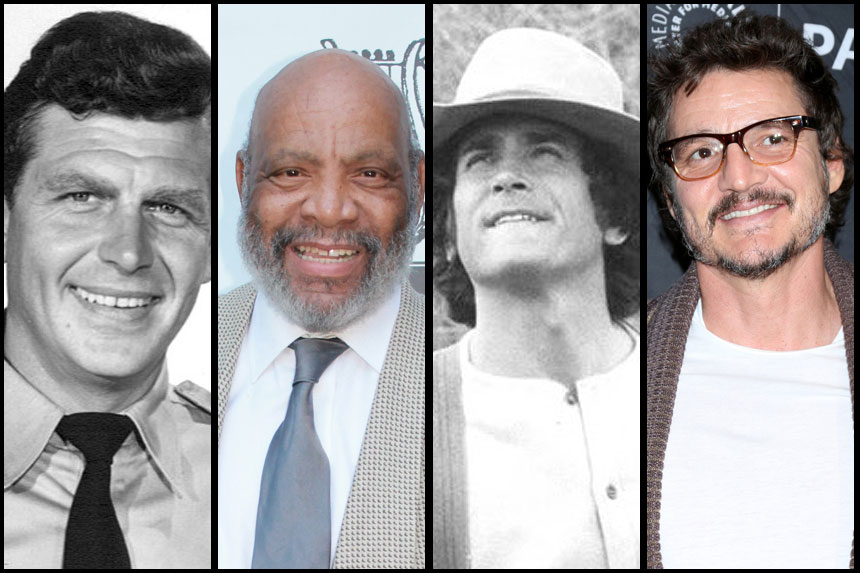


Here are the 10 best . . . and the 5 worst.
5. Con Watch: Publishers Clearing House Calling — Are You a Winner?
By Steve Weisman

Who doesn’t want to win a sweepstakes? Before you get too excited, make sure you’re not being scammed.
6. History in Ink: Preserving the World’s Largest Cartoon and Comic Collection
By Rich Warren
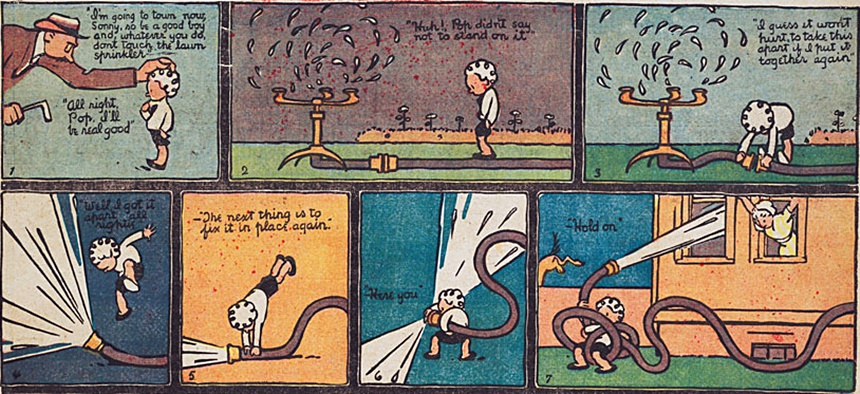
From 1920s manga to Captain Marvel to Calvin and Hobbes, there’s no telling what treasures you’ll uncover at this unique institution.
7. PB&J: An American Love Story
By Linda Rodriguez McRobbie
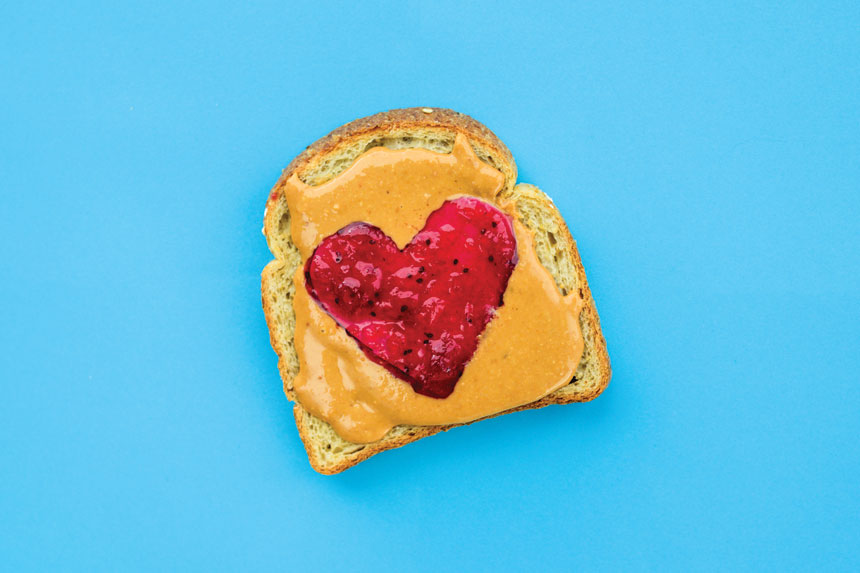
Though no one knows for sure how peanut butter met jelly, one thing is certain — they were meant to be together.
8. No Offense: How Americans Became Intolerant of Body Odor
By Jeff Nilsson
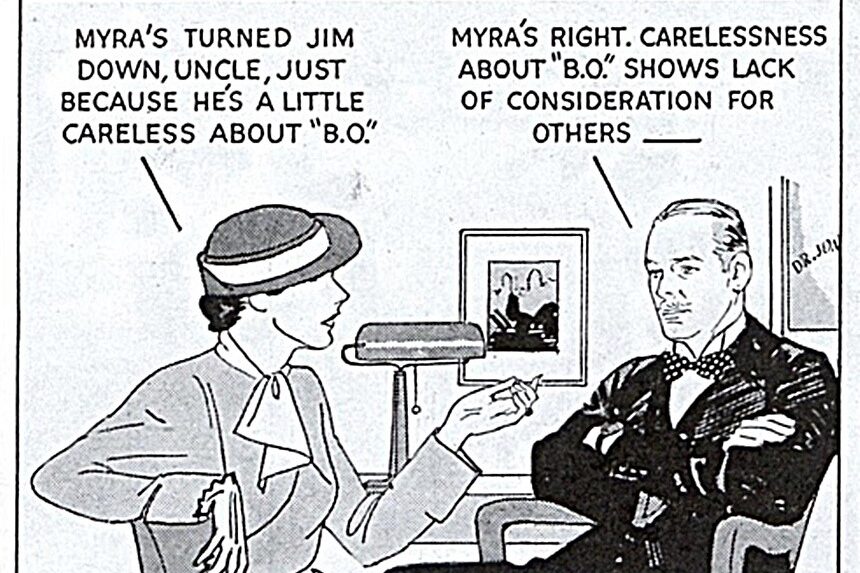
One hundred years ago, soap and deodorant manufacturers started convincing people that body odor was making you undesirable, threatening your social status, and even jeopardizing your job.
9. The 19th Century Photographer Who Shined a Light on American Poverty
By Christina Stanton
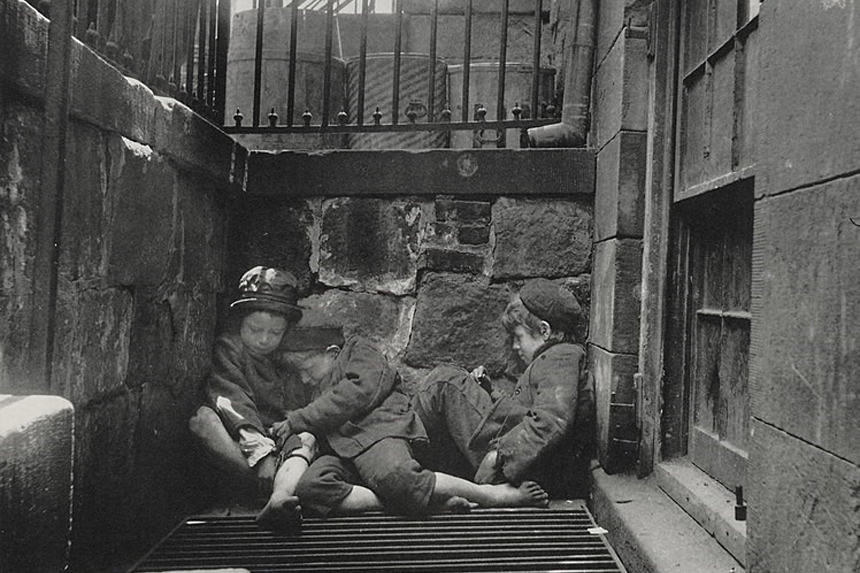

In his efforts to expose New York’s poverty-stricken underbelly, Jacob August Riis produced some of the most iconic photographs of the late 19th century.
10. A Conversation with the Guy Who Made Elvis Famous — Again
By Donald Liebenson
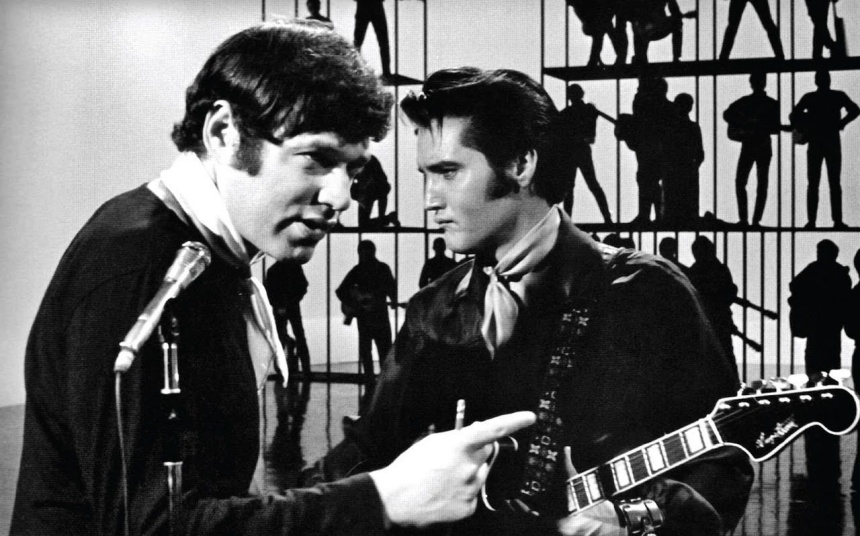
Elvis Presley’s ’68 Comeback Special reinvigorated the singer’s career, and it was the director of that special – Steve Binder – who made it happen.
Fuzzy Forecasters
If the prophets at The Farmer’s Almanac are right, it’s going to be a hard winter, at least according to the caterpillars they’ve studied, who are apparently bracing themselves for cold weather. I’m not one to scoff at caterpillars, so I phoned our firewood man and ordered three extra ricks of firewood. There’s an old saying that firewood heats you three times, once when you cut it, then when you split it, and again when you burn it. I skip the first two warmings and content myself with the third. I’m hoping to break a leg in early winter so my wife will have to carry in the firewood from the shed while I sit in my chair next to the woodstove.
Climate change has caused catastrophic weather events — droughts, floods, record heat, a southward shift in America’s Tornado Alley — all of which I could overlook if climate change brought us more snow, the best thing from heaven since manna fell on the Israelites. Alas, the deep snows of my childhood are uncommon these days, a source of some frustration now that I finally have suitable snow gear. Where were Gore-Tex gloves when I was a kid and had to wear brown jersey gloves that froze claw-like in sodden lumps when touched by a single snowflake?
When I was a kid there was only one winter hat available to young males — the bright orange trooper hat with fake fur ear flaps that caused a generation of males to look like Rocket J. Squirrel. Sadly, one was forced to wear this hat just as he was entering puberty, as effective a means of birth control as was ever devised.
Now that I’m old, I have all sorts of snazzy winter hats with no opportunity to wear them. What I wouldn’t give to stroll into a saloon wearing a cowboy hat like Matt Dillon, brushing the snow from my duster coat, stomping the sleet from my boots. Try doing that in a bright orange trooper hat and still seducing a barmaid.
While we’re discussing improvements in winter wear, I should point out that winter footwear has seen much progress since I was a kid. My grandson in Alaska has winter boots that will keep his tootsies warm to –40 degrees Fahrenheit, but when I was his age, I had to wear a thin pair of dress socks, a thick pair of cotton tube socks over them, then Wonder Bread wrappers my mother had saved, with Converse high-top tennis shoes over them. If it were bitterly cold, which it always seemed to be, I had a pair of unlined black rubber buckled snow boots I wore, whose metal buckles clogged with ice and snow and were impossible to unfasten. When I was finally able to pull them off, I had to hold them upside down and shake out my toes, which had chinked off in the cold. Of my original ten toes, I’m now down to three.
All of this took place back in the days when parents expected kids to stay outside all day no matter how cold it got. Thankfully, I kept warm with a snifter of brandy — which I gave to Mr. Wilson down the street in exchange for sitting in his living room all day watching cartoons. The people who say alcohol doesn’t keep you warm never had Mr. Wilson for a neighbor.
I was looking forward to a snowy winter, but the day after Thanksgiving I saw a caterpillar slip off his fur coat and pull on shorts and a T-shirt. This global warming has gotten ridiculous.
Philip Gulley is a Quaker pastor and author of 22 books, including the Harmony and Hope series, featuring Sam Gardner.
This article is featured in the January/February 2024 issue of The Saturday Evening Post. Subscribe to the magazine for more art, inspiring stories, fiction, humor, and features from our archives.
Fixing Christmas
My first Christmas without my mother is a reminder of my first Christmas without. For all my earliest years, my mother made Christmas magical. But, by the time I turned 10, she also took it away.
Growing up in the 1970s, there were five of us in a small house in rural North Carolina – Mama, Diddy (as we called our dad), my older brother and sister, and me. We didn’t have much, but we had a console TV with a record player on top. For us kids, that’s all we needed.
Whether by choice or necessity, Mama oversaw everything Christmas: the tree, presents, putting greeting cards on a string to display, and giving the season its sparkle. This meant large colorful lights and drowning the tree in silver tinsel.
Diddy was a farmer. He worked from sunup to sundown. I don’t have a lot of memories of him at Christmas, but my favorite is the year he watched the Santa tracker with me. The local TV weatherman, Frank Deal – a lanky fellow with curly red hair – would chart Santa’s journey from the North Pole all the way to our little town, advising us when it was time to go to bed. As Santa grew closer, Diddy said, “Close your eyes or Santy won’t come.” I squeezed my eyes shut. I wanted Santa to see from waaay up there that I was asleep!
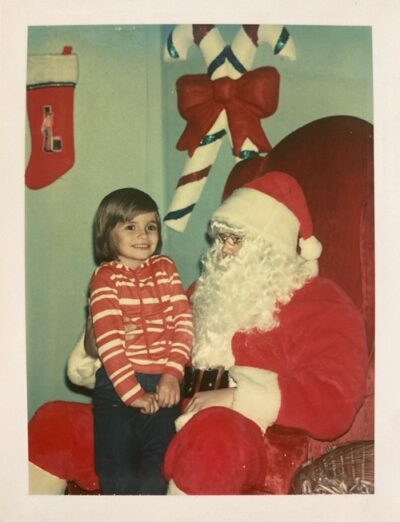
By 3 a.m. I couldn’t contain myself. I’d bound out of my room, rip open my presents, and play with everything at least once. Then I would pass out in the wrapping paper landfill. All before sunrise.
In 1981 when I was nine, Diddy moved out. We went from struggling to being among the “dirt poor” of Mama’s own youth. The thermostat went off and kerosene heaters went on, ones that seemed like they might set the house on fire at any moment, and left my nostrils filled with soot. In time, tarps and duct tape were all that seemed to hold the house together.
That first Christmas without my father, we couldn’t afford a tree, so I made one out of construction paper and taped it to the wall in our den. On Christmas morning, my sister and I emerged from our cramped bedroom to find one gift for each of us sitting on a recliner – identical jewelry organizers, a curious choice given that we had no jewelry. My brother received a statue of a bald eagle. None of the items were wrapped. There was no frenzy of tearing paper off. No exhaustion from playing with the toys we’d received. Mama slept in and we just went back to our rooms. I think we had known deep down this Christmas would be different; the money stress had been hard to miss. But we’d grown up with tales of Christmas miracles – surely one would come our way. The silence of tiptoeing around our sleeping mother and witnessing the gray stillness on that December morning sent us each into our own space to cry. We were hurt. We grieved – the best of our childhood was likely over.
Mama grew bitter. The money problems worsened. The following year, we stopped celebrating Christmas altogether. As a symptom of our decline, instead of watching holiday specials, Mama rented movies like The Town That Dreaded Sundown. I stopped dreaming of presents and started wishing for safe rooms.
The message I received was, once we were broke, we were broken.
As my siblings and I grew up and got jobs, we tried to “fix” the Christmas of our past with Christmas presents, pun intended. My brother worked and sacrificed to buy us our first VCR – at a time when it cost almost a thousand dollars. My sister would save all year, putting cash into a little white envelope to buy everything on our Christmas lists. Once I was making my own money, I tried to do every Christmas-y thing I could: host dinners, see all the light displays, send dozens of Christmas cards, go to every holiday concert, movie, and stage show (looking at you, A Very Die Hard Christmas), and, of course, go overboard with gifts – so many gifts for my friends, my family, for strangers in need! We thought if we had more of what we didn’t have as kids, it would make the holiday feel right again.
It never did.
My sister and mother died just months apart earlier this year. The double losses put me in a deeply reflective state on the meaning of things. Each time I went into a store, I was hit with a pang of loss – this year I wouldn’t be buying cards or gifts for either of them. It was in Staples, of all places, where I finally broke. Mama had loved taking me to get school supplies when I was young. We’d walk the aisles and she’d help me pick out paper, pens, and Trapper Keepers. She never rushed me. Instead, she’d tell me stories of what it was like when she was a kid – how she couldn’t afford to buy a copy of her class photo (back when they’d just take one picture of the entire room of students), so she’d sneak and take one of the unpurchased ones out of the trash. She’d had so little in her own childhood that she delighted in giving me more in mine. For the earliest years of my life, she’d been trying to fix what she’d missed out on, too. In that moment, next to stacks of notebooks I didn’t need but always seemed to buy, I sobbed. Mama and me – we weren’t so different. And all I wanted to do was tell her. I get it, Mama. I get it.
But I couldn’t tell her. I would never be able to tell her anything again.
In my grief, I finally realized what we lost so long ago. It wasn’t the Christmas stuff. It was the Christmas spirit. We had mistaken the garland and gifts for what mattered most. Hope.
Mama must have thought that when she couldn’t give us more than she’d had, there was no point in trying. I wish I’d known then what I know now: Mama, it wasn’t the presents that made us happy. It was you.
I have something now I didn’t have before: perspective. The best part of Christmas wasn’t the toys – my favorite thing I ever received was a complete set of Charlie’s Angels dolls, yet I soon destroyed them and buried Kelly in the backyard. (Sorry, Jaclyn Smith. Nothing personal.)
The magic was in watching Mama be happy. Creating memories I’d savor all these years later.
In the days leading up to Christmas, back when Diddy still lived with us, I’d eavesdrop as Mama took the receiver from the wall phone and its long cord and hid herself in the next room to order Barbies from the Sears catalogue. She would come home from stores like Kmart and our local chain, Roses, with loud, crinkly bags stuffed with treasures unknown. Sometimes she would surprise me early with a toy. “Give Mama sugar,” she would say and gesture for me to kiss her on the cheek.
Once the tree was decorated, Mama would take us outside. She wanted to see how it looked through the window to neighbors and passersby. And on the rare occasion when it snowed, she’d beckon us out into the cold to share in her sense of wonder. When I moved to Southern California in 1998, she would keep snowballs in the freezer for me to come home to.
As the years went on, my mother became mercurial. Difficult. Even downright mean. On the one hand, she might tell me, “You don’t have the good sense God gave a billy goat.” On the other, she would Fed Ex me Krispy Kreme donuts when I moved to a state that didn’t yet have them. She was capable of flying into a rage and breaking gifts we’d given her, but then she would have a change of heart and try to make a joyful shopping trip out of going to Wal-Mart to get “a better one.”
Eventually, I pulled away. I had to stop engaging with the negativity – I got a separate phone line just for her calls. It was my “scary phone” that off-loaded her rants into the voicemail ether. As a good Southerner, I never stopped loving my Mama, even if I didn’t always like her.
Our family home rotted and fell apart, and so did Mama. The house and her own cognitive decline put her at risk, so she was forced into a nursing home by the state. After suffering from dementia, she died in June. At her funeral, my aunts, uncles, and I joked that the cracks of thunder outside were “Mama having the last word.”
Before she passed, I visited her in the memory care facility. Her eyes were cloudy with age and confusion. Gone was her rage. In its place was the Mama of my youth. A tiny wisp of a woman with a beautiful head of hair. Perfectly curled. She didn’t recognize me. But she lit up like a child at the sight of my two Pomeranians. She held them as if they were her own. She kissed on their heads just as she’d done to me as a child.
It was as if I was being granted an early Christmas wish – a little taste of the miraculous. Mama was the nicest she’d been since I was young, watching her scoop up snow in her mitten-covered hands.
At one point she looked at me and said, “You seem like a sweet girl. Your mama must have done a good job raising you.”
Yes, Mama. You did.
Endjourney
“Welcome to CreAIrt. Prompt genre?”
“I’m sorry, what?” Fred leaned across the registration table toward the receptionist, who — it seemed to him — might have just quoted the Latin motto of the Italian Space Force.
“What genre will you be prompting?” replied the cheery young woman with a name tag branding her as BONNIE J. “Static? Animatic? Audio-Visual? Litero-Textual?”
Fred stammered. “I … don’t know what those are.”
“Your medium?”
“I’m what?”
Bonnie sighed a cheery sigh. “What medium do you work in? Art? Movies? Music? Writing? We have over 300 cutting-edge polymedia workstations with the latest artificial intelligence software to render natural language prompts into any form of art. Time bundles are available through a number of flexible registration packages. ”
“Ah!” Fred was finally catching on. “You’re talking about admission fees?”
“Yes. We have member and non-member rates, single-day or full weekend access. That includes a thousand render-hours on any available console, and you can top-up at any time.”
“How much is it to just look?”
The woman gave a pug-esque head tilt. “Look?”
“Yeah. When I heard about this A.I. art-convention thing, I thought it sounded cool. I don’t, like, do any of that stuff, so I wouldn’t need a workstation or anything. I’m just curious to see what people are doing with it.”
“You’re just curious?”
“Sure. It’s fascinating what this technology can do. I’ve seen some really wild shit, pardon my French.”
Bonnie looked shocked, but not at the French. She snagged a swiftly passing colleague by the elbow.
“Um, this gentleman says he only wants to observe and doesn’t want to prompt or render. Do we have a price for that?”
The other, notably more senior, woman fiddled with her neck-chain glasses, swiped around on a tablet, wrestled through a three-ring binder, then shrugged and continued along her original vector.
“I don’t think we have a category for you,” she proffered cautiously. “So, I guess, you can just go in.”
“For free?”
“I don’t see why not.” Bonnie pivoted a tablet screen toward him. “Just enter your contact information to register and go right ahead.”
“Awesome. Thanks!”
After Fred typed his name and number, Bonnie handed him a QR-coded badge and ceremoniously lifted the velvet rope. Fred proceeded along a beige pipe-and-drape corridor until he passed through a grand entry arch and into a stadium-sized convention hall. A labyrinth of numbered aisles extended in all directions, with legions of standing computer desks separated by semi-private partitions.
“Whoa.”
Fred passed along rows of alcoves populated by a demographic straight out of central diversity casting — with pudgy thirty-something white men constituting, by just the slightest margin, a majority. They tip-tapped on keyboards, filling the convention hall with a percussive titter pierced by the occasional ejaculation of joy or defeat. Every now and then, someone at a terminal would loudly share a noteworthy hack or morsel of gossip.
“‘In-the-style-of’ is limited only to Patreon supporters!”
“You can get 16:9 from 4:3 if you put in ‘letterbox.’”
“They say if Krutowski is going to picket again?”
“This is bullshit! They just banned ‘nipples.’”
“You can get them if you say they’re men.”
“Nope. They banned ‘moobs,’ too.”
From time to time, Fred would peep over someone’s shoulder at the goings-on on their screen. He was met with a few dirty looks, but more often than not, the occupant leaned aside and gestured proudly.
“Check this out,” said one scraggly bearded fellow as he typed:
/create/ dutch renaissance oil painting of rick and morty in church
From a gauzy RGB fog emerged two putty-faced characters in ruffled collars and silken doublets, striking contrapposto poses at the vanishing point of infinitely regressing gothic arches awash with silver-winged van Eyck angels.
“Cool,” declared Fred.
In the next stall, a nose-pierced girl keyed in: /create/ gemstone bird battle ruby pearl amethyst hyper detailed intense light. Jewel-encrusted kingfishers mounted with steampunk cannons soared above opalescent lunar craters as they dodged vermillion-fuchsia laser beams.
“Fantastic!”
The first fellow called Fred back to behold jazz age alien stripper, which yielded a lanky Roswell gray grinding its gonad-free crotch on a pole to lascivious ragtime.
“That’s just freaky.”
Fred visited each booth along the aisle and was treated to a smorgasbord of sensory overload, with images of jaw-dropping beauty and teeth-gritting grotesquery all equally riveting. One grinning grandma showed off motion sequence evolution of nature and technology launching a two-minute odyssey of cybernetic seeds sprouting into clockwork poppies that ground each other into gobs of veins that morphed into highways, and so on. A kid who didn’t look old enough to deliver a pizza summoned muscle teddy bear DJ, which materialized complete with pulsing speaker towers blasting competing thumpa-thumpa anthems.
“You’ve got two songs playing at once,” said Fred, over the noise. “I can’t make out either. Can you do just one?”
The kid looked quizzically then hunt-pecked on the keys /edit audio/ single track. One tune dropped out.
“That’s better,” declared Fred. “Killer bass, but it needs a melody.”
This time the kid typed /edit audio/ add melody and a punchy horn line laid down some catchy hooks.
“Try adding ‘deltoid dance,’” suggested Fred. After the input, the teddy bear flexed its ripped shoulders to the beat.
“Sick,” declared the young auteur, then asked. “Want to see my side-scroller? It’s like Castlevania meets Cuphead in eight-bit.”
Fred was treated to the most whacked-out video game he’d ever seen. Leaping feline hero-sprites bounded between the towers of Angkor Wat and dispatched each other with serrated rainbow whips.
“That is wicked. Great work!”
The kid all but beamed. “Thanks, man! So what do you make?”
“I’m just here to see what you all are up to. Keep doing what you’re doing!”
He gave the kid an encouraging double-pat on the shoulder and continued down the line. Behind him, he heard the kid’s voice call out: “Hey, this guy is here to look at people’s stuff!”
Fred found himself accosted by content creators who wanted him to witness, and even critique, their projects-in-progress. He listened to snippets of symphonies. He watched animations with stunning cinematic realism. He slipped on a VR headset and explored the undersea realm of Atlantis-R’lyeh. One fellow even read from his screen a series of haiku describing sports cars with daring double-entendres. Each new item was a marvel, an amalgam of incongruous sights and sounds that blended into strange, seamless perfection. He was definitely right to come check this out. It was amazing!
The legend of “The Guy Who’s Here to Look” spread among the conventioneers, and Fred embraced the moniker. When asked to opine, he noted what artistic influences he could discern — there’s a Mondrian pattern … that’s definitely Hokusai … I see a touch of Hieronymus Bosch — and pointed out details that could be enhanced or compositions re-arranged. His input was mostly embraced with a hearty “Thanks, Guy!” marred only by the exceedingly rare “Screw you!”
The morning hours sped by until Fred sat down at a laminated table with a $17 pizza slice and bottled water. As he chewed on salty cardboard and skimmed the convention program on his phone, a lanky man with bug-eyed spectacles sidled up next to him.
“You’re ‘The Guy’ right?”
“Yes. Apparently, I am ‘The Guy.’”
“Will you come to my premiere?” asked the man. “It’s in the screening room today at 3:30. It’s a motion-graphic episode from Book One of my Kurosawa-Batman manga. I’ve been working on it since yesterday. It’s going to be totally lit!”
“If it’s Kurosawa-Batman, shouldn’t it be partially lit?” replied Fred with a smirk. “Like, you know, chiaroscuro.”
Magnified eyes blinked behind bubble lenses. “Huh? Chia-what?”
“Chiaroscuro. It means ‘light and dark.’ It’s an illustration style using contrasting shadows.”
Glasses-man hammered on his phone screen with his thumbs. “How do you spell that? C-H-E …?”
Fred slowly spelled the word. Twice. “It’s that look you always see in German expressionist films. You know, like Nosferatu.”
Fred needed nothing beyond the man’s beseeching expression to know what was now required of him.
“That’s N-O-S-F…”
* * *
After finishing his lunch — which was twice more interrupted by impromptu screening invitations from next-table eavesdroppers — Fred resumed wandering the floor, giving feedback freely and enjoying his newfound guru status. After another hour, Fred felt ready to move on, his curiosity sated.
His progress toward the exit drew a gauntlet of beggar-artists reminding him of scheduled showtimes. Reluctant to disappoint, Fred followed the signs to the Screening Room, a medium-sized auditorium with curved seat tiers. An emcee with a mic singled out his entry — “Here he is!” — and prompted a solid round of applause. Fred got a primo spot smack in the middle of the slope.
The lights went down and the screen assaulted his eyes with glorious visuals, each presenter’s work introed by a title card. No matter how pretty or ugly, how surreal or common, the sequences soon took on a crushing monotony, every one flawless and soulless. Gold pyramid spaceships. Neat. Futuristic cities reclaimed by overgrowth. Interesting. And, yes, even Kurosawa-Batman, the Dark Knight fighting robot samurai in razor-sharp black-and-white. Huzzah. After he’d dozed off for the third time, Fred took his body’s hint and quietly slinked out the rear exit.
* * *
Later in the evening as Fred lounged in his apartment and flipped channels, his text alert chirped three times in as many minutes. He discovered a series of messages from CreAIrt all marked with increasingly frantic emoji. He opened the most recent.
Hello, Mr. Conklin, this is Bonnie from CreAIrt again. In addition to VIP passes and meal vouchers I’ve been authorized to offer a stipend for your time. We eagerly await your response and hope to see you tomorrow!
Fred scrolled to the previous messages. It seemed rank-and-file attendees had praised his insights and badgered the conference organizers for his return, so Bonnie dug into the payment records and contacted the sole zero-dollar registrant. Fred was about to respond when yet-another message came in.
Bonnie here again. Have you had a chance to look at my offer?
“Hey, Bonnie,” dictated Fred to voice-recognition. “Thanks for reaching out but I don’t think I can make it tomorrow. It was really cool today though so thanks again. Good luck with the rest of the show.”
Forty-five seconds later: Are you sure? We’re happy to compensate you. What would you like?
“I want fiddy bucks!” said Fred with a chuckle.
OK.
“I was kidding! I don’t want fifty bucks. That’s a joke.”
I’m prepared to go as high as $500
Fred was confounded, pondering the myriad ways one might define the word joke.
“Are you serious?”
Yes completely serious. So many creators valued your feedback that the sponsor is willing to incentivize your return. I can send the money now to your preferred pay stream.
Fred was flattered. He was also slightly disturbed, substantially wary, but most of all infused with renewed curiosity.
“I guess I can come by again tomorrow,” he replied. “I don’t particularly want any money. The lunch service was a crime against humanity so if I could get some better food, I’d be happy to show up.”
Wonderful! I’ll meet you at the main door at 7am sharp!! Thank you, Mr. Conklin!!!
Fred set down his phone and sat digesting a bellyful of bemusement, until he shrugged and resumed re-watching Season Three of whatever it was he was watching.
As promised, Bonnie greeted Fred at the door and ushered him past lines of hang-dog would-be AIrt-ists waiting to pay at the registration tables. He was led to a conference room with a luxury-hotel-level continental breakfast. There were platters of carved fruit arranged into exotic landscapes, and the colorful tower of stacked pastries made the service credenza look like a Christmas tree of carbohydrates. Once Bonnie took her leave and shut the door, Fred picked up a plate and began picking out tidbits.
After a few minutes, a man entered dressed in a crisp black suit and pristine white collarless shirt, looking like a wealthy pastor from a utopian future. He put out a hand accompanied by a vast, predatory smile.
“Fred Conklin? Ed Darhenny.”
Fred shook hands as he matched the familiar face and name to a mental archive of news headlines. “Ed Darhenny? Aren’t you the owner of that tech company? What’s it called …?”
“You can just pencil in a ‘Yes’ because if we start listing the tech companies I own we’ll be here until Clarus the Dogcow comes home.”
“Aren’t you, like, the richest person in the world?”
Darhenny chuckled. “Not yet.” He made the sign of the cross and kissed his fingertips. “But from your lips to God’s ears. I’m closing in on some heavy hitters in the Dubai royal family, from there it’s a short sprint to the summit — but I’m here, Fred, to talk about you. And, specifically, to deliver this.”
Darhenny plunked onto a pedestal a foot-tall spire of faceted glass that evoked — despite Fred’s best efforts to dispel the image — a surging crystalline phallus. “Meet the first annual Darhenny Prize for Creativity in A.I. Art.”
“You’re giving me an award?”
“Why the funk-and-wagnall would I give you an award? You haven’t done anything. No, what I’m giving you is the authority to bestow this award. From every alphanumeric auteur at this conference, from every machine-crafted confabulation they churn out, you get to choose the one-and-only winner.”
Fred studied Darhenny’s menacingly benevolent expression and asked the only question that made sense. “Why me?”
“Fred, we stand at the cusp of a New Gilded Age,” said Darhenny. “When any goo-goo-muck with a seventh-grade vocabulary can rent supercomputer time and spit out masterworks that make Van Gogh and Vermeer look like toddlers with crayons. Literally anyone can be a super-artist. And when everyone is super …” He shrugged.
“That’s where you come in,” continued Darhenny. “In the land of unlimited creation, the consumer is king. You provide these wannabe Fellini-Mozarts with what they most covet: an audience. And as an audience of one, you reign supreme. As of this moment, Fred, you are the world’s premier A.I. art critic.”
Fred shook his head with an inseparable blend of denial and disorientation. “But I’m not.”
“Lots of the attendees who filled out feedback forms seemed to think so. It just needs an official sanction. Take out your phone, open the conference program, and flip to the brand-new ‘Darhenny Award’ ad on page two. Read me the tagline.”
Fred did so: “‘Winner to be selected by Frederick J. Conklin, the world’s premier A.I. art critic.’ You can’t just make something real by saying it.”
Darhenny’s chuckle fringed on the maniacal. “Oh, Fred, your naiveté is downright refreshing. I can see I have chosen wisely.”
“You didn’t even ask my permission.”
“A.I. art wouldn’t exist were it worried about asking for permission. The deed is done. The only question is are you in or are you out?”
Fred silently seethed, but in the midst of it sensed the genesis of new, hitherto unimagined possibilities. He gave what he considered his best poker face and said, “I want something in return.”
“I’d be deeply disappointed in you if you didn’t,” replied Darhenny. “Name it.”
That blunt affirmation caught Fred off guard and he faltered. “Um, I want … uh … a brand new Ferrari Spider.”
“Be serious, Fred. You live in Manhattan. Try again.”
Fred settled on a stark reality. “I want my college loans paid off.”
Darhenny nodded. “I thought you might. They’re doozies. Consider it done. Log in to FAFSA after lunch if you care to double-check.”
“I have a feeling I won’t need to,” said Fred. “Why are you doing this? Is this some kind of rich-guy prank?”
“Pranks are for poor people,” said Darhenny. “Making party guests recoil from a rubber turd in the punch bowl is tawdry entertainment at best. Us rich guys get our kicks by granting wishes and beholding joy.”
“How did I wish for this? And do I look joyful to you?”
“A wish is a dream your sleeping heart makes, or something like that. And joy is a journey, not a destination. But I can tell you’ve taken a first step.”
Fred knew he was in a cage. A gilded cage with top-notch catering, but a cage nonetheless. What bothered him was that he couldn’t decide whether wanted to run away or settle in.
“How do I choose the winner?” he asked.
“However you want. You have complete freedom to establish any criteria.”
“What if I just pull a name out of a hat?”
Darhenny leaned over and inspected the food table. He selected a petit four and popped it whole into his mouth, chewing as he spoke. “You could. But you won’t. I know a man afflicted with a conscience when I see one. You’re thinking about what I’ve said. You’re worrying if you can do it. You’re wondering if it’s an enormous opportunity or a terrible burden. I don’t know what you’re going to do, Fred, but I know — beyond any doubt, whatever it is — you’re going to do it to the best of your ability. You can take that as your answer to ‘Why me?’ if you like. Sometimes, the intention matters more than the outcome.”
With that, Darhenny left, leaving Fred in the presence of a mountain of delicacies with a suddenly absent appetite. So, without any real clarity of purpose, Fred went out to the convention floor and began to mingle. Where, on the prior day, he had been greeted with gushing enthusiasm, he was now regarded with hushed awe. Every nugget of praise or proposed revision he offered sparked only anxiety, sending creators into stammering spirals.
In the middle of the day, Bonnie corralled him from the exhibit floor and forced him to take a break, leading him back to the conference room, which was now stocked with deli sandwiches the size of his forearm. He managed a few bites and sat sipping artisanal soda in brooding silence.
Forty minutes later, Bonnie returned and said, “It’s time for the screenings. Are you ready?”
Fred rose wearily and shrugged. “I don’t know what I’m supposed to do.”
She held up a stack of papers. “Here. I printed out all the entries who signed up to screen. They should be in order. It might help you keep track.”
Fred took the stack, surprised and grateful. “Thank you. I really appreciate that.”
“You got roped into this, and I’m sorry for that. I know you’ll do your best.”
“That’s what Darhenny said,” noted Fred.
Bonnie gasped. “You met him?”
“Right here in this room.”
“You really are the chosen one, blessed by the trickster-god of tech!” She bowed with a deep flourish. “Come, master. Your disciples await.”
Fred sat through hour after hour after hour of presentations. He tried to take notes but quickly ran dry of pithy insights. After the fourth Blade Runner/Wizard of Oz mashup, he could no longer care about neon reflections on the Tin Man’s chestplate. A version of Wind in the Willows with Rat, Mole, and Toad delivering dialogue resculpted by a chatbot in the style of David Mamet was amusing for 2 of its 17-minute run time. And if he had to sit through one more anime girl in a thong riding a rocket/pegasus/bratwurst he might have to contemplate ritual seppuku. It was well into evening when the emcee mercifully declared they would adjourn for the night and resume tomorrow (the wail of indignation from waiting presenters was deafening), and Fred all-but-sprinted to the relative serenity of the conference room. Bonnie awaited his return and asked how it went.
“You know in 2001 when the guy gets sucked into the Stargate?” he replied. “Like that.”
“At least you weren’t clubbed by ape-men with bones.”
Fred pointed to the trophy. “That will come tomorrow from whoever doesn’t get ‘The Monolith.’”
“We didn’t arrange any dinner catering. Can I order something for you?”
“I have to get out of here,” replied Fred. “Is there a quiet place nearby to eat?”
“There’s a little Italian restaurant I like. It’s on Thirty-Sixth, between Ninth and Tenth.”
“Is it expensive?”
Bonnie smiled. “No. But they gave me a gold card to cover whatever you want, so feel free to go four-star.”
“Little, quiet, and cheap sounds just right. Thank you.”
Bonnie nodded and turned to go. Fred called after her.
“Hey,” he said. “Would you want to come with me?”
* * *
La Terrazze was a second-floor walk-up over a fabric store. A waiter shepherded them to a nook in the back, half-hidden behind a plastic olive tree, to a table covered by butcher paper and a trio of winking electric candles. When he was handed the wine list, Fred scanned down to the bottom and settled on the second-from-cheapest. He was about to order when Bonnie yoinked the sheet from his hands and pointed near the top of the three-digit reds.
“Remember, we’re paying,” she said. “And I want something good.”
From his first sip of oaky Tuscan tannins, which threaded into his sinuses and danced a tarantella, Fred felt an indescribable gratitude for the day of Bonnie’s birth. However, the only sound he managed was, “Wow.”
“I agree,” replied Bonnie. “I had this once at a tasting and I promised myself if I ever had the means, I would get a bottle. You’re my means, Mr. World’s Premier A.I. Art Critic.”
Fred genuinely blushed. “I never said that.”
“I know. That came straight from Lord Darhenny, or so I heard. His company is sponsoring the conference, and they literally dictated the ad last night.”
“Do you work for him?” asked Fred.
“I work for the convention center. We do whatever the event sponsors say. A.I. art one week, pastry chefs the next, urologists after that. It’s all just badges and lanyards to me.”
“So you have nothing to do with A.I. art?”
Bonnie shook her head. “Don’t know a damn thing about it.”
“But you’ve seen it, right?” asked Fred. “Detail and complexity that would take a trained artist hours and hours, it does in seconds. I took exactly three art history electives in college — so I’m no expert — but I know enough to recognize how crazy powerful it is. It’s scanned every painting, every photograph, every frame of film ever shot, deconstructed them, and can remix stylistic elements at will. That’s basically what a human artist does. A little bit of this, an influence of that, and you make something new. The machine just does it bigger and better.”
“What about all these people, the ones doing all the prompting. Don’t they have something to do with it?”
Fred sipped his wine and sighed. “That’s the thing — they kind of don’t. It’s like if a kindergartener tells a professional artist, ‘Draw me a horse. Now make its feet claws. Add dragon wings. Put a knight on its back.’ That kid hasn’t drawn anything, just submitted requests to a higher power. If he signed his name to that dragon-horse picture, we’d consider him a selfish brat. I’m not sure these prompt jockeys understand that.”
Bonnie drained her glass and refilled it. “Sounds like you don’t think very much of them.”
“I love art. Always have. But I can’t paint or draw to save my life. I can’t even figure out how to use the A.I. software! It’s a magic black box to me, so I do admire how they’re able to manipulate it. I totally get their enthusiasm for what it can do — but it’s dishonest if you don’t recognize the difference between you and the black box. There’s no struggle. There’s no sweat. There’s no meaningful process, just a free ride to the final product. It’s like cheating. I don’t know. I suppose it all comes down to the big, eternal question: What is art?”
“You want to know what art is?” asked Bonnie. “I’ll show you art.”
She took a tin cup from a nearby shelf and upended it on the table, spilling a logjam of crayons. She splayed her hand onto the paper tablecloth and traced around her fingers with a brown crayon, then added red scribble-feathers, a gobbler sack, an orange beak, two three-toed spindle legs, and finally a blue eye with long lashes.
“Ta-da!” she announced. “A turkey.”
Fred smacked his hand onto the top half of the turkey and traced in green, adding a smiley face where his wrist was. “My octopus is attacking your turkey.”
Bonnie drew a ring of yellow lightning bolts. “My turkey has electrical powers that zap your octopus.”
Fred traced five interlocking rings from the bottom of his wine glass. “My octopus has an Olympic force field that blocks your lightning.”
And so it went, between salad, antipasto, entrée, and gelato — not to mention a second bottle of $400 Piedmont Barbaresco — Fred and Bonnie scrawled and giggled for two hours, cramming the tablecloth with doodles and allowing their hands to brush against each other more comfortably by the minute. When they finally set foot on the sidewalk, Fred was overstuffed and tipsy, yet feeling this big old world was really a pretty darn okay place.
“Hey!” said Fred. “I got a idea!”
Bonnie stepped close to him, the New York streetlights brushing over the Mona Lisa smile on her upturned face. “Wass your idea?”
For a moment, Fred forgot his idea.
“I know,” he recovered. “Is there stores still open?”
“This’s New York,” replied Bonnie. “Everything. All the time. What store you want?”
“Art store. You still got unlimited credit for the world’s greatest I.A.R. critic?”
Bonnie produced a gold plastic rectangle. “Ooh. It’s so shiny.”
“Less go shopping.”
“K.”
* * *
In the morning, after two aspirin to take the edge off his sleep-deprivation headache, Fred entered the screening room, already crammed with eager hopefuls. Instead of taking the place of honor reserved for him, Fred stood on the stage and raised his arms.
“Excuse me, everyone! There’s been a change of venue. Today’s judging will not occur here but in Exhibit Hall C. If you’ll follow me, it’s down the corridor, and everything’s all set up.”
There were a few pockets of grumbling, but mostly folks just gathered their backpacks and trundled out into the foyer then down the passageway to the adjacent space. Hall C was not an auditorium but a high-ceiling ballroom that was configured with rows of folding tables placed end to end like a German beer hall. Some 300 chairs were lined on each side of the tables, and at each place was a box of 64 crayons, a cup of pencils, a tub of modeling clay, and a dozen large sheets of white butcher paper. It had taken half the night to wrangle it all, bribing store clerks, cabbies, and the center’s surly Teamsters. It was impressive what Bonnie could accomplish by flashing a gold card and dropping the name Darhenny.
As the crowd drifted in, Fred overhead choruses of “What the hell is this?” but he continued to beckon calmly until a quorum was present. Fred stood on a chair and addressed the mob.
“As you all know by now, my name is Fred Conklin, and I am the designated sole judge for the Darhenny Prize for Creativity in A.I. Art. Images created by artificial intelligence are always of the highest quality; the only variable in what it produces are the ideas you prompt to start the process. So, to fairly judge an A.I. art achievement, it’s not the output but your intentions that matter. If you’ll all take seats, you can draw, sketch, or write out whatever you want to create, and then I can judge your ideas in a raw, unassisted form.”
As expected, almost no one moved except to shuffle angrily in place and broadcast their indignation.
“This is bullshit!”
“What the eff is going on?”
“Who the hell do you think you are?”
“Screw you! I didn’t sign up for this!”
“You’re right! You didn’t sign up for this.”
Fred looked and saw Bonnie also standing on a chair.
She continued. “You signed up to use state-of-the-art workstations and buy rendering hours. That’s in the terms of service you all agreed to. No contest of any kind is mentioned. This award is a new addition, a bonus. You’re welcome to participate, but you are not entitled to.”
Fred resisted the urge to give Bonnie a long-distance high-five. “That is absolutely correct. Stay if you wish, go if you’d rather, but the rules of this contest are mine and mine alone to determine. I should point out this is not about who is the best artist. I’m not really qualified to judge that. This about who comes up with the best idea. So have at it!”
Two-thirds of the occupants left immediately, quite a few aiming vivid curses or vague threats at Fred. The remainder tentatively took spots around the predominantly empty tables. Little by little, people got busy. With pencil and paper, clay and crayon, human beings embarked upon the task of extracting the pictures in their heads and setting them down for others of their kind to behold. Some gravitated together to collaborate. Others retreated to corners to work in secretive solitude. Occasionally, someone would rip up a page in frustration and start over.
Fred walked around, largely ignored by people immersed in acts of creation. He didn’t know what they would come up with. He didn’t know who would win the award, or even if the award would be given. Yet, for all that uncertainty, Fred felt no anxiety. Looking upon a room of adults laboring with the tools of kindergarteners, Fred felt only curiosity.
Bonnie stepped beside him. “Looks like you’ve answered an eternal question.”
“What do you mean?”
“This,” she said, waving her arm in a wide arc. “This is art.”
“I don’t know about that,” replied Fred. “But it’s sweat and struggle, and that’s a start.”
Curtis Stone’s One-Pot Cold Comfort
After all the sumptuous holiday feasts, it’s time to eat healthy and stay cozy. And in the Stone household, that means winter soups. I love to have a big pot simmering on the stove, filling the house with delicious aromas.
Root vegetables are wonderful in cold-weather soups. They are rich in fiber, vitamins, and minerals and low in all the things you don’t want — calories, fat, and bad cholesterol.
Robillita is a classic Tuscan soup that is made with root vegetables and beans and thickened with stale bread.
Easy to prepare and easy on the pocketbook, my recipe for Lentil Ribollita calls on humble ingredients like green lentils, kale, tomatoes, onions, carrots, celery, and turnips. You can substitute other root vegetables you have on hand.
If you have Parmesan rind, throw it in the pot. It will add a lushness to the soup and offer a wonderful umami flavor. A big batch of this soup can last all week, with a quick reheat for fast weeknight dinners.
Traditionally served on New Year’s Day in the South, Hoppin’ John is consumed to bring good fortune and luck in the new year. Pulled Chicken Hoppin’ John is a lighter version than the traditional dish that calls for a ham hock. Using skinless chicken thighs still gives a suppleness to the dish but is far less fatty than the original. I like to serve with a small, seasonal salad on the side.
Lentil Ribollita
(Makes 6 servings)
2 tablespoons plus ¼ cup olive oil, divided
1 small yellow onion, finely diced
3 celery stalks, finely diced
5 garlic cloves; 3 sliced, 2 smashed, divided
3 rosemary sprigs, divided
1 cup green lentils
2 carrots, peeled, cut into 1/2-inch pieces
1 turnip, peeled, cut into 1/2-inch pieces
1 15-ounce can whole peeled tomatoes
1 bunch Tuscan kale, stems removed, leaves coarsely chopped
1/2 baguette, torn into about 2-inch pieces
2 ounces Parmesan cheese, for grating (optional)
Preheat oven to 450°F.
In 6-quart pot over medium heat, add 1 tablespoon oil. Add onion, celery, sliced garlic, and one rosemary sprig and cook, stirring occasionally, for 10 minutes, or until onions are soft. Stir in lentils and 6 cups water and bring mixture to a simmer. Simmer lentils for 35 minutes, or until tender.
Meanwhile, on large heavy rimmed baking sheet, toss carrots and turnips with 1 tablespoon oil and sprinkle with salt. Tear tomatoes into pieces and place around vegetables (reserve juices from tomatoes for another use). Roast vegetables for 20 minutes or until browned and crisp-tender. Stir vegetables into lentil mixture. Bring lentil-vegetable mixture to simmer and stir in kale to wilt. Simmer for 5 minutes, or until kale is tender. Season soup with salt and pepper to taste.
In medium frying pan over -medium-high heat, add remaining ¼ cup oil, remaining 2 rosemary sprigs, and smashed garlic cloves. Cook 2 minutes, or until garlic is golden and rosemary is crisp. Using slotted spoon, transfer garlic and rosemary to a plate; set aside. Add bread pieces to oil and fry, turning as needed, for 2 to 3 minutes, or until golden. Using slotted spoon, remove bread from oil. Remove oil from heat and reserve.
Ladle soup into bowls. Garnish with fried bread, drizzle with rosemary-garlic oil, and crush some fried rosemary over soup. Serve with finely grated Parmesan cheese, if desired.
Make-Ahead: Soup can be made up to 2 days ahead, cooled, covered, and refrigerated.
Per serving:
Calories: 241
Total Fat: 8 g
Saturated Fat: 2.5 g
Sodium: 370 mg
Carbohydrate: 32 g
Fiber: 7 g
Protein: 12 g
Diabetic Exchanges: 1.5 starch, 1.5 vegetable, 0.75 lean meat, 1.5 fat
Pulled Chicken with Hoppin’ John and Greens

(Makes 6 servings)
6 chicken thighs
1/2 cup dried black-eyed peas, rinsed
8 ounces mustard greens, stemmed, rinsed, drained,
coarsely chopped
2 slices bacon, diced
1 small onion, diced
1/2 green bell pepper, diced
2 celery stalks, diced
3 garlic cloves, chopped
1 cup uncooked long-grain rice
1 fresh bay leaf
1 teaspoon salt
In large pot, combine chicken, black-eyed peas, and 6 cups water. Bring mixture to boil over medium-high heat, reduce heat to medium-low, and simmer 30 minutes. Stir in mustard greens and simmer 15 minutes, or until peas, chicken, and greens are tender. Drain, reserving cooking liquid and solids separately. Cool chicken slightly. Discard chicken skin and bones, and coarsely shred meat. Reserve chicken meat with greens and peas.
In large heavy skillet over medium-high heat, sauté bacon 5 minutes or until crisp. Using slotted spoon, remove bacon. Reduce heat to medium and add onions, bell peppers, celery, and garlic and sauté 8 minutes, or until onions are just tender. Stir in rice, bay leaf, 1 teaspoon salt, and ½ teaspoon pepper. Add 1 ¾ cups reserved cooking liquid, peas, chicken, and greens. Bring to a simmer. Cover tightly with foil and reduce heat to low. Cook 20 minutes. Remove from heat, uncover, and fluff mixture with a fork. Cover again and let stand 15 minutes. Sprinkle with crisp bacon and serve.
Per serving:
Calories: 360
Total Fat: 7 g
Saturated Fat: 2 g
Sodium: 205 mg
Carbohydrate: 36 g
Fiber: 3 g
Protein: 36 g
Diabetic Exchanges: 2 starch, 4.5 lean meat, 0.5 vegetable
This article is featured in the January/February 2024 issue of The Saturday Evening Post. Subscribe to the magazine for more art, inspiring stories, fiction, humor, and features from our archives.