Review: A Different Man — Movies for the Rest of Us with Bill Newcott
A Different Man
⭐️ ⭐️ ⭐️
Rating: R
Run Time: 1 hour 52 minutes
Stars: Sebastian Stan, Renate Reinsve, Adam Pearson
Writer/Director: Aaron Schimberg
There are moments when it’s not easy to watch A Different Man – and I don’t just mean the scene where a medical procedure causes a fellow’s disfigured face to slough off in chunks, revealing the “normal” face beneath the old one.
In writer/director Aaron Schimberg’s dark, funny, heartbreaking fable, the deepest discomfort comes in recognizing that universal human instinct to long for what we don’t have – and then pine for what was lost in gaining it.
Edward (Sebastian Stan) is a man with neurofibromatosis, a condition that has caused his face to become a mask-like mass of benign tumors, large and small. The condition is vanishingly rare (although not as rare as Proteus syndrome, The Elephant Man’s disease, with which it is often confused). His is a lonely existence, puttering around his squalid Manhattan apartment, then dejectedly surrendering to the stares and recoiling horror of strangers when he goes out.
Edward’s cruel fate is compounded by the fact that his dream is to be an actor. Day after day he goes to auditions, desperately hoping a director will see the artist behind the twisted face. His best chance would seem to be as the facially divergent Cyrano de Bergerac, but even after a heartfelt reading, it’s clear the producers are looking for a classically noble face to go with that prominent proboscis.
During a regular doctor visit, Edward learns of a highly experimental drug treatment that offers the chance of a normal face – and a normal life. At first, he resists the notion. But some tentative encounters with his lovely neighbor Ingrid (Renate Reinsve), a fledgling playwright, ignite a spark of hopefulness. Soon Edward is on a procedure table at a gleaming clinic, hyperventilating as four tubes feed scary-looking chemicals into his face.
Then comes that kinda gross transformation sequence, unfolding over a number of days and culminating in an absolutely horrible Grand Guignol finale.
In a clean break with his old self, Edward “kills” off his old identity in a fake suicide and emerges as “Guy,” a devilishly handsome, ridiculously successful New York real estate broker. Women love him, men want to be him. He’s got it all.
Of course, we know full well the film is not going to let things rest here, and after an unspecified period Guy reconnects with Ingrid, the woman who inspired all this change, without letting on who he really is.
It’s here that A Different Man doesn’t just jump the rails, it takes an Evel Knievel-like, rocket-powered leap to a whole ’nother realm. Guy discovers that Ingrid is producing and directing a play she wrote; a play about a disfigured man named Edward who kills himself after falling in love with his beautiful neighbor.
Most galling: She insists the whole thing is a product of her imagination.
Before long, the sound of other shoes dropping becomes deafening as Guy comes to realize not only is he now utterly unfit to step into the role he was born to play, but the guy who’s playing Edward (British actor Adam Pearson), also born with neurofibromatosis, is comfortable in his own skin in ways the real Edward never was: a charming raconteur, an irresistible ladies’ man, the life of every party…and a kind, generous soul.
A Different Man plays as a pitch-dark comedy, with uncomfortable laughs throughout (the scene where a musical ice cream truck tries to nudge its way around an ambulance taking on a dead body is just so, so wrong). But the laughs are earned thanks to an all-in cast that plunges head-first into the cockeyed material.
As Edward/Gus, Stan (currently also starring as Donald Trump in The Apprentice) brings absolute credulity to an incredible premise: Even under a truckload of prosthetics, his uneasy stance and helplessly hanging arms evoke a sweet kind of hopelessness. Most breathtaking is the moment when Edward, with his new face, ventures into the world for the first time. He walks a city sidewalk at night, wide-eyed at the spectacle of not being stared at; not causing people to turn away. Instead, with the countenance of a child on Christmas morning, it begins to dawn on him that he is walking the world without anyone giving him a second thought.
Moments later, Edward drops into the bar he has frequented for years. Sitting there unrecognized, he at first flinches when a swarm of celebrating Mets fans pours in, drunk and delirious. But as they throw their arms over his shoulders and begin hooting in exhilaration, Edward, too, slowly picks up the rhythms of anonymous brotherhood. He glances from face to face, his mouth wide open in a childish “Oh.” It is a moment of pure, unfiltered wonder, accomplished by an actor of uncommon insight.
The rest of the cast is equally marvelous: Reinsve also played a woman of bold, borderline-abusive self-confidence in The Worst Person in the World, and here she’s a similarly self-absorbed go-getter, oblivious from the start concerning Edward’s inner torment (when Gus dons a mask made from a cast of his old face, Ingrid doesn’t even recognize it). Still, although her naked opportunism flies in the face of Edward/Gus’s earnestness, she’s not a bad person; just a human making decisions on the fly, often based on bad information, much as Edward does.
Pearson arrives rather late in the narrative as Oswald, the bon vivant Brit, but he may be an early favorite for a Supporting Actor Oscar. Radiating confidence and endless good humor, Pearson’s Oswald is easily the most likeable figure in the film. Still, Oswald is not without avarice as he seizes the opportunity to push Gus aside, albeit apologetically, to get what he wants from the easily manipulated Ingrid.
Writer/director Schimberg has explored the tenuous relationship between the world and those with disfigured features before, in his equally uneasy 2018 feature, Chained for Life, also costarring Pearson. Seldom has anyone so deftly walked the tightrope of thoughtful consideration of society’s physical outliers without tumbling into the chasm of unintentional exploitation.
A Different Man sometimes loses track of its myriad commentaries on society’s demands for conformity, and the film seems uncertain regarding precisely how it should wrap things up. But you’ve never seen a movie quite like it, nor characters exactly like these. You’ll want to watch it from beginning to end. But please don’t stare.
Preview Our November/December 2024 Issue
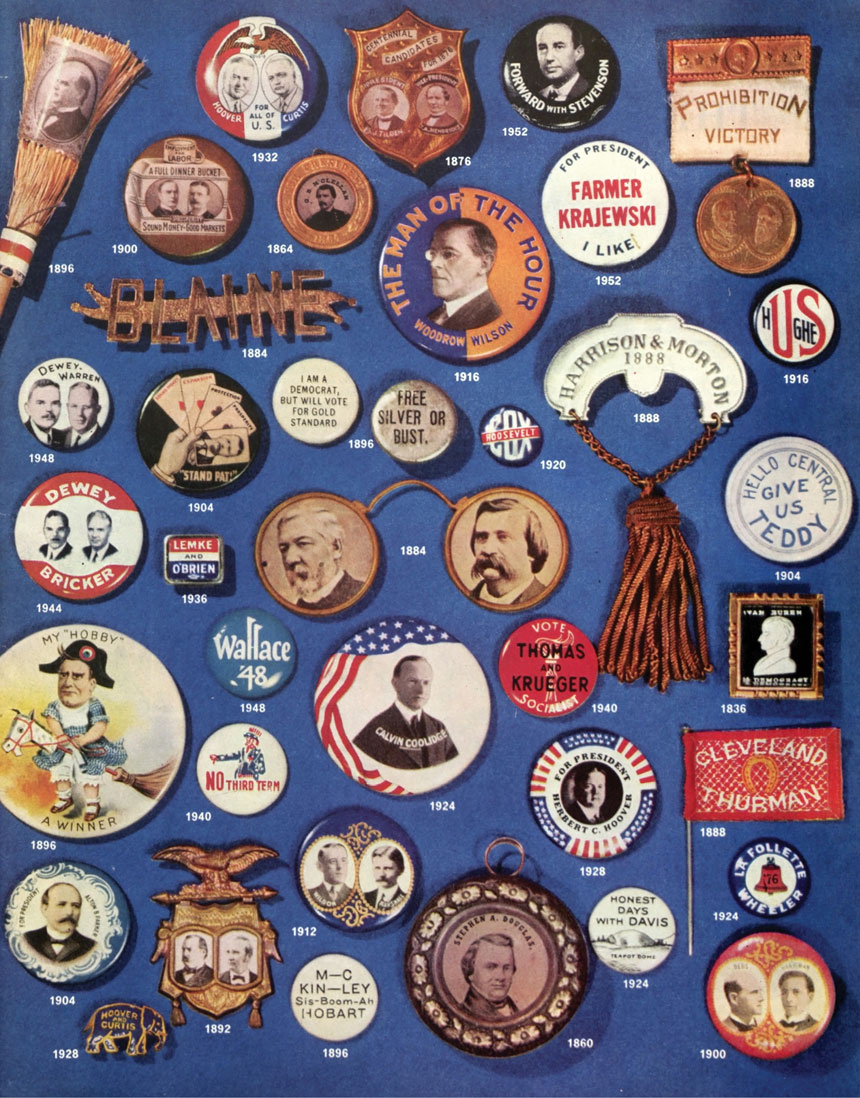
Presidential Campaign Pins 1860–1956
These campaign buttons would have stirred memories for Post readers of 1956. They’d know Dewey, the New York governor who’d lost three presidential races to Democratic candidates. They might have known [pig] Farmer [Henry] Krajewski, the Poor Man’s Party presidential candidate in 1952. Some might recall Lemke and O’Brien, the Labor Party candidates in 1936. But their memories might need jogging to recall Alton B. Parker (lower left, below the anti-McKinley-hobby-horse button). He was the 1904 Democratic candidate who had the ill fortune of running against Teddy Roosevelt.
The men inside the spectacles would be hard for many to recall. They are James G. Blaine and John Logan, who in 1884 lost to Grover Cleveland, the first Democratic president since 1856.
But few would still be alive who’d recognize the small button near the top. It promoted George McClellan, Commanding General of the U.S. Army, discharged for reluctance to lead his army into battle. Arrogant and smarting from his dismissal by Lincoln, he ran against the president on the Democratic platform which sought negotiated peace with the Confederacy. His defeat was ensured by the fact that no votes were cast in the rebel states.
This article is featured in the November/December 2024 issue of The Saturday Evening Post. Subscribe to the magazine for more art, inspiring stories, fiction, humor, and features from our archives.
Cartoons: Election Collection
Want even more laughs? Subscribe to the magazine for cartoons, art, inspiring stories, fiction, humor, and features from our archives.
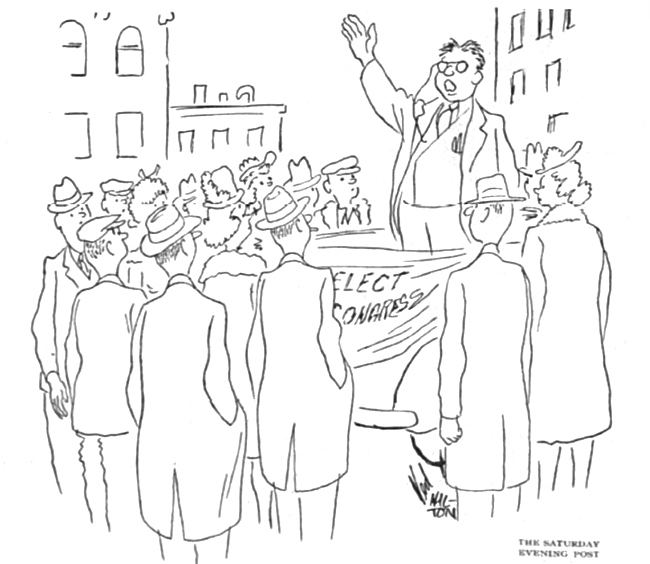
Ned Hilton
December 1, 1945
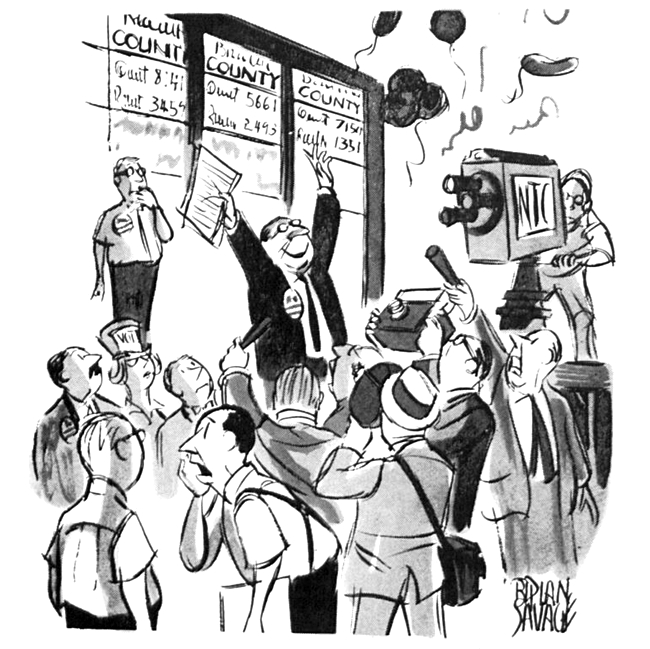
Brian Savage
December 31, 1964
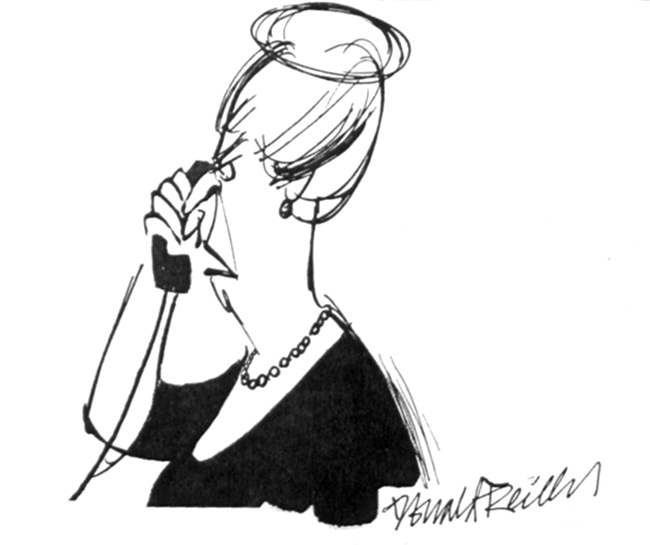
Donald Reilly
October 17, 1964

Interlandi
July 12, 1958

Henry Boltinoff
April 4, 1964

John Gallagher
April 4, 1964
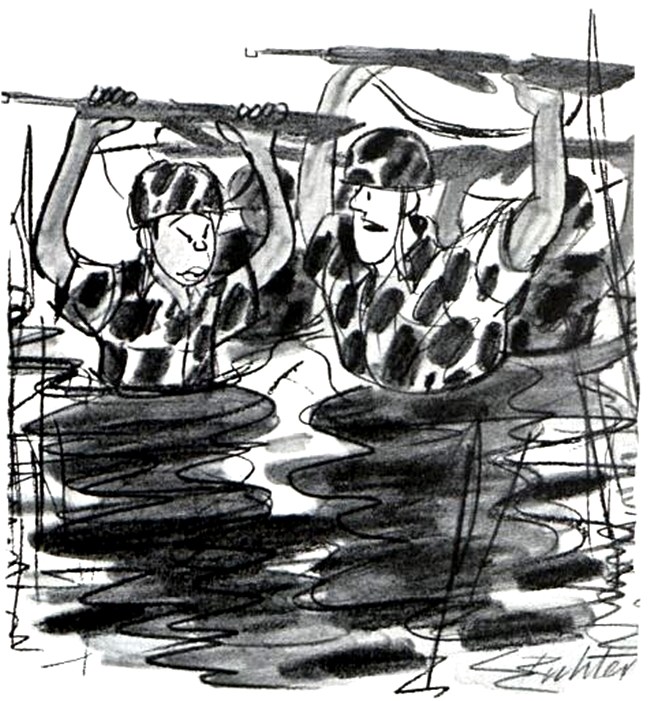
Mischa Richter
January 29, 1966
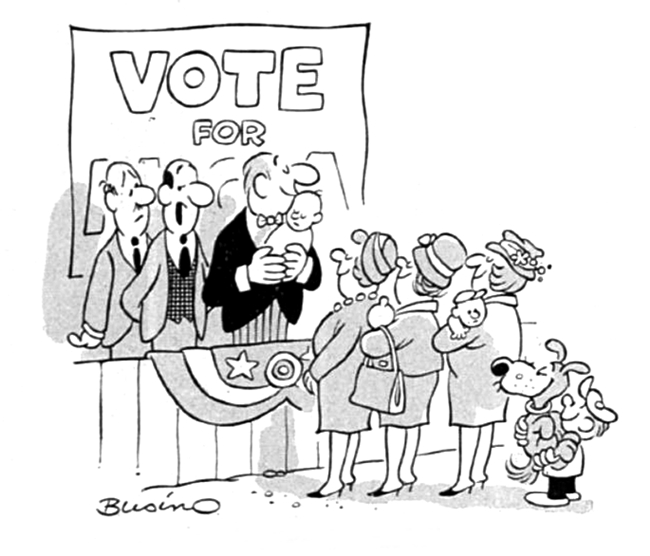
Orlando Busino
October 23, 1965
Want even more laughs? Subscribe to the magazine for cartoons, art, inspiring stories, fiction, humor, and features from our archives.
If Elected…
It might surprise you to learn that working as a Quaker pastor wasn’t my first choice vocation-wise. When I was growing up in Danville, Indiana, I wanted to be the president, like every kid I knew. I’ve spent a good part of my life thinking of the things I’d do if I were in charge of the country, so I’m ready for the task, should duty call, though I can’t imagine the circumstances that would compel a majority of Americans to think I was the answer to our nation’s problems. But if that’s my destiny, so be it.
Just to be clear, I’d only serve one term. When my four years were done, I’d slip out the door and never be heard from again. There’s a lot at our Indiana farm that needs doing, and I can’t do it if I’m hobnobbing with the muckety-mucks in Washington, D.C.
The first thing I’d do if elected president is keep my day job as a Quaker pastor. In a few more years, I’ll be fully vested in our pension plan, which pays close to $300 a month, which I’ll need since I won’t be one of those presidents making the chicken dinner speech circuit after I retire. I can either farm or give speeches, but I can’t do both.
Before you elect me, I should tell you my wife and I won’t be living at the White House. We have friends in D.C. who live a mile from the White House and have a perfectly good guest bedroom where we can stay. We don’t want to ramble around in a big, old house all by ourselves. Any house that requires a staff of 90 people is too much house for us.
We have one “staff member” at our house now. Her name is Crystal. She drives a school bus in our town and comes to our house the fourth Tuesday of every month to put things in order. My wife makes us clean the house the Monday before so Crystal won’t think we’re slobs.
Just so you know up front, I’d ask Martin Sheen to be my running mate. I’d let him live in the White House, since we won’t be using it. I know he’s an old white guy and Lord knows we’ve put enough of them in charge, but he was a president on TV, so he knows the ropes. If anything happened to me — if I got fed up and quit, for instance — I’m confident he’d make a fine president. In his seven years of playing a president on TV, I never heard the first complaint about him. Even my wife liked him, and she hates TV.
If elected, I’d be bringing some of my own people to Washington, mainly Crystal, to make our bed every morning. That’s my job at our house, and after 41 years of marriage, I’d like to roll out of bed knowing someone else would make it. There are teeth to brush, hair to shampoo, and breakfast to eat. I won’t have time to fool with a bed.
For that matter, I won’t be having state dinners either. I’m not in the restaurant business. There are lots of good places to eat in Washington, D.C., so I’m not inclined to entertain folks looking for a free meal. I realize these policies won’t make me popular with the upper crust, but so be it. I have a country to run, cows to milk, and turkeys to pardon. When I’m the president, the elites will have to fend for themselves.
Philip Gulley is a Quaker pastor and author of 22 books, including the Harmony and Hope series, featuring Sam Gardner.
This article is featured in the November/December 2024 issue of The Saturday Evening Post. Subscribe to the magazine for more art, inspiring stories, fiction, humor, and features from our archives.
Considering History: What We Talk About When We Talk About America
In recent weeks, historians, public scholars, and other interested folks on social media have been discussing the upcoming 250th anniversary of the Declaration of Independence and the founding of the United States, prompted in part by a thoughtful Atlantic Monthly article from Beverly Gage on America’s identity crisis. Gage prompts us to consider whether we will have a collective appetite to commemorate this historic anniversary at all, and if so whether those events will feature only idealized visions of the founding or whether they can include more nuanced dialogue about our histories. And as with everything in late 2024, both Gage’s essay and the broader discussions have linked that debate to the election and the nation’s seemingly deepening partisan divides; how would a Harris or a Trump administration commemorate the 250th anniversary?
There’s no doubt that next week’s election will profoundly influence how these conversations develop over the next two years and far beyond. But despite any immediate outcomes, I believe that the dualities at the heart of this debate are deeper and more defining than the divide between left and right. The truly fundamental question is: What do we talk about when we talk about America?
Two Defining Dualities
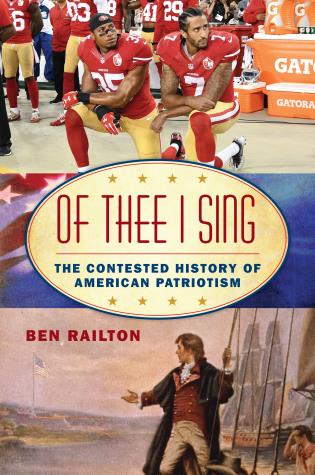
Two longstanding dualities that best help us understand competing visions and definitions of American identity are a pair of interconnected debates: The debate between mythic and critical patriotism and the debate between exclusion and inclusion.
At the center of my most recent book, Of Thee I Sing: The Contested History of American Patriotism (2021), is this debate between mythic and critical patriotism. Mythic patriotism relies on an idealized vision of American history and identity and defines any who challenge those myths as unpatriotic, while critical patriotism offers a critique of the ways the nation has fallen short of its ideals in an effort to push us closer to that more perfect union. In this column, I argued that the participants in and forces behind the January 6th insurrection embodied multiple layers of mythic patriotism; while in this one, I pointed to the long history of African American critical patriotism, from Frederick Douglass to Martin Luther King Jr., James Baldwin to Colin Kaepernick.

In my other recent book, We the People: The 500-Year Battle Over Who is American (2019), I focus on the debate between exclusion and inclusion. As I wrote in this column, 2024 represents the 100th anniversary of moments that exemplify these exclusionary and inclusionary sides to who we’ve always been; namely the 1924 Immigration Act and its discriminatory quota system versus the 1924 Indian Citizenship Act, which extended American citizenship to Native Americans.
These dualities of mythical vs. critical patriotism and exclusion vs. inclusion are what I’m talking about when I talk about the worst and best of America. Much of my work for Considering History has engaged with those two sides, so here I’ll just share four further examples of each.
The Worst of America
- Anti-Immigrant Myths Have Been Strikingly Consistent — and Consistently Wrong: No American communities have been targeted by exclusionary narratives more than immigrants, and those narratives have always been both inaccurate and backwards about these inspiring American communities.
- Sundown Towns, Racism, and Exclusion: Racial violence and terrorism targeting African Americans have likewise always been driven by exclusionary goals, by attempts to remake American communities into homogeneous white supremacist enclaves.
- The 1893 Hawaiian Coup and the Realities of American Expansion: As the United States has expanded, across the continent and around the world, that process has consistently depended on exclusionary visions and treatment of the peoples whose land the nation is enveloping.
- Wamsutta James, Thanksgiving, and the National Day of Mourning: No American exclusion was more destructive than that of indigenous communities. As we approach the Thanksgiving holiday, it’s vital to recognize Wamsutta James’ alternative concept of a National Day of Mourning.
The Best of America
- Black-Owned Businesses Reflect the Best of American History: An inclusive vision of America doesn’t just mean acknowledging our foundational and defining diversity — it requires that ideals such as opportunity and the American Dream are truly achievable for all Americans, such as Black business owners.
- AAPI Medal of Honor Recipients Exemplify the Best of America: No American community has been more consistently diverse than those who have served the nation in our military, yet many of those stories are under-remembered.
- Celebrate Freedom by Reading a Banned Latino or LGBTQ+ Book: One of the most frustrating forms of exclusion are attempts to limit or ban what American students read and learn. More inclusive reading lists and curricula help us celebrate the best of our authors and stories, communities and histories.
- Six Inspiring Figures from American History to Be Thankful For: The Thanksgiving holiday presents an opportunity for an important form of inclusion: expressing gratitude for those figures from across all American communities who have fought for the best of our ideals.
On a recent road trip, I happened by chance to stop for breakfast at The Corner Restaurant in Milford, Connecticut. Their website doesn’t exaggerate, as this was one of the tastiest breakfasts I’ve ever eaten. And that deliciousness is interconnected with the amazing and distinctly American diversity of their menu: South Indian spiced duck and African hash, Malaysian pulled pork and a Mexican breakfast, Cajun blackened eggs and Vermont maple syrup. When we talk about America, that’s what we’re talking about: the inclusive best that resists exclusionary myths and truly makes us great.
Common Threads: Using Women’s Suffrage to Sell Soup and Cereal
With the elections approaching, our screens and billboards are filled with political ads trying to persuade voters to support a candidate or a cause. This form of campaigning is certainly not new, and while its main goal is to stir people into active engagement, the result is often turning politics into a consumer product.
If today it’s the candidates who are being sold, in the 1920s, companies found that politics and elections themselves could be a useful marketing tactic to sell their products.
Advertising companies have long targeted “Mrs. Consumer” in their campaigns, seeing women, and particularly housewives, as the main audience for their ads. While early ads often portrayed the woman consumer as passive, emotional, and gullible, by the 1920s — as women became more active and visible in the public sphere — ads also changed their approach. Looking to capitalize on women’s new sense of citizenship leading up to and after the passage of the 19th Amendment in 1920, ad campaigns sought to convince women to exercise their political power not only at the ballot box but also in the store.
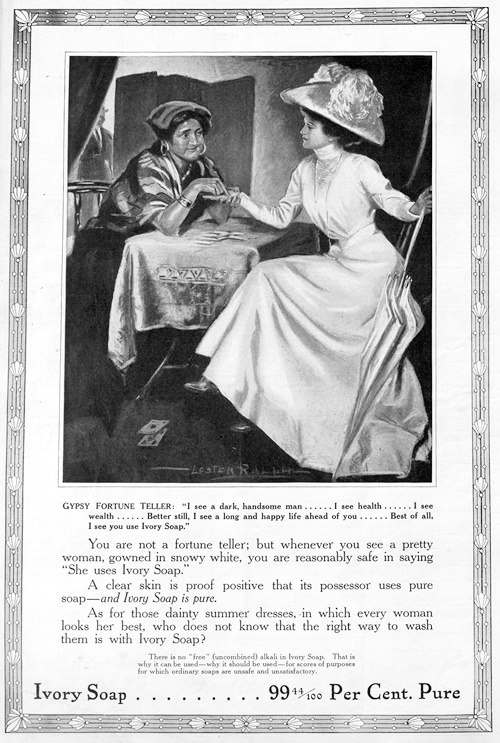
Even before the 19th Amendment, retailers and manufacturers were eager to cash in on women’s new sense of political agency by framing consumption as the manifestation of their rights. “Another Victory for Equal Rights!” an ad for The Royal Tailors company announced in 1914, proclaiming that they had begun to provide services for both men and women. Another 1914 ad for Kellogg’s Corn Flakes also adopted the suffrage slogan “Votes for Women,” featuring a march of little girls as if in a suffrage parade, claiming that “the women of this country have always voted ‘aye’” for the cereal.

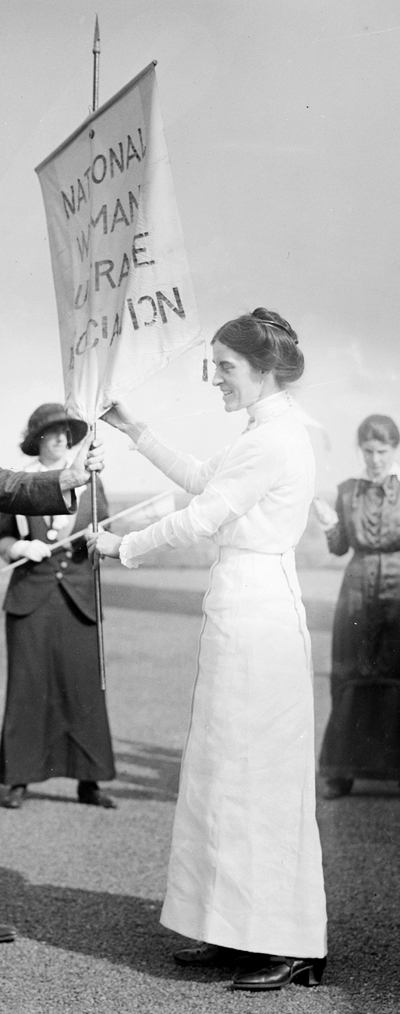
The increasing numbers of women working in the advertising business also helped in shifting views on the woman consumer. Frances Maule — a veteran suffragist that made a career as an executive copywriter at J. Walter Thompson Advertising Company — argued in a Printers’ Ink article that “[w]hen we sit down…to try to visualize the woman purchaser, we should do well to recall to our minds the fact — so well expressed in the old suffrage slogan — that ‘Women Are People.’” Maule rejected the “good old conventional ‘angel-idiot’ conception of women,” and instead suggested to see women as a more complex group of types and interests.
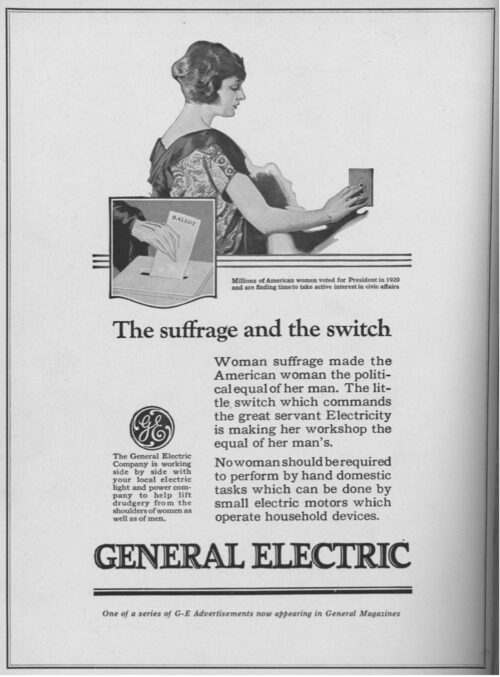
Once the 19th Amendment had passed, advertisers grew even bolder in connecting voting with consumption. A 1923 General Electric ad titled “The Suffrage and the Switch” conflated the achievement of women’s suffrage with the progress that electricity brought to domestic life. Portraying a fashionable woman turning an electrical switch next to a smaller picture of a woman’s hand casting a ballot, the copy announced that “Woman suffrage made the American woman the political equal of her man. The little switch which commands the great servant Electricity is making her workshop the equal of her man’s.”
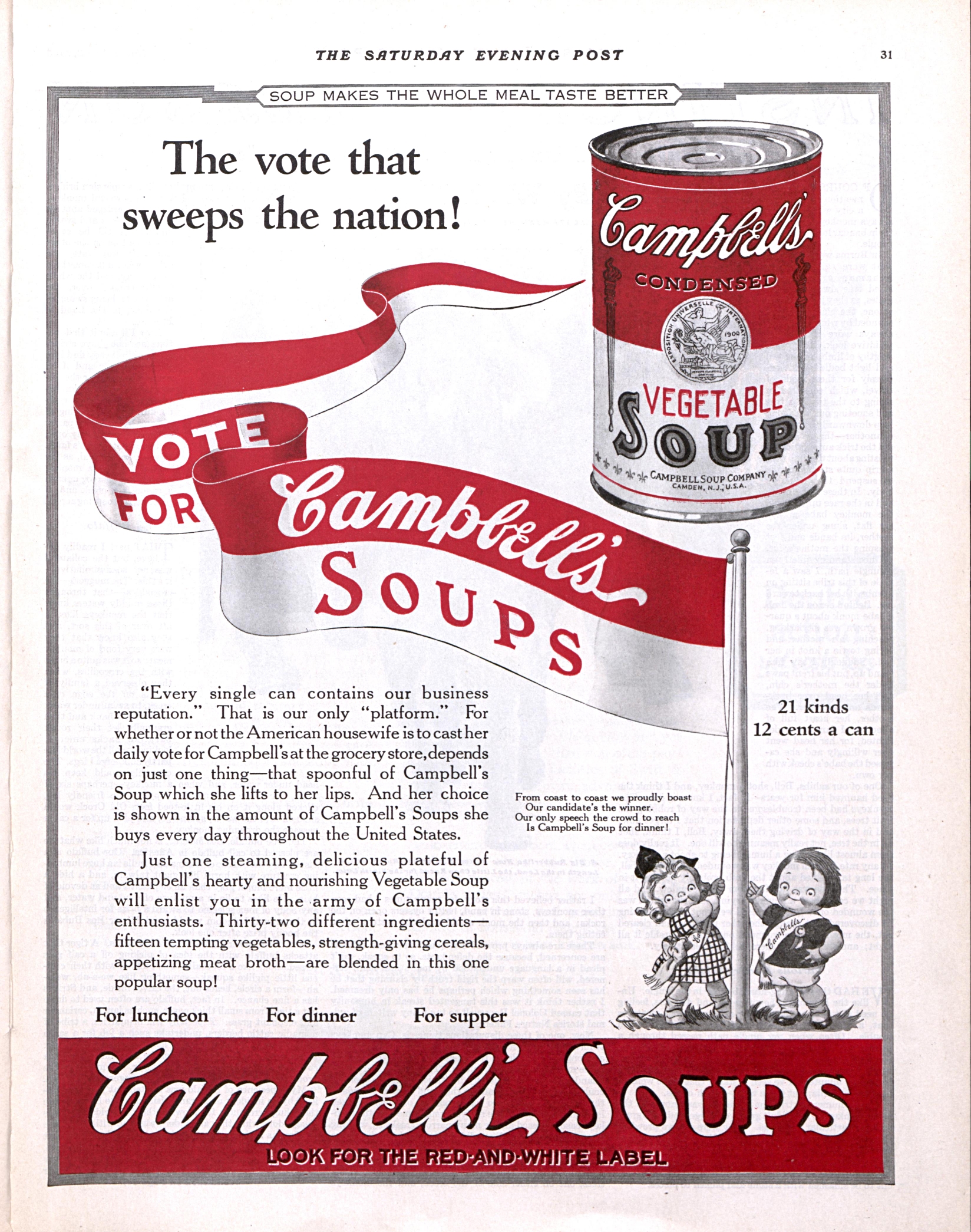
While campaigns by the League of Women Voters sought to educate women on the intricacies of the political process and how to cast their vote properly, advertising consultant Christine Frederick reminded companies that “the polls [are] being open every day at a million or more retail stores.” As a 1923 ad for Campbell’s Soup proclaimed, the American housewife “cast her daily vote for Campbell’s at the grocery store,” making her impact felt where it counts.
The emphasis on consumption as a form of political participation came to dominate ad campaigns in the 1920s and 1930s, suggesting that women’s “voting power” might count more in the marketplace than in Washington. Whereas women’s participation and representation in partisan politics remained insignificant, ads like the one for Listerine Tooth Paste suggested that “When lovely women vote” their voice mattered, even if it was only with regard to their favorite brand, not government policies.
By pointing to the similarities between women’s role as citizens and as consumers, these advertisements framed consumption not as a frivolous act, but as a parallel arena for women to exert choice and control, using the power of the wallet in political ways. Shopping became a form of political exercise and a democratic means to express American values and freedom.
Despite the empowering messages some of these ads conveyed, they also reduced political participation to a consumer choice, illusorily equating buying products with political power. Despite proclaiming that it is women who sit on “The Supreme Court of Business” — as one ad tried to assure manufacturers — alluding to their influence as consuming arbiters, in reality, very few women could claim such a power. In the actual Supreme Court of the United States, the one that influences women’s lives and legal status, women were not represented until 1981.

If in the 1920s advertisers sought to convince women that their vote mainly mattered in the marketplace, today it is clear that it primarily matters in politics. With the increasing influence and power of women, not only as voters but also as candidates and elected officials, appealing for women “to vote” for the right product no longer suffices. As the growing percentage of women’s participation in elections show, when “lovely women vote” they can not only determine what brand is going to succeed, but also who will be the next president.
July/August 2024 Limerick Laughs Winner and Runners-up
“We can’t keep the puppies” they said
As their little boy cried and turned red.
“Oh please,” said their son,
“Can’t we just keep this one,
And get rid of my sister instead?”
Congratulations to Justin O’Connor of Leeds, Massachusetts, who won $25 for his limerick describing George Hughes’s cover illustration from our October 6, 1951, issue.
If you’d like to enter the Limerick Laughs Contest for our upcoming issue, submit your limerick via our online entry form.
Here are some more great limerick entries from this contest, in no particular order:
“But John dear, our Timmy’s so small —
and he has a good reason to bawl!
He loves that dear pup.
We just can’t give it up!”
“But Sweetheart, we can’t keep them all!”
—Barbara Hosbach, Pennington, New JerseyThere once was a young lad named Stan.
Had a tantrum while grabbing the man.
“You can’t take my Jack.
He’s mine, give him back.”
For what the man paid, yes, he can.
—Dolores Sahelian, Mission Viejo, CaliforniaLittle Jimmy is taking it rough.
Saying bye to a puppy is tough!
His parents, in vain,
Must try to explain,
That four dogs is more than enough.
—Jillian Stanley, Sacramento, CaliforniaA loved one is taken away.
There’s little a father can say.
He dare not confess,
The truth, I guess,
That four more will leave any day.
—Phillip Ross, Indianapolis, Indiana“He’s the one that I want,” the boy cries.
“But he’s broken,” his young parent lies.
“He can’t say ‘Bow Wow.’
He can only meow.
It’s really a cat in disguise.”
—Jan Sawyer, Milford, OhioSonny’s tantrum should have been brief
As he rolled through the stages of grief.
But the deal dad explained
Of one shared, four retained
Provided no trace of relief.
—Paxton Grant, Hightown, VirginiaThere are signs of concern from his spouse,
And his young son is starting to grouse,
His reasoning’s sound:
“We’re not running a pound,”
But I think dad’s still in the dog house.
—Jim Johnston, Poland, Ohio“Why on earth are you bawling?” Dad said,
As he roughly grabbed hold of young Fred.
“Because,” said the boy,
“That man looks full of joy,
And I hoped he would take me instead.”
—Bob Turvey, Stoke Bishop, Bristol, United KingdomNo pleading or parental scolding
Could stop this small drama unfolding
Rick hadn’t forgotten
What day care had taught him
To want what the other guy’s holding.
—Lisa Timpf, Simcoe, Ontario, Canada
Niagara Without the Falls
What if Niagara Falls weren’t there? Would the trip up North still be worth it?
That’s a ludicrous question, of course. A legendary honeymoon destination, a world-class natural wonder, and host to a carnival-like maze of honkytonk tourist traps, Canada’s side of Niagara Falls is the region’s recreational Black Hole – a place where sightseers’ time and money usually disappear without a trace.
Then again, in geological time, at least, Niagara Falls is just passing through. When people first arrived here a mere 12,000 years ago, it was 7 miles farther downriver. And it’s still on the march.
So, what if Niagara Falls weren’t there at all?
The answer to that question is Niagara-on-the-Lake, a quaint town set in a gently sloping region near Canada’s southernmost point. Its climate tempered by Lake Ontario, the pleasant environs of Niagara-on-the-Lake have made the locale a destination for as long as humans have trekked this area.
And, yes, even without those falls that thunder just up the river, there’s plenty to see and do.
It goes without saying that a town with a whimsical name like Niagara-on-the-Lake had darned well better boast a main street that is downright adorable. The town does not disappoint – its three-block main drag, Picton Street, is punctuated by a Big Ben-like cenotaph, a century-old memorial to the town’s World War I veterans that stands smack in the middle of the roadway.

Behind the trees that line Picton Street, boutique hotels, wine tasting rooms, and gourmet restaurants abound. At Treadwell – named one of Canada’s best restaurants by enRoute magazine – you can sit at the bar and marvel at the mixologists’ skill while feasting on East Coast scallops in a cauliflower puree, nibbling ever smaller bites because you just don’t want it to end.
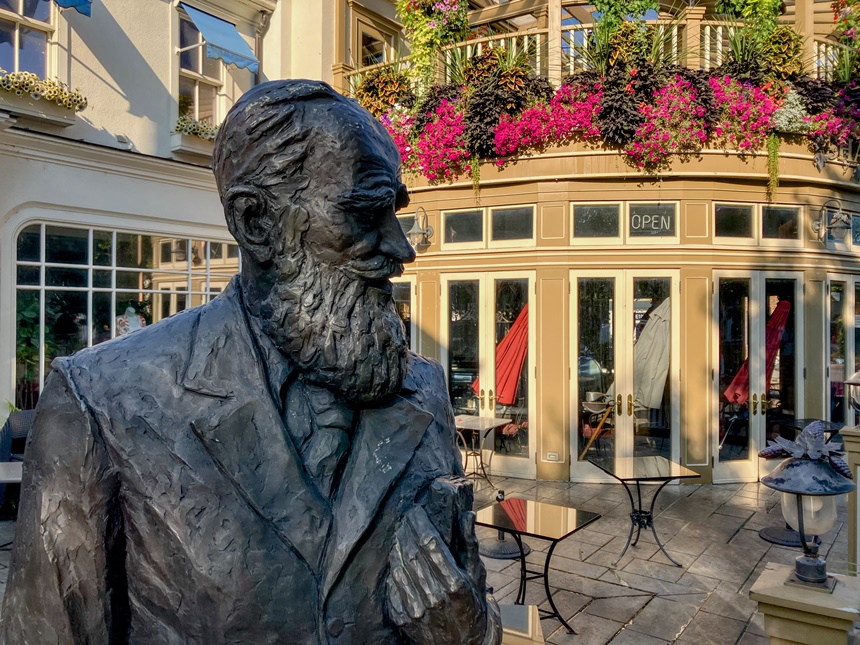
The dominant denizen of Picton Street is none other than George Bernard Shaw, whose imposing bronze statue casts an appropriately cynical glare up the sidewalk. There’s no record of Shaw ever setting foot in Niagara-on-the-Lake, but that does not stop the locals from mounting their annual Shaw Festival, which dates back to 1962. The festival – attended by such luminaries as Queen Elizabeth II and Indira Gandhi – runs April through December each year, featuring plays by and “in the spirit of” Shaw.
One cool late summer morning, after sipping coffee to the sound of fountains splashing in the courtyard of the intimate 124 on Queen Hotel, I amble down King Street toward Queen’s Royal Park, a sliver of waterfront greenery located where the Niagara River opens to the lake. The bank is peppered with repurposed water management structures – most notably the Pumphouse Arts Center, spotlighting local artists in a space that once housed the city’s water pumps.

Instinctively, I head for an imposing white gazebo, rising near the water at the upstream end of Queen’s Royal Park. It’s an irresistibly welcoming structure, one I could swear I’ve seen before. One minute of deft Googling explains that familiarity: The gazebo figures heavily in the 1983 Stephen King horror flick The Dead Zone. You can find it on YouTube – it’s the spot where Christopher Walken has a vision of a grisly murder.
The movie studio built the gazebo and then left it as a gift to the community. Now it’s a favorite wedding photo spot. Go figure.
It’s probably not a big deal to be late for an appointment at a distillery, but I’m getting a little antsy, anyway.
More than 10 minutes ago, the drawbridge on Lakeshore Road abruptly halted my 90-minute drive down from Toronto, and the freighter I’m stopped for, the rusty red Algoma Harvester, is maneuvering the Welland Canal – between the Great Lakes of Ontario and Erie – slower than I could backstroke it.
My frustration is evident when I finally arrive at Spirit in Niagara distillery, a stone’s throw from the shore of Ontario. But the staffer who’s agreed to meet up with me, a good-natured soul named Randy Ferguson, doesn’t blink an eye.
“We’re used to that,” he says. “The pace is a little slower around here.”
Then he offers me a blue plum sour, which is like a traditional whisky sour except for the additional detonation of a tangy fruit bomb in your mouth and the sense that you might be floating somewhere in Nirvana, suspended in a purple cloud.
“Nice, huh?” says Ferguson.
Nice doesn’t even begin to get to it. I shrug off the frustration laid upon me by that slowpoke ship and settle into the laid-back rhythms of Niagara-On-the-Lake, whose very name seems to whisper “take your time.”
Outside, Randy leads me through the 17-acre peach orchard that surrounds the distillery – part of a 200-acre family-owned spread that has stood here for four generations. Some years ago, Arnie Lepp, the current family caretaker of the property, was aghast to learn that some 10 percent of the Niagara area fruit — peaches, plums, pears, apricots, and cherries – was discarded each year because it either fell from the trees, got too ripe, or was sub-standard in appearance.

Well, Lepp reasoned, no one cares what the fruit in your alcohol spirit looked like before it was magically turned into booze. He calculated that one ton of spoiling fruit can yield more than 18 gallons of alcohol. And so an industry was born: Today his Spirit in Niagara small batch distillery operates out of a 10,000 square-foot facility, serving thirsty visitors and shipping its signature fruit-based gin, vodka, vermouth, bourbon, whisky, vodka, and brandies across the continent.
But you don’t have to be a drinker to drink in the peaceful, easy feeling you get wandering the orchards or gazing out toward Lake Ontario from the distillery’s second-floor tasting room balcony. And it’s easy to be impressed with the shiny copper distilling columns that soar toward the high ceiling, their round portholes lending them the appearance of enormous musical flutes.
And if the blue plum sour doesn’t seal the deal, perhaps the peach pit sour will.
If you want to worry about foreign countries aiming their weapons of war at the United States, you might want to start here at Fort George on the Canadian side of the Niagara River. From where I’m standing on a steep hill below the fort’s wooden palisade, I count at least three cannons pointing directly at the good people of Youngstown, New York.

Worse, the Youngstownians don’t seem to be aware of the peril. There’s a guy with his dog in a sailboat. Two people are rocking on their front porch, looking straight down a cannon’s barrel.
No one over there seems to remember the time, barely two centuries ago, when the Canadians and the Americans took turns marauding each other’s Niagara riverbanks, burning entire towns to the ground as they jostled for advantage during the War of 1812.
Sarah Kaufman hasn’t forgotten. The director of the Niagara-on-the-Lake Museum is walking me through 117-year-old Memorial Hall, the first purpose-built museum space in all of Ontario.
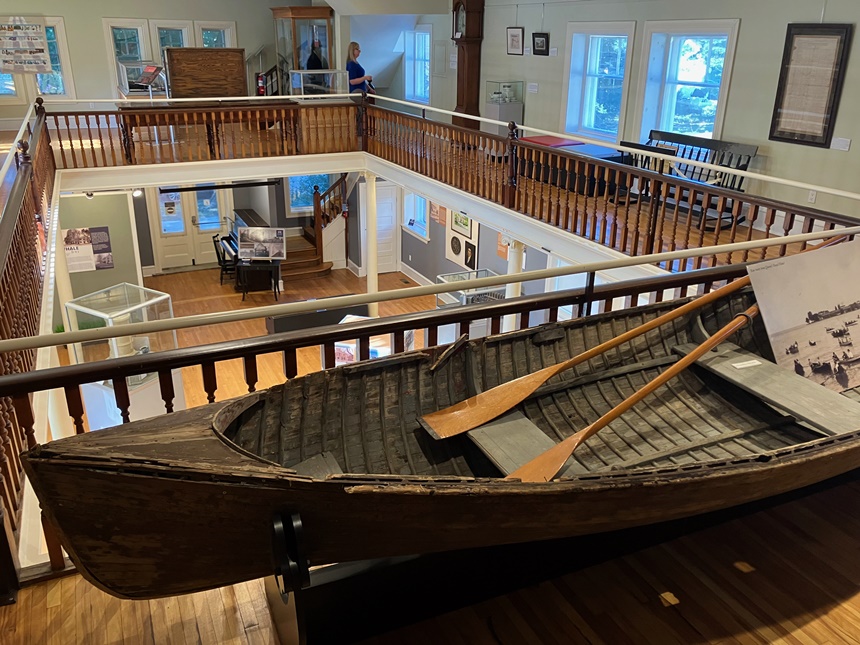
“Because, as you’ve seen, we are so close to the United States, a lot of British loyalists escaped to Niagara-on-the-Lake after the Revolution,” she says. “So, when the War of 1812 broke out, the Americans came over here and basically burned the town down – that’s why most of our older homes were built after 1812.”
I’m feeling a little guilty about all this, and I offer an official apology on behalf of the entire U.S.
“No apology necessary,” she smiles. “We went across the river and burned everything from Fort Niagara to Buffalo.”
I guess that makes us even. Plus, they got Celine Dion.
The museum houses a remarkable – and nicely bite-sized – collection of Canadian historical items, including period furniture, a heartbreaking exhibit about British orphans who were shipped to Canada as household help, and a bicycle that was ridden all the way here from Colombia in 1954 (the young cyclist was intent on attending the World Boy Scout Jamboree that year).
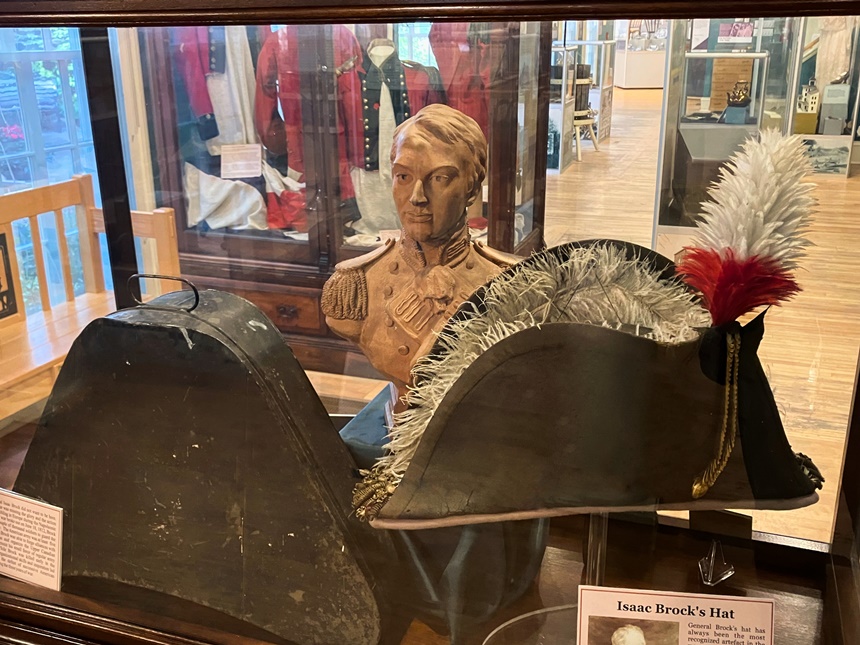
Right near the museum’s front door, in a glass case, sits its prize War of 1812 artifact: the hat of General Isaac Brock, one of Canada’s top dogs in the war (it was Brock who led the capture of Detroit, bluffing that he had thousands of Native American allies when really it was the same group of guys walking in and out of the trees in a big circle). His hat is a cool, Napoleonic model: felt with ostrich feathers, somewhat the worse for wear because during his funerals (he had two of them) militiamen kept trying it on.
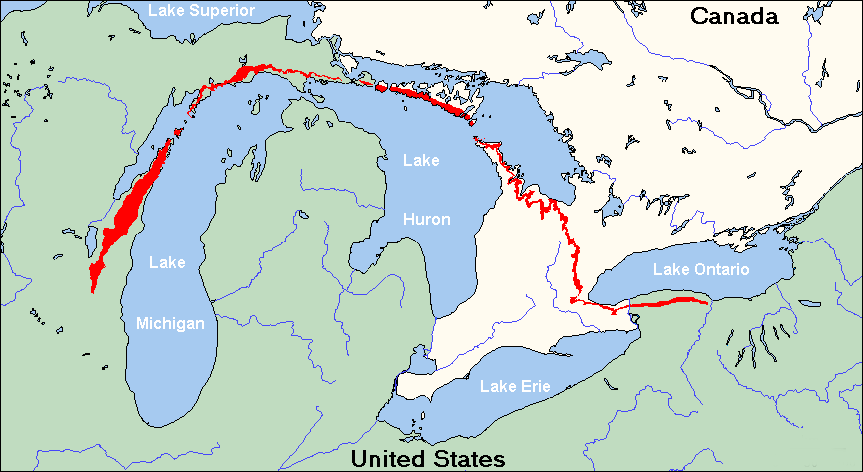
The Niagara region is the nation’s fruit basket not only because it sits at the southernmost part of the country, but also thanks to the profile of a tall hill that stretches along the southern horizon. The rise, visible from just about everywhere along the lake, is unremarkable in height – less than 200 feet in most places – but astonishing in its length: 1,000 miles, curving in a nearly uninterrupted arc from New York State westward through Canada to Wisconsin.
It’s called the Niagara Escarpment – the cliff over which Niagara Falls falls – and it has a fortuitous way of holding warmer lake air close to the ground, enabling fruits trees to flourish longer than they would on an open plain. The rim of an ancient lake bed, the escarpment also marks a region of remarkably fertile farmland.

“When the escarpment was basically underwater, it left an incredible amount of glacial limestone beneath the soil,” says Emily Royal, the assistant winemaker at Two Sisters Vineyards near Niagara-on-the-Lake.
The density and makeup of minerals in the soil, however, can change within a matter of feet.
“Our rosé block alone has seven different kinds of soils in it!” she says.
Southern Ontario’s water-tempered climate and rich soil make it one of the continent’s more surprising wine regions; There are dozens of world-class wineries scattered all around Niagara-on-the-Lake. Pouring me a lovely 2016 Cabernet Franc, Royal acknowledges the inevitable challenges that nag at southeastern Ontario farmers: Occasional high humidity and torrential rains have become a problem as the climate heats up.
Wine glasses in hand, we wander out to the Two Sisters tasting room patio. Rows of grape vines, 72 acres in all, plunge into the distance, the green plants and blue sky interrupted by the startling sculpture – 15 feet high, at least – of an enormous blue rabbit.
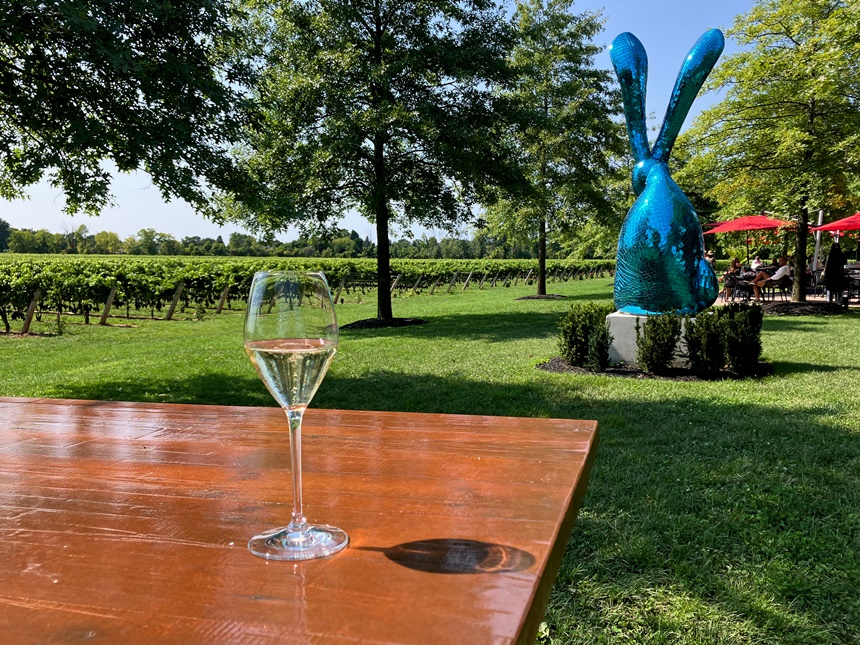
“Yeah, the owners collect art,” she says, tilting her head a bit and squinting as she gazes toward it. “They just bought it last year.”
No matter. If the wine is good enough, even a big blue bunny makes perfect sense.
As I motor through the winding back roads of the Niagara-on-the-Lake region, the wineries and distilleries create endless, irresistible reasons to detour. With its sleek interior and funky wall décor – including a huge TV screen showing alcohol-themed movies – AMO Winery rivals the most edgy tasting rooms California has to offer. Hockey immortal Wayne Gretzky is a hands-on owner of Wayne Gretzky Estates, which at one end of its handsome facility creates premium wines and at the other distills powerful spirits – including a cream liquor that will change the way you think of coffee forever.

But wineries and distilleries are not my only distraction: Driving back to Toronto along Queen Elizabeth Highway, I can’t help but keep glancing over at the dark line of the Niagara Escarpment, which parallels my route. Finally, I can’t stand it anymore. I veer off and head for the hills.
Coming over a rise, I spot a sign for Hidden Bench Estate Winery. “Winery of the Year” an additional sign proclaims, so of course I have to visit.
As I pull into a parking space in the gravel lot, through my windshield I am faced with vine rows that stretch to a line of trees far in the distance. On the nearest wooden post of each row is fastened a metal plate engraved with information about that particular row’s grapes, including variety and year planted. Those numbers will follow these grapes all the way to their wine barrels, which will bear that same identifying data. Walking the perimeter of the lot, the plates identify rows of Pinot Noir, Riesling, and Cabernet Franc.
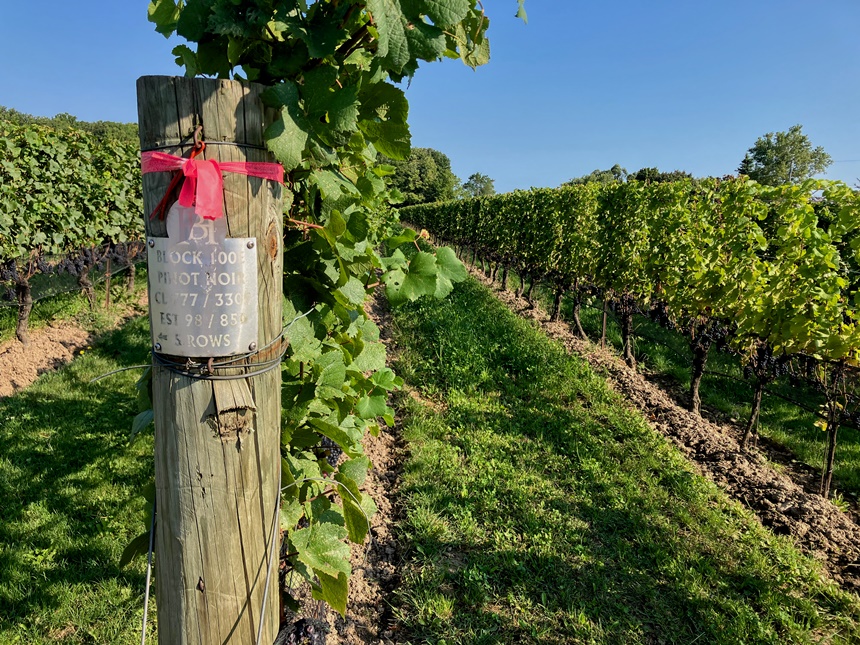
I am standing near the crest of the Niagara Escarpment. If you picture a beach and imagine those successive ledges of sand left behind as the tide retreats, you get some idea of how the Niagara Escarpment’s prehistoric lake shore is structured: From top to bottom, the receding water left a series of steplike shelves, or benches, of land. Hidden Bench occupies one of those shelves, a prime piece of agricultural real estate.
“There are several steps down the escarpment, and we’re the second from the top,” says the winery’s Matt Finn, his right hand sweeping across the 20 acres of vines that spread beyond the visitor’s center/tasting room. Through a break in the trees, far below, I can make out a blue patch of Lake Ontario – and beyond that, the towers of Toronto.
That elevation is great for grapes – sort of, because it makes them work harder to reach the water table, more than 20 feet below our feet.
“You want your vines to be a little stressed out every season,” says Finn. “In fact, we replanted about five acres of new vines really close together – twice as many vines per acre – so they have to fight the other vines for nutrients.
“And you’ll find the flavor of those grapes is much different than the ones grown at a traditional density. Because they like to be challenged.”
It seems a little cruel to set your grapes against each other like little purple gladiators, but I choose to accept Finn’s assertion that they like it. Plucky little guys, those grapes.
I am at last on the road to Toronto, and I’m not stopping this time. In the back seat, bottles of souvenir wine and spirits jangle merrily, causing me to wonder if I’m within Border Patrol limits (thankfully, I am, otherwise I’d still be sitting on the floor at Customs swilling Canadian Malbec).
Making the big turn at Hamilton, heading back east along Ontario’s north shore, it occurs to me that I’ve totally forgotten to visit, for old time’s sake, the rim of Niagara’s Horseshoe Falls. Ridiculous, because it’s just a few miles up the road from Niagara-on-the-Lake.
Then I remember the words of Sarah Kaufman at the Niagara-on-the-Lake History Museum.
“What we have down here, and what Niagara Falls doesn’t have, is this mix of history and heritage and culture and wine,” she said. “The Falls are beautiful, if waterfalls are your thing. This is a place that has something for almost everyone.”
I laugh to myself. Didn’t even miss it.
Forty Years Ago: The Terminator Makes a Killing
Arnold Schwarzenegger was already an iconic figure in October of 1984. He’d won the Mr. Universe bodybuilding contest five times and Mr. Olympia seven. He’d been a focus of the documentaries Pumping Iron and The Comeback. And he’d made five movies, including Conan the Barbarian and its sequel, Conan the Destroyer. For normal humans, that would be a career bio, but for Arnold, it was a prelude. That October, a science fiction film would push both Arnold and a gifted young director into the stratosphere. That film was, of course, The Terminator.
Director James Cameron got his big break like many talents of the time did: working for Roger Corman. The B-movie master launched myriad careers, creating space for the likes of Jack Nicholson, post-Opie Ron Howard, John Sayles, and countless others. By 1977, Cameron had already studied physics and read numerous papers on film technology and special effects. When he saw Star Wars, he quit his day job to try to work in movies. Cameron made a science fiction short, Xenogenesis, in 1978 and got work as a production assistant on The Ramones movie, Rock ‘n’ Roll High School. After that, he went to work in effects for Roger Corman studios, making miniature models for the films.
Battle Beyond the Stars trailer (Uploaded to YouTube by Roger Corman [Official YouTube Page])
Cameron was working on models for Battle Beyond the Stars when the art director was fired. Corman was already impressed with Cameron’s work, and the young model maker soon essentially took over the tasks of art director, production designer, and special effects producer. Though the film was a low budget affair, Cameron used every trick in his arsenal to make it look great. Two of Cameron’s recurring future collaborators worked on the film as well: Actor Bill Paxton was employed as an on-set carpenter, and James Horner composed the score. Battle Beyond the Stars was moderately successful, and much of the praise the film received pointed to work done by Cameron.
Corman gave him the director’s chair for Piranha II: The Spawning. However, Cameron alleges that he was in charge for less than three weeks before an Italian producer pushed him out. The resultant film is not something that Cameron likes to claim, though his name is still on the movie as director. For years, he said that he considered his first “real” directing job to be his next movie, The Terminator, but he did admit to it being his debut in a 2010 interview with 60 Minutes.
According to Cameron, he was sick in Italy while work on Piranha II and had a dream about a metallic killer. That inspired his Terminator concept. Cameron’s friend Bill Wisher helped on the screenplay, receiving an Additional Dialogue credit (Wisher would officially co-write the sequel). Producer (and Cameron’s future second wife) Gale Anne Hurd contributed edits and received a co-writing credit. Former Corman co-workers of Cameron and Hurd had gone on to work at Orion Pictures, and Cameron was able to secure distribution if another entity picked up the financial backing. Hemdale Film Corporation chair John Daly agreed to hear Cameron’s pitch. Cameron made a show of it by having his actor friend Lance Henriksen burst into the room first in an early version of the Terminator costume. Henriksen sat silently until Cameron came in and revealed the gag. Daly was excited by Cameron’s work and pitch, and put together a deal involving Hemdale, Orion, HBO, and other production houses to get the movie made.
The Terminator trailer (Uploaded to YouTube by Rotten Tomatoes Classic Trailers)
When casting began, one of Orion’s co-founders pitched Arnold Schwarzenegger for the part of Kyle Reese, the heroic soldier from the future. Cameron didn’t like the idea because, given Arnold’s rising profile, he’d have to find someone more menacing or of greater star power to be the Terminator. He met Arnold determined not to cast him, and left convinced that Arnold should be The Terminator. It’s funny in retrospect, but even though Arnold signed on, he wasn’t wild about the picture. The Terminator only has 17 lines of dialogue in the entire movie. However, when Arnold started to see the edits come together, he knew Cameron had done something special. The part of Reese went to Michael Biehn, and the role of Sarah Connor went to Linda Hamilton. Cameron’s Corman buddies Paxton and Henrikson were cast in minor roles.
Cameron was already skilled in special effects, but he also recruited an established master to help create the Terminator. Makeup artist Stan Winston, who had already proven his genius on 1982’s The Thing, collaborated with Cameron to sketch out the cyborg design. It took six months for Winston and his team to create and build the puppet apparatus used for the “unskinned” Terminator in the film.
Observers were skeptical about The Terminator’s chances for box office success. Even personnel at Orion had their doubts. However, the movie opened at #1 at the box office in its first week. Audiences flocked to the action-packed film that included elements of science-fiction, horror, and, occasionally, humor. The critics who loved it really loved it, praising the effects, pacing, and performances. Most of the negative criticism focused on the amount of violence, but there was general agreement that Arnold had cemented his place as an action star. He brought physicality and menace to the role, and had one scene that gave him his everlasting catchphrase, “I’ll be back.”
Prolific writer Harlan Ellison also loved the movie, but found it a little too familiar. Ellison threatened to sue over similarities to “Soldier,” an episode of The Outer Limits that he had written about two enemy combatants from the future who do battle in the past. Over Cameron’s objections, Orion settled, and a credit for Ellison was added to later prints of the film and home video releases.
Despite the Ellison hiccup, Cameron and Schwarzenegger had carved out prime spots in Hollywood. While The Terminator was being made, Cameron had already been approached about a sequel to Alien. He would write and direct Aliens in 1986. Starring original cast member Sigourney Weaver alongside Cameron regulars Biehn, Paxton, and Henriksen, it was a massive hit and is widely regarded as one of the finest action films ever made. Arnold went on an insane run of 1980s box office successes, reeling off hits like Commando, Predator, The Running Man, and Twins with seemingly ridiculous ease.
Terminator 2: Judgment Day trailer (Uploaded to YouTube by Rotten Tomatoes Classic Trailers)
Cameron, Schwarzenegger, and Hamilton reunited in 1991 for an almost inevitable sequel, Terminator 2: Judgment Day (colloquially known as T2). T2 was a bigger hit than both the original Terminator and Aliens, taking the #1 spot at the box office for the year. Like Aliens, it’s seen as one of the best action and science fiction films ever, as well as one of the greatest sequels; the movie flipped the script by having Arnold play a new, heroic Terminator who is sent to the past to protect young John Connor from an advance robotic assassin, the T-1000 (played by Robert Patrick). Cameron shoved the art of moviemaking further into the future with the computer effects used for the morphing T-1000. T2 won four Oscars (Best Visual Effects, Best Sound, Best Sound Effects Editing, Best Makeup), giving it the distinction of being the first sequel to win an Oscar when the original film had received no nominations.
The rest you know. The Terminator has continued as a franchise, running off four more movies, a TV series, a web series, and an anime-style series that premiered in August. Arnold continues to be one of the biggest stars in Hollywood history (as well as having a stint as the governor of California). He currently stars in the Netflix action-comedy series, FUBAR, the second season of which completed filming in August.
Cameron would continue to elevate the art of filmmaking, marrying eye-popping visuals to crowd-pleasing stories. Avatar (#1), Avatar: The Way of Water (#3), and Titanic (#4) are three of the of the four biggest box office moneymakers in history. He also took Oscars for Best Director, Best Picture, and Best Film Editing for Titanic. Cameron and his brother Michael also hold a number of patents on film equipment that they developed for underwater shooting, as well as other digital filming innovations, like the head rigs used for performance capture. He is currently prepping the third Avatar film, Fire and Ash, for 2025 release.
News of the Week: The October Theory, Halloween Candy, and the Yankees vs. the Dodgers
What If the New Year Began Three Months Earlier?
There are a lot of people who believe the new year should start in the fall and not in January. After all, it’s when things start anew: Kids are back in school, vacations are over, and people get back into the swing of work; the weather turns from hot and humid to cool, and there’s just an overall feeling of a fresh start and a refocus to the fall.
I was thinking of this after reading The Wall Street Journal’s piece about a related trend called “The October Theory,” where young people on social media discuss the benefits of fall being the best time to set new goals, change their lives, and to basically do all of the things that a lot of people do in January. The October people think they’ll have an advantage, getting a three-month head start on resolutions and changes.
I love the fall too and have always looked at Labor Day as the starting point for changes and new energy. But I don’t think the new year should start in October. January makes more sense to me, when the holidays are over and New Year’s is January 1. There’s a difference between when your “new life” begins and the “new year” begins. Unless the pro-fall movement wants to move New Year’s Day to October too?
That would really mess up the companies that make calendars and planners.
At Least Nobody Picked Circus Peanuts
My favorite Halloween candy – well, favorite candy even if it’s not Halloween – is the Reese’s Peanut Butter Cup.
That’s the top choice of a lot of people, according to this map that shows the most popular Halloween candy in each state. It’s data from Instacart, but there are other companies that use other methods and their results are different (though the Reese’s Peanut Butter Cup is always at or near the top).
Also popular: M&Ms (both regular and peanut), Snickers, Twix, and for some reason Sour Patch Kids, which I will never believe is the most popular Halloween treat here in Massachusetts.
But we can be thankful we’re not Maine, New Hampshire, South Carolina, or Kansas. They chose candy corn.
“Rhapsody in Blue” at 100
The Post’s Andy Hollandbeck was already on this back in February with a terrific story about the 100th anniversary of George Gershwin’s “Rhapsody in Blue.” But last weekend CBS Sunday Morning had a good piece by David Pogue.
Uploaded to YouTube by CBS Sunday Morning
Rubik’s Cube: Now Even More Frustrating!
This incredibly small Rubik’s Cube – 1000 times smaller than the regular puzzle – answers the question, what if you had to solve a Rubik’s Cube but could only use a pair of tweezers?
On the bright side, it only costs $5,320.00
RIP Fernando Valenzuela, Jack Jones, Ron Ely, Philip Zimbardo, Michael Newman, Lynda Obst, Sherry Coben, Ward Christensen, Mimi Hines, Paul Di’Anno, and John Kinsel Sr.
Fernando Valenzuela was the popular Los Angeles Dodgers pitcher who won the Cy Young and Rookie of the Year awards in 1981. He died Tuesday at the age of 63.
Jack Jones was probably best known for singing the theme song to The Love Boat, but he had a long career as a singer of American standards, including such songs as “Wives and Lovers,” “Lollipops and Roses,” and “The Impossible Dream.” He died Wednesday at the age of 86.
Ron Ely was the star of two 1960s series, Tarzan and The Aquanauts, as well as the 1987 reboot of Sea Hunt. He also appeared on Father Knows Best, The Love Boat, Fantasy Island, Superboy, and in the film Doc Savage: The Man of Bronze. He died this week at the age of 86.
Philip Zimbardo was the psychologist who ran the infamous Stanford prison experiment. He died last week at the age of 91.
Michael Newman was the real-life lifeguard who played Newmie on Baywatch. He was also a firefighter while filming the show and continued the job when the show was canceled. He died Sunday at the age of 68.
Lynda Obst produced such movies as Sleepless in Seattle, Flashdance, and Adventures in Babysitting, as well as the TV shows Hot in Cleveland and The Hot Zone. She also wrote two popular books about Hollywood: Hello, He Lied & Other Tales from the Hollywood Trenches and Sleepless in Hollywood. She died Tuesday at the age of 74.
Sherry Coben was the creator of the comedy series Kate & Allie. She died last week at the age of 71.
Ward Christensen was one of the co-creators – with Randy Suess – of the computer bulletin board system (BBS), the online community and forums people used before the web. He died last week at the age of 78.
Mimi Hines replaced Barbra Streisand on Broadway in Funny Girl. She went on to perform in many more musicals. She died Monday at the age of 91.
Paul Di’Anno was the original lead singer for Iron Maiden. He died Monday at the age of 66.
John Kinsel Sr. was one of the Navajo code talkers during World War II. He died Saturday at the age of 107.
This Week in History
First Appearance of The Smurfs (October 23, 1958)
The little blue characters made their debut in the Belgian magazine Spirou.
“Black Thursday” (October 24, 1929)
The Great Wall Street Crash of 1929 was so bad it had both a Black Thursday and a Black Tuesday.
This Week in Saturday Evening Post History: Cracker Jack (October 22, 1955)

This ad serves two purposes. The first is for Halloween (obviously), and the second is for baseball’s World Series (“Buy me some peanuts and Cracker Jack …”). It starts tonight at 8 p.m. ET on Fox.
I don’t know anything about baseball anymore but I know enough to root against the Yankees.
Saturday Is National Pumpkin Day
I saw a news report the other day about a pumpkin spice car wash. They’re putting pumpkin spice in the soap and water so your car smells like fall. It’s a limited-time thing and it’s for charity so I guess that’s good. After the story the news producer said they should do the same thing on Thanksgiving, with turkey and gravy smells, and I’m thinking this could be a regular holiday event. A pine scent for Christmas, maybe ham for Easter?
Anyway, back to pumpkin. Here are seven recipes that use pumpkin in one form or another.
Pumpkin Spice Latte from The Pioneer Woman
Pumpkin Soup from Bobby Flay
Turkey Pumpkin Chili from Tamatha Crist
Pumpkin Hard Cider Cheese Dip from Food Network
Pumpkin Lovers Lasagna from Rachael Ray
Pumpkin Bread with Cranberries from Ellie Krieger
Pumpkin Pie from America’s Test Kitchen
If you can’t make it to that car wash you can always leave one of these dishes in your car overnight.
Next Week’s Holidays and Events
Mother-in-Law Day (October 27)
This is one holiday you don’t want to forget.
Mischief Night/Cabbage Night (October 30)
The name probably varies, depending on where you live, but I think the activities should be extended to Halloween night itself. Give out cabbage to the kids. Kids love cabbage!
Review: Conclave — Movies for the Rest of Us with Bill Newcott
Conclave
⭐️ ⭐️ ⭐️ ⭐️
Rating: PG
Run Time: 2 hours
Stars: Ralph Fiennes, Stanley Tucci, John Lithgow, Lucian Msamati, Isabella Rossellini
Writers: Peter Straughan, Robert Harris
Director: Edward Berger
Reviewed at the Toronto International Film Festival
No religious body in world history has engendered as many movies as the Roman Catholic Church’s College of Cardinals. (Disagree? Quick: Name all the thrillers set within the halls of the Southern Baptist Convention.)
A tense behind-closed-doors drama with career-best performances and a twist ending I guarantee you will never see coming (no matter how hard you try), Conclave manages to wring high voltage drama from an ancient ritual: the election of a new Roman Catholic Pope. The movies have been here countless times before — from The Shoes of the Fisherman to The Godfather Part III to The Young Pope — usually offering a familiar gaggle of outwardly pious cardinals jockeying for the inside track like Seabiscuit and War Admiral pounding down the final stretch.
Conclave is, at the outset, at least, cut from the same vestment: The pope has died unexpectedly, the cardinals are summoned to the Vatican, and the process to elect a replacement is placed under the authority of Cardinal Lawrence (Ralph Fiennes), a low-key Vatican bureaucrat who, incidentally, has some support for being the Next Big Guy. We meet the usual candidates/suspects: the obviously oily hypocrite (John Lithgow, natch), the pragmatic American (Stanley Tucci), the Italian mobster (Sergio Castellitto). All fit the usual parameters, except for an African cardinal (Lucian Msamati) who emerges as an unexpectedly sympathetic character despite his assertion that gay people “deserve prison in life and Hell in death.”
Flitting about all this testosterone-fueled locker room intrigue is a swarm of black-and-white-robed nuns. The women, barely acknowledged by the boys, dutifully keep their heads down — except for the mother superior (Isabella Rossellini), who utilizes her role as an invisible functionary to gather valuable intel and strategize ways to use it.
The beating heart of Conclave is its rock-solid performances, a collection of individual star turns that nevertheless adds up to an unforgettable ensemble piece.
Few screen actors can convey a character’s inner self like Fiennes, whose stoic Vatican cardinal convincingly morphs from pragmatic office functionary to budding idealist to Detective Columbo with little more than a subtly raised eyebrow. Lithgow roars through the carved Vatican doors with his expected ferocity, but he leaves room for the ambitious-to-a-fault power broker he plays to hide more than a few surprises up those loose black sleeves. Tucci’s American cleric exudes a sly mix of Yankee verbosity and reluctant restraint. And then there’s Rossellini as a seen-it-all sister who didn’t get the memo about women being silent in the church. Her steely-nerved Sister Agnes could easily be an older version of her mom’s Sister Mary Benedict, the baseball-playing boxing instructor sister who gave Father Bing Crosby a run for his collection money in The Bells of St. Mary’s.
The Vatican settings are opulent — particularly the film’s meticulous recreation of the Sistine Chapel, where the cardinals isolate themselves for their ballot process. And director Edward Berger — who left us all in awe with the subtle terrors of All Quiet on the Western Front — has a way of turning subdued, even silent passages into moments of screaming tension. Throw in an edge-of-your-seat score by Volker Bertelmann (Western Front, One Life) — and that what-in-the-world finale — and Conclave earns its pillar of white smoke.
In a Word: Getting Latin’s ‘Head’ Examined
Senior managing editor and logophile Andy Hollandbeck reveals the sometimes surprising roots of common English words and phrases. Remember: Etymology tells us where a word comes from, but not what it means today.
In my previous In a Word column, “Giving Shape to Cape,” I explained how the Latin word for “head” — caput — evolved to give us two versions of the word cape, a clothing item and a geological feature. But caput took many other routes through Latin and the Romance languages. A veritable hydra, caput has spawned dozens of English words, some more obvious than others.
Cap
Today we might think of a cap — at least of the head-topping sort — as a close-fitting hat. A millennium ago, though, the Old English caeppe was, more broadly, a hood. It traces to the Late Latin cappa “woman’s head covering, cloak,” a descendant of caput — probably a shortened form of capitulare “headdress.” Cappa gave us both cap and cape. In short, it’s called a cap precisely because it covers your caput.
But we’ve had a thousand years find more uses for this world, and modern caps can refer to a myriad of things that either cover the top of something (like a soda bottle) or create an upper boundary (like a funding cap).
Decapitate
Unfortunately, to decapitate doesn’t mean “to knocking someone’s hat off.” This word uses the Latin prefix de- meaning “off” along with the original source of cap. The Latin decapitare “to behead” came into English through — no surprise here — French.
Capsize, Precipitate
If you’re boating at night and don’t happen to see that cape ahead, you might hit the rocks and capsize your vessel. The history of capsize is a bit nebulous, but it is probably related to the Spanich capuzar or Catalan cabussar, both meaning “to thrust the head underwater” and both tracing back to our Latin caput.
Going down headfirst isn’t limited to boats, of course. The Latin prefix prae- (or, in English, that pre- at the beginning of prefix), means “before”; place that little bit before caput (and then properly decline it), and we get praecipitatio, “falling headlong.” Since the 15th century, the “falling” part of that meaning has taken over, and precipitate and precipitation have found places in religious writings, alchemy and chemistry, and meteorology.
Chief
Two common and ancient metaphorical senses of head are “uppermost, most prominent,” as the head is to the body, and “leader, commander, decision-maker,” that is, the brains of the operation. Both metaphorical senses of caput, after some alteration in Vulgar Latin, were carried into Old French, and then English, as chief. While Modern English has kept the word unchanged as both “uppermost” (e.g., chief accomplishment) and “commander” (police chief), in Modern French, the word is now chef.
Captain
Outside of Vulgar Latin, the more staid and officially accepted form of caput “prominent, chief” was capitaneus. It kept its formality in Old French military use as capitaine, which then became the English captain.
Cadet (and Caddie)
At the other end of the command chain, we find the word cadet, today a student at a military college who is training to become an officer. Long ago, among French noble families, the eldest son was considered the first head of the family; younger sons were, in the Gascon tongue, the capdets — from Late Latin capitellum, meaning “little heads” — which got wider French usage as cadets. These cadets were often sent into the military to become officers, without rising through the ranks or attending military school (because what self-respecting aristocrat would make his son work among the common soldier?). Hence the word’s link to military officers.
The Scottish form of the same word, cadee, came to mean “messenger boy,” but was then adopted in the birthplace of golf for the boy in charge of a golfer’s clubs — in English, a caddie.
Corporal
France wasn’t the only nation with an army, of course. In Italy, the commander of a body of troops was called a caporale, combining the Latin caput with an Italian ending marking it as a noun or adjective. The word changed in French and then English to corporal, likely influenced by the idea that this lowest noncommissioned officer was in charge of a body (Latin corpus, Italian corpo) of troops.
Capo
Lovers of mafia films will recognize capo as a type of “captain” within the mob. Stemming from the Latin caput, capo is both an etymologically and organizational counterpart to captain.
Guitar players, however, will first associate capo not with the Mafia, but with a small device that attaches to the neck of the instrument and raises the pitch of all the strings simultaneously. The name of this type of capo is a shortening of capotasto, an Italian word that literally means “head key” or “head stop.”
Achieve
Returning to chief and chef for a moment — the French used the phrase a chef (venir), literally meaning “come to head” but used in the sense of “complete, get to the end.” This was compressed until it became the verb achever, which by the early 1300s had become the English achieve.
Five Capitals
The architectural capital: We’ve already covered the idea of caput meaning the top or uppermost part of a thing. In Latin, the top part of a column or pillar was called a capitellum “little head,” which became the Old French chapitel, the Anglo-French capitel, and eventually the English capital.
The typographic capital: The Latin adjective capitalis means “of the head,” which became the English adjective capital “principal, first.” As typography advanced, we began using what are now called uppercase and lowercase letters on certain words. While there have always been differing guidelines and styles for employing uppercase letters, one letter is always uppercase: The first letter of a new sentence. Because that letter comes at the head of a sentence, we call it a capital letter.
The geopolitical capital: Nations, states, and other geographical divisions have cities called capitals because those are the principal cities of government, where the heads of state do their work. (America’s Capitol, the building, takes its name from the Capitolium, a temple of Jupiter Optimus Maximus on the Capitoline Hill in ancient Rome. It’s relationship to capital is likely but not certain.)
Legal capital: A connection between one’s head and one’s life was evident in both Old English and Latin. So capital came to describe crimes and punishments that carried the death penalty: capital crimes and capital punishment.
Financial capital: We’ve established the historical sense of capital to mean “principal.” In the financial sense, principal is the initial amount of a loan, as opposed to the interest (originally called usury). One might take a loan and combine it with their own and other investors’ money to kick off a new business. This collection of funds, the initial outlay that an entrepreneur hopes to build on, was called the capitalis pars “principal part.” Over time, this type of capital came to describe a company’s long-term assets.
Chattel and Cattle
The idea of capital as business property was picked up among French speakers and applied to other kinds of property used for profit, especially livestock — and the word changed with it. In Old French it became chatel, and in Old North French, it was catel. Both words found their way into English, as chattel and cattle.
Cabbage
Speaking of farms, one agricultural commodity that takes the form of a bundle of leaves the size and shape of a human head was called in Old French caboce, from a diminutive of caput. In Old North French, it became a caboche, which was adopted into English, and the ch shifted into a soft j sound, giving us cabbage. (Lettuce is head-shaped too, of course; its name ultimately comes from Latin lac “milk,” from the white juice of the plant.)
Chapter
Capitulum “little head” in Late Latin also came to be used to describe the principal divisions of a book. This became the Old French chapitle, then chapitre, and then the English chapter.
Biceps, Triceps, Quadriceps
The –ceps part of these muscles names is what comes from caput. These words come from the addition of the prefixes bis- “double,” tri- “three,” and quadri- “four,” creating words that mean “two-headed,” “three-headed,” and “four-headed.”
The “heads” in this anatomical sense are the more fixed or larger places where a muscle attaches to a bone. The names are accurate: The biceps, on the front of the upper arm, has two heads; the triceps, on the back of the upper arm, has three heads; and the quadriceps are a four-muscle group on the front of the thigh. (Muscle, of course, comes from a word meaning “little mouse,” and it can be fun to muse on the image of quadriceps muscles as “little four-headed mice.”)
Classically, biceps, triceps, and quadriceps are singular. We hoi polloi, who are used to that final s indicating a plural, have back-formed the singular words bicep, tricep, and quadricep. There are those, however, who insist that the original words should remain singular and that their plurals should be formed using either the standard English morphology (bicepses, tricepses, quadricepses) or the classical Latin forms (bicipites, tricipites, quadricipites).
And with that last flex, heading on to some other activity sounds like a capital idea.
Curtis Stone’s Roasted Beet Dip
Roasted Beet Dip
(Makes three cups, 12 servings)
4 medium red beets (about 1 pound total), trimmed
1 tablespoon olive oil
1 garlic clove
1 ½ cups plain Greek yogurt
¼ cup extra-virgin olive oil
1 tablespoon fresh lemon juice
½ cup dukkah (recipe below)
4 pita breads
Preheat oven to 400°F.
In 8-inch square baking dish, toss beets with olive oil to coat, and season with salt and pepper. Add ¼ cup water and cover pan tightly with foil. Roast for about 45 minutes, or until beets are tender. Allow beets to cool for 10 minutes.
Using paper towels, rub beets to remove skins (skins will slip right off). Cut enough of beets into about ¼-inch dice to measure 1 cup; reserve trimmings. Set diced beets aside. Quarter remaining beets and combine in a food processor with beet trimmings and garlic and process until finely chopped. Add yogurt, olive oil, and lemon juice and blend to a smooth puree. Season with salt and pepper. Transfer mixture to a medium bowl and fold in diced beets.
To serve, transfer beet dip to a serving bowl and sprinkle dukkah evenly over it. Serve flatbreads and remaining dukkah alongside for dipping.
Make-Ahead: The beet dip can be made up to 2 days ahead, covered, and refrigerated.
Per serving:
Calories: 77
Total Fat: 2.5 g
Saturated Fat: 0.5 g
Sodium: 82 mg
Carbohydrate: 9 g
Fiber: 1 g
Protein: 5 g
Diabetic Exchanges: 0.25 starch, 0.5 vegetable, 0.25 fat
Dukkah
(Makes 1 ½ cups)
Dukkah is an Egyptian spice blend loaded with a unique combination of coarsely ground toasted seeds and nuts. For a simple snack, dip a piece of pita bread or grilled flatbread into extra-virgin olive oil, or your favorite dip, and then dunk it into dukkah. Sprinkle dukkah on deviled eggs or over a green salad, and use it as a crust for fish, chicken, or lamb chops.
½ cup hazelnuts
¼ cup sliced almonds
⅓ cup coriander seeds
⅓ cup white sesame seeds
2 tablespoons cumin seeds
1 teaspoon fennel seeds
½ teaspoon kosher salt
¼ teaspoon freshly ground black pepper
¼ teaspoon cayenne pepper
Preheat oven to 400°F. Spread hazelnuts and almonds on separate small baking pans and toast in oven until fragrant and golden, stirring occasionally, about 6 minutes for almonds and 8 minutes for hazelnuts.
Rub warm hazelnuts in a cloth to remove brown skins. Cool hazelnuts and almonds completely.
Heat small heavy sauté pan over medium heat. Add coriander seeds and stir for about 3 minutes, or until aromatic and toasted. Transfer to small plate and set aside. Add sesame seeds, cumin seeds and fennel seeds to pan and stir over medium heat for about 3 minutes, or until toasted and aromatic. Transfer to plate and cool completely.
In food processor, pulse coriander seeds four times to break them up. Add hazelnuts, almonds, sesame seeds, cumin seeds, and fennel seeds and pulse until coarsely ground. Do not blend to paste; mixture should be texture of coarse bread crumbs.
Transfer to a bowl and stir in salt, black pepper, and cayenne.
Make-Ahead: The dukkah will keep for up to 1 week, stored airtight at room temperature.
From Good Food, Good Life by Curtis Stone. Copyright © 2015 by Curtis Stone, excerpted with permission of Ballantine Books, a division of Random House LLC. All rights reserved.
Our Better Nature: Several Spooky Spiders
Spiders can sometimes be dangerous in weird ways. At a Michigan gas station in 2015, a man tried to kill one with a lighter and accidently torched a pump island instead, and in 2014, a guy in Seattle burned his house down trying to kill spiders with a blowtorch. But fire isn’t typically why we fear spiders.
Some experts think our aversion to spiders may be an evolutionary response, woven into the very strands of our DNA. Even though less than one percent of the world’s 50,000 species of spiders pose a risk to us, early humans who kept their distance from things like spiders, scorpions, and snakes probably lived longer.
These days, fake spiders star in horror films and come out of the woodwork at Halloween time because a lot of folks – perhaps 75 percent of the population – still find them creepy, and from 2.7 to 6.1 percent of Americans suffer from arachnophobia, an intense fear of spiders. Even so, it would be helpful to learn how to identify and avoid a few of our most common venomous spiders.
I want to point out that spiders are essential to the web of life, eating millions of tons of insects each year. Not only do they munch mosquitoes and feast on flies, they are key predators of agricultural pests.
Roughly 3,500 kinds of spiders call the U.S. home, and of them, only a dozen have a powerful enough venom to make us ill (all other spiders have less-toxic venom for immobilizing their prey). Most states have just two or three toxic spiders, with fifteen states reporting a single one. There’s a greater diversity of spiders in the South, generally speaking.
The northern black widow is the most widespread species of concern. As its name suggests, it’s cold-hardy, but oddly enough is found across the South as well as the North. It’s less common in the Midwest and Northwest. A red-and-black color scheme on a car is sporty. On a spider, it’s scary. Lucky for us, to , to identify the northern black widow we don’t have to flip her over to look for the characteristic red hourglass shape on her belly. Females, which can be 1.5 inches long (legs included), have red geometric patches on their top side, and a broken-hourglass mark on their bellies.

An interesting sidebar about the black widow, so called because they’re known to eat the male after mating, is that such behavior is not the norm. This “sexual cannibalism” was first seen in the lab where males couldn’t get away. It seems that in the wild, males have a “best defense is a running head start” policy, and most survive.
Fortunately, black widows live outside. They’re sometimes brought in on firewood or other items where these shy, nocturnal bug-hunters hide during the day. Northern black widows can also wander in through gaps in foundations or broken weather-seals around doors if there are cool, damp places next to the house to hide in. Move brush and leaves away from foundations, and keep door gaskets in good shape.
Their bites initially cause redness and swelling, followed by severe muscle and stomach cramps, nausea, and sweating within an hour. If you’ve been bitten by a black widow, call a poison control center or dial 911 immediately. Apply ice to the bite while you wait for help. Do not use a tourniquet.
Although black widows have the most toxic venom, the brown recluse spider is more deadly. Bites from the brown recluse, while rare, may require medical intervention because they can cause extensive tissue death (necrosis) with possible infection and scarring. In about one percent of cases, their bites are fatal when the venom becomes systemic.


Brown recluse spiders are shiny, hairless, tan to brown, and up to a half-inch long. An important feature to look for is a dark brown, violin-shaped mark on its back, with the neck of the violin pointing backwards. True to their name, these guys are reclusive, which is a problem when they hide in clothing or bath towels. Their range extends from the Gulf States as far north as Virginia, with higher numbers in the Midwest. But they sometimes hide in luggage or gear of returning vacationers, and show up elsewhere.
Most brown recluse bites result in tissue death around the bite, forming a wound that can take weeks to heal. The main concern is infection at the site. Bites that lead to fever, nausea, or dizziness may suggest a systemic response, and you should seek medical care right away.
Primarily an outdoor species, brown recluse spiders will adapt to living inside, especially as cooler weather approaches. Many home insecticides are not effective (spiders aren’t insects), and all come with health risks. Infestations are best handled by a professional.
There is a house-dwelling native spider that can bite, the yellow-sac spider. Found in all 50 states, they are ghostly pale, yellow to greenish (sometimes pink or tan), and from three-sixteenths to three-eighths of an inch long. They cache their silken sac-homes behind pictures, in the corners of rooms, and other nooks. Though not dangerous, this species has a mildly toxic venom that causes a rash, and sometimes a limited necrotic area.

About thirty years ago, one bit my neck (it was in my shirt collar), and a nickel-size wound developed. The lesion turned gray and took weeks to heal. I have to count my blessings, though. There was no fire.
Cartoons: Costume Party
Want even more laughs? Subscribe to the magazine for cartoons, art, inspiring stories, fiction, humor, and features from our archives.
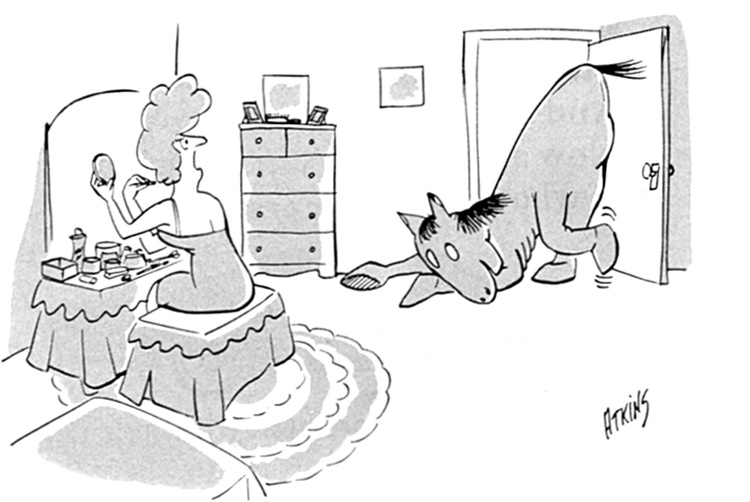
Elmer Atkins
October 3, 1964

Davie
September 21, 1963

Orlando Busino
February 12, 1966

John Gallagher
January 26, 1957

Harry Mace
January 5, 1963

Dan McCormick
December 29, 1956

Richardson
November 3, 1962
Want even more laughs? Subscribe to the magazine for cartoons, art, inspiring stories, fiction, humor, and features from our archives.