Lassie Come Home (1943)
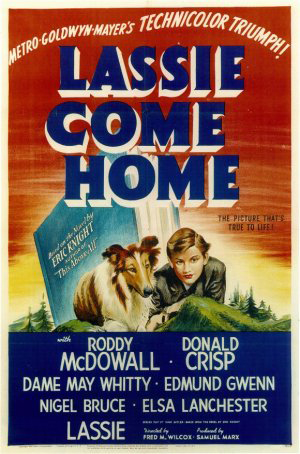
Hailed as “one of the all-time great family films” by Turner Classic Movie’s Leonard Maltin, Lassie Come Home was the first film adaptation of Eric Knight’s story by the same name, which ran in the Post on December 17, 1938.
The first of seven Lassie movies produced by MGM, the film starred Roddy McDowall, Donald Crisp, Dame May Whitty, and a young Elizabeth Taylor, who replaced Maria Flynn in the role of Priscilla. It was nominated for an Academy Award for Best Cinematography in 1944, though it failed to win a statue.
Fans may know that while the Lassie of Knight’s stories was in fact female, the dogs who played her on screen were always male, the first being Pal. For his debut film, Pal earned a salary of $250 a week—more than any of his two-legged cast mates. Every collie that has since been used in a Lassie movie has been a direct descendant of Pal.
Lili (1953)
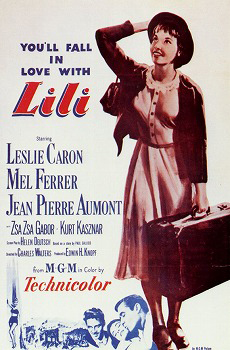
Starring Mel Ferrer, Zsa Zsa Gabor, Jean-Pierre Aumont, and Leslie Caron as “Lili,” this admittedly strange musical—about a man who can only express himself through his puppets and a runaway French girl who sees nothing abnormal about talking to them as if they’re real people—was based on Paul Gallico’s short story “The Man Who Hated People,” published by the Post on October 28, 1950.
The movie was nominated for a Golden Globe, two BAFTAs, and six Oscars, including an Academy win for Best Music, Scoring of a Dramatic or Comedy Picture. It earned a four-star rating from TCM’s Leonard Maltin, and in 2004 The New York Times included Lili in their Guide to the Best 1,000 Movies Ever Made.
Perhaps more accomplished is the fact that the first known appearance of the “smiley” emoticon occurred on March 10, 1953 in an ad for the movie that was placed in the New York Herald Tribune. It read: “Today You’ll laugh 🙂 You’ll cry 🙁 You’ll love <3 ‘Lili’.”
Red River (1948)
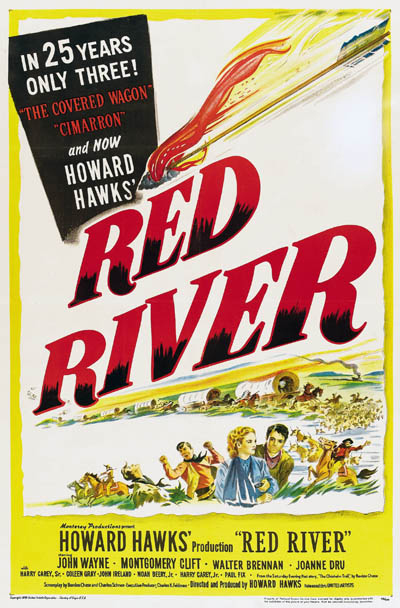
Bordon Chase’s “The Chislom Trail” was a six part series that first ran in the Post in December 1946. Brought to the silver screen in 1948 under the name Red River, the movie starred John Wayne, Montgomery Clift, Joanne Dru, and Harry Carey. Director Howard Hawks had initially offered the role of Thomas Dunson to Gary Cooper, who turned it down for fear that the character’s ruthless nature would damage his screen image.
The film was nominated for Academy Awards for Best Film Editing and Best Writing, and was officially preserved by the National Film Registry and the Library of Congress in 1990 for its cultural, historical, and aesthetical significance. In 2008, it ranked fifth on the American Film Institute’s list of the 10 greatest films in the “Western” genre.
Despite its moderate success, fans might never guess at the behind-the-scenes tension between Wayne and Clift that almost prevented the actors from being cast together. The two were polar opposites politically, and despite a rumored pact to avoid all discussion of politics on set, the actors eventually disliked each other so much that they avoided one another when not filming. Co-star Walter Brennan didn’t mesh well with Clift either—so much so that Clift later turned down the role of “Dude” in Rio Bravo to avoid the two actors. The role eventually went to Dean Martin.
The Quiet Man (1952)
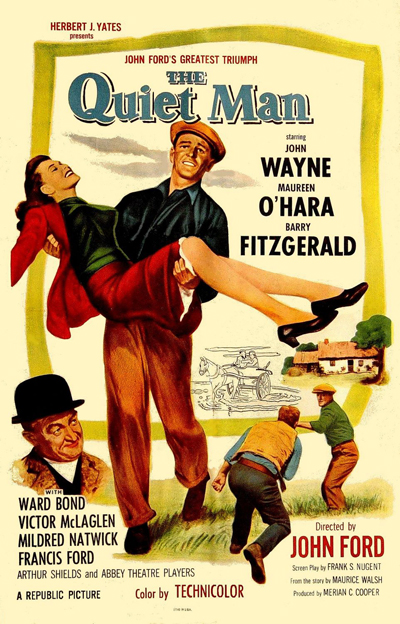
“The Quiet Man” originally appeared in the Post on February 11, 1933, and was written by Maurice Walsh.
Director John Ford tapped “River” castmate John Wayne to play Sean Thornton, an Irishman returned home to escape his past who falls in love with Mary Kate Danaher, played by Maureen O’Hara, earning the ire of her ill-tempered brother Will, whose antics to keep the lovers apart form the main plot.
Earning four stars from Leonard Maltin and TCM, it’s a fan favorite for its sweeping shots of the Irish countryside and an intense—although comical—fist fight between two principal characters. Little known is that O’Hara filmed most of the movie with a broken hand. During the wind-swept cottage scene, an indignant Mary Kate slaps Thornton for a brazen kiss, but O’Hara’s hand landed incorrectly against Wayne’s open palm, breaking a bone. Unlike most movies today, Quiet Man was being filmed in sequential order, and O’Hara was unable to wear a cast until after filming had finished.
The film grossed $3.8 million in its first year, and garnered two Golden Globe nominations and seven Oscar nods, including two Academy wins for Best Cinematography and Best Director. It’s even referenced in the 1982 movie E.T., when the eponymous alien discovers the television.
Call of the Wild (1935)
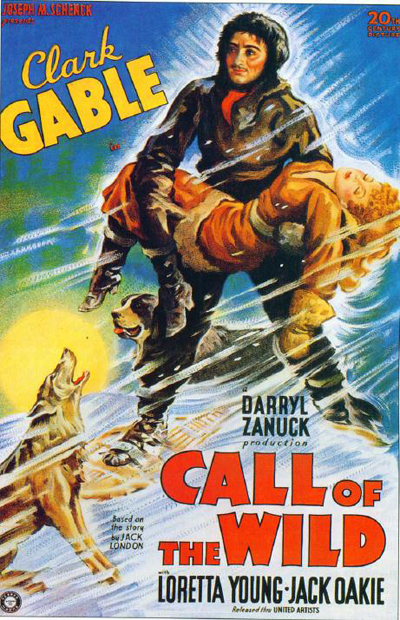
Jack London’s “Call of the Wild” was first serialized in the Post in 1903. Later published as a novel, it’s now an American classic that has been adapted to film no less than seven times since 1908.
The 1935 adaptation, starring Clark Gable as Jack Thornton, Loretta Young, and Frank Conroy, is widely considered the best adaptation thus far, despite its broad interpretation of London’s original story, and earns a 3.5 out of 4 stars from Turner Classic Movie’s Leonard Maltin. Gable is portrayed as the story’s protagonist, relegating Buck, the sled-dog-turned-St. Bernard, to a minor character who does little more than help Jack win a lucrative bet and serve as the catalyst for a romance between Gable and Young’s characters. Despite its popularity, the movie was never nominated for a single award.
In an ironic twist of life imitating art, Gable and Young had an affair on set, resulting in a hidden pregnancy and the birth of their much-speculated about love child, Judy Lewis, who confirmed the long-standing rumor in a 2004 memoir.
Classic Art: Growing Up with Rockwell
Melinda Pelham Murphy, a daughter of Norman Rockwell’s photographer Gene Pelham, grew up around Rockwell’s studio. She talks about being a Rockwell model and the artist’s famous chair and offers a fond remembrance of Rockwell’s wife.
The Babysitter
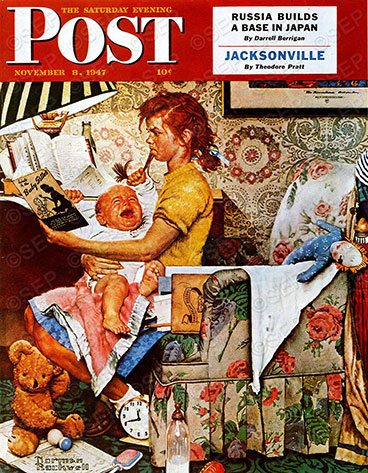
The Babysitter
Norman Rockwell
November 8, 1947
We would like to say that no babies were harmed in the making of this classic Rockwell cover, but the baby may disagree. During Melinda’s first modeling job, as the crying infant in The Babysitter, the artist and photographer couldn’t get her to cry, so someone stuck her foot with a pin. “My mother told me she always felt terrible about that, but it was what it was.”
“Obviously I was too small to remember anything,” she says. “But somewhere I have a photograph of me that Dad took … and I can see my mother’s image. She’s standing and I’m looking at her, and I am sort of looking sad like, ‘Oh, help me!’” Like many illustrators of the period, Rockwell began by painting live models. But around the mid 1930s, he used photography to capture the scene he would sketch out for a painting, calling the model back if necessary.
The Babysitter shows Rockwell’s ability to capture a dizzying array of details, making it one of those paintings where viewers may pick up something new each time they look at it. And still Melinda brought a fresh detail to our attention: “There’s a pin, an actual pin in the painting. The pin is in the diaper that’s hanging over the chair. He put it right through the canvas, he didn’t paint that in there.” It’s a delightful bit of Rockwell whimsy we were unaware of. Melinda has another viewpoint: “When I found out that I was stuck by a pin and I look at that painting, I wonder if that was the pin that did the deed and then he put it in the picture,” she says, laughing.
Despite the prickly offense, Melinda has a good sense of humor about the situation. In fact, she says she (along with the model baby sitter, Lucille Towne Holton) got involved in keeping the painting where the artist wanted it to be. Rockwell gave the original to the sixth graders of Taft Elementary in Burlington, Vermont, in memory of a student who died of leukemia. The school closed in 1978, and the painting was stored in a local bank. In 1995 appraisers determined it would be worth about $300,000. This was welcome news to the cash-strapped school system, which considered an auction. Former classmates protested and were offered an alternative: raise $300,000 and the painting would remain in town. Many townspeople got involved, and Melinda reports, “We raised the funds and it stays forevermore! It’s at the Fleming Museum; and every time my granddaughter goes there, she says, ‘That’s my grandmother!’ She gets a kick out of it.”
Rockwell Ads
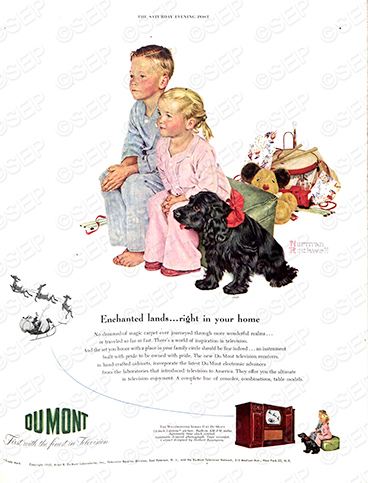
Du Mont TV Ad
Norman Rockwell
December 9, 1950
We first saw Melinda on a recent episode of Antiques Roadshow, where she was having Rockwell artifacts appraised, including a print of this 1950 Du Mont TV ad featuring her at about age 5. The print was accompanied by a note addressed to her father: “…to reimburse your daughter for the long session of posing. Give her my thanks for helping me out. Sincerely, Norman.” We called to ask her about her memories of the artist.
“I do remember him! I remember very well,” Melinda says, although she was only about 5 or 6 when he moved away from her small town in Vermont. “My sister always says to me, ‘I don’t know how you remember all that, I don’t remember these things.’ Maybe I just paid more attention or maybe I just have a different brain. And my sister didn’t pose for him that often.”
What she remembers was a kind man with a fondness for Cokes. This was a treat because soft drinks were limited to “special occasions” at home. But Rockwell had a Coke machine and the models could help themselves on breaks.
Melinda also recalls that Rockwell was particular about the pose he wanted for this ad. “He was very detailed in the way he wanted you to sit,” she says. And sit she did, for 15 hours. The time “would be broken up,” Melinda says, “so he might be working with the boy or the dog, and they didn’t need me” for a while. She remembers the artist’s wife Mary Rockwell who “would take me into the house so I wasn’t just sitting in the studio all that time. She was great about leaping into the breach. I can remember getting a dish of ice cream.”
“It was a long day,” Melinda says, “but Mary took me on a walk. I remember we walked down the back road, and it was a dirt road that ran along the river. And I remember picking ferns with her and then we went back to her garden and got some zinnias.” Melinda’s mother was laid up with an injury at this time, “and I brought her home this bouquet of flowers that Mary had ‘helped’ me put together. She did it all herself, I was very small, but I remember picking the ferns. She was really very sweet. She was a lovely lady. I have very fond memories of being there as a child.”
Blank Canvas
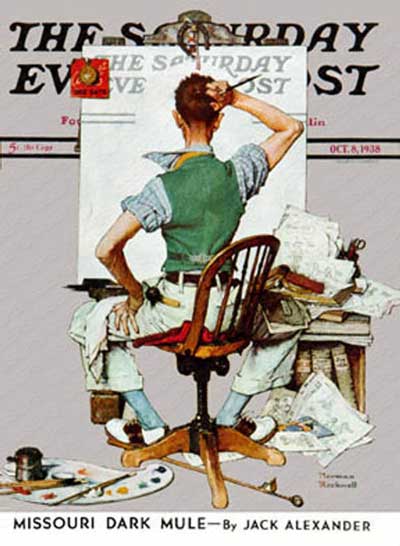
Blank Canvas
Norman Rockwell
October 8, 1938
Painting and drawing appraiser Alasdair Nichol was a bit surprised when Melinda also brought a chair to his table at the Antiques Roadshow, suspecting she had been sent to the wrong area. But when Melinda explained that the chair had belonged to Norman Rockwell and had been depicted in the iconic 1938 cover we see here, he understood. Rockwell’s photographer, Gene Pelham (Melinda’s dad), took the chair after the artist threw it out.
“Dad never threw anything away,” Melinda says. He would salvage discards or “Norman would get these things and say, ‘Here, Gene, take this. I don’t want it.’ Norman was not a hoarder or collector, I don’t think, unless it was something he felt he would need in the long run for paintings—costumes and things.”
But the salvaged chair was special. “To think of the amazing paintings that he did when he was sitting in this chair,” appraiser Nichol said. To see how the cast away chair was evaluated, we have a link to the appraisal, courtesy of the Antiques Roadshow.
Thank you to the Antiques Roadshow for the link to the episode featuring Melinda and to the Norman Rockwell Museum for their assistance in contacting her.
Red Raspberry Desserts
All berries are a great source of fiber, but there’s one bright berry that tops them all—the raspberry. According to Mayo Clinic, the raspberry has one of the highest fiber contents of all fruits at 8 grams of fiber per cup. And adding these tiny tart (or sweet) punches of fiber to your diet won’t only aid in digestion—fiber also helps lower your risk of heart disease. So treat your heart (and your taste buds) to these red raspberry recipes from the Washington Red Raspberry Commission.
Red Raspberry Cinnamon-Oat Crumble
(Makes 8 servings; ½ cup per serving)
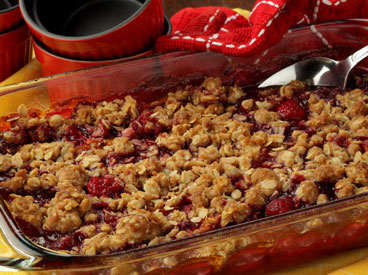
Topping Ingredients
- ⅔ cup white whole wheat flour
- ⅔ cup old fashioned oats
- ¼ cup packed brown sugar substitute blend
- ½ teaspoon salt
- ¼ teaspoon ground cinnamon
- ⅛ teaspoon ground nutmeg
- ⅛ teaspoon ground allspice
- ⅓ cup canola oil
Filling Ingredients
- 1 pound bag frozen unsweetened peach slices, thawed
- 12-ounce bag frozen unsweetened red raspberries
- ¼ cup packed brown sugar substitute blend
- 2 teaspoons fresh lemon juice
- ½ teaspoon ground cinnamon
- 2 teaspoons vanilla extract
Directions
- Preheat oven to 375°F.
- In large bowl, stir together topping ingredients, except oil. Drizzle oil over all and gently toss with fork to create “crumble” texture.
- Coat 11-by-7-inch baking dish with cooking spray. Stir together filling ingredients. Sprinkle topping evenly over all. Bake 45-50 minutes or until lightly brown and fruit is bubbling.
- Remove from the oven and let stand 30 minutes to absorb flavors.
Cook’s Tip: As with most fruit cobblers, the flavors are even better the next day because they are more blended and have time to absorb into the fruit.
Nutrition Facts
Per Serving
Calories: 200
Total fat: 8g
Saturated fat: 0.5g
Carbohydrate: 27g
Fiber: 4g
Protein: 3g
Sugars: 12g
Sodium: 150mg
Red Raspberry Stained Pears
(Makes 4 pear halves and ¾ cup sauce total)
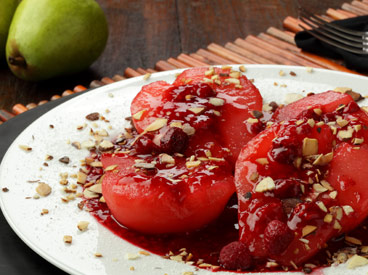
Ingredients
- 2 firm medium pears, peeled, halved and cored (12 ounces total)
- ¾ cup water
- 2 teaspoons cornstarch
- 1 ⅓ cups frozen unsweetened red raspberries
- ½ teaspoon almond extract
- 2 tablespoons granulated sugar
- 2 tablespoons sliced almonds, toasted, coarsely crumbled
Directions
- Bring ½ cup of water to a boil in medium nonstick skillet over medium high heat, add pears, cut side down, cover, reduce heat, and simmer 7-8 minutes or until just tender crisp. Remove skillet from heat. Using large slotted spatula, remove pears and place in 13-by-9-inch glass baking dish.
- Combine cornstarch with remaining ¼ cup water in small bowl. Stir until cornstarch is completely dissolved. Add mixture to pan drippings in skillet with raspberries, stir to blend. Bring to a boil, over medium high heat, continue boiling 1 minute. Do not stir. Remove from heat, gently stir in almond extract and pour over pears. Let stand 1 hour, turning pears occasionally.
- To serve place pears on dessert plates, spoon sauce over all, sprinkle sugar and almonds evenly over all.
Nutrition Facts
Per Serving
Calories: 130
Total fat: 2.5g
Carbohydrate: 0g
Fiber: 5g
Protein: 2g
Sugars: 18g
Sodium: 0mg
Recipes and photos reprinted with permission from Washington Red Raspberry Commission and created by Nancy Hughes, with photography by Valerie Uteg, Thigpen Photography.
What to Eat When You Have a Cold

There’s a lot of folk wisdom floating around out there. Let’s separate fact from fiction.
False: Feed a cold and starve a fever. Not true, says Post dietitian Elise Lindstrom, R.D. Instead, the best remedy for both is plenty of nutrient-rich foods, water, de-caffeinated tea, and juices. Lindstrom’s menu of healing foods also includes oatmeal and whole wheat pasta for energy; yogurt to support the immune system; and apples, cranberries, and tomato sauce to fight inflammation.
True: Sip a delicious bowl of steaming chicken soup. In studies, chicken soup actually did relieve congestion and other cold symptoms.
False: Avoid dairy products. Counter to popular wisdom, dairy products don’t worsen runny noses after all, according to a review of studies.
False: Toss back a shot of whiskey. Turns out Grandpa’s favorite antidote didn’t hold up to clinical tests: alcohol only worsens a cold’s dehydrating effects.
Poo Fighters

Sorry about the bad pun, but we’re talking about, um, fecal transplants. Recently published research in the New England Journal of Medicine shows that for a certain intransigient intestinal ailment, transplanting beneficial microorganisms from a healthy intestinal tract into an ailing one can work miracles.
In the study, fecal transplants quickly cured 15 of 16 people of a debilitating illness caused by a very nasty and stubborn bacteria called Clostridium difficile that antibiotics couldn’t cure. The results drive home the importance of maintaining a balanced and diverse microbiota.
For the transplant, donor feces were blended into a potion that was ported into the patient’s intestine via a tube down the throat. Some patients felt better within a day, and enrollment was halted early because the transplant group fared so much better than a control group.
“The study helps to scientifically prove the high success rates of fecal transplants that we see in our patients: This therapy works,” says Dr. Colleen R. Kelly, a gastroenterologist with the Women’s Medicine Collaborative in Providence, Rhode Island, who was not part of the original trial. As for the unpleasant-sounding methodology, pinpointing the curative strains may someday lead to therapeutic pills or products containing them.
Read more about good bacteria in “Why We Need Germs,” March/April 2013.
E Pluribus Trivia
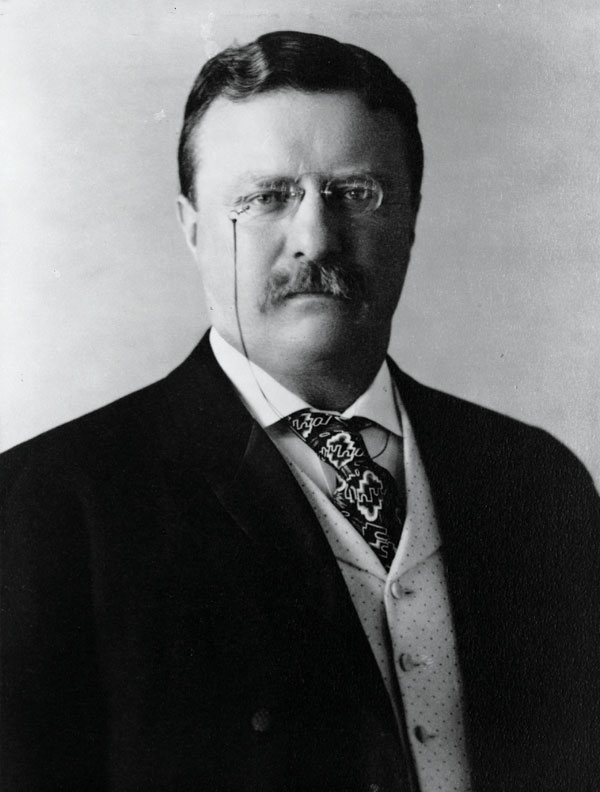
Nine of our 47 vice presidents inherited the presidency—eight from a president’s death and one because President Richard Nixon quit. Seven vice presidents died in office. Two vice presidents resigned: John C. Calhoun to go to the Senate, and Spiro Agnew to go into hiding.
George Clinton was the first of seven vice presidents to die in office (1812). The second was Elbridge Gerry (1814), who gave his name to the notorious and ongoing practice of gerrymandering—creating misshapen voting districts to ensure your party’s victory. Both served under James Madison, president from 1809 to 1817.
Richard Mentor Johnson, V.P. under Martin Van Buren (1837–1841), rose to political prominence partly on his reputation for having personally killed Shawnee Chief Tecumseh in the war of 1812. His reputation came undone in subsequent years when word got out that his common-law wife, with whom he had two daughters, was the light-skinned slave Julia Chinn. She died in the cholera epidemic of 1833, and her existence was conveniently swept under the rug during his period serving as V.P. For the record, Johnson educated and deeded property to his two daughters.
Theodore Roosevelt found the job of presiding over the Senate so tedious that he often slept at his desk. He famously said of his senatorial charges, “When they call the roll in the Senate, the Senators do not know whether to answer ‘Present’ or ‘Guilty.'”
Charles G. Dawes is the sole vice president to write a hit song. His 1912 “Melody in A Major” later had words added and became “It’s All in the Game.” Tommy Edwards took the song to number one in 1958, seven years after Dawes’s death.
Not until Alben Barkley in 1949 was the vice president called “The Veep,” a term coined by a young Barkley relative. It was noted by the Oxford English Dictionary in 1949 and has passed into common usage.
The Worst 10 1/2* Vice Presidents
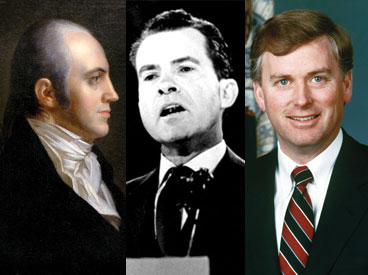 What do Thomas Jefferson, Theodore Roosevelt, Hannibal Hamlin, and Millard Fillmore have in common? All are former vice presidents of the United States. Two are on Mount Rushmore; two are not.
Forty-seven men have occupied the office of vice president, and while they were in there, they did little other than serve as presiding officer of the Senate, their only constitutional mandate.
Vice presidents were chosen more for perceived vote-getting abilities than because of genuine credentials as public servants—which many had. Even so, an aura of veiled weirdness has hovered over the office for more than two centuries.
In 1788, the U.S. held its first presidential election under a flawed system: The man with the most electoral votes got to be president, and the man finishing second became vice president. President John Adams, elected following Washington in 1796, and Vice President Thomas Jefferson detested each other. Imagine George W. Bush with Al Gore as vice president or an Obama-Romney administration, and you’ll understand.
In 1800, Jefferson and Adams faced off—the first time two former vice presidents mutually sought the presidency. But Adams finished third while Jefferson and Aaron Burr tied with 73 votes each. Burr had agreed in advance to serve as Jefferson’s vice president, and that’s how things ultimately worked out.
Jefferson’s near-disaster led to the passage of the 12th Amendment, which required electors to cast separate votes for the two offices. This spared us, up to a point, acrimony between the two top office holders. Since the first vice president was elected in 1788, a motley of murderers, traitors, bribe takers, and outright crooks have paraded through the vice presidency. What’s more, during the 224 years between 1788 and 2012, the office has stood vacant on 18 occasions for a total of almost 38 years.
The nation survived not only those 18 vacancies but also the 10 and one-half vice presidents we examine below.
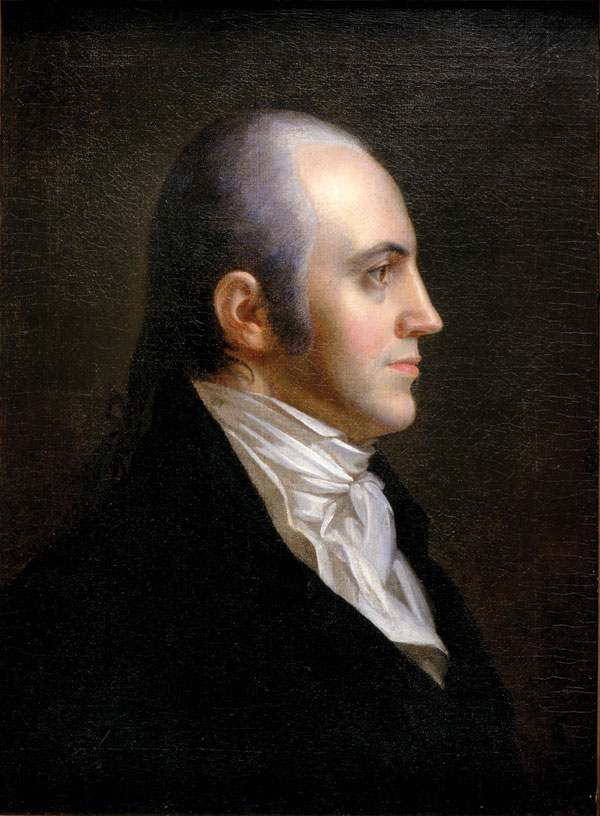
Aaron Burr
(1801-1805)
Our third vice president, Aaron Burr of New York, set the tone of lunacy that so often defines the office. Burr killed Secretary of the Treasury Alexander Hamilton in an illegal duel and got himself charged with murder in both New York and New Jersey. After leaving office, shady land deals in the western wilderness got him charged with treason. He was never convicted of either crime.
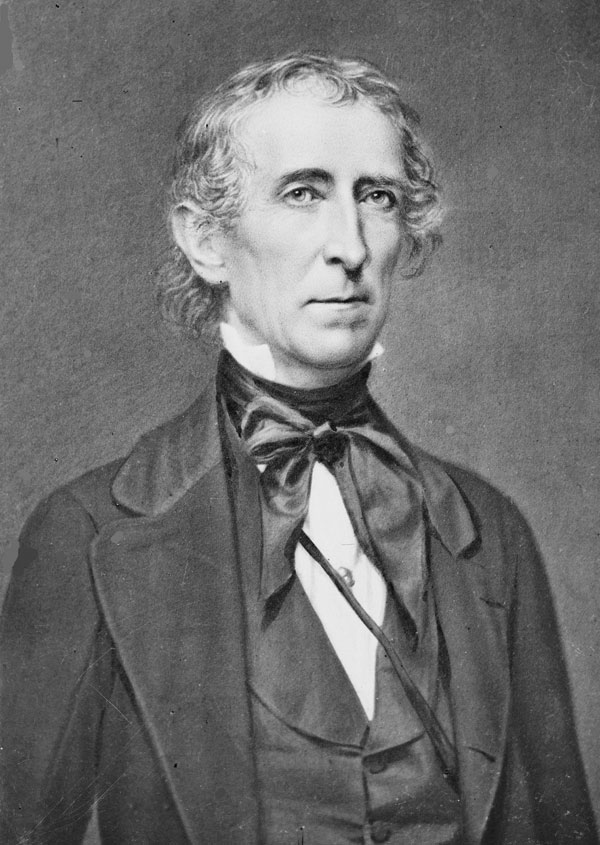
John Tyler*
(1841)
How do you get one-half of a vice president? John Tyler of Virginia did it this way. He was the “too” of the 1840 campaign slogan, “Tippecanoe and Tyler Too.” The “Tippecanoe” half of the ticket was William Henry Harrison who spoke for three hours at his rainy inauguration, caught pneumonia, and died 31 days later, making Tyler our shortest-serving vice president.
Incredibly, though the Constitution provided for a vice president, it did not state expressly that the vice president would assume the office of president following a chief executive’s death. A quick-acting Congress rectified this … in 1967.
Before even being elevated to the presidency, Tyler signaled his lack of interest in his elected position. In fact, immediately after Harrison’s inauguration, Tyler left Washington and didn’t return until he was summoned at the president’s death. On his return, Tyler resisted congressional attempts to name him “temporary” or “acting” president and served almost a full term as a no-asterisk president. In that post, however, he was unremarkable and historians have called him weak. He so alienated his party that he was denied its nomination for the election of 1844.
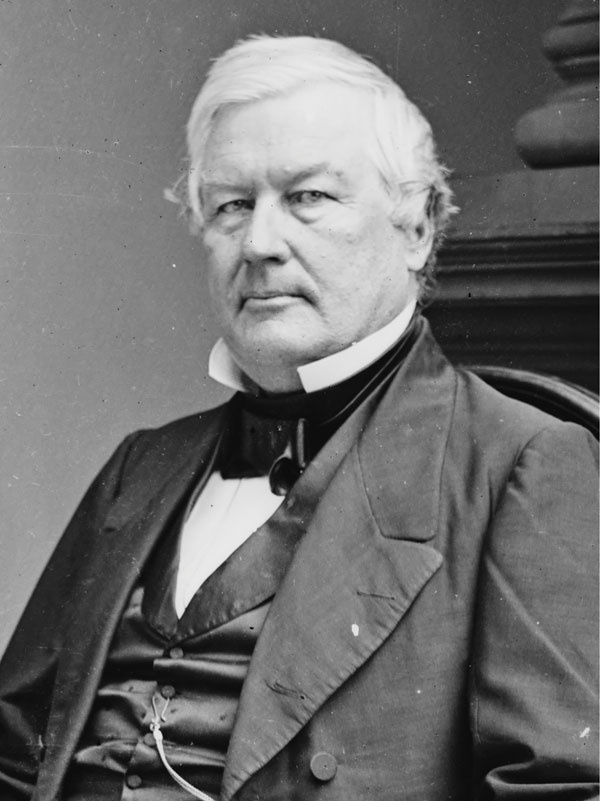
Millard Fillmore
(1849-1850)
Millard Fillmore, who became chief executive in 1850 when President Zachary Taylor died of natural causes, was the first vice president of urban legend, though not until 43 years after his death. In a 1917 column, humorist H.L. Mencken wrote that Fillmore had introduced the first bathtub into the White House. This was an outright hoax, but people believed it, then and now.
Mencken came clean in 1949, but the story remains alive. As a part of “Fillmore Days” in Moravia, New York—near Fillmore’s birthplace—wheeled bathtubs race through the city’s streets.
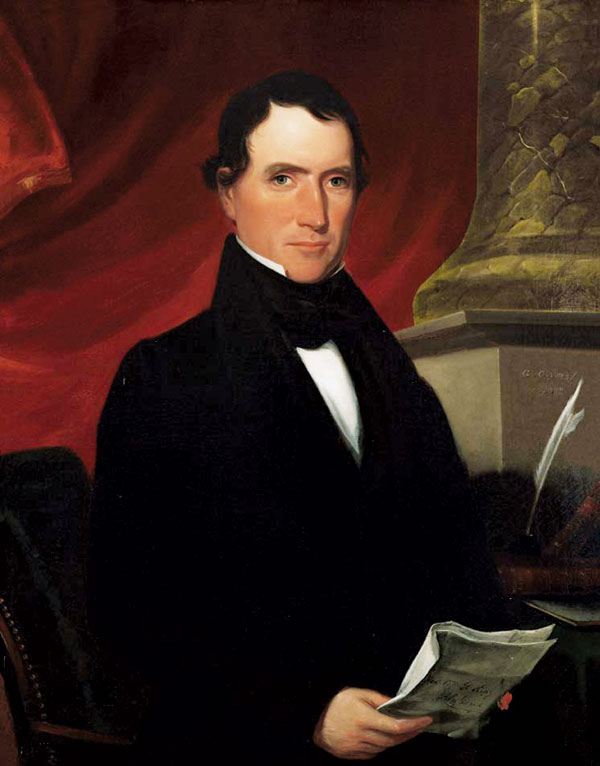
William Rufus King
(1853)
King served only slightly longer than Tyler. He was elected with Franklin Pierce in 1852 and served 46 days before expiring. King is best remembered as our only bachelor vice president and as the longtime roommate of James Buchanan, who in 1856 became the only bachelor elected president.
The Buchanan-King duo was known around Washington as the “Siamese twins,” and President Andrew Jackson referred to them as “Aunt Fancy and Miss Nancy.” King’s brief tenure, not his private life, places him on our list.
A footnote to the bachelors: Buchanan’s vice president, John C. Breckenridge, finished his one term and left town in 1861 to join the Confederates. He was one of two vice presidential turncoats, the other being Tyler, who served as a Confederate legislator.
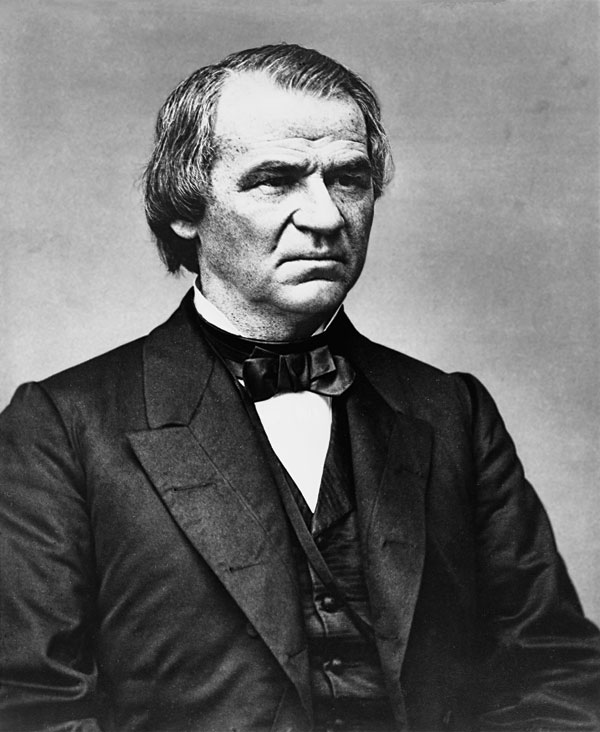
Andrew Johnson
(1865)
Johnson, a Tennessee Democrat and a tailor by trade, ran with Abraham Lincoln in 1864 on something called the National Union ticket. He got things rolling by showing up apparently inebriated for his inauguration. (Honest Abe later said, “Andy ain’t a drunkard”—possibly the only time a president publicly defended a vice president.)
When Lincoln was assassinated in April 1865, Johnson took office and found himself at loggerheads with the Republican administration. A former slave owner, Johnson displayed few concerns for the rights of recently freed slaves and was ultimately impeached by the House and put on trial in the Senate.
Johnson avoided expulsion by a single vote and in 1868 joined the growing parade of vice presidents who gained the presidency but were denied their party’s nomination.
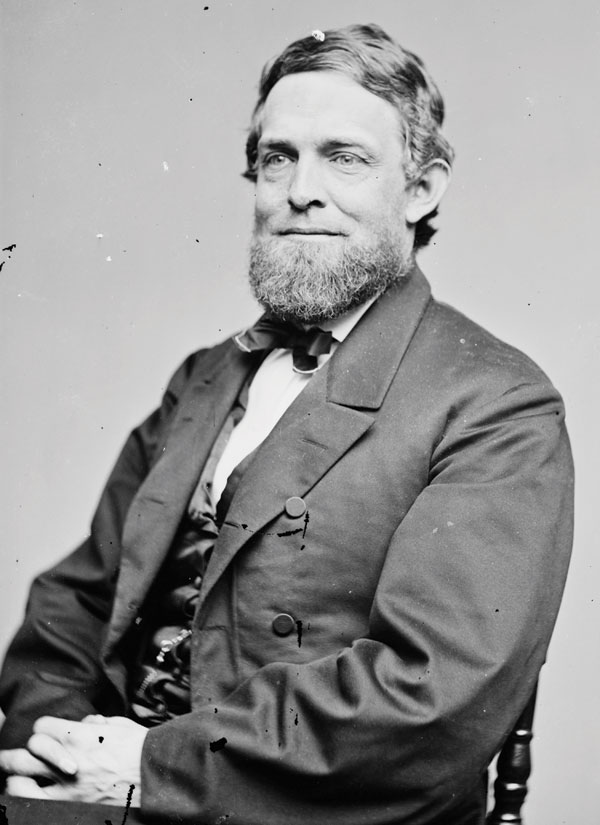
Schuyler Colfax
(1869-1873)
Selected to run with Civil War hero Ulysses Grant in 1868, Colfax had previously served as Speaker of the House of Representatives. Grant, 46, and Colfax, 45, formed the youngest team ever to run for the two offices until Bill Clinton and Al Gore ran in 1992.
A native New Yorker and friend of editor Horace Greeley, Colfax took Greeley’s advice and moved west to South Bend, Indiana. He served as a U.S. Representative from his adopted state. During Grant’s first term, Colfax’s involvement in the Crédit Mobilier of America railroad scandal transpired. (Ironically, Colfax would later drop dead on a railroad station platform after walking three-quarters of a mile in subfreezing Minnesota weather.) He was not nominated for a second term.
He was the first of two vice presidents to preside over both houses of Congress, the other being John Nance Garner. Appropriately enough for a vice president, he was a member of the International Order of Odd Fellows.
Colfax is buried in South Bend, one of four vice presidents buried in Indiana. Keeping their distance, the others are buried at Crown Hill Cemetery in Indianapolis.
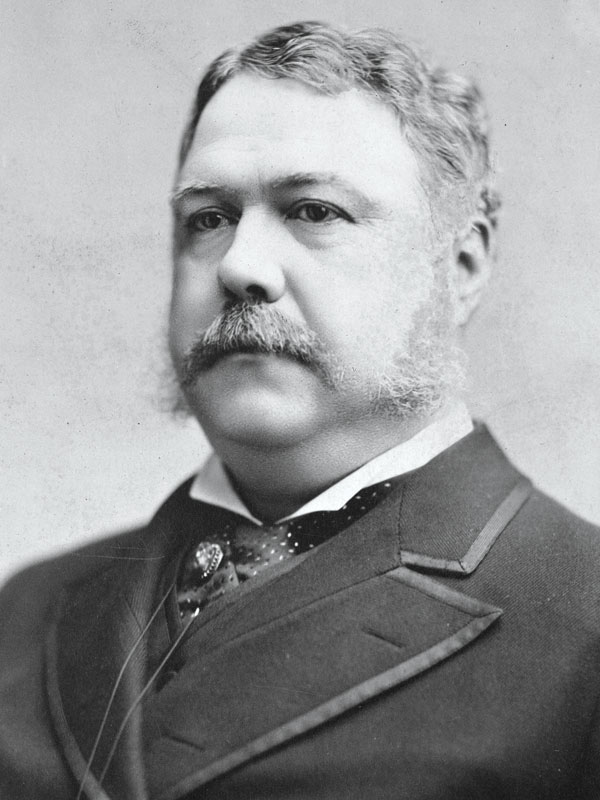
Chester Arthur
(1881-1885)
Utopian religious nut Charles J. Guiteau shot President James Garfield on July 2, 1881, and announced “Arthur is president now!” He was wrong. It took Garfield until September 19 to die.
Arthur came to the vice presidency in a cloud of controversy. He’d been removed from his post as collector of the port of New York 10 years earlier amid charges of corruption. But once in the White House, Arthur is credited by most historians as a reformer. None other than Mark Twain praised his presidency. But the high-living, overweight gourmand would not serve a second term. After learning he was dying of kidney disease, Arthur made only a half-hearted attempt to secure his party’s nomination, and he left office in 1885.
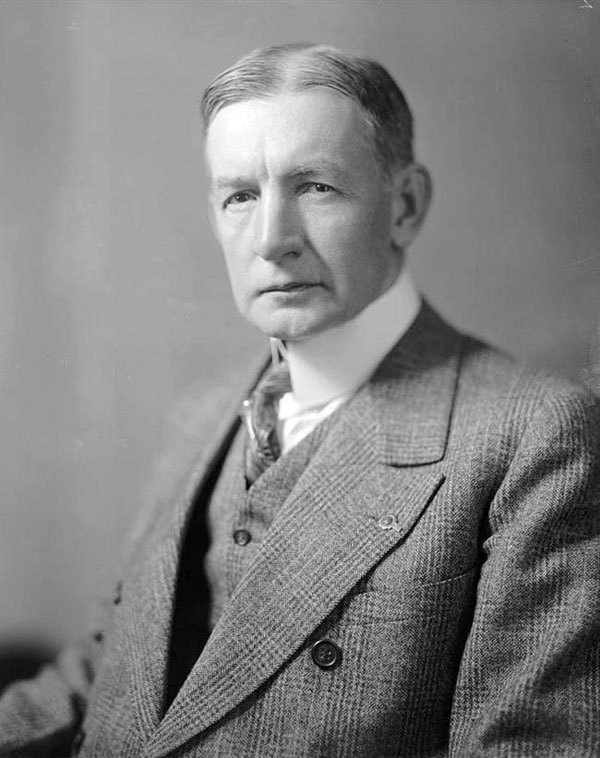
Charles G. Dawes
(1925-1929)
Dawes could not get along with his boss Calvin Coolidge and refused even to attend cabinet meetings. The first time he addressed the Senate, he made a speech denouncing the way it conducted business. Later, he napped through a decisive vote, which resulted in a Coolidge appointee losing his job. Dawes is one of two V.P.s to receive the Nobel Peace Prize. (The other was Teddy Roosevelt.) Dawes received his accolade in 1925 for the Dawes Plan, aimed at restoring German economic equilibrium after World War I. It ultimately did not work, but he got to keep the prize.
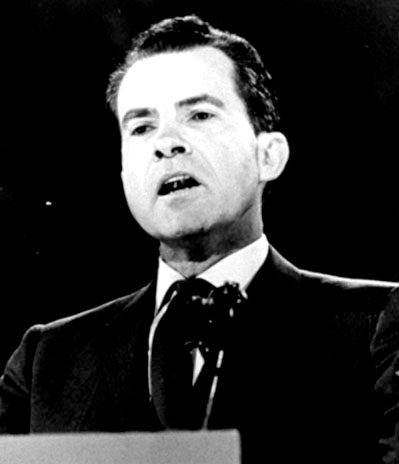
Richard Nixon
(1953-1961)
Richard Nixon, elected with Dwight Eisenhower in 1952, gave generously to the dusty storehouse of vice presidential trivia. Asked what Nixon’s principal contribution to foreign affairs was, Eisenhower replied, “If you give me a week, I might think of one.”
To be fair, some historians would counter that Nixon did a good job presiding over Eisenhower’s cabinet for six weeks while the president recovered from a heart attack. (See “Richard Nixon—A Great President!” The Contrarian View, Nov/Dec 2012.) Nixon was the only vice president to be elected president after leaving office and suffering through two opposition presidents: Kennedy and Johnson.
When Vice President Spiro Agnew resigned following a bribery scandal in 1973, Nixon appointed Gerald Ford of Michigan to the post. Then, when Nixon himself resigned in the wake of the Watergate scandals, Ford became president and appointed Nelson Rockefeller vice president.
The presidential nomination of a vice president—who went missing for whatever reason—was not possible until 1967 when the 25th Amendment to the Constitution was ratified.

Spiro Agnew
(1969-1973)
Spiro Agnew oozed onto the political scene with Nixon in 1968. A former governor of Maryland, Agnew was the first vice president to serve his master as an attack dog, and relished uttering such phrases as “nattering nabobs of negativism” to define the Washington press corps. As we have seen, the press had the last laugh.
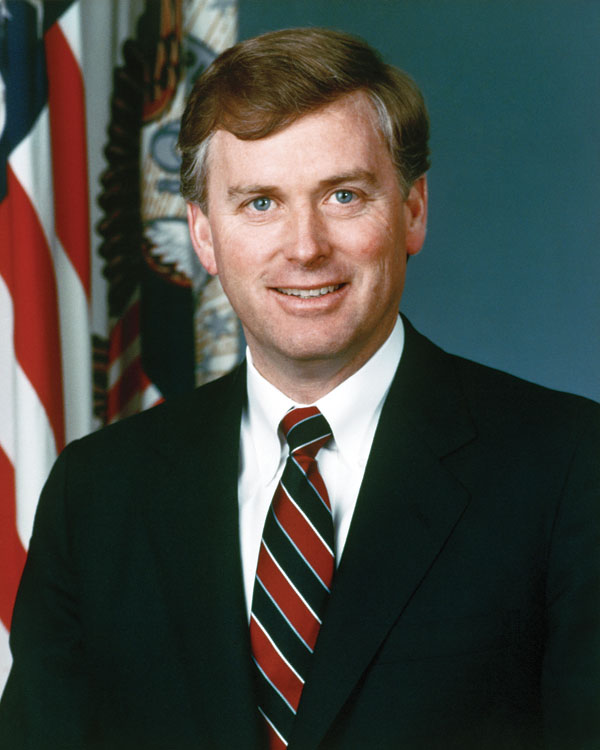
Dan Quayle
(1989-1993)
Dan Quayle, the fifth vice president elected from Indiana, first got himself roasted in the 1988 vice presidential debate by Democrat Lloyd Bentsen: “You’re no Jack Kennedy.” He then went on to publicly misspell “potato” as “potatoe.” Investigation later revealed that he’d been given a flash card containing the errant spelling, but the damage was done.
Quayle, a sitting U.S. Senator, took office with George H.W. Bush and was somehow invited to run for a second term. In Quayle’s hometown of Huntington, Indiana, stands the Quayle Vice Presidential Learning Center. According to Roadside America, visitors can view such exhibits as Dan Quayle’s grammar-school report cards (Bs and As, thank you very much) and one of Millard Fillmore’s hats.
Were there any good vice presidents? Beginning with Theodore Roosevelt in 1901, there were a few. And remember that, under the original electoral system, Thomas Jefferson and John Adams were vice presidents.
Teddy Roosevelt won both the Republican nomination for president in 1904 and the subsequent election. In 1912, he ran unsuccessfully for president with his ill-starred Bull Moose Party (see “100 Years Ago—A Chaotic Presidential Election”). By then, however, he had won the Nobel Peace Prize, served as New York City’s police commissioner, Governor of New York, Assistant Secretary of the Navy, and established himself as a dedicated conservationist and successful reformer.
John Nance “Cactus Jack” Garner from Uvalde, Texas, served as vice president for two terms under Franklin Roosevelt. He is most famous for his definitions of the office he occupied, but he was also a former Speaker of the House and a power in Democratic politics. He might well have become president had FDR not run for an unprecedented third term.
Harry Truman, elected vice president for FDR’s even more unprecedented fourth term, assumed the presidency on April 12, 1945, when FDR died less than three months after the inauguration. Truman was nominated for president in 1948 and elected, but his contribution to the vice presidency went far deeper than personal success.
Truman took office with a minimum of preparation—FDR had essentially ignored him—and found his plate filled with such items as World War II, the atomic bomb, peace in Europe, and Soviet expansionism. He vowed that no vice president should ever again be so blindsided, and he put his own vice president, Kentucky’s popular Alben Barkley, on the National Security Council and otherwise involved him in government.
From Truman forward, some but not all vice presidents ran as men (and one woman, Geraldine Ferraro) considered capable of occupying the presidency. Is it our bad luck or our good fortune that only one vice president, George H.W. Bush (whose linguistic contribution was “Voodoo Economics”), has made it to the presidency in the last 44 years?
1963: Beatles Invasion!
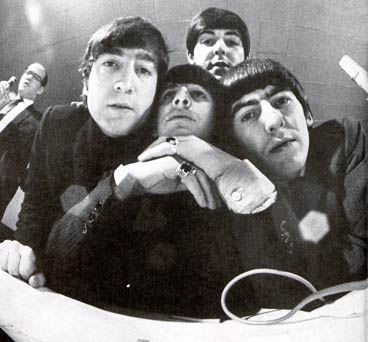
It was 50 years ago that the Beatles entered Abbey Road Studios in London to begin a marathon recording session. Out of the 10 songs they recorded, they immediately released “Please Please Me.” Sales in the U.S. were so poor, the song didn’t even appear on the music charts. Yet one year after the recording session, the Beatles arrived at New York’s Kennedy International Airport to be greeted by 3,000 screaming fans.
Even now, it’s hard to understand how the Beatles managed to rise to such stardom in so short a time. For three years, they had been playing dockyard bars in Liverpool, England, and Hamburg, Germany. Then, in the space of few months, they started appealing to the American imagination and built an army of screaming, adoring fans.
This sudden fame surprised the world. It also surprised the Beatles. (Asked what he thought about their sudden popularity, John Lennon replied, “I think everyone has gone daft.”) But it didn’t surprise America’s pundits and commentators, most of who were ready with a quick explanation; the Beatles were just a passing fad, another teenage craze like the one inspired by Elvis. The only thing that distinguished this group was their haircuts, which seemed to elicit endless criticism from adults.
Among the critics was Vance Packard, who wrote “Building the Beatle Image” for a March 21, 1964, issue of The Saturday Evening Post. Packard was an investigative journalist who had written best-sellers about status, conformity, and advertising in America. Like many critics, he attributed the popularity of the Beatles’ music to its ability to set parents’ teeth on edge. But Packard saw something other commentators missed: the Beatles had an “exciting sense of freshness. … Surliness is out, exuberance is in. … Pomposity is out, humor is in.”
The humor came through repeatedly in the Beatles press conferences, where John, Paul, George, and Ringo turned the question-and-answer sessions into spontaneous comedy routines.
Q: How did you ever decide on a name like The Beatles for the group?
John: Well, I had a vision when I was 12, and I saw a man on a flaming pie, and he said, ‘You are Beatles with an A.’ And we are.Q: What’s the rudest question you’ve been asked?
Ringo: The rudest was, someone said to me, ‘How are you doing, John?’
John: That’s not rude.
Ringo: (jokingly) Well, it was an insult.Q: The airport police were quite concerned about some oversized roughnecks who tried to infiltrate the crowd.
Paul: That was us!Q: A psychiatrist at one of your concerts in Seattle said the effect on the children—14,000 kids in there—he called it unhealthy, and he said you had a neurotic effect. How do you feel about this?
John: It was probably him that was unhealthy, watching it.Q: John, how would you describe yourself in one word?
John: I don’t know.
Paul: ’John.’
John: ’John,’ yeah. Thank you.Q: What do you think about the criticism that you are a bad influence?
Paul: I dunno, you know. I don’t feel like a bad influence. (to John) Do you?
John: Nah, I think you’re a good influence, Paul.
Paul: Thank you, John.Q: As you’re confined to your room all day, what do you do?
George: Oh! Tennis and water polo.Q: Have you been heckled at all? Have you ever had …
Paul: Oh, yeah! We used to have it in—especially in the early days! But John—John had a perfect answer! What was it …? ‘Shut up!’Q: I must tell you, by the way, that Detroit University have got a ‘Stamp Out The Beatles’ movement.
George: I know, yeah.
John: Yeah, we heard something about that.
Paul: We’ve got a ‘Stamp Out Detroit!’
Q: They think your haircuts are un-American.
John: Well, it was very observant of them because we aren’t American, actually.
Paul: (laughs) True, that.Q: How long do you think Beatlemania will last?
John: As long as you all keep comin’.
While the Beatles could charm reporters, their comic improvisations wouldn’t have made them so popular. It was their music—a bright sound with fresh melody lines, interesting harmonies, and a strong beat (so strong, Packard noted, that you could still follow it amid the screams of their fans.)
They also had a healthy borrowing of several American musicians. Years later, John recalled that he wrote “Please Please Me” after hearing Roy Orbison singing “Only The Lonely.” He was suddenly motivated to write an “Orbison song.” For lyrics, he recalled an old Bing Crosby song he’d heard as a child, “Please, lend your little ear to my pleas.”
When he performed it the recording studio, he sang the descending melody line—“Last night I said these words to my girl”—while Paul sang a high note in harmony. It was an effect he freely admitted he’d borrowed from the Everly Brothers.
Before flying to America where the Beatles were so noisily received, Paul McCartney worried that the group had nothing to offer. Americans already had their own groups. “What are we going to give them that they don’t already have?” The answer was talent, hard work, imagination, and the intelligence to musically borrow from the best.
Classic Art: George Washington
George Washington was a favorite subject of artists like J.C Leyendecker, N.C. Wyeth, and Stevan Dohanos. In all, the first president of the United States has appeared on the cover of The Saturday Evening Post 10 times.
Washington Crossing the Delaware
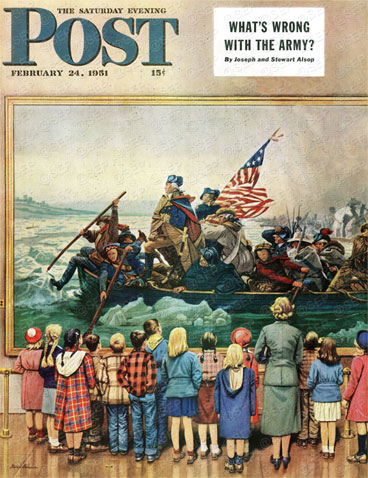
Washington Crossing the Delaware
Stevan Dohanos
February 24, 1951
It is daunting to consider the work realist painter Stevan Dohanos put into this painting. Reproducing images of over a dozen students (and their teacher) with meticulous detail should have been artistic challenge enough, but duplicating Emanuel Leutze’s famous 1850 painting is mind-boggling.
Much has been criticized about Leutze’s Washington Crossing the Delaware: “The crossing was at night (not daytime)”; “That particular version of the flag came later”; and “Washington was only in his 40s and not the elderly man we see here”; to name a few. While the historical inconsistencies are worth noting, the huge 21-by-12-foot painting of that 1776 Christmas night is still a magnificent accomplishment and a tribute to a critical turning point in American history. The painting today is part of the collection of the Metropolitan Museum of Art in New York City.
From 1942 to 1958 Dohanos painted 123 Post covers, which can be viewed in our online gallery or at art.com.
First Farmer of the Land
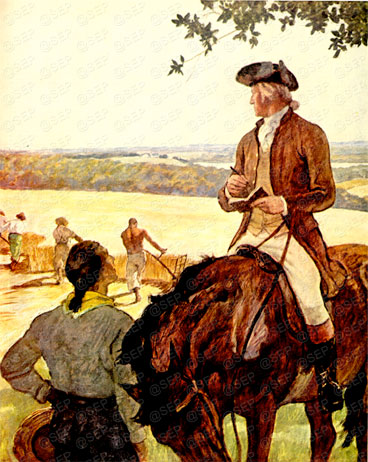
First Farmer of the Land
N.C. Wyeth
Country Gentleman
February 1946
N.C. Wyeth was described in a 2011 Post article by Edgar Allen Beem as “a larger-than-life figure, a swashbuckler of a man whose dramatic illustrations fired the imaginations of generations of readers.” This portrait of Washington was Wyeth’s last work. Country Gentleman editors noted in 1946, “He was working on it at the time of his tragic death at a grade [train] crossing last fall. It is, therefore, an unfinished work. We preferred to have you see it this way than let some lesser artist finish it.”
Wyeth, who had used George Washington as a subject several times, was a natural choice to illustrate the article about the farming habits of the former president. “Mr. Wyeth did exhaustive research on Washington’s farming operations so that this picture might be accurate in every detail,” editors noted. Those details clearly include the depiction of slave labor, a factor not addressed in the article, which concentrates on the minutiae of crops and agriculture. According to the article, Washington was so thorough in his farming procedures that he was determined to find out how many seeds of various cereals were in a pound in order to calculate how many pounds to sew per acre. He carefully counted 8,925 barley seeds per pound; 71,000 seeds of red clover; and 298,000 of timothy (this was before the days of grain estimates.)
George Washington and W.W.I Soldiers
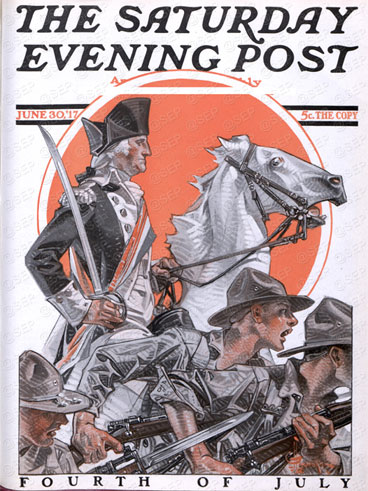
George Washington and W.W.I Soldiers
J.C. Leyendecker
June 30,1917
Five of J.C. Leyendecker’s 322 Post covers were portraits of George Washington. His July 1927 cover (George Washington on Horseback) shows a magnificent Washington on horseback in full command of the Revolutionary forces.
This 1917 cover shows the general astride his horse for a latter-day conflict. The United States was involved in World War I and for the Fourth of July holiday, Leyendecker evoked the spirit of the Revolutionary War hero to guide modern-day soldiers through the latest conflict. It was a stirring patriotic scene at yet another critical time in U.S. history.
Chocolate-Dipped Anything
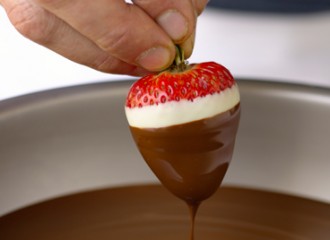
We can all agree that there are not many limits on what you might consider suitable to dip in chocolate. This Valentine’s Day, create your own fun and romantic dessert of sinful indulgence. Strawberries, dried fruit, and pretzels are traditionally dipped in chocolate, but tradition is made to be broken. Put together your own vision of luscious, chocolate-dipped bits and pieces. Pears are superb dipped in dark or milk chocolate, and pineapple mixes well with milk chocolate. With one taste of the decadent morsels you prepare, your sweetheart is guaranteed to melt.
“Tempered chocolate is the preferred ingredient for dipping,” says The Culinary Institute of America Chef Peter Greweling. “Many home candy makers are intimidated by the thought of tempering chocolate. In truth, the process is much simpler than getting behind the wheel to drive. With just a little practice and patience, you can use the seeding method below to properly temper chocolate every time.”
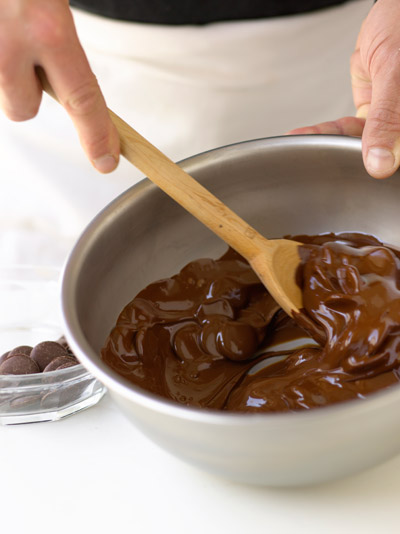
Tempering Chocolate
- Weigh or measure chocolate you will be tempering. As always, weight is the preferred method for measuring any ingredients; otherwise, use the following chocolate conversion table:
- 6 ounces = 1 cup pistoles* or chopped chocolate, ½-inch pieces
- 8 ounces = 1 ⅓ cups pistoles or chopped chocolate, ½-inch pieces
- 10 ounces = 1 cup melted chocolate
- 8 ounces = ¾ cup melted chocolate
- Weigh or measure second amount of chocolate equal to 25 percent of original amount.
- Fully melt larger amount of chocolate using microwave or water bath. Remove bowl of melted chocolate from heat. Chocolate should be 120°F for dark chocolate or 110°F for milk or white chocolate.
- Add smaller amount of unmelted chocolate to melted chocolate. This is called the seed; it will cool the melted chocolate and cause it to set the way you want. You can use either pistoles or a single block as the seed; a single block has the advantage of easy removal once the chocolate is tempered.
- Stir melted chocolate gently and constantly until temperature falls to 85°F for dark chocolate or 83°F for milk or white chocolate. This will take 15 to 20 minutes, and most or all of the seed should have melted by the end of this time.
- Testing chocolate for temper is the only way to know for sure that chocolate is actually tempered. The following temperatures give good guidelines, but even with strict adherence to technique, no one can tell for sure whether chocolate is tempered without performing a test to see how it sets.
- Make sure chocolate is below 90°F for dark or 87°F for milk or white chocolate.
- Dip spoon in chocolate, place spoon on work surface, and leave it undisturbed for 7 to 8 minutes at working room temperature, 68°F. Do not yield to the temptation to refrigerate the spoon! This will only give inaccurate results.
- After 8 minutes have passed, look closely at the chocolate on the spoon. If chocolate has set so that it no longer looks wet, and surface is uniform and without streaks, chocolate is tempered.
- If chocolate has not set or has set with a streaky appearance, chocolate requires further seeding (see step 8).
- If chocolate sets properly, gently warm it over water bath not exceeding 89°F for dark chocolate or 86°F for milk or white chocolate.
- If seed has melted but chocolate is not setting quickly without streaks or spots, it must be seeded more. Add a few more pistoles or another small block to bowl, and stir for another 3 to 4 minutes. After this time, test again (step 6), and proceed from there.
- Remove any unmelted seeds from melted chocolate.
- Use chocolate as desired while maintaining the proper working temperature.
How To Dip
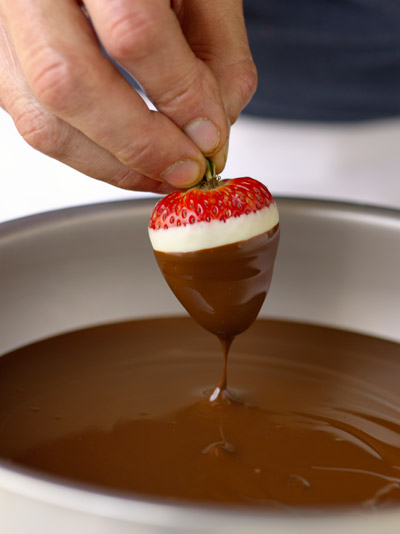
- Prepare the centers. The centers to be dipped should be dry and at a cool room temperature. When dipping fruit in chocolate, allow it to warm to room temperature rather than dipping it while it is ice-cold from the refrigerator. If cutting fruit for dipping, dry the cut pieces with a paper towel to remove excess moisture from the surface of the fruit.
- Temper the chocolate or melt the coating. Dipping centers in untempered chocolate will result in bloom and chocolate that is not sufficiently crisp. If using a compound coating, follow the manufacturer’s guidelines for temperature.
- Dip the centers. The centers may be entirely enrobed in the chocolate by dipping with a fork, or partially coated by holding one end of the center and dipping up to the desired level in the chocolate.
- Allow the chocolate to set. Placing the dipped centers on parchment paper to set keeps them clean and ensures that they will not stick to the surface. This step should always be performed at room temperature to obtain the best shine and snap from the chocolate.
*Pistoles
Discs of couverture, which is chocolate made from cacao beans that have been fermented and dried properly then roasted, refined, and conched to improve flavor and texture.
Recipe, photos, and video courtesy The Culinary Institute of America. All rights reserved. You can find this recipe and more in The Culinary Institute of America’s Chocolates and Confections at Home (2010, John Wiley & Sons Inc.).
Limerick Laughs Contest Winners
We are pleased to present our Limerick Laughs contest winners and runners-up!
Click the images or text below to read our favorite limericks from the most recent issues of The Saturday Evening Post.
Submit your limerick to the Limerick Laughs Contest for our current issue via the online entry form.
 January/February 2026 Limerick Laughs
Congratulations to Gwen Lenker of Santa Rosa, California! Gwen wins $25 for a limerick describing John Falter’s Ice Skating on Pond from the January 26, 1952, issue of the Post.
 November/December 2025 Limerick Laughs
Congratulations to Lauretta Ehling of Port Angeles, Washington! Lauretta wins $25 for a limerick describing Norman Rockwell’s Santa with Elves from the December 2, 1922, issue of the Post.
 September/October 2025 Limerick Laughs
Congratulations to Ryan Tilley of Longwood, Florida! Ryan wins $25 for a limerick describing Frederic Stanley’s Halloween Scare from the November 2, 1935, issue of the Post.
 July/August 2025 Limerick Laughs
Congratulations to Karen Dlugos of Latrobe, Pennsylvania! Karen wins $25 for a limerick describing Jack Welch’s Sunday Funnies from the December 20, 1947, issue of the Post.
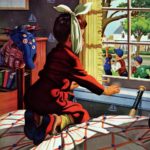 May/June 2025 Limerick Laughs
Congratulations to Barbara Hosbach of Pennington, New Jersey! Barbara wins $25 for a limerick describing Stan Ekman’s Mumps from the May 20, 1944, issue of the Post.
 March/April 2025 Limerick Laughs
Congratulations to Bob Turvey of Stoke Bishop, Bristol, England! Bob wins $25 for a limerick describing Norman Rockwell’s Springtime, 1936 from the April 25 issue of the Post in that year.
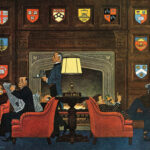 January/February 2025 Limerick Laughs
Congratulations to Jeff Foster of San Francisco, California! Jeff wins $25 for a limerick describing James Williamson’s Transistor Radio in the University Club from the September 29, 1962, issue of the Post.
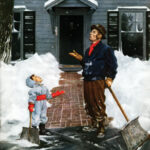 November/December 2024 Limerick Laughs
Congratulations to Neal Krawetz of Fort Collins, Colorado! Neal wins $25 for a limerick describing George Hughes’s More Snow? from the December 29, 1951, issue of the Post.
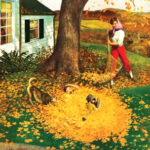 September/October 2024 Limerick Laughs
Congratulations to Domenic Sette of Missoula, Montana! Domenic wins $25 for a limerick describing John Clymer’s Leaf Pile from the October 16, 1954, issue of the Post.
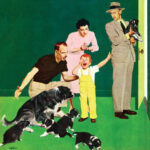 July/August 2024 Limerick Laughs
Congratulations to Justin O’Connor of Leeds, Massachusetts! Justin wins $25 for his limerick describing George Hughes’s Puppy Sale from the October 6, 1951, issue of the Post.
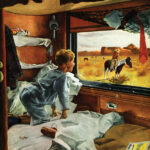 May/June 2024 Limerick Laughs
Congratulations to Bob Turvey of Bristol, England! Bob wins $25 for his limerick describing George Hughes’s Train Window on the West from the July 24, 1954, issue of the Post.
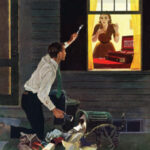 March/April 2024 Limerick Laughs
Congratulations to Laurie O’Connor Stephans of Plano, Illinois! Laurie wins $25 for her limerick describing George Hughes’s Finding the Fork from the October 3, 1959, issue of the Post.
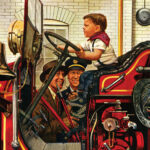 January/February 2024 Limerick Laughs
Congratulations to Daniel Galef of Cincinnati, Ohio! Daniel wins $25 for his limerick describing Stevan Dohanos’s Boy on Fire Truck from the November 14, 1953, issue of the Post.
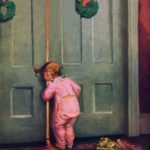 November/December 2023 Limerick Laughs
Congratulations to Paul Buchheit of Chicago, Illinois! Paul wins $25 for his limerick describing Mary Ellen Sigsbee’s Christmas Peek from the December 22, 1934, issue of the Post.
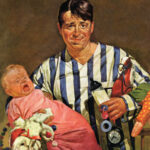 September/October 2023 Limerick Laughs
Congratulations to Helen Ksypka of Eliot, Maine! Helen wins $25 for her limerick describing Howard Scott’s Early Morning Feeding from the January 27, 1945, issue of the Post.
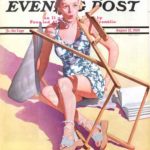 July/August 2023 Limerick Laughs
Congratulations to Barbara Hosbach of Pennington, New Jersey! Barbara wins $25 for her limerick describing John Hyde Phillips’s Broken Beach Chair from the August 12, 1939, issue of the Post.
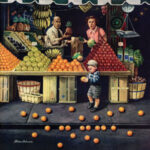 May/June 2023 Limerick Laughs
Congratulations to Angie Gyetvai of Oldcastle, Ontario! Angie wins $25 for a limerick describing Stevan Dohanos’s Toddler and Oranges from the September 19, 1953, issue of the Post.
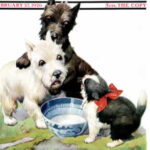 March/April 2023 Limerick Laughs
Congratulations to Paxton Grant of Hightown, Virginia! Paxton wins $25 for a limerick describing Robert L. Dickey’s Cat Guards Bowl of Milk from the February 27, 1926, issue of the Post.
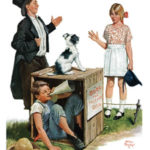 January/February 2023 Limerick Laughs
Congratulations to Jeanne Kaufman of Boulder, Colorado! Jeanne wins $25 for her limerick describing Alan Foster’s Bozo the Talking Dog from the September 1, 1928, issue of the Post.
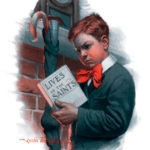 November/December 2022 Limerick Laughs
Congratulations to Gennadiy Gurariy of Milwaukee, Wisconsin! Gennadiy wins $25 for a limerick describing Leslie Thrasher’s Lives of the Saints from the December 26, 1949, issue of the Post.
September/October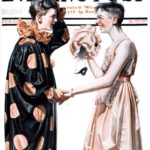 2022 Limerick Laughs
Congratulations to Jim Johnston of Poland, Ohio! Jim wins $25 for a limerick describing Frederic Stanley’s Costume Surprise from the February 12, 1921, issue of the Post.
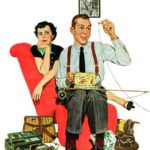 July/August 2022 Limerick Laughs
Congratulations to Gennadiy Gurariy of Milwaukee, Wisconsin! Gennadiy wins $25 for a limerick describing Coby Whitmore’s Fishing Season from the June 3, 1950, issue of the Post.
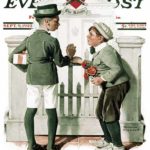 May/June 2022 Limerick Laughs
Congratulations to Ross Manes of Junction City, Kansas! Ross wins $25 for his limerick describing Norman Rockwell’s Rivals from the September 9, 1922, issue of the Post.
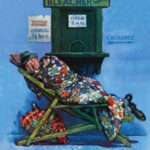 March/April 2022 Limerick Laughs
Congratulations to Ken Morgan of Chapel Hill, North Carolina! Ken wins $25 for his limerick describing this Monte Crews cover from the September 30, 1939, issue of the Post.
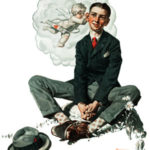 January/February 2022 Limerick Laughs
Congratulations to Jeff Foster of San Francisco, California! Jeff wins $25 for his limerick describing this Norman Rockwell cover from the April 5, 1924, issue of the Post.
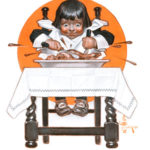 November/December 2021 Limerick Laughs
Congratulations to Daniel Galef of Tallahassee, Florida! Daniel wins $25 for his limerick describing this J.C. Leyendecker cover from the November 11, 1914, issue of the Post.
September/October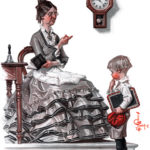 2021 Limerick Laughs
Congratulations to Jim Johnston of Poland, Ohio! Jim wins $25 for his limerick describing this J.C. Leyendecker cover from the September 19, 1914, issue of the Post.
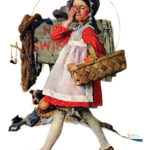 July/August 2021 Limerick Laughs
Congratulations to Maxine Babalis of Salt Lake City, Utah! Maxine wins $25 for her limerick describing this Norman Rockwell cover from the June 15, 1929, issue of the Post.
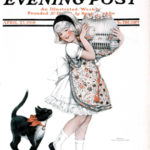 May/June 2021 Limerick Laughs
Congratulations to Dan Curley of Porter Corners, New York! Dan wins $25 for a limerick describing this Sarah Stilwell-Weber cover from the April 27, 1918, issue of the Post.
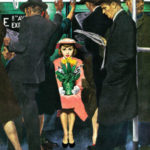 March/April 2021 Limerick Laughs
Congratulations to Ronald Levinsky of South Salem, New York! Michael wins $25 for a limerick describing this colorful George Hughes cover from the March 28, 1953, issue of the Post.
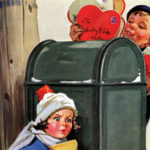 January/February 2021 Limerick Laughs
Congratulations to Michael Chanatry of Centerville, Ohio! Michael wins $25 for a fun limerick describing this Henry Hintermeister cover from the February 1938 issue of Country Gentleman.
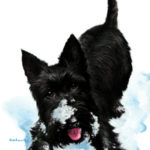 November/December 2020 Limerick Laughs
Congratulations to Ken Morgan of Chapel Hill, North Carolina! Ken wins $25 for a playful limerick describing this W.W. Calvert cover from the January 30, 1943, issue of The Saturday Evening Post.
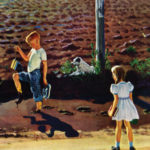 September/October 2020 Limerick Laughs
Congratulations to Cheryl Ireland of Lapeer, Michigan! Cheryl wins $25 for a laughable limerick describing this detail from a John Falter cover from the May 13, 1950, issue of The Saturday Evening Post.
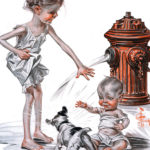 July/August 2020 Limerick Laughs
Congratulations to Julie Barsel Bergman of Newington, Connecticut! Julie wins $25 for a laughable limerick describing this J.C. Leyendecker cover from the July 24, 1915, issue of The Saturday Evening Post.
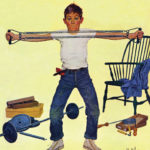 May/June 2020 Limerick Laughs
Congratulations to Ken Morgan of Chapel Hill, North Carolina! Ken wins $25 for a laughable limerick describing this Kurt Ard cover from the March 14, 1959, issue of The Saturday Evening Post.
 March/April 2020 Limerick Laughs
Congratulations to Richard Howard of Gainesville, Florida! Richard wins $25 for a witty limerick describing this W.D. Stevens cover from the May 1, 1937, issue of The Saturday Evening Post.
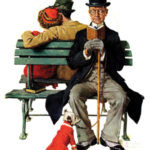 January/February 2020 Limerick Laughs
Congratulations to Mike Arndt of Clements, Maryland! For a great limerick describing this Norman Rockwell cover from the November 21, 1936, issue of The Saturday Evening Post, Mike wins $25 and our gratitude.
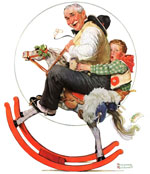 November/December 2019 Limerick Laughs
Congratulations to Jan Sasek of Antelope, California! For a great limerick describing the scene in this Norman Rockwell cover from the December 16, 1933, issue of The Saturday Evening Post, Jan wins $25 and our gratitude.
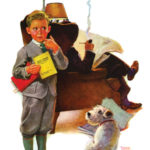 September/October 2019 Limerick Laughs
Congratulations to M. Leach of Groton, Massachusetts! For a great limerick describing the scene in this Frances Tipton Hunter cover illustration from the March 25, 1939, issue of The Saturday Evening Post, M. Leach wins $25 and our gratitude.
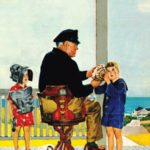 July/August 2019 Limerick Laughs
Congratulations to Jan Sasek of Antelope, California! For a fun limerick describing this John Falter cover illustration from the July 21, 1956, issue of The Saturday Evening Post, Jan wins $25 and our gratitude.
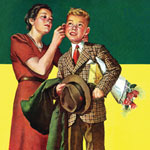 May/June 2019 Limerick Laughs
Congratulations to Lorraine Ray of Aiken, South Carolina! Lorraine wins $25 and our gratitude for her fun limerick describing this Frances Tipton Hunter cover from the February 15, 1941, issue of The Saturday Evening Post.
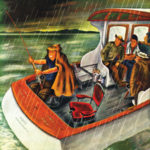 March/April 2019 Limerick Laughs
Congratulations to Joyce Petricheck of Finleyville, Pennsylvania! Joyce wins $25 and our gratitude for her fish-wish limerick describing Constantin Alajálov’s Deep Sea Fishing in Rain from the August 31, 1946, issue of The Saturday Evening Post.
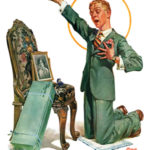 January/February 2019 Limerick Laughs
Congratulations to Brian Federico of Clyde, New York! Brian wins $25 and our gratitude for his funny and witty limerick describing Frederic Stanley’s Practice Propsal, from April 30, 1927, issue of The Saturday Evening Post.
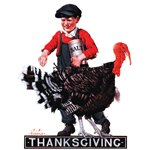 November/December 2018 Limerick Laughs
Congratulations to Jennifer Glancy of Alexandria, Virginia! Lisa wins $25 and our gratitude for her funny and witty limerick describing J.F. Kernan’s Thanksgiving, from November 24, 1923, issue of Country Gentleman.
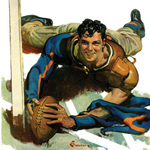 September/October 2018 Limerick Laughs
Congratulations to Lisa Timpf of Simcoe, Ontario, Canada! Lisa wins $25 and our gratitude for her funny and witty limerick describing E.M. Jackson’s Touchdown, from November 1931.
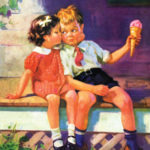 July/August 2018 Limerick Laughs
Congratulations to Linda Fein of Philadelphia, Pennsylvania! Linda wins $25 and our gratitude for her funny and witty limerick describing Henry Hintermeister’s A Kiss for Ice Cream, from June 1936.
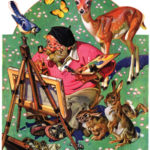
May/June 2018 Limerick Laughs
Congratulations to Michelle Gordon-Weedon of Airway Heights, Washington! Michelle wins $25 and our gratitude for her funny and witty limerick describing J.C. Leyendecker’s cover from May 26, 1934.
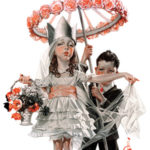 March/April 2018 Limerick Laughs
Congratulations to Elaine Person of Orlando, Florida! Elaine wins $25 and our gratitude for her funny and witty limerick describing J.C. Leyendecker’s cover from June 11, 1921.
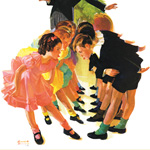 January/February 2018 Limerick Laughs
Congratulations to Linda Neukrug of Walnut Creek, California! Linda wins $25 and our gratitude for her funny and witty limerick describing Cotillion, Albert W. Hampson’s cover from May 23, 1936.
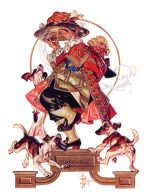 November/December 2017 Limerick Laughs
Congratulations to Neal Levin of Bloomfield Hills, Michigan! Neal wins $25 and our gratitude for his funny and witty limerick describing Begging for Turkey, J.C. Leyendecker’s cover from December 2, 1933.
 September/October 2017 Limerick Laughs
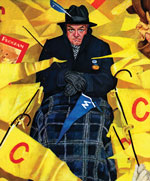
Congratulations to Jeff Foster of San Francisco! Jeff wins $25 and our gratitude for his funny and witty limerick describing Sitting on the Wrong Side, Gene Pelham’s cover from November 15, 1941.
July/August 2017 Limerick Laughs
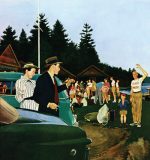
Congratulations to Jennifer Klein of Tel Aviv, Israel! For her limerick, Jennifer wins $25 and our gratitude for her witty and entertaining poem describing First Day at Camp, George Hughes’ cover from July 3, 1954.
May/June 2017 Limerick Laughs
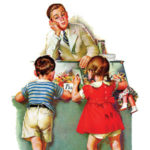
Congratulations to Cheryl Ireland of Chesterfield, Michigan! Cheryl wins $25 and our gratitude for her sweet and endearing poem describing Frances Tipton Hunter’s August 19, 1939, cover Penny Candy.
 March/April 2017 Limerick Laughs
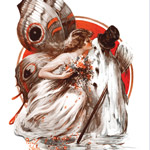
Congratulations to Karen Eastlund of Raritan, New Jersey! Karen wins $25 and our gratitude for her sweet and endearing poem describing Paul Stahr’s March 7, 1925, cover Kissing Winter Goodybe.
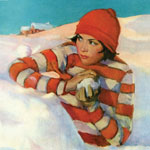
January/February 2017 Limerick Laughs
Congratulations to Jeff Foster of San Francisco, California! For his winning limerick, Jeff wins $25 and our gratitude for his witty and entertaining poem describing Penrhyn Stanlaws’ 1928 cover Snowball Fight.
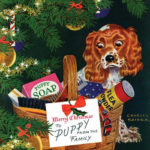
November/December 2016 Limerick Laughs
Congratulations to Jeff Foster of San Francisco, California! For his winning limerick, Jeff wins $25 and our gratitude for his witty and entertaining poem describing Charles Kaiser’s 1942 Christmas cover Dog Basket
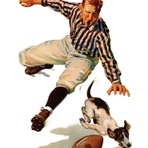
September/October 2016 Limerick Laughs
Congratulations to Karen Meissner of Bothell, Washington, for her winning limerick describing the Lonie Bee’s Dog on the Field.
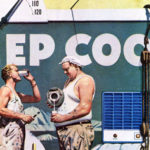
July/August 2016 Limerick Laughs
Congratulations to Guy Pietrobono of Washingtonville, New York, for his winning limerick describing the Stevan Dohanos’ Billboard Painters.
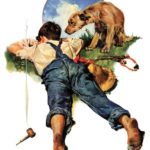
May/June 2016 Limerick Laughs
Congratulations to Rebekah Hoeft of Redford, Michigan, for her winning limerick describing the Harold Anderson’s Sick of Smoking.
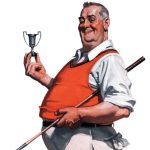 March/April 2016 Limerick Laughs
Congratulations to Alfred Cross of Sacramento, California, for his winning limerick describing the George Brehm’s illustration Golf Trophy.
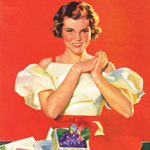 Jan/Feb 2016 Limerick Laughs
Congratulations to Deborah Dickinson-Deacon of Amherst, New York, for her winning limerick describing the F. Sands Bruner illustration Valentine’s Gifts.
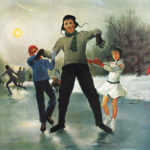
Nov/Dec 2015 Limerick Laughs
Congratulations to Adele Suga for her winning limerick describing the George Hughes illustration Ice-skating Class for Dad.
Sept/Oct 2015 Limerick Laughs
Congratulations to Rose Hester of Brooklyn, New York, our September/October 2015 contest winner!

July/August 2015 Limerick Laughs
Congratulations to Jeff Foster of San Francisco, California, our July/August 2015 contest winner!
May/June 2015 Limerick Laughs
Congratulations to Paul Madsen of Columbia Heights, Minnesota, our May/June 2015 contest winner!
March/April 2015 Limerick Laughs
Congratulations to Lisa Radtke of Sussex, Wisconsin, our March/April 2015 contest winner!
Jan/Feb 2015 Limerick Laughs
Congratulations to Phillip Belfiori of Bel Air, Maryland, our January/February 2015 contest winner!
Nov/Dec 2014 Limerick Laughs
Congratulations to Keith Channing of Saint-Maigner, France, our November/December 2014 contest winner!
Sept/Oct 2014 Limerick Laughs
Congratulations to Terry Free of Andover, Minnesota, our September/October 2014 contest winner!
July/August 2014 Limerick Laughs
Congratulations to Katharine Wallace of Florence, Alabama, our July/August 2014 contest winner!
May/June 2014 Limerick Laughs
Congratulations to Jeanne Kaufman of Boulder, Colorado, our May/June 2014 contest winner!
March/April 2014 Limerick Laughs
Congratulations to Jane Yunker of St. Croix Falls, Wisconsin, our March/April 2014 contest winner!
Jan/Feb 2014 Limerick Laughs
Congratulations to John Eggerton of Springfield, Virginia, our January/February 2014 contest winner!
Nov/Dec 2013 Limerick Laughs
Congratulations to Curt Bench of Salt Lake City, Utah, our November/December 2013 contest winner!
Sept/Oct 2013 Limerick Laughs
Congratulations to Doreen Graham of Calgary, Alberta, Canada, our September/October 2013 contest winner!
July/Aug 2013 Limerick Laughs
Congratulations to Joan Kelley of Tucson, Arizona, our July/August 2013 contest winner!
May/June 2013 Limerick Laughs
Congratulations to Neal Levin of Bloomfield Hills, Michigan, our May/June 2013 contest winner!
March/April 2013 Limerick Laughs
Congratulations to Philip Lindal of Yale, Michigan, our March/April 2013 contest winner!
Jan/Feb 2013 Limerick Laughs
Congratulations to Patrick Murtha of Greencastle, Indiana, our January/February 2013 contest winner!
Nov/Dec 2012 Limerick Laughs
Congratulations to Bette Killion of Greencastle, Indiana, our November/December 2012 contest winner!
Sept/Oct 2012 Limerick Laughs
Congratulations to James Carpenter of Miami, Florida, our September/October 2012 contest winner!
July/Aug 2012 Limerick Laughs
Congratulations to Timothy Cannon of Osceola, Iowa, our July/August 2012 contest winner!
May/June 2012 Limerick Laughs
Congratulations to Julie Polak of Bucyrus, Ohio, our May/June 2012 contest winner!
March/April 2012 Limerick Laughs
Congratulations to Neal Levin of Bloomfield Hills, Michigan, our March/April 2012 contest winner!
Jan/Feb 2012 Limerick Laughs
Congratulations to Rita Schilling of Fort Worth, Texas, our January/February 2012 contest winner!
Nov/Dec 2011 Limerick Laughs
Congratulations to Gayla Baggett of Hendersonville, Tennessee, our November/December 2011 contest winner!
Sept/Oct 2011 Limerick Laughs
Congratulations to Neal Levin of Bloomfield Hills, Michigan, our September/October 2011 contest winner!
Deep Dish Cranberry Pie
Deep Dish Cranberry Pie
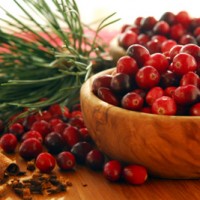
(Makes 8 to 10 servings)
Crust:
- 1 1/4 cup gluten-free flour
- 6 tablespoons unsalted butter, chilled and cut into small pieces
- 2 tablespoons vegetable shortening, chilled
- 1/4 teaspoon salt
- 4 tablespoons ice water, or more as needed
Place gluten-free flour and salt in medium bowl. Using pastry cutter or 2 knives, cut in butter and shortening until mixture resembles coarse crumbs. Add 2 tablespoons ice water, mix just until incorporated. Continue adding ice water as needed, 1 tablespoon at a time, until dough is smooth. Form dough into disk, wrap tightly with plastic wrap. Refrigerate 1 hour.
Preheat oven to 400 F. Remove dough from refrigerator, place on lightly gluten-free floured surface (we use an extra large Silpat-a sort of “rubber” nonstick mat, which really helps prevent dough from sticking to bottom surface). Lightly flour surface of dough with gluten-free flour. Roll pastry to large round, about 12 inches in diameter. Transfer to deep 9-inch pie plate, trim to within 1/2 inch of pan, crimp decoratively. If outer edges break off before folded under and crimped, just use excess dough. Press onto outer edge to form an even edge, then crimp. Prick with fork, cover. Refrigerate 20 to 30 minutes. Reserve any excess dough, reform into ball. Bake 15 to 30 minutes or until light brown. Remove form oven, let cool completely on wire rack.
Filling:
- 1 cup water
- 1 1/2 cups dried cherries
- 1 1/4 cups dried cranberries
- 1 (12 ounce) package fresh cranberries
- 1 1/4 cups granulated sugar
- 3 tablespoons gluten-free flour
- Zest of 1 lemon
- 1 tablespoon milk
- 1 tablespoon sugar
- 1 teaspoon cinnamon
In small saucepan, bring 1 cup water to simmer. Add dried cranberries and cherries. Remove from heat. Cover, let stand 20 minutes.
In large bowl, stir together fresh cranberries, undrained dried cherry-cranberry mixture, 1 1/4 cups sugar, gluten-free flour, and lemon zest. Pour mixture into prepared pie crust. Preheat oven to 375 F.
Roll out excess dough. Using small knife, cut out leaf shapes. Using tip of knife, vein leaves without cutting through dough. Using spatula, remove “leaves” and place on top of pie in decorative fashion. Using pastry brush, brush “leaves” with milk. Sprinkle top with sugar and cinnamon.
Cover pie edges with foil. Bake 45 to 50 minutes or until juices bubble and top of “leaves” are lightly browned. Transfer pie to cooling rack to cool.
Sauce:
- 1 cup crème fraîche
- 3 tablespoons wildflower honey
In medium bowl, whisk together crème fraîche and honey. To serve, place slice of pie on plate, drizzle sauce over top.
Recipe from Glutenfreeda Online Magazine and Recipe Book.